
What is Transfer in Global Payment Systems
Author:XTransfer2025.12.03Global Payment Systems
In global payment systems, a transfer moves money or value from one place to another. You use transfers to send funds across borders or between financial institutions. These transactions are essential for businesses and individuals who need to pay for goods, services, or investments internationally. Transfers ensure funds reach the right recipient securely and efficiently.
Global payment transfers rely on specialized systems to handle currency exchanges and verify transactions. Whether you send money to a supplier or receive payments from clients abroad, transfers simplify the process of moving funds globally.
How Global Payment Transfers Work
Step-by-Step Process
Understanding how global payment transfers work helps you navigate international transactions with ease. Here’s a simplified step-by-step process:
-
Initiating the Transfer: You start by providing details such as the recipient’s name, bank account information, and the amount to be transferred.
-
Currency Conversion: If the transfer involves different currencies, the system converts the funds using current exchange rates.
-
Verification: The payment processor verifies the transaction details to ensure accuracy and compliance with regulations.
-
Routing the Payment: The transfer moves through networks like SWIFT or correspondent banks to reach the recipient’s financial institution.
-
Final Settlement: The recipient’s bank credits the funds to their account, completing the transaction.
Global payment systems streamline this process to ensure speed and reliability. For example, TerraPay’s real-time payment systems allow domestic transactions to occur instantly, while SWIFT ensures that 89% of international wire transfers arrive within an hour.
Role of Intermediaries
Intermediaries play a crucial role in global payments, especially when direct relationships between banks don’t exist. These intermediaries include correspondent banks, payment processors, and financial networks like SWIFT.
-
Correspondent Banks: When banks lack direct connections, correspondent banks act as middlemen. They facilitate international wire transfers by creating chains of intermediaries. However, this can sometimes delay payments.
-
Payment Networks: Systems like SWIFT enhance efficiency by enabling secure communication between financial institutions. Nearly half of SWIFT transactions reach beneficiaries in under five minutes.
-
Mobile Wallets: In regions like Sub-Saharan Africa, mobile wallets dominate cross-border payments. TerraPay processed over 9 million remittance transactions in 2022, with 97% terminating in mobile wallets.
These intermediaries ensure that international payments are secure, even when multiple parties are involved.
Example Using Xtransfer
XTransfer simplifies global payment transfers for small and medium-sized enterprises (SMEs). Its platform allows you to make international payments as easily as local bank transfers.
-
Instant Payments: You can send funds to suppliers in Mainland China instantly, reducing transaction times.
-
Competitive Exchange Rates: XTransfer offers better rates than traditional banks, saving you money on currency conversions.
-
Advanced Security: The platform uses AI-driven compliance systems to ensure secure transactions.
|
Performance Metric |
Impact |
|---|---|
|
Revenue Growth |
Accurate reporting without currency distortions. |
|
Operating Income |
Reflects true performance through constant currency reporting. |
|
Cash Flow Management |
Improves forecasts by separating operating factors from currency fluctuations. |
XTransfer’s partnerships with major banks like JPMorgan and DBS further enhance its reliability. With 24/7 availability and multi-currency accounts, it’s an ideal solution for businesses engaged in international trade.
Key Components of Global Payment Processing
SWIFT Network
The SWIFT network forms the backbone of global payment processing. It connects over 11,000 financial institutions worldwide, enabling secure and standardized communication for international transactions. Each day, SWIFT processes approximately 35 million payment orders, ensuring that funds move efficiently across borders.
SWIFT payments rely on unique codes assigned to each member institution. These codes ensure that your money reaches the correct destination without errors. The network also supports compliance with international regulations, reducing the risk of fraud or illegal activities.
|
Metric |
Value |
|---|---|
|
Number of member institutions |
11,000 |
|
Daily transactions processed |
35 million orders per day |
By using SWIFT, you benefit from a reliable system that prioritizes security and accuracy. This makes it an essential component of global payment systems.
Payment Processors
Payment processors act as intermediaries between you and financial institutions. They handle the technical aspects of global payment processing, ensuring that transactions are completed smoothly.
Here’s how a global payment processor works:
-
It receives transaction details, such as the amount and recipient information.
-
It communicates with the sender’s and recipient’s banks to verify the details.
-
It manages currency conversion when payments involve different currencies.
-
It ensures compliance with legal standards in both the sender’s and recipient’s countries.
-
It transfers funds to local bank accounts before they reach the recipient.
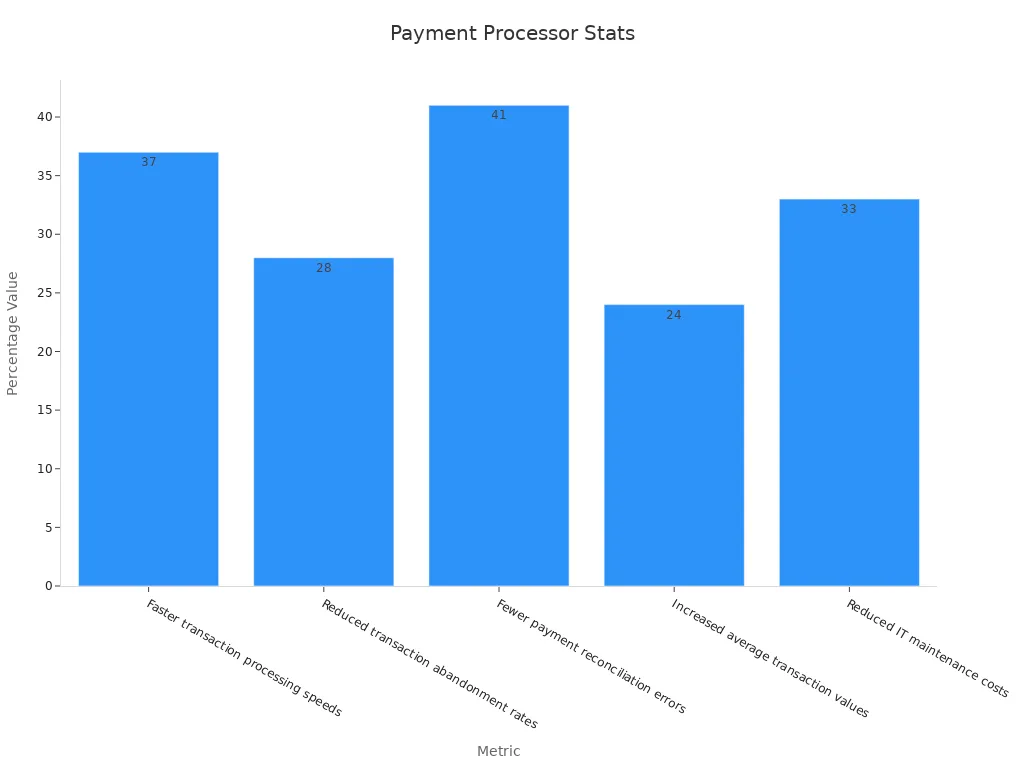
Payment processors also enhance efficiency and accuracy. For example, faster transaction speeds reduce delays, while fewer reconciliation errors improve cash flow management.
|
Statistic Description |
Value |
Source |
|---|---|---|
|
Faster transaction processing speeds |
37% |
Mastercard, 2022 |
|
Reduced transaction abandonment rates |
28% |
Baymard Institute |
|
Fewer payment reconciliation errors |
41% |
PYMNTS.com, 2023 |
|
Increased average transaction values |
24% |
Visa Business Insights |
|
Reduced IT maintenance costs |
33% |
Juniper Research |
Choosing the right payment processing partner ensures that your transactions are secure and efficient. This is especially important for businesses that rely on global payment systems to manage their operations.
Currency Exchange Mechanisms
Currency exchange mechanisms play a vital role in global payment processing. They convert one currency into another, allowing you to send or receive payments in different currencies.
These mechanisms use real-time exchange rates to ensure accuracy. Localized payment methods also cater to regional preferences, making it easier for you to connect with international clients and suppliers. For example, offering payments in a client’s local currency can improve their experience and increase trust.
Security measures protect your transaction details during the exchange process. Fraud detection systems monitor for suspicious activity, safeguarding your funds and data. By streamlining currency conversion, these mechanisms enhance the overall efficiency of global payment systems.
Benefits of Global Payment Solutions
Facilitating International Trade
Global payment solutions simplify international trade by streamlining complex financial processes. When you engage in cross-border transactions, these solutions reduce the need for extensive paperwork and manual intervention. For instance, a single trade transaction can involve up to 27 documents, nine of which relate to transferring ownership between parties. By digitizing these processes, global payment systems save time and minimize errors.
Financial tools like letters of credit also ensure secure transactions. These tools guarantee payment to sellers once goods are delivered, fostering trust between trading partners. As e-commerce continues to grow, the demand for secure and efficient payment methods will only increase.
|
Drivers/Opportunities |
Description |
|---|---|
|
Technological Advancements |
Emerging technologies and internet access drive demand for payment solutions. |
|
E-commerce Growth |
Rising online sales boost the global payment processing market. |
|
Secure Payment Methods |
Customers prefer secure, one-step payment options, especially via smartphones. |
|
Cutting-edge Technologies |
AI and machine learning create new opportunities in payment processing. |
Enhancing Financial Inclusion
Global payment solutions play a crucial role in improving financial inclusion. Digital payments make remittances faster and more affordable, which is vital for low-income populations. They also reduce leakage in government payments, ensuring funds reach the intended recipients.
-
In countries like China, Kenya, and India, over 80% of people now have financial accounts, thanks to digital payment systems.
-
India’s Aadhaar initiative has provided over 1.2 billion residents with digital IDs, enabling them to open financial accounts.
-
Since 2010, more than 60 nations have launched National Financial Inclusion Strategies to expand access to financial services.
Small businesses also benefit significantly. The financing gap for Micro-, Small-, and Medium-sized Enterprises (MSMEs) in developing regions is estimated at $5.7 trillion. By offering accessible payment platforms, global payment solutions help bridge this gap, empowering businesses to grow and thrive.
Speed and Efficiency
Speed and efficiency are among the most significant advantages of global payment solutions. These systems eliminate delays caused by manual processes, ensuring transactions are completed quickly. For example, inefficiencies in payment gateways can lead to a loss of up to 40% of online sales. By optimizing payment systems, you can reduce such losses and improve customer satisfaction.
-
Regularly assessing payment system performance helps prevent revenue loss.
-
Payment metrics provide valuable insights to optimize sales and reduce inefficiencies.
Advanced technologies like AI and automation further enhance efficiency. These tools enable real-time transaction monitoring, fraud detection, and seamless currency conversion. As a result, global payment solutions not only save time but also improve the overall reliability of financial transactions.
Challenges in Global Payments
Transaction Costs
High transaction costs remain a significant challenge in global payment systems. When you send money internationally, fees can quickly add up, especially for smaller amounts. For example, sending $200 in 2023 costs around 6.2-6.3% on average, far above the 3% target set by the Sustainable Development Goals. In regions like South Asia, fees average 6-7%, while in Africa, they often exceed 7%.
Several factors contribute to these costs:
-
Multiple Intermediaries: Payments often pass through several correspondent banks, each adding its own fees.
-
Manual Processes: Inefficiencies arise from manual checks during payment processing.
-
Regulatory Barriers: Inconsistent Know Your Customer (KYC) and Anti-Money Laundering (AML) requirements delay transactions and increase costs.
Efforts to reduce these costs include initiatives to streamline cross-border payments and improve automation. By choosing platforms that minimize intermediary steps, you can save money and time.
Currency Risks
Currency risks pose another challenge in global payments. Exchange rates fluctuate constantly, impacting the value of your transactions. If you send money in one currency and the recipient receives it in another, sudden changes in rates can lead to unexpected losses.
For businesses, these risks can affect profitability. Imagine paying a supplier in euros when the dollar weakens. You end up spending more than planned. To mitigate this, many payment platforms offer real-time currency conversion and competitive rates. These tools help you manage risks and maintain financial stability.
Understanding exchange rate trends and using hedging strategies can further protect your transactions. By staying informed, you reduce the impact of currency volatility on your payments.
Security Concerns
Security remains a critical issue in global payment systems. Cyberattacks and data breaches threaten the safety of your transactions. For instance, a breach reported by Visa and MasterCard revealed that millions of credit card accounts were compromised. Experts like Brian Krebs suggest the actual number of affected transactions could be much higher.
Regular monitoring of your accounts can help detect suspicious activity early. Platforms with advanced security measures, such as AI-driven fraud detection, offer additional protection. However, no system is entirely immune to threats. Avivah Litan, a Gartner analyst, warns that breaches may occur more frequently than reported.
To safeguard your payments, choose systems with robust encryption and compliance protocols. Staying vigilant ensures your financial information remains secure.
Best Practices for Secure and Efficient Payments
Choosing Reliable Platforms
Selecting a reliable platform ensures your global payment transactions are secure and seamless. Look for platforms that offer robust security features, such as PCI DSS compliance, encryption, and fraud monitoring. These measures protect sensitive data and reduce the risk of unauthorized access.
Evaluate the platform’s payment processing fees to avoid unexpected costs. A diverse range of accepted payment methods can also enhance customer satisfaction and reduce cart abandonment. Additionally, check for easy integration with your existing systems to streamline operations. Reliable platforms maintain high uptime rates, ensuring your transactions are processed without delays.
Understanding Fees and Exchange Rates
Understanding fees and exchange rates helps you manage costs effectively. Many platforms charge fees for currency conversion, transaction processing, or intermediary services. Compare these fees across platforms to find the most cost-effective option.
Exchange rates fluctuate constantly, impacting the value of your payments. Real-time currency conversion tools can help you lock in favorable rates. Setting transaction limits and monitoring IP addresses can also prevent fraudulent activity, saving you from potential losses.
Ensuring Regulatory Compliance
Adhering to regulatory standards protects your business from legal risks. Compliance frameworks like GDPR, SOX, and HIPAA ensure data privacy and financial accuracy. For global payment systems, PCI DSS compliance is essential for safeguarding cardholder data.
KYC (Know Your Customer) and AML (Anti-Money Laundering) procedures verify customer identities and prevent illegal activities. These measures not only protect your business but also build trust with your clients.
Global payment systems simplify how you send and receive money across borders. They use networks, processors, and currency exchange mechanisms to ensure transactions are fast and secure. These systems benefit businesses by facilitating trade, improving financial inclusion, and enhancing efficiency. However, challenges like transaction costs, currency risks, and security concerns require careful management.
Understanding global payment systems helps you make informed decisions and avoid unnecessary risks. For SMEs, platforms like XTransfer offer reliable solutions. With instant transfers, competitive rates, and advanced security, XTransfer makes international payments easier and more efficient.
FAQ
What is the difference between a domestic and a global payment transfer?
Domestic transfers occur within the same country, while global transfers involve sending money across borders. Global transfers often require currency conversion and compliance with international regulations.
How long does a global payment transfer take?
The time varies depending on the platform and intermediaries. Some transfers complete instantly, while others may take 1-5 business days. Platforms like XTransfer offer instant payments for faster transactions.
Are global payment systems secure?
Yes, most systems use encryption, fraud detection, and compliance protocols to protect your transactions. Choosing a reliable platform with advanced security features ensures your payments remain safe.
Why do currency exchange rates fluctuate?
Exchange rates change due to factors like economic conditions, interest rates, and market demand. These fluctuations impact the value of global payments. Using real-time conversion tools can help you manage these changes effectively.
How can I reduce transaction costs for global payments?
You can minimize costs by choosing platforms with competitive fees, avoiding unnecessary intermediaries, and using real-time currency conversion tools. Comparing platforms helps you find the most cost-effective option.
Related content