
Understanding the MARKDEF1100 SWIFT Code in Banking
Author:XTransfer2025.06.11MARKDEF1100
The MARKDEF1100 SWIFT code identifies DEUTSCHE BUNDESBANK in international banking. You use this unique code to send money securely across borders. It ensures your funds reach the correct bank without errors. SWIFT codes like MARKDEF1100 simplify global payments by providing a standardized system. They reduce risks and make transactions faster. When you deal with international transfers, accuracy matters. Using the right SWIFT code keeps your money safe and ensures it arrives at the intended destination.
What Is the MARKDEF1100 SWIFT Code?
Definition and Purpose of the MARKDEF1100 SWIFT Code
The MARKDEF1100 SWIFT code is a unique identifier assigned to DEUTSCHE BUNDESBANK, Germany's central bank. It plays a critical role in international banking by ensuring secure and accurate communication between financial institutions. This code acts as a digital address, enabling banks to send and receive messages about transactions, such as payments, transfers, and confirmations, through the SWIFT network.
Each SWIFT code, including MARKDEF1100, follows a standardized format that ensures consistency across the globe. This standardization accelerates payment processing, reduces errors, and minimizes confusion between banks with similar names. For example:
-
It prevents funds from being sent to the wrong institution.
-
It ensures that cross-border payments are processed efficiently.
In essence, the MARKDEF1100 SWIFT code is indispensable for facilitating swift payments and maintaining the integrity of international financial transactions.
Overview of DEUTSCHE BUNDESBANK and Its Connection to MARKDEF1100
DEUTSCHE BUNDESBANK, headquartered in Frankfurt, Germany, is the central bank of the Federal Republic of Germany. It oversees monetary policy, ensures financial stability, and manages the country's foreign reserves. The MARKDEF1100 SWIFT code directly links to this institution, serving as its unique identifier in the global banking system.
This connection allows DEUTSCHE BUNDESBANK to participate seamlessly in international finance. Whether processing payments for government transactions or facilitating trade settlements, the MARKDEF1100 SWIFT code ensures that the bank's operations are efficient and secure.
Additionally, the code enables DEUTSCHE BUNDESBANK to connect with other banks worldwide, including smaller institutions in remote regions. This global reach strengthens Germany's role in international trade and finance.
Why the MARKDEF1100 SWIFT Code Is Essential for International Transactions
The MARKDEF1100 SWIFT code is vital for international transactions because it ensures accuracy, speed, and security. Without this code, banks would struggle to identify the correct recipient institution, leading to delays and potential errors. Here’s why it matters:
-
Unique Identification: Each SWIFT/BIC code, including MARKDEF1100, uniquely identifies a bank, eliminating confusion.
-
Message Routing: It directs transaction messages to the correct destination within the SWIFT network.
-
Error Prevention: It minimizes mistakes, especially when dealing with banks in different countries.
A closer look at the structure of SWIFT codes highlights their functionality:
|
Component |
Length |
Description |
|
Bank Code |
4 |
Freely chosen by the bank |
|
Country Code |
2 |
ISO 3166-1 country code |
|
Location Code |
2 |
Location within the country |
|
Branch Code |
3 (optional) |
Optional branch identifier |
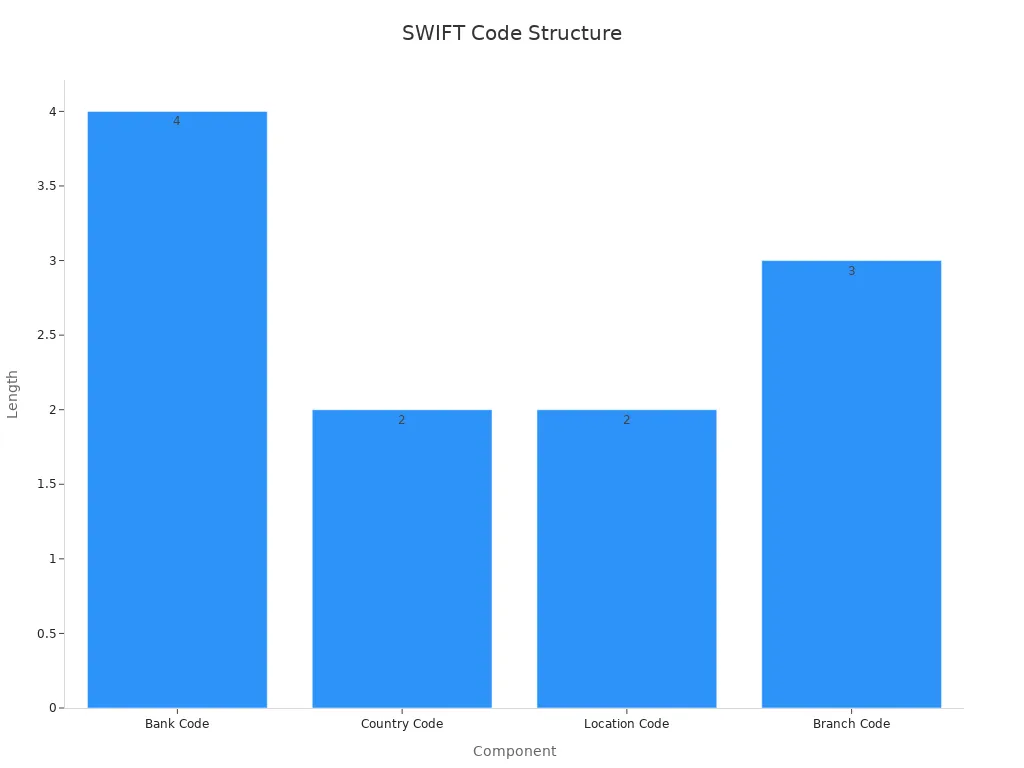
The MARKDEF1100 SWIFT code also plays a crucial role in global trade. It allows importers and exporters to make and receive payments efficiently, ensuring the smooth flow of goods and services. By streamlining processes, it reduces costs and supports timely cross-border payments. This efficiency is essential for maintaining trust and reliability in international banking.
Structure of the MARKDEF1100 SWIFT Code

Explanation of the 8-11 Character SWIFT Code Format
A SWIFT code, also known as a Bank Identifier Code (BIC), is a standardized format used to identify banks and financial institutions worldwide. These codes consist of 8 to 11 characters, each serving a specific purpose. The 8-character format represents the primary office of a bank, while the 11-character format includes additional details about a specific branch. This structure ensures that international transactions are routed accurately and efficiently.
Here’s a breakdown of the SWIFT code format:
|
Component |
Description |
|
Institution Code |
4 letters representing the bank or institution code. |
|
Country Code |
2 letters based on ISO 3166-1 alpha-2 standard, indicating the country. |
|
Location Code |
2 letters or digits indicating the location; specific meanings for '0', '1', '2'. |
|
Branch Code |
3 letters or digits, optional, with 'XXX' indicating the primary office. |
|
Total Length |
8 or 11 characters, with 8 indicating the primary office if no branch code is provided. |
For example, the MARKDEF1100 SWIFT code uses all 11 characters, which means it includes a branch code. This level of detail ensures that your transactions reach the correct destination, even when dealing with large institutions like DEUTSCHE BUNDESBANK.
Breakdown of the MARKDEF1100 Code (Bank Code, Country Code, Location Code, Branch Code)
The MARKDEF1100 SWIFT code can be divided into four key components, each providing specific information about the bank and its location. Understanding these components helps you see how the code directs international transactions:
|
Component |
Description |
Example |
|
Bank Code |
The first four characters, unique to each bank, assigned by SWIFT. |
MARK (DEUTSCHE BUNDESBANK) |
|
Country Code |
The next two characters indicating the country of the bank. |
DE (Germany) |
|
Location Code |
The subsequent two characters identifying the specific location of the bank. |
F1 (Frankfurt) |
|
Branch Code |
The last three characters, optional, identifying a specific branch. |
100 (specific branch in Frankfurt) |
The "MARK" bank code identifies DEUTSCHE BUNDESBANK. The "DE" country code confirms that the bank operates in Germany. The "F1" location code pinpoints Frankfurt as the bank's location. Finally, the "100" branch code specifies a particular branch within Frankfurt. Together, these components ensure that the SWIFT network routes your transactions to the correct institution and branch.
Example Analysis of MARKDEF1100
Let’s analyze the MARKDEF1100 SWIFT code step by step to understand its functionality in real-world scenarios. Imagine you need to send money to DEUTSCHE BUNDESBANK in Frankfurt. By using the MARKDEF1100 code, you provide the following details:
-
Bank Identification: The "MARK" portion ensures that the funds are directed to DEUTSCHE BUNDESBANK.
-
Country Confirmation: The "DE" code confirms that the bank is located in Germany, avoiding confusion with banks in other countries.
-
Location Specificity: The "F1" code narrows the location to Frankfurt, ensuring the transaction reaches the correct city.
-
Branch Precision: The "100" branch code directs the payment to a specific branch in Frankfurt, adding another layer of accuracy.
For instance, if you’re conducting international trade or settling cross-border payments, this level of detail ensures that your transactions are processed without delays or errors. The MARKDEF1100 SWIFT code acts as a precise digital address, guiding your funds to the right place every time.
Importance of SWIFT Codes in International Banking

How SWIFT codes ensure secure and efficient global transactions
SWIFT codes play a crucial role in making international payments secure and efficient. They act as unique digital addresses for banks, ensuring that your money reaches the correct destination without delays or errors. These codes enable real-time communication between banks, allowing them to exchange transaction details instantly. This speeds up the process and ensures accuracy.
The SWIFT system uses encrypted messaging formats to protect sensitive financial data. This minimizes the risk of fraud or mistakes during cross-border transactions. Advanced security measures, such as authentication and access controls, further enhance the safety of international transfers. Additionally, SWIFT supports compliance with Know Your Customer (KYC) protocols, which are essential for secure banking. By linking economies worldwide, SWIFT simplifies business-to-business payments and strengthens global trade.
The role of MARKDEF1100 in identifying DEUTSCHE BUNDESBANK
The MARKDEF1100 SWIFT code is essential for identifying DEUTSCHE BUNDESBANK in international payments. This unique code ensures that funds sent to the bank are routed accurately. It eliminates confusion with other institutions and guarantees that your payment reaches the intended recipient.
When you use the MARKDEF1100 SWIFT code, you provide precise details about the bank, including its location in Frankfurt, Germany. This accuracy is vital for cross-border payments, where even small errors can cause delays. The code also helps DEUTSCHE BUNDESBANK connect with other banks globally, enabling smooth international transfers and supporting Germany’s role in global finance.
Common use cases for the MARKDEF1100 SWIFT code
You might need the MARKDEF1100 SWIFT code in various scenarios involving international payments. For example:
-
Sending money to DEUTSCHE BUNDESBANK for government-related transactions.
-
Facilitating international trade payments for businesses.
-
Settling cross-border transactions between financial institutions.
This code is also used for personal international transfers, such as sending money to family or friends in Germany. By using the MARKDEF1100 SWIFT code, you ensure that your payment is processed quickly and securely, avoiding unnecessary complications.
How Do I Find and Validate My SWIFT Code?
Methods to locate the MARKDEF1100 SWIFT code (e.g., bank statements, official websites)
You can locate the MARKDEF1100 SWIFT code using several reliable methods. Start by checking your bank statements or account details, as banks often include this information for international transactions. Another option is to visit the official website of DEUTSCHE BUNDESBANK. Banks typically provide their SWIFT/BIC code on their websites under the "Contact Us" or "International Payments" sections.
For a more technical approach, tools like BIC Class and from_bank_code can help you find a BIC or SWIFT code. These tools allow you to create and validate SWIFT codes based on the bank and country codes. They also ensure the code meets the required length and structure. The table below summarizes these methods:
|
Method |
Description |
|
BIC Class |
Allows creation and validation of BIC objects based on country and bank codes. |
|
from_bank_code |
Creates a BIC object from country code and domestic bank code. |
|
InvalidLength |
Raises an error if the BIC’s length is not 8 or 11 characters long. |
|
InvalidStructure |
Raises an error if the BIC contains unexpected characters. |
|
InvalidCountryCode |
Raises an error if the BIC’s country code is unknown. |
These methods ensure you can find a BIC or SWIFT code accurately and efficiently.
Tools for validating SWIFT codes, including Xtransfer’s SWIFT code query platform
Validating a SWIFT code is essential to avoid errors in international transactions. Tools like Xtransfer’s SWIFT code query platform make this process simple and reliable. This platform connects with over 11,000 banks worldwide and processes millions of messages daily through the SWIFT network. Its efficiency is evident in the success of companies like WISE EUROPE S.A., which reported a 25% growth in local transactions last year.
Using such tools ensures that your SWIFT code is correct and compliant with international standards. They also help detect errors in the code’s structure, such as incorrect length or invalid characters. By validating your SWIFT code, you can ensure your payments are processed securely and without delays.
Tips for ensuring accuracy when using SWIFT codes
Ensuring accuracy when using a SWIFT code is crucial for successful transactions. Follow these best practices to avoid errors:
-
Use efficient messaging to include accurate payment details.
-
Automate payment processing to reduce manual mistakes.
-
Validate the SWIFT code format and compliance before initiating a transaction.
-
Regularly reconcile payment data to identify discrepancies.
-
Implement security measures to protect sensitive financial information.
-
Monitor payment status to detect anomalies and ensure timely processing.
By following these steps, you can minimize errors and ensure your international payments are secure and efficient.
When and How to Use the MARKDEF1100 SWIFT Code
Scenarios requiring the MARKDEF1100 SWIFT code (e.g., international wire transfers)
You will need the MARKDEF1100 SWIFT code in several situations involving international transactions. This code ensures that your funds reach the correct destination without errors. Common scenarios include:
-
Sending money internationally to DEUTSCHE BUNDESBANK for government-related payments or trade settlements.
-
Receiving money from overseas, where the sender must use the correct SWIFT code to avoid delays or misrouting.
-
Setting up recurring international money transfer arrangements, which require accurate SWIFT code usage to streamline the process and reduce errors.
Using the MARKDEF1100 SWIFT code in these cases guarantees that your transactions are processed securely and efficiently.
Step-by-step guide to using the SWIFT code in transactions
Follow these steps to use the MARKDEF1100 SWIFT code for your international transactions:
-
Obtain the SWIFT Code: Confirm the MARKDEF1100 code from DEUTSCHE BUNDESBANK’s official website or your bank statement.
-
Provide the Recipient’s Details: Include the recipient’s full name, bank account number, and address.
-
Enter the SWIFT Code: Input the MARKDEF1100 code in the designated field when initiating the transaction.
-
Verify the Information: Double-check all details, including the SWIFT code, to ensure accuracy.
-
Complete the Payment: Submit the transaction through your bank or a reliable money transfer service.
This process ensures that your payment reaches the intended recipient without unnecessary delays. If you wonder how long does a SWIFT transfer take, it typically ranges from 1 to 5 business days, depending on the banks involved.
Common mistakes to avoid when using SWIFT codes
Avoiding errors when using SWIFT codes is crucial for successful transactions. Here are some common mistakes to watch out for:
-
Using the wrong SWIFT code for the recipient bank. Different branches may have unique codes, so always verify the correct one.
-
Relying on an outdated SWIFT code. Banks occasionally update their codes, so confirm the current version before proceeding.
-
Omitting part of the SWIFT code. Ensure you include all 8 or 11 characters to avoid processing issues.
-
Confusing SWIFT codes with IBANs. Remember, SWIFT codes identify banks, while IBANs specify individual accounts.
-
Assuming all banks have a SWIFT BIC code. Some smaller banks may not use SWIFT, requiring alternative money transfer services.
By avoiding these mistakes, you can ensure that your international payments are processed smoothly and securely.
The MARKDEF1100 SWIFT code plays a vital role in international banking. It ensures accurate routing of funds by uniquely identifying DEUTSCHE BUNDESBANK. Its structured format, including the bank identifier, country code, location code, and optional branch code, simplifies global transactions. Validation processes prevent fraud and ensure secure payments.
Accuracy matters when using SWIFT codes. Double-checking details minimizes errors and delays. Platforms like Xtransfer make finding and validating SWIFT codes effortless, connecting you to banks worldwide. By leveraging these tools, you can streamline your international payments with confidence.
FAQ
What is the difference between a SWIFT code and an IBAN?
A SWIFT code identifies a specific bank, while an IBAN identifies an individual account within a bank. You use both for international transactions, but the SWIFT code ensures the payment reaches the correct bank, and the IBAN ensures it reaches the correct account.
Can I use the MARKDEF1100 SWIFT code for personal transactions?
Yes, you can use the MARKDEF1100 SWIFT code for personal transactions. It is essential for sending or receiving money internationally to or from DEUTSCHE BUNDESBANK. Always verify the recipient’s details before initiating the transfer.
How do I know if my SWIFT code is valid?
You can validate your SWIFT code using tools like Xtransfer’s SWIFT code query platform. These tools check the code’s structure and ensure it matches the bank’s official records. Double-checking ensures your transaction proceeds without errors.
Is the MARKDEF1100 SWIFT code used for all DEUTSCHE BUNDESBANK branches?
No, the MARKDEF1100 SWIFT code specifically identifies a branch in Frankfurt. Other branches may have different SWIFT codes. Always confirm the correct code for the branch you are dealing with to avoid delays or errors.
What happens if I use the wrong SWIFT code?
Using the wrong SWIFT code can delay your transaction or send funds to the wrong bank. Contact your bank immediately if you realize an error. They may help you trace and recover the funds, but this process can take time.
Related content