
The Rise of Real-Time B2B Cross-Border Payments
Author:XTransfer2025.08.22B2B Cross-Border Payments
Real-time B2B cross-border payments are reshaping how businesses handle global transactions. These systems allow you to send and receive money instantly, reducing delays and ensuring transparent processes. Over 70 countries now use digital payment systems, and transaction volumes have grown by 63% year-on-year. By 2028, instant payments could account for 42% of all cross-border payments, reaching $16 trillion. This rapid adoption reflects the demand for faster and more cost-effective solutions in global payments. Companies like XTransfer empower businesses to access efficient services, leveling the playing field for enterprises of all sizes.
Understanding Real-Time B2B Cross-Border Payments
Definition and Key Features
Real-time B2B cross-border payments refer to the ability to transfer funds instantly between businesses across different countries. These payment systems leverage advanced technologies to eliminate delays, reduce costs, and enhance transparency. Unlike traditional methods, which often involve intermediaries and lengthy processing times, real-time solutions streamline the entire process.
Key features of these systems include:
-
Blockchain technology: Ensures secure and transparent transactions.
-
Real-time processing: Enables instant fund transfers, reducing settlement times.
-
AI integration: Detects and prevents fraud, safeguarding your transactions.
-
Collaboration between banks and fintechs: Combines the strengths of both sectors to improve efficiency.
-
Regulatory compliance: Adapts to global standards, ensuring smooth operations.
A recent industry report highlights the growing importance of these features. For example:
|
Key Features |
Statistics |
|
Use of blockchain technology for transparency |
Projected market size in 2024: USD 67.97 Trillion |
|
Real-time payments for efficiency |
Expected CAGR from 2024 to 2033: 7.2% |
|
AI integration to prevent fraud |
Anticipated market valuation by 2033: USD 121.84 Trillion |
These innovations make real-time B2B cross-border payments a cornerstone of the modern cross-border payments market.
How They Transform Traditional B2B Payments
Traditional business-to-business payment methods often involve multiple intermediaries, high fees, and unpredictable processing times. Real-time systems revolutionize this by offering faster, more reliable solutions. You no longer need to wait days or even weeks for funds to clear. Instead, payments are processed instantly, allowing you to focus on growing your business.
Here’s how real-time systems are transforming the landscape:
-
Speed: Transactions that once took days now happen in seconds.
-
Cost-efficiency: Reduced reliance on intermediaries lowers transaction fees.
-
Transparency: You gain full visibility into the payment process, from initiation to settlement.
The global cross-border payment flow is projected to grow at a rate of 5% annually, reaching over $156 trillion by 2022. B2B transactions dominate this market, accounting for $150 trillion. Emerging markets, driven by initiatives like the African Continental Free Trade Area, are growing even faster at 11% annually. These trends underscore the transformative impact of real-time systems on global payments.
The Importance of Speed and Transparency in Cross-Border Payments
Speed and transparency are critical for settling cross-border payments efficiently. Delays in traditional systems can disrupt supply chains, strain business relationships, and increase costs. Real-time solutions address these challenges by ensuring payments are processed instantly and transparently.
Transparent payment systems offer several advantages:
-
Greater predictability in transaction outcomes.
-
Improved compliance with international regulations.
-
Enhanced access to vital data for better decision-making.
A recent study highlights the benefits of simpler, more transparent cross-border payments. These include greater optionality, increased predictability, and better access to data. Another report emphasizes the challenges of traditional systems, such as the lack of transparency and difficulties in tracking funds. By adopting real-time solutions, you can overcome these obstacles and ensure smoother transactions.
The importance of speed and transparency cannot be overstated. They not only enhance operational efficiency but also build trust with your partners, making real-time B2B payments an essential tool in today’s global economy.
Technological Innovations Driving Real-Time B2B Payments
Blockchain’s Role in Cross-Border Transactions
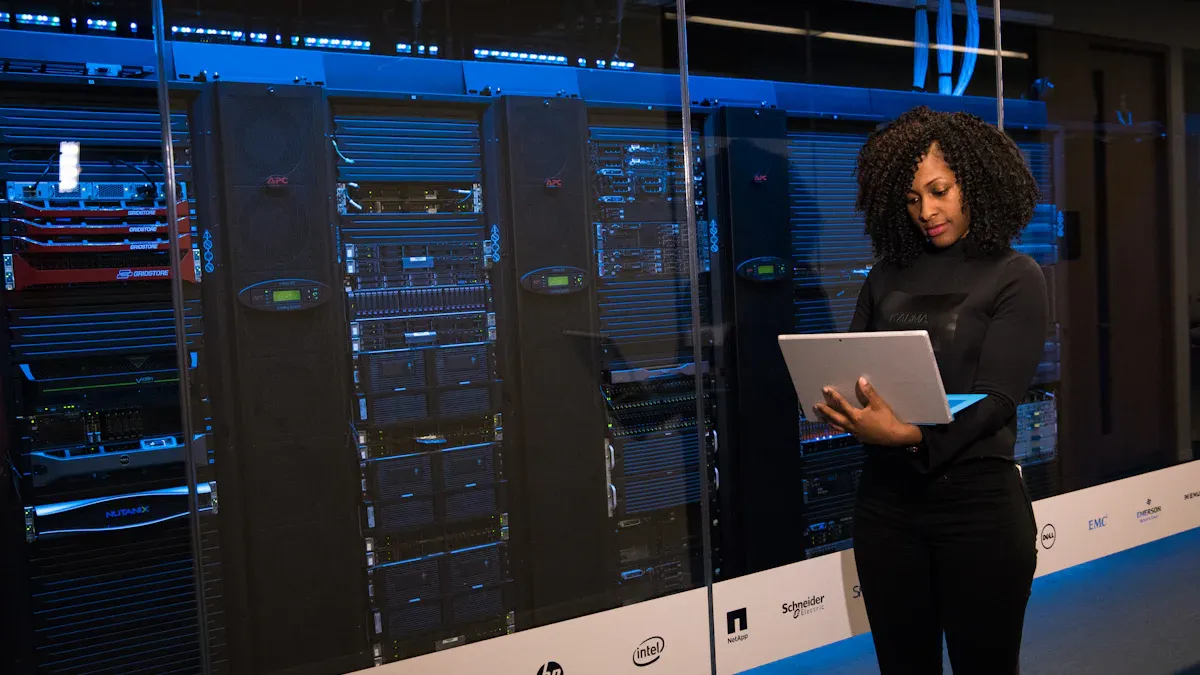
Blockchain technology has revolutionized how businesses handle cross-border payments. It eliminates intermediaries, enabling faster and more secure transactions. You can complete payments in near real-time, often within four to six seconds, regardless of time zones or banking hours. This 24/7 availability ensures that your business operations remain uninterrupted.
Blockchain also reduces costs by removing intermediaries. Traditional payment systems often involve multiple banks or clearinghouses, each adding fees. With blockchain, you bypass these layers, significantly lowering transaction expenses. Additionally, automated record-keeping ensures every transaction is timestamped and stored on an immutable ledger. This transparency builds trust and simplifies audits.
For example, a small business owner in Sri Lanka can send money to a partner in Canada using a blockchain-based platform. The transaction completes in minutes, costs less than traditional methods, and offers unmatched security. Platforms like RippleNet demonstrate how blockchain facilitates real-time, secure cross-border payments, making it a game-changer for global commerce.
AI and Machine Learning for Enhanced Security and Efficiency
Artificial intelligence (AI) and machine learning (ML) are transforming the security and efficiency of cross-border payments. These technologies analyze vast amounts of transactional data to detect unusual patterns. For instance, AI can identify suspicious activities like money laundering by recognizing deviations from normal user behavior. This proactive approach enhances fraud detection and compliance.
AI also reduces false positives, which are common in traditional monitoring systems. By learning from historical data, AI improves accuracy, allowing you to focus on genuine risks. This shift from manual detection to automated insights increases operational efficiency. Compliance teams can spend less time on routine tasks and more on strategic decision-making.
Here’s how AI and ML enhance payment systems:
-
AI establishes a baseline of normal activity, triggering alerts for deviations.
-
Continuous learning enables AI to adapt to evolving financial crimes.
-
Machine learning processes large data volumes quickly, streamlining fraud detection.
A recent study highlights these benefits. AI not only improves security but also lowers operational costs by minimizing time spent on non-issues. This makes it an essential tool for businesses navigating the complexities of cross-border payments.
|
Evidence Description |
Key Benefit |
|
AI enhances pattern recognition, identifying unusual transaction sequences. |
Improves detection of money laundering and illicit activities. |
|
AI establishes a baseline of normal activity for users, triggering alerts for deviations. |
Enhances effectiveness of transaction monitoring. |
|
Continuous learning allows AI to refine its pattern recognition over time. |
Keeps pace with evolving financial crimes. |
|
AI reduces false positives by learning from historical data. |
Leads to more precise detection of genuine threats. |
Interoperability Standards like ISO 20022
Interoperability is crucial for seamless cross-border payments, and ISO 20022 is setting the global standard. This messaging format enables different payment systems to communicate effectively, ensuring faster and more accurate transactions. It supports instant payments and central bank digital currencies (CBDCs), making it a cornerstone of modern financial infrastructure.
ISO 20022 also enhances automated reconciliation, reducing manual errors and improving efficiency. Major infrastructures like TARGET2, CHAPS, and SWIFT GPI have adopted this standard, reflecting its growing importance. By November 2025, 80% of high-value payment systems globally are expected to comply with ISO 20022, up from just 32.9% in December 2024.
For your business, adopting ISO 20022 means fewer delays and greater transparency. It simplifies cross-border transactions, allowing you to focus on growth rather than navigating complex payment processes. This standard is not just a technical upgrade; it’s a strategic advantage in the competitive global market.
XTransfer’s Technological Approach to Simplifying B2B Payments
XTransfer has revolutionized the way businesses handle cross-border payments by leveraging cutting-edge technology. Its platform simplifies complex processes, making international transactions faster, safer, and more cost-effective. Whether you run a small business or a large enterprise, XTransfer provides tools that streamline your payment operations and reduce inefficiencies.
Automation for Speed and Accuracy
XTransfer uses automation to eliminate manual intervention in payment processes. This approach reduces errors and ensures transactions are completed quickly. For example, automated workflows handle repetitive tasks like data entry and reconciliation. This not only saves time but also minimizes the risk of human mistakes. By automating these processes, you can focus on growing your business instead of managing tedious administrative tasks.
AI Integration for Enhanced Security
Artificial intelligence plays a key role in XTransfer’s platform. It analyzes vast amounts of transactional data to detect risks and ensure compliance with global regulations. For instance, AI can identify unusual patterns that may indicate fraud or money laundering. This proactive approach enhances the security of your transactions and protects your business from financial crimes. Additionally, AI-driven insights help you make informed decisions, giving you greater control over your payment operations.
Global Multi-Currency Accounts
XTransfer offers global multi-currency accounts that simplify international transactions. These accounts allow you to send and receive payments in multiple currencies without the need for multiple bank accounts. You also benefit from competitive foreign exchange (FX) rates, which reduce the cost of currency conversions. This feature is especially valuable if your business operates in multiple countries or deals with international suppliers. It ensures seamless transactions while saving you money on FX fees.
Cloud-Based Platforms for Instant Processing
XTransfer’s cloud-based platform enables instant processing of transactions. Unlike traditional systems that rely on physical infrastructure, cloud technology ensures 24/7 availability and eliminates delays caused by time zones or banking hours. This means you can send or receive payments at any time, keeping your business operations uninterrupted. The cloud-based system also scales easily, accommodating the needs of growing businesses without requiring additional resources.
XTransfer’s technological approach empowers businesses of all sizes to navigate the complexities of cross-border payments with ease. Its innovative solutions ensure that you can focus on what truly matters—expanding your business and building strong international partnerships.
Challenges in Real-Time B2B Cross-Border Payments
Addressing Liquidity Bottlenecks
Liquidity bottlenecks remain a significant challenge in real-time B2B cross-border payments. Many businesses struggle to maintain sufficient working capital due to the inefficiencies of traditional payment systems. Smaller businesses, in particular, face difficulties. Only 23% of them report being "very or extremely satisfied" with current solutions. Long settlement times and the need for correspondent banking relationships often lock up funds, leaving businesses without the flexibility to grow internationally.
The cost of maintaining nostro accounts further exacerbates this issue. On average, banks spend $1.5 million annually on these accounts, tying up liquidity that could otherwise support business operations. The inefficiencies in correspondent banking also increase costs and complicate liquidity management. These challenges highlight the need for innovative payment systems that free up working capital and reduce reliance on outdated processes.
|
Evidence Type |
Description |
|
Cost of Nostro Accounts |
The average cost of maintaining nostro accounts for banks is $1.5 million annually. |
|
Challenges in Correspondent Banking |
Inefficiencies lead to higher costs and liquidity management difficulties. |
Overcoming Regulatory Complexities
Regulatory requirements add another layer of complexity to cross-border payments. You must navigate tax regulations, anti-money laundering (AML) laws, and privacy standards. These rules vary by country, making compliance a time-consuming and resource-intensive process. For example, invoicing international customers requires adherence to transaction security and privacy laws. Ongoing monitoring is also necessary as regulations evolve.
Investors face similar challenges. They must manage local compliance, currency conversion risks, and liquidity issues. These hurdles can slow down transactions and increase operational costs. By adopting advanced payment systems that integrate compliance tools, you can streamline processes and reduce regulatory burdens.
Bridging Infrastructure Gaps in Emerging Markets
Emerging markets often lack the infrastructure needed for efficient cross-border payments. Limited access to digital banking systems and outdated technologies create barriers for businesses. These gaps make it difficult for you to send or receive payments quickly, especially in regions with underdeveloped financial networks.
Innovative solutions are bridging these gaps by introducing cloud-based platforms and mobile payment systems. These technologies enable businesses in emerging markets to participate in global trade without relying on traditional banking infrastructure. By leveraging these advancements, you can overcome infrastructure challenges and expand your reach into new markets.
How XTransfer Mitigates These Challenges for Businesses
XTransfer provides innovative solutions to help you navigate the challenges of real-time B2B cross-border payments. Its platform addresses liquidity bottlenecks, regulatory complexities, and infrastructure gaps, ensuring smoother transactions for businesses of all sizes.
Solving Liquidity Bottlenecks
XTransfer simplifies liquidity management by offering global multi-currency accounts. These accounts reduce the need for costly nostro accounts and free up working capital. You can send and receive payments in multiple currencies without tying up funds in intermediary banks. Competitive foreign exchange rates further lower costs, allowing you to allocate resources more effectively.
Additionally, XTransfer’s instant payment processing ensures faster access to funds. This eliminates delays caused by traditional systems, giving you the flexibility to manage cash flow efficiently. Whether you’re a small business or a multinational corporation, XTransfer’s tools empower you to grow without liquidity constraints.
Streamlining Regulatory Compliance
Navigating complex regulations becomes easier with XTransfer’s compliance tools. The platform integrates advanced AI to monitor transactions and ensure adherence to global standards. It automatically detects risks like money laundering and fraud, helping you stay compliant without manual intervention.
XTransfer also simplifies invoicing for international customers. Its automated workflows ensure that your transactions meet local tax and privacy laws. By reducing the burden of regulatory compliance, you can focus on expanding your business rather than managing legal complexities.
Bridging Infrastructure Gaps
Emerging markets often face infrastructure challenges, but XTransfer bridges these gaps with its cloud-based platform. This technology enables instant payments, even in regions with limited banking networks. You can send and receive funds 24/7, ensuring uninterrupted operations.
Mobile-friendly solutions further enhance accessibility. Businesses in emerging markets can participate in global trade without relying on outdated systems. XTransfer’s platform connects you to trusted financial institutions worldwide, making cross-border transactions seamless and cost-effective.
XTransfer’s innovative approach ensures that you can handle b2b payments efficiently, regardless of the obstacles. Its solutions empower you to focus on growth, build stronger partnerships, and thrive in today’s interconnected economy.
The Future of Real-Time B2B Cross-Border Payments

The Role of Stablecoins in Cross-Border Transactions
Stablecoins are reshaping how businesses handle cross-border payments. These digital assets maintain a stable value by pegging to fiat currencies, making them ideal for reducing volatility in international transactions. You can use stablecoins to transfer funds quickly and securely, bypassing traditional banking systems. This efficiency lowers costs and speeds up settlement times, helping businesses operate more effectively in the global market.
Recent research highlights the growing interest in stablecoins among financial institutions:
|
Use Case |
Percentage of Interested Institutions |
|
Yield generation |
73% |
|
Transactional convenience in digital asset markets |
71% |
|
Foreign exchange applications |
69% |
|
Internal cash management |
68% |
|
Store of value functions |
68% |
Stablecoins simplify foreign exchange processes and improve cash management, making them a valuable tool for businesses navigating global payments. Their adoption is expected to grow as more companies recognize their potential to streamline operations and reduce costs.
Central Bank Digital Currencies (CBDCs) and Their Potential Impact
Central Bank Digital Currencies (CBDCs) represent a significant shift in the global payments landscape. These digital currencies, issued by central banks, aim to provide a secure and efficient alternative to traditional payment systems. CBDCs offer instant settlement, reducing the time and cost associated with cross-border transactions.
For businesses, CBDCs could eliminate the need for intermediaries, ensuring faster and more transparent payments. They also enhance financial inclusion by providing access to digital payment systems in regions with limited banking infrastructure. As central banks worldwide explore CBDC implementation, you can expect these currencies to play a pivotal role in transforming cross-border payments.
The projected growth of the B2B cross-border payments market, reaching $50 trillion by 2032, underscores the importance of innovations like CBDCs. Key drivers include technological advancements and increased digitization, which align with the goals of CBDC adoption.
Collaboration Between Fintechs and Banks
Fintech companies and banks are increasingly working together to enhance real-time B2B cross-border payment infrastructures. This collaboration combines the technological expertise of fintechs with the established networks of banks, creating more efficient and secure payment systems.
The Bank of International Settlements emphasizes the importance of tokenization for improving cross-border payments. By integrating technologies like AI and blockchain, banks can remain competitive in the evolving B2B market. Partnerships between fintechs and banks are shifting from traditional client-vendor relationships to strategic alliances, enabling both parties to innovate and adapt to changing demands.
For example, fintechs provide advanced tools for fraud detection and compliance, while banks offer access to global financial networks. Together, they create solutions that address the complexities of cross-border payments, ensuring smoother transactions for businesses.
The future of real-time B2B cross-border payments lies in these partnerships, driving innovation and efficiency across the industry.
XTransfer’s Vision for the Future of B2B Payments
XTransfer envisions a future where cross-border payments are seamless, accessible, and efficient for businesses of all sizes. Its mission focuses on empowering you to compete globally by providing tools that simplify complex payment processes and reduce costs.
Global Financial Inclusion
XTransfer aims to bridge the gap between small businesses and multinational corporations. By leveraging advanced technology, it ensures that you can access the same level of financial services as large enterprises. This vision includes expanding its platform to underserved regions, enabling businesses in emerging markets to participate in global trade without barriers.
Driving Innovation in Payment Technology
Innovation lies at the heart of XTransfer’s vision. The company plans to enhance its platform with cutting-edge technologies like blockchain, AI, and machine learning. These advancements will improve transaction speed, security, and transparency. For example, AI-driven insights will help you make smarter financial decisions, while blockchain will ensure secure and tamper-proof transactions.
Scaling for Tomorrow’s Economy
XTransfer recognizes the growing demand for real-time payments in a rapidly digitizing world. Its platform is designed to scale with your business needs, accommodating higher transaction volumes and new currencies. Cloud-based infrastructure ensures that you can process payments instantly, regardless of time zones or banking hours.
|
Future Goals |
Impact on Your Business |
|
Expansion into emerging markets |
Greater access to global trade opportunities |
|
Enhanced AI and blockchain tools |
Improved security and operational efficiency |
|
Scalable cloud-based solutions |
Faster transactions and uninterrupted growth |
XTransfer’s vision reflects its dedication to transforming the B2B payments landscape. By adopting its solutions, you can stay ahead in the competitive global market and focus on growing your business.
Real-time B2B cross-border payments are transforming global commerce by offering faster, more transparent, and cost-effective solutions. The sector is projected to reach $56.1 trillion by 2030, driven by digitalization and the growing demand for seamless transactions. These systems enhance transparency and efficiency through innovations like ISO 20022 messaging standards, which enable two-way communication and richer insights. Businesses also benefit from value-added services, such as automated matching of purchase orders to invoices, modernizing payment processes.
While challenges like liquidity and regulatory hurdles persist, advancements in technology and strategic partnerships are paving the way for progress. Companies like XTransfer empower businesses to navigate these complexities with tools that simplify cross-border payments and reduce costs. By adopting these solutions, you can stay competitive and unlock new opportunities in the global market.
FAQ
What are real-time B2B cross-border payments?
Real-time B2B cross-border payments allow businesses to transfer money instantly across countries. These systems use advanced technology to eliminate delays, reduce costs, and ensure transparency. You can send and receive funds securely, enabling faster transactions and smoother international trade.
How does blockchain improve cross-border payments?
Blockchain removes intermediaries, speeding up transactions and lowering costs. It creates a secure, tamper-proof ledger for every payment. You gain transparency and trust, as each transaction is recorded and accessible. This technology ensures payments are fast, reliable, and safe.
Why is ISO 20022 important for global payments?
ISO 20022 enables different payment systems to communicate seamlessly. It improves transaction speed and accuracy while supporting instant payments. You benefit from fewer errors and faster processing. This global standard simplifies cross-border payments, making them more efficient and transparent.
Can small businesses benefit from real-time payments?
Yes, small businesses gain access to faster, cost-effective payment solutions. Real-time systems reduce fees and eliminate delays, helping you manage cash flow better. Platforms like XTransfer level the playing field, offering tools that simplify international transactions for businesses of all sizes.
What role does AI play in payment security?
AI analyzes transaction data to detect fraud and ensure compliance. It identifies unusual patterns, reducing risks like money laundering. You benefit from enhanced security and fewer false alerts. AI-driven systems protect your payments while improving efficiency in monitoring processes.
Related content