
The Rise and Fall of Qoo10: Insights for 2025
Author:XTransfer2025.09.04Rise and Fall of Qoo10
Qoo10 emerged as a powerful player in online shopping by understanding what consumers wanted. Its platform attracted over 900,000 active users in Singapore, with 1,000 new registrations daily. More than 50,000 sellers joined within two years, creating a vibrant marketplace. However, as the e-commerce world evolved, Qoo10 struggled to meet changing consumer expectations. The highly competitive landscape exposed its challenges, from financial missteps to a failure to adapt. Its rise and fall highlight how competition and innovation shape the future of e-commerce.
The Rise of Qoo10

Founding Vision and Early Ambitions
Qoo10 began with a clear vision: to create a dynamic online marketplace that connected buyers and sellers seamlessly. Its founders believed in empowering small businesses by providing them with a platform to reach a broader audience. You could see their ambition reflected in the platform's early focus on accessibility and affordability. By eliminating barriers for sellers, such as high listing fees, Qoo10 quickly attracted a diverse range of vendors. This approach made the marketplace vibrant and appealing to shoppers looking for unique products.
The founders also prioritized user experience. They understood that convenience would drive customer loyalty. From the start, Qoo10 invested in creating a user-friendly interface that simplified browsing and purchasing. This focus on usability set the stage for the platform's rapid growth and positioned it as a leader in the e-commerce space.
Innovative Strategies in E-commerce
Qoo10's success stemmed from its ability to innovate in ways that resonated with both sellers and buyers. One of its most groundbreaking strategies was the use of blockchain technology. This innovation reduced operational costs by streamlining transactions and eliminating unnecessary fees. As a result, more sellers joined the platform, drawn by the promise of higher profits and lower expenses.
The platform also stood out by offering products that were hard to find elsewhere. For example, Qoo10 became a go-to destination for Korean cosmetics and fresh seafood. These niche offerings attracted a loyal customer base and differentiated the marketplace from competitors. Additionally, Qoo10 implemented an efficient logistics network that ensured rapid delivery. This focus on speed and reliability enhanced customer satisfaction and contributed to the platform's growing popularity.
Market Expansion and Initial Successes
Qoo10's early expansion efforts were strategic and data-driven. The platform targeted markets with high growth potential, focusing on regions where online shopping was gaining traction. By tailoring its offerings to local preferences, Qoo10 captured new customer segments and solidified its position as an e-commerce giant.
The numbers tell the story of Qoo10's early success. The platform achieved a 15% market share in clothing and a 12% share in cosmetics. It offered over 5 million products, catering to a wide range of consumer needs. Forty percent of its users were aged 18-34, a demographic known for its online shopping habits. Repeat purchases from key categories increased by 30%, reflecting strong customer loyalty. These achievements underscored Qoo10's ability to adapt its strategy to meet market demands.
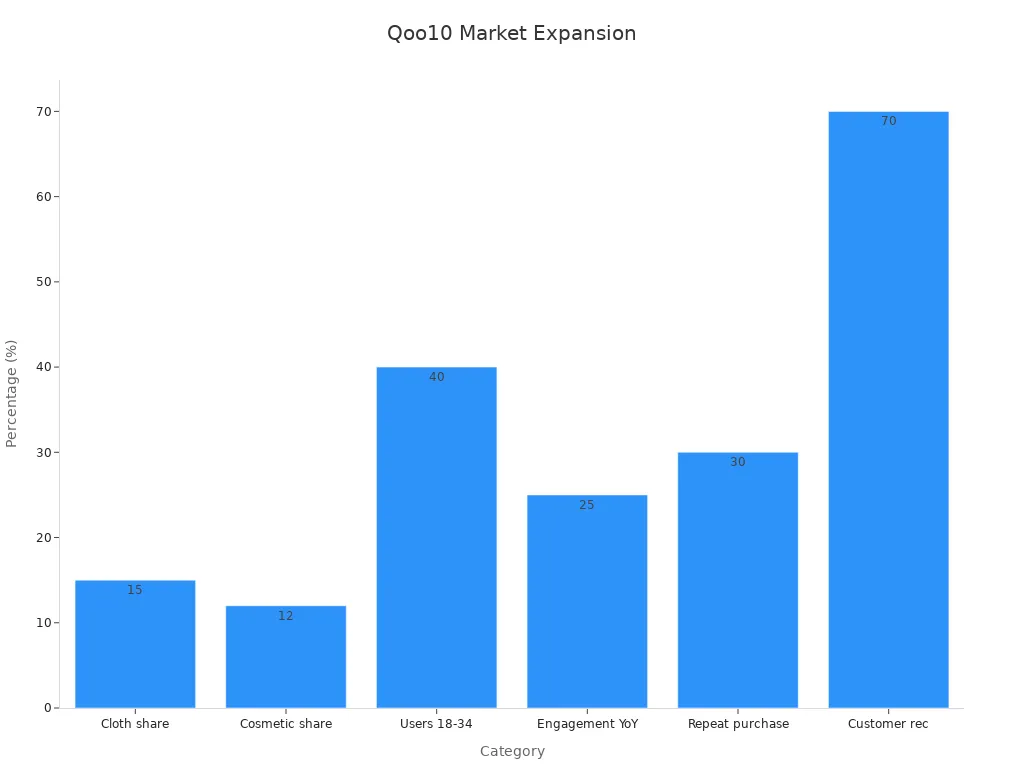
Qoo10's growth trajectory was further supported by its high customer satisfaction ratings. With an average rating of 4.5 out of 5, the platform earned the trust of its users. Seventy percent of customers expressed a willingness to recommend Qoo10 to others, highlighting the marketplace's strong reputation.
The Fall of Qoo10

Financial Mismanagement and Liquidity Issues
Qoo10's financial troubles began when its aggressive strategies outpaced its ability to manage resources effectively. You might recall how the platform once thrived by empowering sellers, but its liquidity issues painted a starkly different picture.
-
The company defaulted on payments to merchants, leaving a staggering $152 million unpaid.
-
South Korean subsidiaries, including TMON and WeMakePrice, failed to disburse funds in mid-2024, sparking widespread complaints.
-
Investigations by South Korean authorities revealed the extent of Qoo10's financial instability.
These liquidity problems stemmed from overextending its resources during rapid expansion. When payments to merchants were delayed, trust eroded, and Qoo10's reputation suffered. You can see how financial mismanagement can quickly turn a thriving business into a failed startup.
Over-Aggressive Acquisitions and Expansion
Qoo10's acquisition strategy aimed to dominate the market, but it ultimately backfired. The platform acquired TMON, WeMakePrice, and Wish, hoping to strengthen its position. While these acquisitions initially seemed promising, they strained Qoo10's financial stability.
-
Funds from TMON and WeMakePrice were misallocated to acquire Wish, creating operational instability.
-
Delayed payments to merchants surfaced in July 2024, further damaging the company's credibility.
-
The CEO admitted that these missteps led to a loss of trust among stakeholders.
You can learn from Qoo10's mistakes by understanding the risks of over-aggressive expansion. Acquisitions should align with a company's long-term strategy and financial capacity. When businesses prioritize growth over sustainability, they risk becoming a failed startup.
Failure to Adapt to Market Trends
The rise of big competitors like Shopee and Lazada exposed Qoo10's inability to adapt to changing market dynamics. As consumer preferences shifted, Qoo10 struggled to keep up. You might notice how the platform once thrived on niche offerings, but its failure to innovate left it vulnerable.
-
Competitors introduced advanced AI-driven personalization, enhancing customer experience.
-
Qoo10's logistics network, once a strength, fell behind in speed and reliability.
-
The platform failed to capitalize on emerging trends like live-stream shopping and social commerce.
When you look at Qoo10's rise and fall, the lesson becomes clear: staying ahead in e-commerce requires constant innovation. Businesses that fail to adapt risk losing their market share to more agile competitors.
Lessons from Qoo10's Rise and Fall
Balancing Ambition with Sustainable Growth
You can learn from Qoo10's story that ambition without sustainability leads to failure. The platform's rapid expansion and acquisitions showed its desire to dominate the e-commerce market. However, this aggressive approach strained its resources and damaged its reputation. When you aim for growth, you must ensure your operations can handle the increased demand. A sustainable strategy involves scaling at a pace that aligns with your financial and operational capacity. This balance helps you maintain trust with customers and stakeholders.
Adapting to Consumer Behavior and Market Changes
The evolution of the e-commerce market highlights the importance of adapting to consumer behavior. Qoo10 failed to keep up with trends like mobile shopping and social commerce, which competitors embraced. You can see how these trends shape the industry by looking at the following data:
|
Statistic/Trend |
Description |
|
Rise of Mobile Commerce |
Over 70% of online purchases expected to occur on mobile devices by 2025. |
|
Influence of Social Media |
Social commerce sales projected to reach $2.9 trillion by 2026, highlighting social media's role. |
|
Importance of Personalized Marketing |
80% of consumers say personalized experiences significantly influence brand loyalty. |
To stay competitive, you must prioritize innovation and align your offerings with customer preferences. This approach not only attracts new customers but also strengthens their loyalty.
Financial Discipline in Scaling E-commerce Operations
Qoo10's financial mismanagement serves as a cautionary tale. The platform's liquidity issues and unpaid merchant payments eroded trust and led to its downfall. Maintaining fiscal discipline is essential when scaling your e-commerce business. Consider the financial performance of successful companies:
|
Company |
Revenue (2023) |
Year-over-Year Growth |
GMV (2023) |
Operating Income Growth |
Free Cash Flow Change |
|
eBay |
$10.1 billion |
3% |
$73.2 billion |
N/A |
N/A |
|
Amazon |
$575 billion |
12% |
N/A |
201% |
$48.3 billion |
These numbers show how disciplined financial management supports sustainable growth. You must allocate resources wisely and avoid overextending your capabilities. This approach builds trust with stakeholders and ensures long-term success.
Actionable Insights for E-commerce in 2025
Leveraging Technology for Competitive Advantage
You can gain a competitive edge in e-commerce by adopting cutting-edge technologies. Innovations like AI-driven personalization, seamless checkout systems, and mobile-first strategies are transforming online shopping experiences. These tools not only streamline operations but also enhance customer satisfaction. For example, AI can analyze purchasing patterns to recommend products tailored to individual preferences, increasing sales and loyalty.
-
According to a PwC study, 86% of buyers are willing to pay more for exceptional customer experiences.
-
eMarketer projects global e-commerce sales to reach $6.3 trillion by 2024, driven by technological advancements.
-
Retailers leading in technology adoption achieve 2.5 times higher revenue growth compared to competitors, as highlighted by Accenture.
Investing in technology is no longer optional. It’s essential for staying ahead of the competition and creating sustainable business models.
Enhancing Customer Experience as a Priority
Customer experience is the cornerstone of success in e-commerce. You can measure and improve it using tools like Net Promoter Score (NPS), Customer Satisfaction Score (CSAT), and Customer Effort Score (CES). These metrics provide insights into customer loyalty, satisfaction, and ease of interaction.
|
Metric |
Description |
|
Net Promoter Score (NPS) |
Measures customer loyalty and likelihood to recommend a product or service. |
|
Customer Satisfaction Score (CSAT) |
Assesses customer satisfaction at a specific moment, typically through surveys. |
|
Customer Effort Score (CES) |
Evaluates the ease of customer interaction and resolution of issues. |
Adopting AI-powered tools can help you analyze real-time data and proactively address customer needs. This approach ensures that your business remains responsive and builds lasting relationships with customers.
Building Resilient and Scalable Business Models
Resilience and scalability are vital for navigating the dynamic e-commerce landscape. You can build a robust business by incorporating decentralized decision-making, redundancy in key roles, and modular organizational designs. These strategies ensure that disruptions in one area don’t cripple your operations.
-
Empower employees at all levels to make decisions for greater agility.
-
Foster diversity in skills and perspectives to enhance adaptability.
-
Design modular systems to isolate disruptions and maintain functionality.
-
Create processes that evolve with market demands.
-
Establish efficient communication channels to ensure smooth information flow.
Measuring growth effectively is equally important. Growth metrics act as a compass, guiding your business toward long-term success. They provide insights into scalability and operational health, helping you make informed decisions.
Identifying and Seizing Emerging Market Opportunities
Emerging markets offer exciting opportunities for growth if you know how to identify and act on them. By analyzing trends and customer behavior, you can uncover untapped segments that align with your business goals. For example, studying how consumers shop online can reveal new product categories or services that meet their needs. Spotting these trends early positions your business for success in dynamic markets.
To seize these opportunities, you need a structured approach. Market research plays a key role in uncovering potential avenues for expansion. Here are three steps you can take:
-
Conduct surveys and interviews to understand consumer preferences and pain points.
-
Analyze competitor strategies to identify gaps in the market.
-
Use market segmentation to target specific demographics effectively.
|
Technique |
Purpose |
|
Surveys and Interviews |
Yield qualitative data highlighting consumer preferences and pain points. |
|
Competitor Analysis |
Provides insights into market positioning and identifies gaps for new products or services. |
|
Market Segmentation |
Helps target different demographics effectively, aligning marketing strategies with behavior. |
You can also leverage data to make informed decisions. For instance, tracking customer behavior helps you identify trends like increased demand for sustainable products or mobile-first shopping experiences. Research shows that businesses using these insights grow faster and adapt better to market changes.
Emerging markets often require agility. You must act quickly to capture opportunities before competitors do. Focus on building flexible strategies that allow you to pivot as new trends emerge. In the fast-paced world of e-commerce, staying ahead means continuously monitoring market shifts and aligning your offerings with consumer needs.
Qoo10's journey offers a compelling narrative of ambition and caution. Its rise stemmed from a vibrant marketplace and innovative strategies, but its fall highlighted the dangers of financial mismanagement and failure to adapt. You can see this pattern reflected in the broader e-commerce landscape:
|
Metric |
Description |
|
Peak Popularity |
Qoo10 was a household name in e-commerce, known for its vibrant marketplace. |
|
Competitive Landscape |
Faced competition from major players like Lazada and Shopee with significant resources. |
|
Consumer Expectations |
Shifted towards instant gratification and seamless mobile experiences. |
|
Market Evolution |
Consolidation led to a few dominant players controlling the market. |
Comparing Qoo10 to competitors like Shopee and Lazada reveals the importance of scalability and customer-centric innovation.
Qoo10's story underscores the need for financial discipline, adaptability, and a focus on customer experience. As you navigate the future of e-commerce, these lessons remain invaluable.
FAQ
What caused Qoo10’s downfall?
Qoo10’s downfall resulted from financial mismanagement, over-aggressive acquisitions, and failure to adapt to market trends. Liquidity issues and delayed payments eroded trust among merchants and customers. Competitors like Shopee and Lazada capitalized on emerging trends, leaving Qoo10 behind.
How can e-commerce businesses avoid Qoo10’s mistakes?
You can avoid similar mistakes by prioritizing financial discipline, adapting to consumer behavior, and scaling operations sustainably. Focus on innovation and customer experience to stay competitive. Use data-driven strategies to identify emerging trends and align your offerings with market demands.
What lessons does Qoo10’s story offer for startups?
Qoo10’s story teaches you to balance ambition with sustainability. Rapid growth without proper planning can lead to failure. Financial discipline, adaptability, and customer-centric strategies are essential for long-term success. Learn from Qoo10’s missteps to build a resilient business model.
Why is adapting to market trends important in e-commerce?
Adapting to trends helps you stay relevant and competitive. Consumer preferences evolve quickly, and businesses that fail to innovate risk losing market share. For example, trends like mobile shopping and social commerce have reshaped the industry. Staying ahead ensures growth and customer loyalty.
How can technology improve e-commerce operations?
Technology enhances efficiency and customer satisfaction. AI-driven personalization, seamless checkout systems, and mobile-first strategies streamline operations and boost sales. For instance, AI can recommend products based on purchasing patterns, increasing customer loyalty and revenue.
Related content