
Spot vs Forward Exchange Rate Simplified
Author:XTransfer2025.12.04Spot Exchange Rate
When exchanging currencies, timing plays a critical role. The spot exchange rate represents the current exchange rate for immediate transactions. In contrast, the forward exchange rate sets a predetermined price for a future transaction. These rates often differ due to market expectations. For instance:
-
A forward rate higher than the current spot rate signals anticipated currency appreciation, which may reduce exports for the appreciating currency's country.
-
A lower forward rate suggests expected depreciation, potentially boosting exports for the depreciating currency's nation.
Market factors, such as rising LIBOR rates or swap rates, also influence these differences. Understanding this helps you navigate currency markets more effectively.
Understanding the Spot Exchange Rate
What Is a Spot Exchange Rate?
A spot exchange rate is the current price at which one currency can be exchanged for another. It reflects the real-time value of currencies in the foreign exchange market. This rate is used for immediate currency exchange, where transactions are settled quickly, typically within two business days. For example, if you want to exchange USD for EUR today, the spot exchange rate determines how much EUR you will receive for your USD.
|
Definition/Statistic |
Description |
|---|---|
|
Spot Exchange Rate |
The current price at which one currency can be exchanged for another at a specific time. |
|
Settlement Date |
Most transactions settle two business days after the transaction date, except for pairs like USD/CAD, which settle the next business day. |
How Is the Spot Rate Determined?
The spot rate is influenced by several factors that reflect the economic and political environment. These include:
-
Inflation differentials: Higher inflation in a country often weakens its currency.
-
Interest rates: Higher interest rates attract foreign investments, strengthening the currency.
-
Political stability: Stable governments encourage investor confidence, boosting the currency's value.
-
Terms of trade: A country with favorable trade terms often sees its currency appreciate.
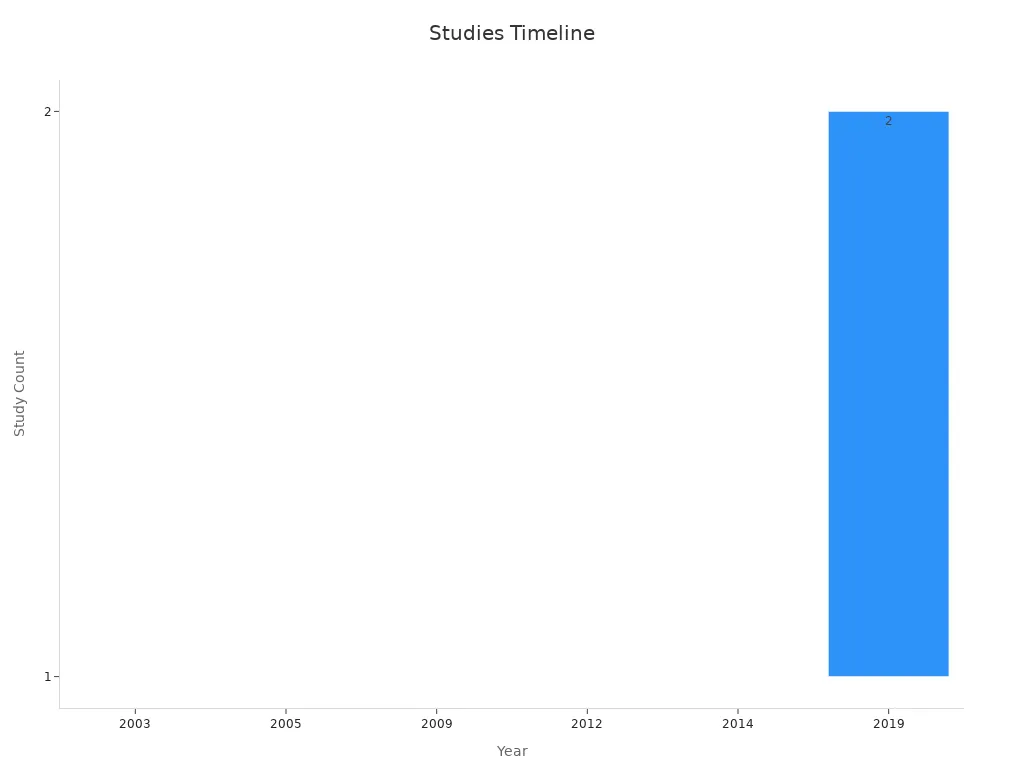
These factors interact dynamically, causing the spot rate to fluctuate throughout the day. Research studies, such as those by Amélie Charles and Olivier Darné, have analyzed the random walk behavior of spot exchange rates, highlighting their unpredictable nature.
Common Uses of Spot Rates in Currency Exchange
Spot rates play a vital role in currency exchange. Businesses use them for immediate transactions, such as paying international suppliers or converting foreign earnings. Travelers rely on spot rates to exchange money for trips abroad. Additionally, financial institutions use spot rates to execute trades in the forex market. These rates provide a transparent and efficient way to facilitate global trade and finance.
Understanding the Forward Exchange Rate
What Is a Forward Exchange Rate?
A forward exchange rate is the agreed-upon price for exchanging one currency for another at a future date. Unlike the spot rate, which reflects the current market price, the forward rate locks in a specific value for a transaction that will occur later. For example:
-
Current spot exchange rate: 1.2730 $/.
-
Six-month forward exchange rate: 1.3000 $/.
This type of agreement, known as a forward contract, helps businesses and investors manage risks associated with currency exchange fluctuations. By securing a forward price, you can protect yourself from potential losses caused by unfavorable market movements.
How Is the Forward Rate Determined?
The forward rate is calculated using a parity relationship that connects the spot exchange rate with the interest rate differentials between two countries. This relationship ensures economic equilibrium in the foreign exchange market. When interest rates differ, the forward rate adjusts to reflect these differences, either as a premium or a discount.
For instance, if the interest rate in Country A is higher than in Country B, the forward rate for Country A's currency will likely show a discount compared to the spot rate. Researchers like Jeffrey Frankel and Kenneth Froot have studied forward rates and found that they often act as biased predictors of future spot rates. This bias stems from market participants' expectations rather than an exchange risk premium.
Practical Applications of Forward Rates in Finance
Forward rates play a crucial role in financial planning and risk management. Here are some common applications:
|
Application Type |
Description |
|---|---|
|
Economic Expectations |
Forward rates reflect market sentiment and macroeconomic forecasts, indicating anticipated economic cycles. |
|
Hedging and Risk Management |
Institutions utilize forward rates to create strategies that reduce exposure to future interest rate changes. |
|
Investment Strategy |
Variations in forward rates can indicate shifts in risk appetite, prompting changes in asset allocation and portfolio management. |
By using a forward rate agreement, you can hedge against currency risks, stabilize cash flows, and make informed investment decisions. These strategies are essential for businesses and investors operating in global markets.
Spot Exchange Rate vs Forward Exchange Rate: Key Differences
Timing of Transactions
The timing of transactions is one of the most significant differences between spot and forward exchange rates. Spot rates apply to immediate currency exchanges, where transactions settle within two business days (T+2). For example, if you exchange USD for EUR today, the settlement will typically occur within this timeframe. In contrast, forward rates are used for future-dated transactions. These transactions occur on a specific date agreed upon in a forward contract, which could range from weeks to months ahead.
|
Feature |
Spot Rates |
Forward Rates |
|---|---|---|
|
Settlement Timing |
Immediate (T+2) |
Future-dated as per contract |
|
Exposure to Risk |
High (subject to market changes) |
Lower (locks in a rate for the future) |
Spot rates are ideal for immediate needs, such as paying international suppliers or converting foreign earnings. Forward rates, however, help you plan for future cash flows and protect against currency fluctuations.
Purpose and Use Cases
Spot and forward rates serve different purposes in currency exchange. Spot rates are commonly used for daily trading and immediate settlements. Businesses often rely on spot rates to handle urgent payments or convert foreign currency earnings. Travelers also use spot rates to exchange money for trips abroad.
Forward rates, on the other hand, are designed for hedging and financial planning. By locking in a forward price, you can protect your business from the impact of currency fluctuations. For example, if you expect to pay a supplier in a foreign currency six months from now, a forward contract ensures that you know the exact cost in your local currency. This reduces uncertainty and helps you manage your budget effectively.
|
Usage Scenario |
Spot Rates |
Forward Rates |
|---|---|---|
|
Daily Trading |
Yes |
No |
|
Hedging Risks |
No |
Yes |
|
Future Planning |
No |
Yes |
Forward rates are particularly useful for businesses involved in international trade. They allow you to stabilize cash flows and reduce exposure to market volatility.
Price Determination and Influencing Factors
The way spot and forward rates are determined also highlights their differences. Spot rates are market-driven and fluctuate based on supply and demand. Factors like inflation, interest rates, and political stability play a significant role in determining the spot rate. For example, higher inflation in a country often weakens its currency, while higher interest rates attract foreign investments, strengthening the currency.
Forward rates, however, are derived from the spot rate and interest rate differentials between two countries. This relationship, known as interest rate parity (IRP), ensures that no arbitrage opportunities exist in the foreign exchange market. Forward rates may also reflect market sentiment and macroeconomic forecasts, making them more complex than spot rates.
|
Evidence Type |
Description |
|---|---|
|
Complexity of Rates |
Forward rates exhibit a more complex structure compared to spot rates. |
|
Volatility Structure |
Forward rates show intricate relationships between rate movements and their volatility. |
|
Factor Models |
Traditional models may not fully capture forward rate dynamics, requiring advanced approaches. |
Several statistical analyses illustrate the factors influencing both rates:
-
Purchasing Power Parity (PPP): Exchange rates adjust so that identical goods cost the same in different economies.
-
Interest Rate Parity (IRP): Exchange rates relate to interest rate differentials, ensuring no arbitrage opportunities.
-
Economic Indicators: Inflation rates, GDP, and trade balances significantly impact currency values.
-
Market Sentiment: Investor behavior and speculative trading can lead to rapid changes in exchange rates.
Understanding these factors helps you make informed decisions when dealing with spot or forward rates. Whether you need immediate currency exchange or want to hedge against future risks, knowing how these rates are determined is essential.
Volatility and Risk Management
Volatility plays a significant role in currency exchange. Spot rates often experience rapid fluctuations due to market dynamics. These changes occur because of factors like economic news, geopolitical events, and shifts in investor sentiment. For example, if a country announces higher-than-expected inflation, its currency may weaken immediately, causing the spot rate to drop. You must stay alert to these changes when dealing with immediate currency exchange.
Forward rates, on the other hand, offer stability. By locking in a rate through a forward contract, you can shield yourself from unexpected currency fluctuations. This makes forward rates a valuable tool for risk management. Imagine you need to pay a supplier in six months. If the spot rate changes unfavorably during this period, your costs could increase. A forward contract eliminates this uncertainty by securing a fixed rate for the future transaction.
|
Feature |
Spot Rates |
Forward Rates |
|---|---|---|
|
Volatility |
High, subject to market changes |
Low, provides stability |
|
Risk Exposure |
Greater risk due to unpredictability |
Reduced risk through fixed rates |
To manage risk effectively, you should assess your financial needs and choose the appropriate rate type. Spot rates are ideal for immediate transactions, but forward rates help you plan ahead and avoid surprises.
Example Comparison of Spot and Forward Rates
Understanding the differences between spot and forward rates becomes clearer with examples. Consider the following comparison:
|
Rate Type |
Currency Pair |
Rate |
Description |
|---|---|---|---|
|
Spot Rate |
USD/EUR |
1.20 |
The current exchange rate for immediate transactions, e.g., exchanging USD for EUR. |
|
Forward Rate |
USD/EUR |
1.18 |
The agreed exchange rate for a future transaction, protecting against currency fluctuations. |
In this example, the spot rate for USD/EUR is 1.20, meaning you would receive 1.20 EUR for every USD exchanged immediately. The forward rate, however, is slightly lower at 1.18. This difference reflects market expectations and interest rate differentials. If you anticipate needing EUR in six months, the forward rate allows you to lock in a price now, avoiding potential losses if the spot rate drops.
You can use this comparison to decide which rate suits your needs. Spot rates work well for urgent transactions, while forward rates provide security for future planning. By understanding these examples, you can make informed decisions and optimize your currency exchange strategy.
Why Understanding Exchange Rates Is Important
Impact on International Trade and Business
Exchange rates play a pivotal role in shaping international trade and business operations. They directly influence the cost of goods and services traded across borders. For instance, when a currency depreciates, exports from that country become cheaper for foreign buyers, potentially boosting demand. Conversely, currency appreciation can make exports more expensive, reducing competitiveness in global markets.
The impact of exchange rates varies across industries. Some sectors, such as manufacturing and agriculture, are more sensitive to currency fluctuations due to their reliance on global supply chains and export markets. The table below highlights key factors that demonstrate how exchange rates affect trade and business:
|
Key Factors |
Description |
|---|---|
|
Effect of Exchange Rates |
Changes in foreign currency exchange rates can influence the prices of goods in domestic markets and traded goods. |
|
Industry Responsiveness |
The analysis examines which industries are most affected by exchange rate changes based on consumption and production distribution. |
Real-world examples further illustrate this impact. Hong Kong's fixed exchange rate mechanism has fostered investor confidence, transforming it into a global financial hub. On the other hand, Argentina's fixed currency peg initially stabilized its economy but eventually led to a financial crisis due to market pressures:
|
Country |
Exchange Rate Mechanism |
Impact on Trade and Economy |
|---|---|---|
|
Hong Kong |
Fixed (Currency Peg) |
Fostered investor confidence, became a global financial hub, maintained economic stability. |
|
Argentina |
Fixed (Currency Peg) |
Initially stabilized economy but led to a financial crisis due to market pressures. |
Understanding these dynamics helps you anticipate how exchange rate movements can affect your business, enabling you to adapt strategies for global trade.
Role in Financial Planning and Risk Mitigation
Exchange rates are crucial for financial planning and managing foreign exchange risk. Currency fluctuations can significantly impact your business's profitability, especially if you operate internationally. By understanding exchange rates, you can develop strategies to protect your finances from adverse market movements.
Experts recommend several approaches to mitigate risks associated with currency exchange:
-
Financial managers must balance hedging costs against potential losses from adverse currency movements.
-
Regular reassessment of currency exposure levels is crucial.
-
Employing robust stress testing under varied market conditions is recommended.
-
Strategic use of derivatives for risk mitigation is emphasized by industry leaders.
Real-world examples highlight the importance of these strategies. A global manufacturing giant minimized exposure during euro depreciation by implementing forward contracts and diversifying its currency portfolio. Similarly, a tech multinational optimized its treasury operations by using real-time analytics to adjust hedging ratios dynamically. These actions demonstrate how proactive financial planning can safeguard your business from currency volatility.
Forward contracts, in particular, are valuable tools for managing foreign exchange risk. By locking in a forward rate, you can stabilize cash flows and protect your business from unexpected currency fluctuations. This approach ensures that you maintain control over your financial outcomes, even in unpredictable markets.
How Xtransfer Simplifies Currency Exchange for Businesses
Navigating the complexities of currency exchange can be challenging, especially when dealing with spot and forward rates. Xtransfer simplifies this process by providing reliable tools and real-time data to help you make informed decisions. Whether you need to access the spot rate for immediate transactions or secure a forward rate for future planning, Xtransfer offers a seamless solution.
The platform allows you to monitor real-time foreign currency exchange rates, ensuring transparency and accuracy. This feature is particularly beneficial for businesses engaged in international trade, as it enables you to respond quickly to market changes. Additionally, Xtransfer's user-friendly interface makes it easy to execute transactions and manage your currency exchange needs efficiently.
By leveraging Xtransfer, you can reduce the complexities of dealing with spot and forward rates. The platform empowers you to focus on growing your business while ensuring that your currency exchange operations remain smooth and cost-effective.
Spot exchange rates allow you to complete immediate currency exchange transactions, while forward exchange rates help you plan for future exchanges. Each serves a unique purpose in managing international trade and finance. By understanding these rates, you can make smarter decisions and reduce risks tied to currency fluctuations. Platforms like Xtransfer simplify this process, offering tools to navigate spot and forward rates with ease. This empowers you to focus on growing your business while handling currency exchange efficiently.
FAQ
What is the main difference between spot and forward exchange rates?
Spot rates apply to immediate currency exchanges, while forward rates are for transactions set at a future date. Spot rates reflect current market prices, whereas forward rates lock in a predetermined price for future planning.
Why do businesses use forward exchange rates?
Forward rates help businesses manage risks from currency fluctuations. By locking in a rate, you can stabilize costs for future transactions, ensuring predictable cash flows and reducing uncertainty in financial planning.
How are spot rates determined?
Spot rates depend on supply and demand in the forex market. Factors like inflation, interest rates, and political stability influence these rates. They change frequently based on real-time economic conditions.
Can individuals use forward exchange rates?
Yes, individuals can use forward rates for large transactions, such as property purchases abroad. Forward contracts provide protection against unfavorable currency changes, ensuring you know the exact cost in your local currency.
How does Xtransfer help with currency exchange?
Xtransfer provides real-time exchange rate data and tools for managing spot and forward transactions. It simplifies the process, helping you make informed decisions and handle currency exchanges efficiently.
Related content