
Settle in Global Payment Key Facts and Insights
Author:XTransfer2025.09.01settle in global payment
Settle in global payment refers to the process of completing financial transactions between parties in different countries. It ensures that payments are transferred securely and accurately, enabling smooth international trade. Efficient payment settlement is critical for businesses, as it reduces costs, enhances cash flow, and builds trust with global partners. For example, digital payments can save $4 to $20 per transaction by eliminating manual processes. Xtransfer, with its advanced technology and global reach, empowers SMEs to settle in global payment effortlessly. Its multi-currency capabilities, AI-driven compliance, and partnerships with major banks make it a trusted solution.
What Is Payment Settlement?
Definition and Purpose
Payment settlement refers to the process of completing a financial transaction by transferring funds from the payer to the payee. This process ensures that both parties fulfill their obligations, creating trust and reliability in financial exchanges. It involves several steps, including authorizing the payment, transmitting the details, clearing the transaction, transferring the funds, and reconciling the accounts. Without this structured process, international trade would face delays, errors, and financial risks.
The global payment settlement market highlights its importance. In 2023, it was valued at over $1 trillion, reflecting its critical role in maintaining financial stability and operational efficiency. As digital payments grow, the total transaction value in this market is expected to reach $20.09 trillion by 2025, with a projected annual growth rate of 13.63% through 2030. These figures underscore the increasing reliance on efficient payment settlement systems to support global commerce.
Key Stakeholders in the Payment Settlement Process
Several key players ensure the smooth functioning of the payment settlement process. Each stakeholder plays a unique role in facilitating secure and accurate transactions:
-
Payers and Payees: These are the individuals or businesses initiating and receiving the payment. Their trust in the system is essential for successful settlements.
-
Banks and Financial Institutions: They act as intermediaries, processing payments, clearing transactions, and transferring funds between accounts.
-
Payment Processors: These entities handle the technical aspects of payment processing, ensuring that transactions are authorized and completed efficiently.
-
Regulatory Bodies: They oversee compliance with financial laws and regulations, safeguarding against fraud and ensuring transparency.
This collaborative effort ensures that every transaction is completed accurately and securely, fostering confidence in the global payment ecosystem.
Importance of Payment Settlement in Global Trade
Payment settlement is the backbone of international trade. It ensures that businesses can exchange goods and services without worrying about financial discrepancies. A well-functioning settlement system reduces risks, enhances cash flow, and builds trust between trading partners.
In times of financial uncertainty, secure payment methods like letters of credit (LC) have proven invaluable. Studies show that LCs provided effective protection during financial crises, limiting the collapse of international trade. They also highlight the importance of risk management in payment choices, emphasizing how structured settlement processes safeguard businesses from potential losses.
Efficient payment settlement systems also drive economic growth. By reducing delays and errors, they enable businesses to focus on expanding their operations. As global trade continues to grow, the demand for reliable settlement solutions will only increase, making it a vital component of the international economy.
Types of Payment Settlements
Gross Settlement vs. Net Settlement
Gross settlement and net settlement represent two distinct approaches to processing payments. Gross settlement involves the immediate transfer of funds for each transaction. This method ensures that payments are settled individually, reducing credit risk but requiring higher liquidity. On the other hand, net settlement consolidates multiple transactions into a single payment, optimizing liquidity but introducing potential systemic risks.
A study highlights the impact of transaction volumes in gross settlement systems on liquidity prices and credit risk spreads in money markets. While net settlement systems are more efficient in liquidity use, gross settlement systems play a crucial role in influencing daily liquidity conditions. Understanding these differences helps you choose the right approach based on your business needs and risk tolerance.
Issuer, Merchant, and Scheme Settlements
The roles of issuers, merchants, and payment networks are central to the credit card payment settlement process. When a customer initiates a payment, the transaction flows through several stages:
-
The customer swipes their card and authenticates the payment.
-
The merchant sends the transaction to the acquiring bank.
-
The acquiring bank processes the payment through the payment network.
-
The issuing bank authorizes the transaction and debits the customer’s account.
-
The payment is settled to the acquiring bank, minus an interchange fee.
-
The acquiring bank pays the merchant, minus a merchant discount fee.
The table below summarizes the roles of key stakeholders in this process:
|
Role |
Description |
|
Issuer |
The bank that issues credit or debit cards to consumers and works with payment networks. |
|
Merchant |
A business that accepts card payments in exchange for goods or services. |
|
Acquirer |
The bank that provides merchants with tools to accept card payments and processes these transactions. |
|
Payment Network |
The system that facilitates card-based payments and sets rules for transactions, such as interchange fees. |
This collaborative effort ensures a seamless merchant settlement process, fostering trust and reliability in global payment systems.
Xtransfer’s Role in Simplifying Payment Settlement Types
Xtransfer simplifies the complexities of various types of payment settlement for SMEs. Its platform supports both gross and net settlement systems, allowing you to choose the method that aligns with your business goals. By leveraging advanced technology, Xtransfer streamlines the payment gateway settlement process, ensuring faster and more secure transactions.
With its AI-driven compliance tools and partnerships with major banks, Xtransfer enhances the merchant settlement process by reducing delays and minimizing risks. Whether you’re managing credit card payment settlement or cross-border transactions, Xtransfer provides a reliable solution tailored to your needs.
How the Payment Settlement Process Works

Authorization and Capture
Authorization and capture are the first steps in the payment settlement process. During authorization, the system verifies the payer's account details and ensures sufficient funds are available. This step prevents failed transactions and builds trust between the payer and payee. Once authorized, the capture phase holds the funds temporarily until they are ready for settlement. These steps ensure that payments are processed securely and efficiently.
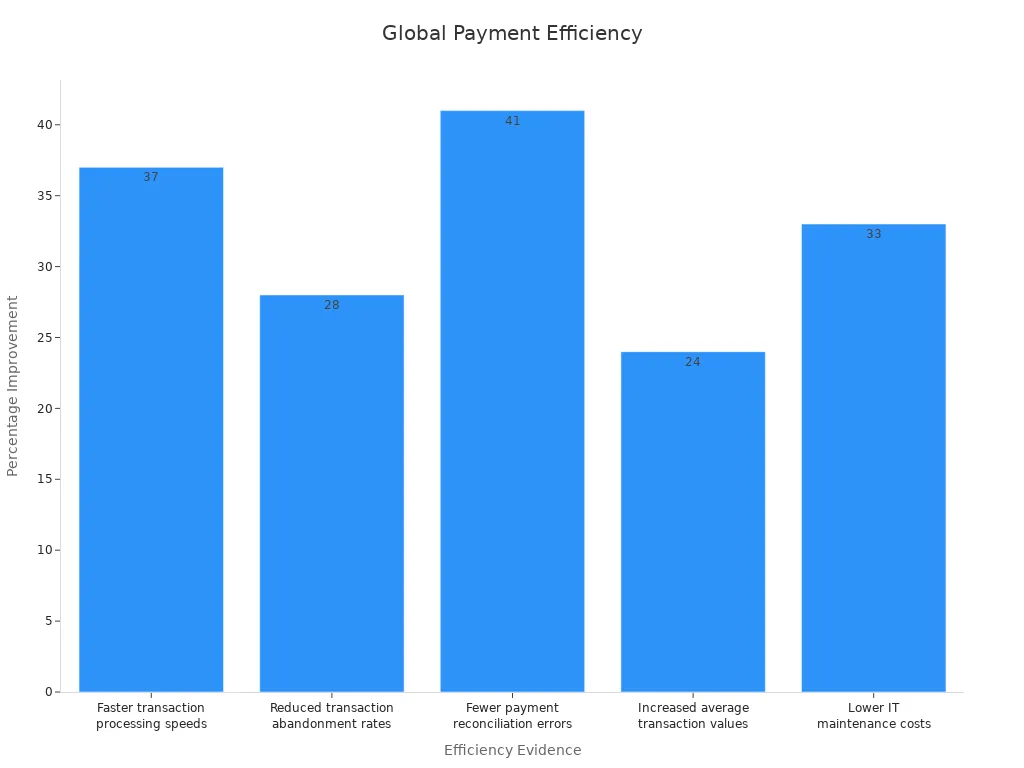
The efficiency of authorization and capture mechanisms has significantly improved in recent years. For example, Mastercard reported that transaction processing speeds are now 37% faster, while e-commerce platforms have seen a 28% reduction in transaction abandonment rates. Additionally, reconciliation errors have decreased by 41%, and average transaction values have increased by 24%. These advancements highlight the importance of robust authorization and capture systems in global payment processing.
Clearing and Fund Transfer
Clearing and fund transfer are critical stages where the actual movement of money begins. Clearing involves the exchange of payment information between banks or financial institutions. This step ensures that all transaction details are accurate and ready for settlement. Fund transfer follows, where the money moves from the payer's account to the payee's account.
Different banking networks have varying timelines for clearing and settlement. For instance:
|
Banking Network |
Clearing Time |
Settlement Time |
Notes |
|
Fedwire |
Minutes |
Real-time |
Best for time-sensitive payments |
|
CHIPS |
Minutes |
End of day |
More cost-effective for non-urgent payments |
|
SWIFT |
N/A |
N/A |
Messaging system, not a clearing network |
These timelines demonstrate how the choice of network can impact the speed and efficiency of the payment settlement process. For businesses, selecting the right network ensures timely fund transfers and smooth operations.
Reconciliation and Reporting
Reconciliation and reporting are the final steps in the payment settlement process. Reconciliation involves matching transaction records to ensure accuracy. This step identifies and resolves discrepancies, maintaining financial integrity. Reporting provides a detailed overview of all transactions, helping businesses track their cash flow and comply with regulatory requirements.
Effective reconciliation and reporting systems offer several benefits:
|
Metric |
Description |
|
Accuracy Rates |
Measures the percentage of correctly matched transactions against the total volume. |
|
Time Efficiency |
Gauges the time taken to identify and rectify discrepancies, enhancing operational efficiency. |
|
Exception Handling |
Reflects the ability to manage exceptions, with a low percentage indicating a streamlined process. |
|
Automated Matching Percentage |
Indicates the efficiency of reconciliation software by measuring transactions matched without human intervention. |
|
Financial Integrity |
Ensures financial records accurately reflect the true state of affairs, facilitating better decision-making. |
|
Compliance Assurance |
Aligns financial records with regulatory requirements, reducing the risk of penalties and legal issues. |
These metrics highlight the importance of advanced reconciliation tools in the payment settlement process. By automating matching and exception handling, businesses can save time and reduce errors. This ensures that financial records remain accurate and compliant with global standards.
Overcoming Challenges in the Payment Settlement Process
The payment settlement process often faces obstacles that can disrupt smooth transactions. Understanding these challenges and how to address them is essential for ensuring efficient operations in global trade.
Cybersecurity Concerns
Cybersecurity threats remain one of the most significant challenges in payment settlement. Hackers target sensitive financial data, putting businesses and consumers at risk. You can mitigate these risks by adopting advanced technologies like Central Bank Digital Currencies (CBDCs). These digital currencies enhance security by using blockchain technology, which ensures transparency and reduces the chances of fraud.
Global Compliance Issues
Navigating compliance requirements across different countries can be complex. Each region has unique regulations, making it difficult to maintain consistency in payment settlement. Innovations in cross-border payments, such as AI-driven compliance tools, simplify this process. For example, platforms like Xtransfer use AI to monitor transactions and ensure adherence to global standards, reducing the burden on businesses.
Consumer Skepticism
Many consumers hesitate to trust digital payment systems due to concerns about privacy and reliability. Decentralized finance (DeFi) solutions address this issue by offering greater transparency and control over financial transactions. These systems operate on public ledgers, allowing users to verify transactions independently and build trust in the process.
Business Reluctance
Some businesses resist adopting modern payment settlement methods due to perceived complexity or cost. Faster payment networks can overcome this reluctance by offering quick and cost-effective solutions. These networks streamline the transaction process, reducing delays and improving cash flow for businesses.
The table below summarizes these challenges and their solutions:
|
Challenge |
Method of Overcoming |
|
Cybersecurity concerns |
Adoption of Central Bank Digital Currencies |
|
Global compliance issues |
Innovations in cross-border payments |
|
Consumer skepticism |
Use of decentralized finance (DeFi) solutions |
|
Business reluctance |
Implementation of faster payment networks |
By addressing these challenges, you can ensure a smoother payment settlement process. Leveraging advanced technologies and innovative solutions not only enhances efficiency but also builds trust in global financial systems.
Settlement Timings and Compliance
Same-Day and Next-Day Settlement Cycles
Settlement cycles determine how quickly payments are finalized. Same-day settlement ensures transactions are completed within 24 hours, offering faster access to funds. Next-day settlement, on the other hand, processes payments by the end of the following business day. These cycles play a crucial role in maintaining cash flow and reducing financial risks.
For businesses, same-day settlement provides immediate liquidity, which is essential for urgent payments. Next-day settlement offers a balance between speed and cost, making it suitable for routine transactions. Choosing the right cycle depends on your operational needs and the urgency of your payment requirements.
Factors Influencing Settlement Timelines
Several factors affect how quickly payments are settled. The type of payment system used is a major determinant. Real-time systems like Fedwire process transactions instantly, while batch systems like CHIPS settle payments at the end of the day.
Geographical differences also impact timelines. Cross-border transactions often take longer due to varying banking regulations and time zones. Additionally, the complexity of the payment method, such as gross or net settlement, can influence the speed of processing.
Your choice of payment provider matters too. Reliable platforms like Xtransfer optimize settlement timelines by leveraging advanced technology and partnerships with major banks. This ensures faster and more secure transactions, even for cross-border payments.
Regulatory Adherence and Fraud Prevention
Compliance considerations around payment settlements are vital for avoiding penalties and ensuring smooth operations. Regulatory adherence involves following financial laws and standards set by governing bodies. Fraud prevention focuses on safeguarding transactions from cyber threats and unauthorized access.
A fragmented regulatory landscape, especially in Asian markets, complicates compliance. Research shows that settlement failures amount to trillions of dollars annually, emphasizing the financial risks of non-compliance. Transitioning to faster cycles like T+1 increases trade failures, highlighting the need for robust compliance measures.
Platforms like Xtransfer address these challenges by using AI-driven tools for monitoring transactions. These tools ensure adherence to global standards and reduce fraud risks, helping you maintain trust and reliability in payment settlements.
Xtransfer’s Commitment to Timely and Compliant Settlements
Xtransfer stands out as a trusted partner for businesses seeking efficient and secure payment settlements. Its commitment to timely and compliant transactions ensures that your business operates smoothly in the global marketplace.
Advanced Technology for Speed and Accuracy
Xtransfer leverages cutting-edge technology to optimize settlement timelines. Its platform processes payments in real-time, reducing delays and ensuring funds reach their destination quickly. For example, Xtransfer’s multi-currency accounts allow you to handle over 20 currencies seamlessly. This feature eliminates the need for multiple banking relationships, saving you time and effort.
AI-Driven Compliance Tools
Compliance with global regulations is a cornerstone of Xtransfer’s services. The platform uses AI-powered tools to monitor transactions and detect potential risks. These tools ensure that your payments adhere to anti-money laundering (AML) standards and other regulatory requirements. By automating compliance checks, Xtransfer minimizes errors and reduces the risk of penalties.
Strong Banking Partnerships
Xtransfer collaborates with leading financial institutions like JPMorgan, Deutsche Bank, and DBS. These partnerships enhance the reliability of its services, providing you with access to secure and efficient payment networks. Whether you’re managing cross-border transactions or local payments, Xtransfer’s network ensures smooth operations.
|
Feature |
Benefit |
|
Real-Time Processing |
Faster settlements and improved cash flow |
|
AI-Driven Compliance |
Reduced risk of fraud and regulatory penalties |
|
Global Banking Partners |
Secure and reliable payment networks |
Xtransfer’s dedication to timely and compliant settlements empowers your business to thrive in international trade. By choosing Xtransfer, you gain a partner that prioritizes your success.
Best Practices for Efficient Payment Settlement

Leveraging Technology for Real-Time Processing
Technology plays a vital role in ensuring efficient payment settlement. Real-time processing allows you to complete transactions instantly, reducing delays and improving cash flow. Automated payment settlement systems streamline operations by eliminating manual intervention, which minimizes errors and enhances accuracy.
Metrics like payment conversion rate help you measure the success of real-time processing. For instance:
-
Payment Conversion Rate: Tracks the percentage of successful transactions, helping identify issues causing declines.
-
Conversion Rate By Bank: Highlights transaction success rates for specific banks, revealing potential fraud rule changes.
-
Conversion Rate By Payment Method And Card Type: Evaluates the performance of different payment methods, guiding checkout design improvements.
By leveraging these metrics, you can optimize your payment processing systems and ensure seamless operations. Real-time processing not only accelerates settlement but also builds trust with your partners.
Ensuring Secure Transactions
Secure transactions are essential for protecting sensitive payment data and maintaining compliance with regulations. Measures like encryption and tokenization mask payment information during transmission, while authentication methods verify identities to prevent unauthorized access. Fraud detection tools, such as Address Verification Service (AVS) and Card Verification Value (CVV), monitor transactions for suspicious activity.
Compliance with regulations further strengthens security. For example:
|
Regulation |
Purpose |
|
FinCEN |
Prevents fraudulent transactions and illicit fund transfers. |
|
FCA |
Ensures fair trading standards and payment integrity. |
|
PCI DSS |
Establishes security guidelines for handling card payment information. |
To enhance secure transactions, you should implement measures that align with local and international laws. Maintaining accurate records and using advanced fraud detection tools ensures transparency and reliability in payment settlement.
Partnering with Reliable Providers like Xtransfer
Collaborating with trusted providers simplifies the complexities of global payment settlement. Xtransfer, for example, offers robust solutions tailored to your needs. Its partnership with TerraPay enables local payments in 136 countries, expanding your reach in international markets.
Xtransfer’s market validation further demonstrates its reliability. A survey by iiMedia Research ranked Xtransfer first among B2B cross-border trade payment platforms, highlighting its leadership in the industry. By choosing Xtransfer, you gain access to secure networks, advanced compliance tools, and efficient payment processing systems.
Reliable partnerships empower you to focus on growing your business while ensuring smooth and secure payment settlement processes.
Regular Monitoring and Reconciliation
Regular monitoring and reconciliation are essential for maintaining accuracy and trust in your payment settlement process. By keeping a close eye on transactions, you can identify discrepancies early and resolve them before they escalate into larger issues. Reconciliation ensures that your financial records match the actual flow of funds, providing a clear picture of your business's cash flow.
Why Monitoring Matters
Monitoring your payment systems helps you detect errors, fraud, or delays in real-time. For example, if a transaction fails during processing, immediate action can prevent further complications. Regular checks also allow you to track key metrics, such as transaction success rates and settlement times. These insights help you optimize your operations and improve customer satisfaction.
Steps for Effective Reconciliation
Reconciliation involves comparing your internal records with bank statements or payment processor reports. Follow these steps to streamline the process:
-
Gather Data: Collect transaction details from all relevant sources, including invoices, receipts, and bank statements.
-
Match Records: Compare each transaction to ensure amounts, dates, and parties align.
-
Investigate Discrepancies: Identify mismatches and determine their cause, such as duplicate entries or processing errors.
-
Update Records: Correct errors and adjust your financial statements to reflect accurate data.
Tools to Simplify the Process
Advanced tools can automate much of the monitoring and reconciliation process. Payment platforms like Xtransfer offer features that match transactions automatically, reducing manual effort. These tools also generate detailed reports, making it easier for you to analyze trends and ensure compliance.
By prioritizing monitoring and reconciliation, you can enhance the reliability of your payment systems and build stronger relationships with your partners.
Understanding the payment settlement process is essential for thriving in global trade. It ensures smooth transactions, reduces errors, and builds trust with partners. Efficient systems offer significant benefits: cost efficiency, enhanced customer experience, and improved data insights. For example:
-
Centralized processes reduce operational expenses.
-
Automation minimizes errors, improving transaction success rates.
Compliance and best practices, such as secure systems and regular monitoring, further enhance reliability. Xtransfer simplifies payment settlements with advanced technology, AI-driven compliance, and strong banking partnerships. By choosing Xtransfer, you gain a trusted partner to navigate global trade confidently.
FAQ
What is the difference between gross and net settlement?
Gross settlement processes each transaction individually, ensuring immediate fund transfer. Net settlement consolidates multiple transactions into one, optimizing liquidity but settling at specific intervals.
How does Xtransfer ensure compliance with global regulations?
Xtransfer uses AI-driven tools to monitor transactions and detect risks. These tools align payments with anti-money laundering (AML) standards and other global regulations, reducing errors and penalties.
Why is reconciliation important in payment settlement?
Reconciliation ensures your financial records match actual transactions. It helps identify errors, resolve discrepancies, and maintain accurate cash flow. Regular reconciliation builds trust with partners and ensures compliance with financial standards.
Can Xtransfer handle multi-currency transactions?
Yes, Xtransfer supports over 20 currencies through its global multi-currency accounts. This feature simplifies cross-border payments and eliminates the need for multiple banking relationships.
How do same-day and next-day settlements benefit businesses?
Same-day settlements provide immediate liquidity, ideal for urgent payments. Next-day settlements balance speed and cost, making them suitable for routine transactions. Both options improve cash flow and reduce financial risks.
Related content