
Merchant Vessel Security Sparks Concerns
Author:XTransfer2025.05.14Merchant Vessel
A recent robbery at Beira Anchorage has sparked concerns over regional maritime security. During the night of the incident, it was reported that unauthorized individuals boarded an M/V (merchant vessel) and stole valuable equipment. This alarming breach underscores weaknesses in safety protocols for merchant vessels. The increasing frequency of such incidents raises immediate concerns about their broader implications. As outlined by the eCFR, operators of M/Vs (merchant vessels) are required to promptly report any distress or communication loss to the Coast Guard. Analyzing data from logbooks, GPS, and interviews could play a crucial role in identifying the root causes and mitigating future threats to M/V (merchant vessel) operations.
The Beira Anchorage Robbery Incident
Timeline and Key Details
The robbery at Beira Anchorage occurred during the early hours of the night, under the cover of darkness. Reports indicate that the perpetrators approached the merchant vessel using a small, unlit boat to avoid detection. Once alongside the vessel, they swiftly climbed aboard, exploiting gaps in security measures. The entire incident unfolded within a short timeframe, leaving the crew with little opportunity to respond.
Local authorities received the first report of the robbery shortly after it occurred. The merchant vessel's crew promptly alerted port officials, who initiated an investigation. However, the lack of immediate response allowed the robbers to escape undetected. This timeline highlights the need for enhanced vigilance and quicker reaction protocols in such scenarios.
The Merchant Vessel Involved
The merchant vessel targeted in this incident was a medium-sized cargo ship engaged in regional trade. It was anchored at Beira Anchorage, awaiting clearance to dock and unload its cargo. The vessel's crew consisted of experienced seafarers who followed standard operating procedures for anchorage.
Despite these precautions, the merchant vessel boarded by the robbers lacked advanced security systems, making it vulnerable to such attacks. The absence of surveillance cameras and motion detectors on the deck further compounded the issue. This incident underscores the importance of equipping merchant vessels with modern security technologies to deter unauthorized access.
Method of Robbery and Reported Losses
The robbers employed a smash-and-grab technique, a method characterized by its speed and efficiency. They targeted high-value equipment stored on the deck, including navigation tools and communication devices. These items were small enough to carry but critical to the vessel's operations.
Smash-and-grab robberies are a growing concern globally, costing businesses billions annually in property damage and lost revenue. In 2023, U.S. retailers alone faced losses of $121.6 billion due to theft, up from $112.1 billion in 2022. California reported the highest losses at $8.720 billion, with external theft accounting for 37% of these incidents.
The financial impact of this robbery extends beyond the immediate loss of equipment. The merchant vessel faced delays in its operations, leading to increased costs and potential penalties. Additionally, the crew experienced heightened stress and concerns about their safety, which could affect their performance in future voyages.
Broader Maritime Security Concerns
Trends in Regional Merchant Vessel Robberies
The rise in regional merchant vessel robberies has become a pressing concern for maritime stakeholders. Recent data highlights a significant increase in piracy incidents, particularly in the Strait of Malacca.
-
In the first half of 2023, the Strait of Malacca recorded 38 piracy incidents.
-
This figure represents a 41% rise compared to the same period in 2022.
-
Such incidents complicate navigation and disrupt maritime trade in the region.
These statistics underscore the growing threat to merchant vessels operating in high-risk areas. The methods employed by perpetrators often involve swift and calculated attacks, leaving little time for crews to respond. This trend not only jeopardizes the safety of seafarers but also poses economic risks to shipping companies. Enhanced vigilance and robust security measures are essential to counter these threats effectively.
Global Maritime Crime Patterns
Maritime-related incidents are not confined to specific regions. A global analysis reveals diverse patterns of criminal activities targeting vessels. The following table provides insights into the types of incidents and their regional prevalence:
|
Incident Type |
Region |
Year |
Change (%) |
Notes |
|---|---|---|---|---|
|
Piracy and armed robbery |
Southeast Asia |
2022 |
+8% |
Increase in failed attacks, 55% of total incidents |
|
Armed robbery |
Southeast Asia |
2022 |
-10% |
Overall vessel boardings increased by 5% |
|
Hijackings |
Gulf of Guinea |
2022 |
0% |
3 incidents, concerns over future frequency due to oil prices |
|
Kidnap-for-ransom |
Gulf of Guinea |
2022 |
-91% |
Only 2 incidents, down from 22 in 2021 |
|
Theft and armed robbery |
Gulf of Mexico |
2022 |
N/A |
Surge in incidents, under-reporting complicates tracking |
|
Shift in threat area |
Gulf of Oman and Aden |
2022 |
N/A |
Threats from regional conflicts, primarily Yemen and Iran |
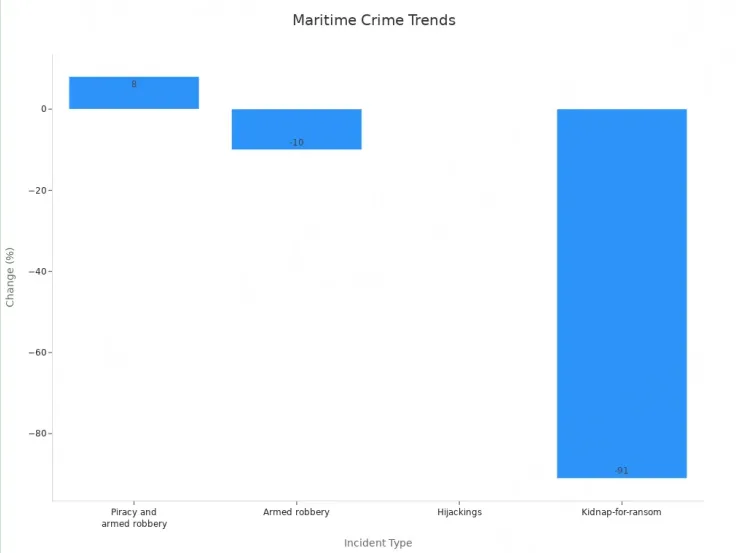
Southeast Asia remains a hotspot, with 63% of incidents occurring in the Singapore Strait. The Gulf of Guinea has seen a decline in kidnap-for-ransom cases, but concerns persist about future hijackings due to fluctuating oil prices. Meanwhile, the Gulf of Mexico faces a surge in theft and armed robbery, with criminals becoming increasingly bold. These patterns highlight the need for tailored security strategies to address region-specific threats.
Economic and Operational Impacts on Merchants
Maritime security challenges have far-reaching economic and operational consequences for merchants. Increased attacks on shipping routes disrupt global trade and impose significant financial burdens. Reports indicate several key impacts:
-
Geopolitical conflicts, particularly in the Red Sea, have heightened risks for merchant vessels. Many ships now reroute to avoid conflict zones, leading to longer delivery times and higher fuel costs.
-
The lingering effects of the COVID-19 pandemic continue to affect shipping operations. Freight rates remain elevated, and logistical challenges persist.
-
Houthi attacks on shipping routes have forced vessels to take alternative paths, adding delays and costs. These disruptions impact a substantial portion of global shipping capacity.
Rerouting vessels away from dangerous waters is a common risk mitigation strategy. However, this approach increases operational costs and can lead to disputes under contracts of carriage. Consumers ultimately bear the brunt of these expenses through higher prices for goods. The financial damage caused by maritime-related incidents underscores the importance of proactive measures to safeguard merchant operations.
Preventive Measures for Merchant Vessel Security
Best Practices for Securing Merchant Vessels
Securing merchant vessels requires a combination of proactive measures and adherence to established guidelines. The Shipmaster's Security Manual offers valuable insights into compliance with the ISPS Code and counter-piracy strategies. It also provides real-world case studies to help crews respond effectively to security incidents.
To enhance vessel safety, operators should adopt the following best practices:
-
Conduct regular risk assessments to identify vulnerabilities.
-
Implement a comprehensive cybersecurity plan involving all organizational levels.
-
Train crew members on contingency plans for cyber incidents and physical threats.
-
Equip vessels with advanced surveillance systems, such as motion detectors and cameras.
These measures not only reduce the risk of unauthorized access but also minimize potential damage to critical equipment and operations.
Role of International Cooperation in Maritime Security
Global collaboration plays a pivotal role in addressing maritime security challenges. Frameworks like the United Nations Convention on the Law of the Sea (UNCLOS) establish legal guidelines for combating piracy and resolving disputes. The International Maritime Organization (IMO) has also developed the ISPS Code to enhance port and vessel security.
Regional agreements further strengthen cooperative efforts. The Djibouti Code of Conduct focuses on piracy in the Western Indian Ocean, while the Regional Cooperation Agreement on Combating Piracy and Armed Robbery against Ships in Asia (ReCAAP) addresses threats in Asia. Additionally, the Yaoundé Code of Conduct supports Gulf of Guinea states in mitigating piracy. These initiatives demonstrate the importance of shared responsibility in safeguarding global shipping routes.
Emerging Technologies and Innovations
Modern technology offers innovative solutions to enhance vessel security. The following table highlights key advancements and their applications:
|
Technology |
Description |
Example Use Case |
|---|---|---|
|
Cybersecurity Measures |
Firewalls, encryption, and network segmentation to counter cyber threats. |
Cybersecurity training for vessel crews and shore-based staff. |
|
Biometric Identification |
Unique physical traits for identity verification. |
US Coast Guard's biometric system for crew boarding. |
|
Autonomous Vessels |
Self-operating vessels for enhanced security. |
Rolls-Royce's "Sea Hunter" for autonomous navigation and threat detection. |
|
AI for Threat Detection |
Data analysis to identify potential threats. |
AI algorithms detecting anomalous vessel behavior or illegal activities. |
|
Surveillance Systems |
Cameras, radars, and sonars for comprehensive monitoring. |
Singapore's real-time vessel movement monitoring system. |
These technologies not only improve threat detection but also streamline responses to potential security breaches. By integrating these tools, the maritime industry can better protect merchant vessels from evolving risks.
Recent Maritime Incidents and Their Implications
USS Harry S. Truman Collision with Merchant Vessel Besiktas-M
The USS Harry S. Truman collided with the merchant vessel Besiktas-M in the Mediterranean Sea. Both ships were moving at the time of the incident, which occurred under normal operating conditions. Reports from Navy Times and WTOP confirm that neither vessel sustained flooding or propulsion system damage. The Truman remained operational, while the Besiktas-M experienced minor structural damage. No injuries were reported among the crews of either ship.
The collision has prompted an investigation to determine contributing factors. Analysts are examining navigation protocols, communication systems, and situational awareness during the event. The following table summarizes key details from compiled reports:
|
Source |
Summary |
|---|---|
|
Navy Times |
The USS Harry S. Truman collided with the merchant vessel Besiktas-M. No injuries or flooding occurred. The incident is under investigation. |
|
Inkl |
The Truman's propulsion systems were unaffected. The cargo ship sustained slight damage. |
|
WTOP |
Both ships were moving during the collision. No injuries or flooding were reported. |
This incident highlights the importance of rigorous navigation practices and underscores the need for enhanced maritime safety protocols.
North Sea Tanker and Cargo Ship Collision
On March 10, 2025, the tanker Stena Immaculate collided with the cargo ship Solong near Spurn Head in the Humber Estuary, England. The Stena Immaculate was transporting aviation fuel, while the Solong carried dangerous goods. The collision resulted in one fatality, and the crew of the Solong abandoned ship before being rescued.
The UK Marine Accident Investigation Branch (MAIB) launched an investigation into the incident. Key areas of focus include navigation practices, manning levels, and environmental conditions. The following details provide additional context:
-
The Stena Immaculate carried over 220,000 barrels of aviation fuel from Greece to England.
-
The Solong operated fixed trade routes in the North Sea, transporting various products.
-
The collision occurred in a high-traffic area, emphasizing the need for stricter vessel monitoring systems.
This tragic event underscores the risks associated with navigating congested waterways and transporting hazardous materials.
GPS Interference and Its Impact on Merchant Vessels
GPS interference poses significant challenges to vessel navigation and safety. Disruptions can occur naturally, accidentally, or intentionally. Solar flares, malfunctioning equipment, and deliberate jamming by nation-states are common causes. These disruptions affect critical systems such as ECDIS, autopilot, and AIS, leading to potential misdirection or operational failures.
The consequences of GPS spoofing are particularly alarming. Vessels can be misled into hostile waters or have their locations concealed for illicit activities. The following table outlines key types of GPS disruptions:
|
Type of Disruption |
Description |
|---|---|
|
Natural disruptions |
Solar flares overpower GPS signals; terrain blocks signals underwater. |
|
Accidental disruption |
Malfunctioning equipment jams GPS; improperly installed antennas block signals. |
|
Intentional jamming |
Nation states jam GPS; examples include military jamming in Ukraine and auto thieves using jammers. |
|
Shipboard Impacts |
Systems like ECDIS, autopilot, and AIS fail or provide misleading information when GPS is jammed. |
|
Consequences of Spoofing |
Vessels are misdirected into hostile waters or have their locations concealed for illicit activities. |
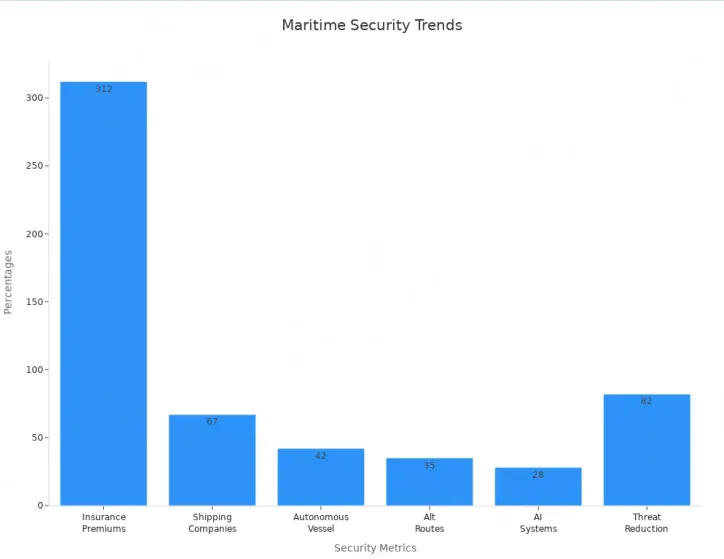
The growing prevalence of GPS interference highlights the need for advanced cybersecurity measures and robust navigation systems to safeguard merchant vessels.
The Beira Anchorage robbery serves as a stark reminder of the vulnerabilities merchant vessels face in high-risk regions. This incident highlights the urgent need for enhanced security measures to protect maritime operations. Stakeholders must prioritize vigilance and adopt proactive strategies to mitigate future threats.
|
Evidence |
Description |
|---|---|
|
Enhanced Surveillance |
Emphasizes the need for improved monitoring systems to ensure maritime safety against threats like piracy and terrorism. |
|
National and International Collaboration |
Highlights the importance of cooperation among various stakeholders to effectively address maritime security challenges. |
|
Proactive Precautions |
Stresses the necessity of taking preventive measures to deter potential assaults on merchant vessels. |
Collaboration between nations, shipping companies, and maritime organizations is essential to strengthen global maritime security. By investing in advanced technologies and fostering international partnerships, the industry can safeguard merchant vessels and ensure the safety of global trade routes.
FAQ
What is the primary cause of merchant vessel robberies?
Merchant vessel robberies often occur due to inadequate security measures, such as insufficient surveillance systems or untrained crew. Criminals exploit these vulnerabilities, especially in high-risk regions like Southeast Asia and the Gulf of Guinea.
How can merchant vessels improve their security?
Vessels can enhance security by installing advanced surveillance systems, conducting regular risk assessments, and training crew members in threat response. Adopting international security standards, such as the ISPS Code, also strengthens defenses against unauthorized access.
Why is international cooperation essential for maritime security?
Maritime threats often span multiple jurisdictions. International cooperation enables information sharing, coordinated patrols, and unified legal frameworks. These efforts ensure a collective response to piracy, armed robbery, and other maritime crimes.
What role does technology play in preventing maritime crimes?
Emerging technologies, such as AI-based threat detection and biometric identification, enhance vessel security. These tools improve monitoring, identify potential risks, and streamline responses, reducing the likelihood of successful attacks.
How do maritime crimes impact global trade?
Maritime crimes disrupt shipping routes, delay deliveries, and increase operational costs. These challenges affect supply chains, leading to higher prices for goods and economic losses for shipping companies and consumers alike.
Related content