
Key Tax Rules for U.S. Citizens with Overseas Accounts
Author:XTransfer2025.05.28Foreign-Income Declaration Form
If you have financial accounts or investments overseas, staying compliant with U.S. tax laws is essential. The IRS requires you to meet specific reporting requirements for foreign financial assets. Failing to do so can lead to severe penalties, including fines of up to $10,000 for non-willful violations or even 50% of your account balance for willful non-compliance. For example:
-
Non-willful FBAR violations: Up to $10,000 per violation.
-
Willful FBAR violations: Up to $100,000 or 50% of the account balance.
-
Form 8938 penalties: $10,000, increasing to $50,000 for continued failure to file.
Understanding these filing requirements and using forms like the Foreign-Income Declaration Form can help you avoid costly consequences.
What Needs to Be Reported
Definition of Foreign Financial Assets
Foreign financial assets include a wide range of accounts and investments held outside the United States. The IRS defines these assets as any financial account maintained by a foreign financial institution or other specified assets held for investment purposes. These may include depository or custodial accounts, as well as equity or debt interests in foreign institutions. However, certain exceptions exist, such as accounts maintained by U.S. payors or those under specific mark-to-market elections.
To clarify, here is a breakdown of key definitions:
The IRS considers you a "specified person" if you are a U.S. citizen, resident alien, or certain nonresident aliens. This classification determines your reporting obligations.
Examples of Reportable Assets
You must report various types of foreign financial assets if they meet the IRS thresholds. Common examples include:
-
Foreign bank accounts, such as savings or checking accounts, if the aggregate value exceeds $10,000.
-
Foreign stock accounts, whether held directly or through a foreign financial institution.
-
Foreign mutual funds and ETFs, which are often classified as Passive Foreign Investment Companies (PFICs) and require additional reporting forms.
The importance of comprehensive reporting cannot be overstated. For instance, the IRS received over 300,000 Form 8938 filings for the tax year 2014, highlighting the growing focus on foreign asset disclosure. Failure to report these assets accurately can lead to significant penalties.
Non-Reportable Assets
Not all foreign assets require disclosure. The IRS excludes certain types of property and investments from reporting requirements. These non-reportable assets include:
-
Foreign real estate, such as a vacation home or rental property.
-
Precious metals, like gold or silver, held directly.
-
Personal property, including art, antiques, jewelry, cars, and other collectibles.
These exclusions simplify the process for many taxpayers. However, if you hold these assets within a foreign financial account, they may still fall under reporting obligations.
Understanding what qualifies as a foreign financial asset ensures you meet your reporting obligations as a U.S. citizen. By staying informed, you can avoid costly mistakes and remain compliant with IRS regulations.
Filing Requirements and Thresholds
Filing Thresholds for U.S. Residents
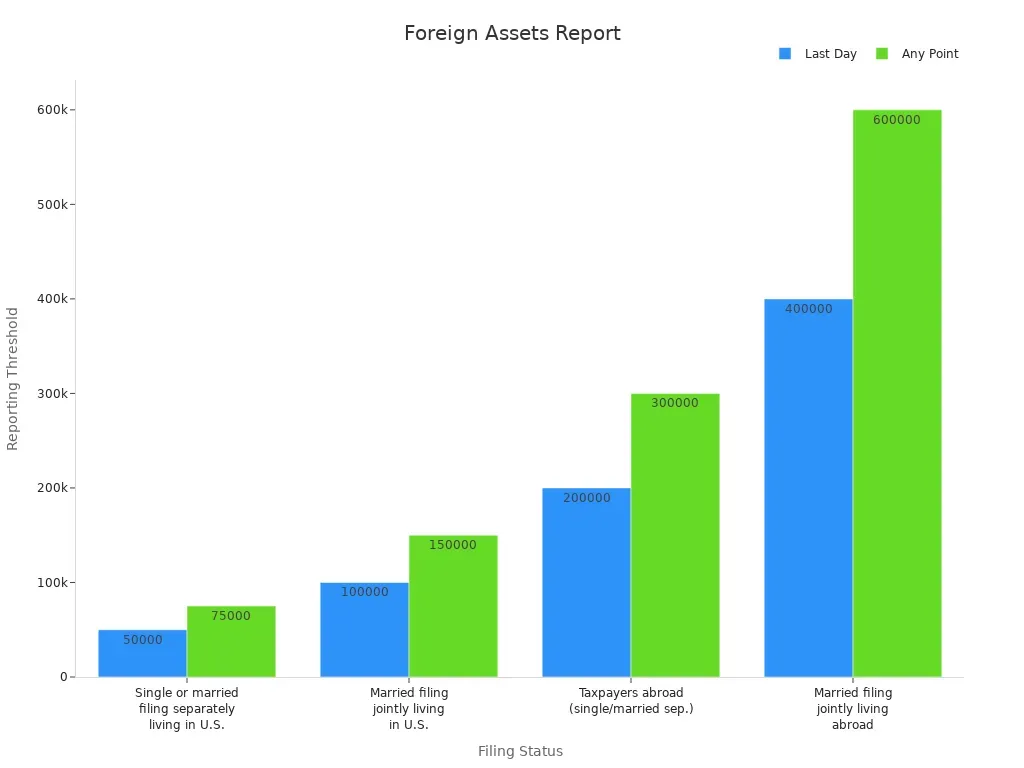
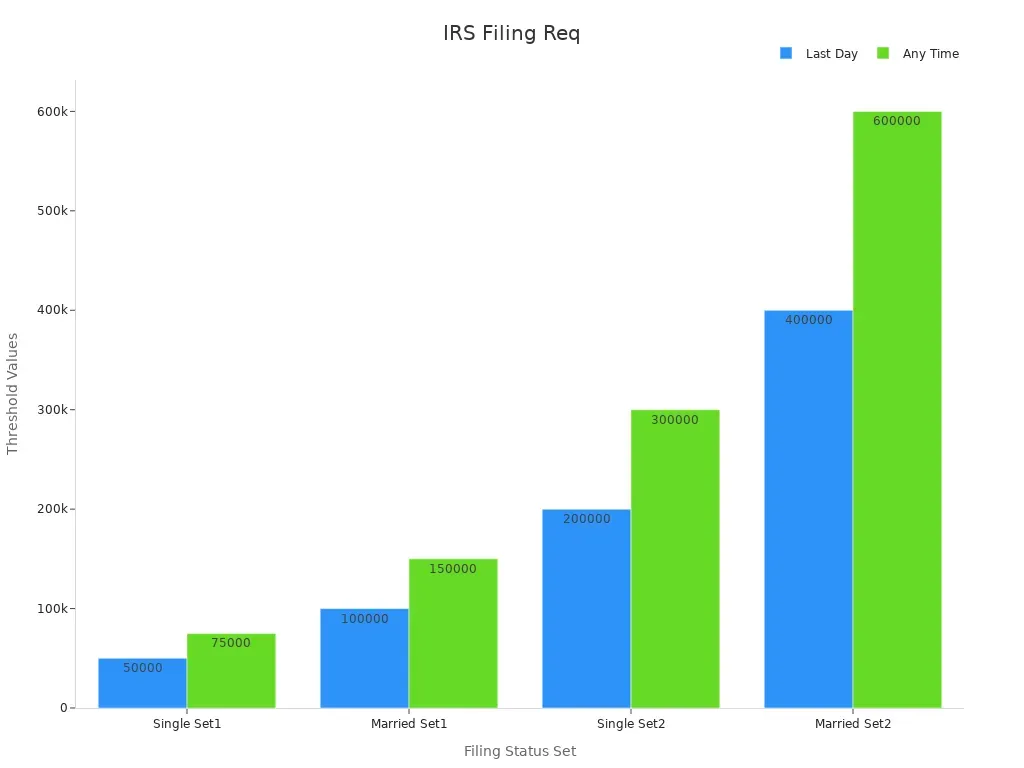
If you live in the U.S., your foreign financial assets must meet specific thresholds before reporting becomes mandatory. The IRS sets these thresholds based on your filing status and the value of your assets at the end of the year or at any point during the year. For example:
You must also file FinCEN Form 114 (FBAR) if the aggregate value of your foreign accounts exceeds $10,000 at any time during the year. Additionally, FATCA requirements mandate the use of Form 8938 for reporting specified foreign financial assets that exceed these thresholds. These forms ensure compliance with international information reporting standards.
Filing Thresholds for U.S. Citizens Living Abroad
If you live abroad, the thresholds for reporting foreign financial assets are higher. FATCA requirements specify that single filers must report assets exceeding $200,000 at the end of the year or $300,000 at any time during the year. For married couples filing jointly, the thresholds increase to $400,000 and $600,000, respectively.
These thresholds reflect the IRS's focus on international information reporting for U.S. citizens living abroad. By meeting these requirements, you can avoid penalties and ensure compliance with FATCA regulations.
Special Considerations for Joint Accounts
Joint accounts require special attention when reporting foreign financial assets. Each account owner must report the full value of the account on an FBAR. However, spouses can simplify reporting if they meet specific conditions. If one spouse files an FBAR and reports all joint accounts, the other spouse may not need to file separately. This exception applies only when both spouses own the accounts jointly and file on time.
Understanding these nuances helps you navigate international information reporting requirements effectively. Joint accounts often complicate compliance, but knowing the rules ensures you meet FATCA requirements without unnecessary filings.
Key Forms and Differences
Overview of FBAR (Foreign Bank Account Report)
The FBAR, officially known as FinCEN Form 114, is a critical form for reporting foreign financial accounts. You must file this form if the aggregate value of your foreign accounts exceeds $10,000 at any point during the year. The Financial Crimes Enforcement Network (FinCEN) oversees FBAR filings, which aim to prevent money laundering and tax evasion.
Key features of FBAR include:
-
Filing requirements apply to U.S. citizens, residents, and entities like corporations and trusts.
-
You must report all foreign accounts, including savings, checking, and investment accounts.
-
Willfulness in non-compliance can lead to severe penalties. For example:
-
Failing to file after receiving a warning letter.
-
Omitting accounts without reasonable explanation.
-
Documents like foreign bank statements and correspondence with tax preparers can establish willfulness. Filing FBAR accurately ensures compliance and avoids penalties.
Overview of Form 8938 (Statement of Specified Foreign Financial Assets)
Form 8938 is another essential document for reporting foreign financial assets. Unlike FBAR, this form focuses on broader asset categories, including stocks, bonds, and mutual funds held outside the U.S. The IRS introduced Form 8938 under FATCA to combat tax evasion.
Key points about Form 8938:
-
You must file this form if your foreign assets exceed specific thresholds. For example:
-
$50,000 for single U.S. residents on the last day of the tax year.
-
$200,000 for expatriates under the same conditions.
-
-
Non-compliance can result in penalties up to $50,000 and a 30% withholding tax on U.S. source payments.
-
Filing thresholds vary based on your residency and filing status.
By submitting Form 8938, you fulfill FATCA requirements and avoid costly consequences.
Key Differences Between FBAR and Form 8938
Although FBAR and Form 8938 both address foreign financial assets, they differ in purpose, thresholds, and filing agencies. Understanding these distinctions helps you determine which form applies to your situation.
FBAR focuses on accounts, while Form 8938 covers a wider range of assets. You may need to file both forms if your foreign holdings meet the respective criteria. Staying informed about these differences ensures compliance with U.S. tax laws.
Penalties for Non-Compliance

Failing to comply with foreign financial asset reporting rules can lead to severe penalties. The IRS enforces these penalties to ensure taxpayers meet their obligations. Understanding the consequences of non-compliance helps you avoid costly mistakes.
Penalties for Failing to File FBAR
The penalties for failing to file the FBAR (FinCEN Form 114) depend on whether the violation is willful or non-willful. Non-willful violations can result in fines of up to $10,000 per violation. Willful violations carry much harsher penalties, including fines of $100,000 or 50% of the account's highest balance, whichever is greater. These penalties aim to deter intentional non-compliance.
For example, IRS enforcement actions in recent years have resulted in significant penalties:
These figures highlight the financial risks of failing to file FBAR accurately.
Penalties for Failing to File Form 8938
Form 8938 penalties are equally severe. The IRS imposes an initial fine of $10,000 for failing to file. If you continue to ignore filing requirements after receiving an IRS notice, additional penalties can reach up to $50,000. Furthermore, underreported taxes due to non-disclosure may incur a 40% penalty on the underpayment amount. In extreme cases, criminal penalties may also apply.
Additional Consequences of Non-Compliance
Non-compliance can lead to both civil and criminal penalties. Civil penalties for willful violations may include fines of up to 50% of the account balance. Criminal charges, such as tax evasion, can result in imprisonment. The IRS also has an extended statute of limitations for enforcement, meaning violations discovered during audits can lead to penalties years later.
Understanding these penalties underscores the importance of staying compliant with foreign financial asset reporting requirements.
How to File and Stay Compliant

Step-by-Step Guide to Filing FBAR
Filing the FBAR (FinCEN Form 114) is a straightforward process when you follow the correct steps. This guide will help you navigate the filing process efficiently:
-
Preparation: Collect all necessary details about your foreign financial accounts. This includes account numbers, the names and addresses of financial institutions, and the maximum account values during the year.
-
Access the Filing System: Visit the Financial Crimes Enforcement Network's (FinCEN) BSA E-Filing System website.
-
Registration: If this is your first time filing, create a BSA E-Filing account.
-
Complete the Form: Select "File FinCEN Form 114" and fill in all required fields, including your personal information and account details.
-
Review and Submit: Double-check all the information for accuracy before submitting the form electronically.
-
Confirmation: Save or print the confirmation page for your records.
-
Deadline: File by April 15th. If you miss this deadline, you automatically receive an extension until October 15th.
💡 Tip: Keep records of your filed FBARs and supporting documents for at least five years. This ensures you have proof of compliance if the IRS requests it.
Step-by-Step Guide to Filing Form 8938
If your foreign financial assets exceed the reporting thresholds, you must file Form 8938 as part of your income tax return. Here's how to file Form 8938:
Before filing Form 8938, review this checklist:
💡 Note: Filing Form 8938 is a critical part of FATCA compliance. Ensure you report all relevant assets, including financial accounts, stocks, bonds, and mutual funds.
Tips for Maintaining Compliance
Staying compliant with FATCA regulations requires proactive measures. Here are some tips to help you maintain compliance:
-
Stay Organized: Keep detailed records of all foreign financial accounts and assets. This includes account statements, transaction records, and correspondence with financial institutions.
-
Use Technology: Leverage advanced tax software to streamline the reporting process. Real-time data processing tools can help you stay updated on your financial information.
-
Consult Professionals: Work with a tax professional who specializes in FATCA compliance. They can help you identify applicable tax incentives, credits, and reporting requirements.
-
Review Regularly: Conduct periodic reviews of your financial accounts to ensure all information is accurate and up-to-date.
-
Train Employees: If you manage a business, train your staff on tax compliance procedures to minimize errors.
💡 Tip: Correct any errors promptly by amending filings as needed. This reduces the risk of penalties and demonstrates your commitment to compliance.
Common Questions and Scenarios
What Happens if You Discover an Unreported Account?
Discovering an unreported foreign account can feel overwhelming, but taking immediate action can help you avoid severe consequences. The IRS allows you to correct past mistakes through voluntary disclosure programs. These programs let you report unfiled accounts and pay any owed taxes or penalties. Acting quickly demonstrates good faith and may reduce penalties.
Real-life cases highlight the importance of addressing unreported accounts. For example, an IRS audit uncovered discrepancies in a bookkeeper's records, leading to a criminal investigation. In another case, a court ordered the liquidation of a business after finding unreliable financial reports. These examples show how unreported accounts can lead to financial and legal troubles.
If you discover an unreported account, gather all relevant documents, including account statements and transaction records. Consult a tax professional to guide you through the disclosure process. Taking these steps ensures compliance and minimizes risks.
How Do Filing Requirements Change with Asset Value?
Filing requirements for foreign accounts depend on the value of your assets. The IRS considers various scenarios when determining these requirements. For instance, if you transfer property or close accounts without disclosure, the value of those assets still impacts your filing obligations. On the other hand, funds used for necessary living expenses or medical costs may not affect your calculations.
Understanding how asset value influences your filing requirements helps you stay compliant. Regularly reviewing your accounts ensures you meet IRS thresholds.
Real-Life Examples of Compliance Challenges
Many expats face challenges when complying with U.S. tax laws. For example, FBAR filings nearly doubled from 741,249 in 2011 to 1.49 million in 2021. Despite this increase, the IRS struggles to close the compliance gap among the estimated 9 million U.S. citizens living abroad. FATCA, which collects data from 113 jurisdictions, serves as a valuable resource but lacks enforcement capabilities.
The Treasury Inspector General for Tax Administration reported limited progress in ensuring compliance. This highlights the ongoing difficulties expats face when navigating complex tax rules. Staying informed and seeking professional advice can help you overcome these challenges.
Understanding your reporting obligations for foreign financial assets is essential to avoid penalties. Staying informed and seeking professional assistance can significantly reduce the risk of non-compliance.
-
Keeping up-to-date with training on compliance requirements helps you stay ahead of changes.
-
Proactive measures, like implementing effective compliance programs, enhance your ability to mitigate risks.
-
A well-documented response to regulatory inquiries demonstrates your commitment to compliance and may positively influence outcomes.
By taking these steps, you ensure adherence to U.S. tax laws and protect yourself from costly consequences.
FAQ
What is Form 8938, and who needs to file it?
Form 8938 is used to report specified foreign financial assets under FATCA. You must file it if your foreign assets exceed IRS thresholds. U.S. citizens living abroad and residents with significant foreign holdings often need to file this form with their tax returns.
What happens if I don’t file Form 8938?
Failing to file Form 8938 can result in penalties starting at $10,000. Continued non-compliance may lead to additional fines of up to $50,000. The IRS may also impose a 40% penalty on underreported taxes due to undisclosed foreign assets.
How does FATCA reporting differ from FBAR?
FATCA reporting, including Form 8938, focuses on broader foreign financial assets. FBAR, on the other hand, targets foreign bank accounts exceeding $10,000. Both forms serve different purposes but may overlap for some taxpayers.
Can I claim the Foreign Earned Income Exclusion and Foreign Tax Credit together?
Yes, you can claim both. The Foreign Earned Income Exclusion reduces taxable income earned abroad, while the Foreign Tax Credit offsets taxes paid to foreign governments. Combining these helps in avoiding double taxation for U.S. citizens living abroad.
How can I correct past non-disclosure of foreign accounts?
The IRS offshore disclosure programs allow you to report unfiled accounts and pay owed taxes or penalties. Acting promptly demonstrates good faith and may reduce penalties. Consult a tax professional to navigate the disclosure process effectively.
Related content