
How Cross Commerce Simplifies Global Selling for Businesses
Author:XTransfer2025.08.28Benefits of Cross Commerce
Cross commerce transforms the way you sell globally by bridging the gap between online and offline sales channels. It helps streamline operations, expand your customer base, and deliver a unified shopping experience. For instance, integrating these channels boosts customer reach and enhances decision-making through better data management. The global cross-border e-commerce market, valued at USD 2,205.1 billion in 2024, is projected to soar to USD 18,201 billion by 2034, growing at a CAGR of 23.50%. This growth highlights the benefits of cross commerce as a strategy to simplify global selling and unlock new opportunities for businesses.
Understanding Cross Commerce
Definition and Core Concept
Cross commerce refers to the seamless integration of online and offline sales channels to create a unified shopping experience. It allows you to manage your business operations across multiple platforms while ensuring consistency in customer interactions. Whether your customers shop online, visit a physical store, or use a mobile app, cross commerce ensures they receive the same level of service and product availability. This approach not only simplifies operations but also enhances your ability to meet customer expectations in the fast-evolving world of ecommerce.
How Cross Commerce Unifies Online and Offline Channels
Integrating online and offline channels is essential for modern businesses. Cross commerce bridges the gap between these channels, enabling you to provide a cohesive experience. For example, customers can browse products online, check in-store availability, and make purchases through their preferred channel. This integration improves customer satisfaction and boosts sales performance.
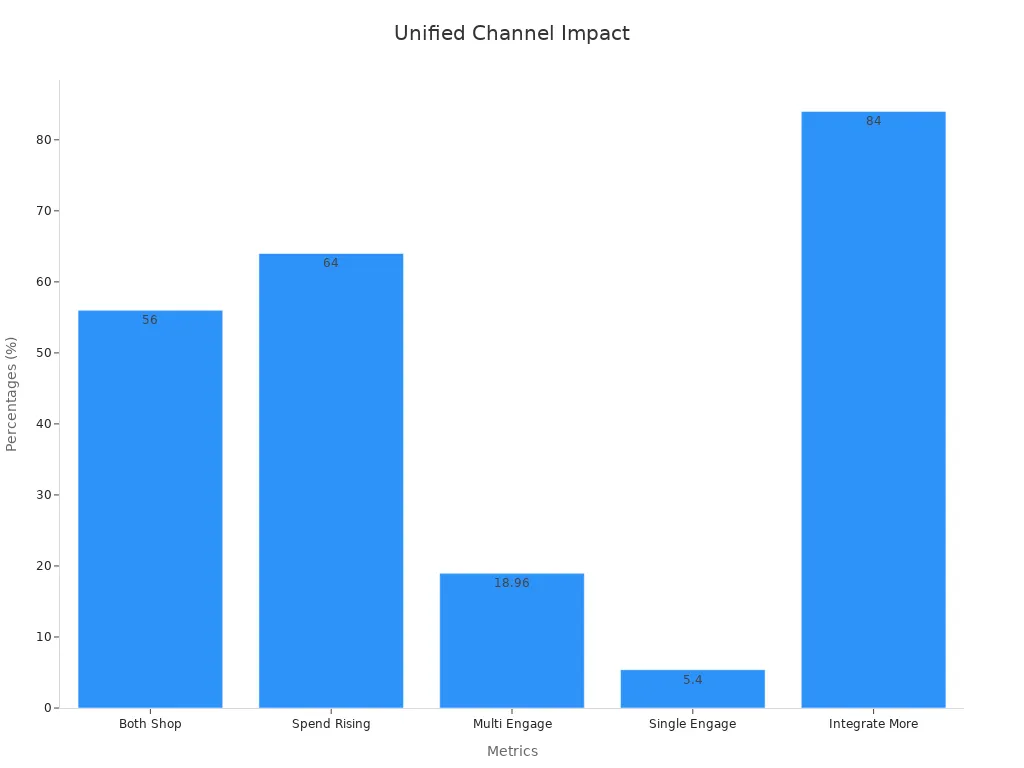
Here’s a table showcasing the impact of unified channels on sales and customer engagement:
|
Statistic |
Source |
|
56% of adult consumers prefer to shop both online and in-person at a brick-and-mortar store. |
National Retail Federation |
|
64% of consumers are willing to increase their spending if their concerns are addressed through the same communication channel they initially use. |
zendesk.com |
|
The average engagement rate of campaigns using three or more channels was 18.96%, while single-channel campaigns earned only 5.4%. |
Retail Dive |
|
84% of consumers believe retailers should be doing more to integrate their online and offline channels. |
RetailNext |
By unifying your channels, you can also leverage data from both online and offline sources to refine your marketing strategies and improve decision-making.
Why Cross Commerce is Essential for Cross-Border Ecommerce
Cross commerce plays a critical role in cross-border ecommerce by addressing the complexities of selling internationally. It helps you manage diverse customer preferences, currencies, and languages while ensuring compliance with local regulations. The global ecommerce market is growing rapidly, with cross-border sales expanding 219% faster than overall ecommerce. This highlights the importance of adopting cross commerce to stay competitive.
Key statistics supporting the necessity of cross commerce include:
-
The global cross-border ecommerce market reached $1.56 trillion in 2023 and is projected to expand to $5.06 trillion by 2028.
-
It has a compound annual growth rate (CAGR) of 26.4%.
-
37% of global cross-border shoppers purchased from Chinese sellers last year, showcasing the importance of understanding local market dynamics.
By implementing cross commerce strategies, you can tap into the growing international ecommerce market and unlock new opportunities for your business.
Benefits of Cross Commerce for Global Sellers

Streamlined Operations Across Borders
Cross commerce simplifies your operations by integrating various processes into a single, cohesive system. Managing cross-border ecommerce often involves handling multiple currencies, languages, and regulations. Cross commerce platforms streamline these complexities, allowing you to focus on growing your business. For example, automated systems can manage returns, enforce policies, and ensure compliance with international duties and taxes. This reduces administrative overhead and improves efficiency.
Here’s a table showcasing how streamlined operations benefit global sellers:
|
Performance Metric |
Description |
|
Operational Efficiency |
Integration of Loop’s returns portal with Global-e’s infrastructure reduces administrative overheads. |
|
Revenue Retention |
Automated policy enforcement and store credit incentives optimize revenue retention. |
|
Market Expansion |
GoRuck expanded into 50 new markets, showcasing the scalability of operations. |
|
Customer Experience |
Simplified returns enhance the post-purchase experience, strengthening consumer trust. |
|
Compliance with Regulations |
Global-e ensures compliance with international duties and taxes, alleviating complex pain points. |
By streamlining operations, you can improve customer satisfaction and gain a competitive advantage in the global ecommerce market.
Access to New Markets and Demographics
Cross commerce opens doors to new opportunities by enabling you to access new markets and reach diverse demographics. With the right tools, you can expand your brand visibility and tap into regions where ecommerce is growing rapidly. For instance, cross-border ecommerce allows you to sell products in countries with high demand for international goods. This expanded market reach not only increases sales but also strengthens your global presence.
To succeed in new markets, you need to understand local preferences and adapt your strategies accordingly. Cross commerce platforms provide insights into customer behavior, helping you tailor your offerings to meet their needs. This approach ensures that your business remains relevant and competitive in a global landscape.
Improved Customer Experience Through Localization
Localization is key to delivering a seamless shopping experience for your customers. Cross commerce platforms help you adapt your website, payment options, and marketing strategies to align with local languages, currencies, and cultural preferences. When customers feel understood and valued, they are more likely to trust your brand and make repeat purchases.
For example, offering prices in local currencies and providing multiple payment options can significantly enhance the shopping experience. Additionally, localized content, such as product descriptions and customer support, builds stronger connections with your audience. By prioritizing localization, you can improve customer satisfaction and boost sales in cross-border markets.
Cost Efficiency and Resource Optimization
Cross commerce helps you save costs and use resources more effectively by streamlining your operations. Managing multiple sales channels often leads to inefficiencies, such as duplicated efforts, data-entry errors, and fragmented workflows. Cross commerce eliminates these issues by integrating your processes into a single, unified system. This approach reduces waste and ensures that your resources are allocated where they are needed most.
Here are some ways cross commerce optimizes your resources and reduces expenses:
-
Centralized Inventory Management: A unified system allows you to track inventory across all channels. This reduces overstocking and prevents stockouts, saving you money on storage and lost sales.
-
Automated Processes: Automation minimizes manual tasks like order processing and returns management. This reduces labor costs and improves accuracy.
-
Improved Decision-Making: Access to real-time data helps you identify cost-saving opportunities and make informed decisions.
Cross commerce also enables you to scale your business without increasing overhead costs. For instance, you can expand into new markets using the same infrastructure, avoiding the need to invest in separate systems for each region. This scalability ensures that your business grows efficiently while maintaining profitability.
By adopting cross commerce, you not only cut costs but also create a more agile and efficient business model. This positions you for long-term success in the competitive global marketplace.
Addressing Challenges in Cross-Border Ecommerce
Localization: Language, Currency, and Cultural Adaptations
Localization is essential for success in cross-border ecommerce. Adapting your website, product descriptions, and marketing materials to local languages and cultural nuances ensures that your brand resonates with diverse audiences. For example:
-
Translate content into the local language to build trust with customers.
-
Display prices in local currencies to simplify purchasing decisions.
-
Tailor product listings to reflect cultural preferences and norms.
Providing multilingual customer support also enhances the shopping experience. Customers feel valued when their queries are addressed in their native language. Conducting thorough market research helps you understand consumer behavior and purchasing patterns in each region. This knowledge allows you to refine your strategies and meet local expectations effectively.
Regulatory Compliance: Taxes, Tariffs, and Legal Requirements
Navigating regulatory compliance is one of the most complex aspects of cross-border transactions. Each country has unique tax laws, tariffs, and legal requirements that you must follow. For instance, new tariffs can complicate financial reporting and increase operational costs. Businesses often face challenges due to the lack of transparency in tariff policies and their frequent changes.
|
Evidence Type |
Description |
|
Tariff Exclusions |
Over 100,000 exclusions lacked transparency and consistency. |
|
Political Influence |
Tariff policies were influenced by political contributions and rivalries. |
|
Consumer Impact |
Tariffs affected purchasing power across states, impacting consumer demand. |
To stay compliant, monitor legislative developments and collaborate with finance, legal, and compliance teams. This proactive approach ensures that your business adapts to evolving trade policies without disruptions.
Fraud Prevention and Security Measures
Fraud prevention is critical in cross-border ecommerce. Cybercriminals often target international transactions due to their complexity. Common types of fraud include credit card fraud, chargeback fraud, and account takeovers. For example:
|
Type of Fraud |
Description |
Financial Impact |
|
Credit Card Fraud |
Unauthorized use of card information. |
441,882 reports in 2022 (FTC). |
|
Chargeback Fraud |
Disputing charges to avoid payment. |
Losses expected to exceed $25 billion by 2024. |
|
Account Takeover |
Unauthorized access to user accounts. |
Average loss of $12,000 per case. |
Implementing robust security measures, such as two-factor authentication and real-time fraud detection systems, can mitigate these risks. Additionally, educating your customers about safe online practices helps build trust and reduces the likelihood of fraud.
Simplified Logistics and Return Processes
Managing logistics and returns in cross-border commerce can be challenging. Cross commerce simplifies these processes by integrating advanced tools and strategies that improve efficiency and reduce costs. You can optimize return routing using algorithms that determine the best destination for returned products. This reduces shipping expenses, minimizes environmental impact, and enhances inventory management.
Real-time dashboards provide immediate insights into inventory levels. You can monitor stock availability and locations, enabling quick adjustments to your strategies. Visual tools also help forecast demand and allocate resources effectively. This ensures that your logistics operations remain agile and responsive to market changes.
To streamline the flow of returned goods, categorize products based on their condition. This allows you to prioritize inventory recovery options, such as restocking or recycling. Efficient transportation and storage systems further enhance the process, ensuring that returned items move smoothly through the supply chain. Accurate tracking and reporting tools help you evaluate the success of these strategies, allowing continuous improvement.
Cross commerce platforms also simplify cross-border logistics by addressing region-specific challenges. For example, they can automate customs documentation and ensure compliance with local regulations. This reduces delays and improves the overall customer experience. By adopting these solutions, you can build a more sustainable and efficient logistics network that supports your global ecommerce goals.
Strategies for Implementing Cross Commerce
Choosing the Right Cross Commerce Platform
Selecting the right cross commerce platform is crucial for your business's success in cross-border ecommerce. A well-suited platform ensures seamless integration of your sales channels, enhances operational efficiency, and supports your global expansion goals. To make an informed decision, consider the following criteria:
|
Criteria |
Description |
|
Strategic Alignment |
Ensure the platform aligns with your business model and long-term objectives. |
|
Objective Expertise |
Choose a platform that provides unbiased recommendations, free from agency partnerships. |
|
Transparent Pricing and Support |
Look for clear pricing structures and robust support to avoid unexpected costs. |
|
Case Study Evaluation |
Evaluate case studies thoroughly to understand both successes and challenges. |
|
Client References |
Speak with past clients to gain insights into the platform's performance and post-launch support. |
Case studies often highlight short-term achievements but may not reflect long-term stability. Always request comprehensive details about what worked and what didn’t. Internal factors, such as your team structure and digital priorities, can also influence the platform's effectiveness. By carefully evaluating these aspects, you can select a platform that meets your specific needs and supports your cross-border ecommerce journey.
Conducting Market Research and Localization
Market research and localization are essential for implementing cross commerce effectively. Understanding your target audience's preferences, cultural nuances, and purchasing behaviors allows you to tailor your strategies for maximum impact. Localization ensures that your brand resonates with customers in different regions, enhancing their shopping experience.
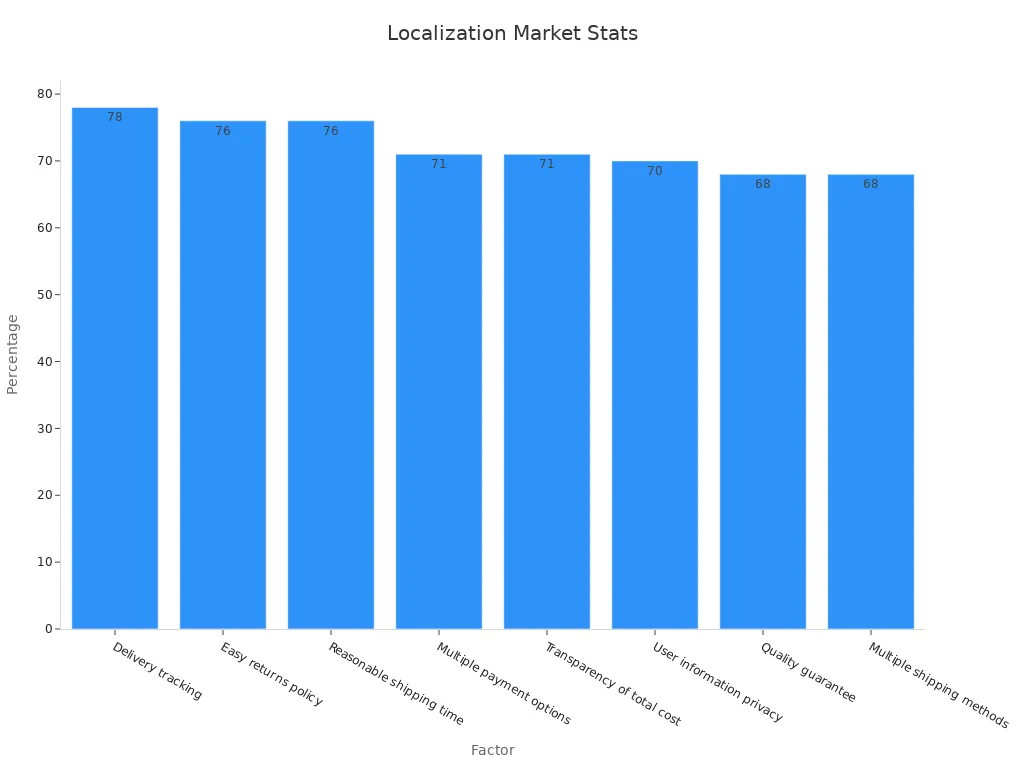
Key factors influencing localization success include delivery tracking, easy returns, and multiple payment options. The table below highlights the importance of these factors:
|
Factor |
Percentage |
|
Delivery tracking |
78% |
|
Easy returns policy |
76% |
|
Reasonable shipping time |
76% |
|
Multiple payment options |
71% |
|
Transparency of total cost |
71% |
|
User information privacy |
70% |
|
Quality guarantee |
68% |
|
Multiple shipping methods |
68% |
Successful brands like McDonald’s, Coca-Cola, and Nike demonstrate the power of localization. McDonald’s adapts its menu to local tastes, Coca-Cola incorporates cultural nuances into its marketing campaigns, and Nike tailors its product offerings to align with regional sports preferences. These strategies build trust and loyalty among local customers.
Utilizing tools like Google Analytics and Shopify can help you analyze consumer purchasing patterns. These insights enable you to identify peak purchasing times and popular products in different countries, allowing you to refine your approach and meet customer expectations.
Integrating Global Payment Solutions
Integrating global payment solutions is a critical step in cross-border ecommerce. Customers expect secure, convenient, and diverse payment options when shopping online. Offering multiple payment methods, such as credit cards, digital wallets, and local payment systems, enhances customer satisfaction and increases conversion rates.
Cross commerce platforms simplify payment integration by supporting various currencies and payment gateways. This ensures that your customers can complete transactions in their preferred currency without facing additional hurdles. Transparency in pricing, including clear information about taxes and fees, builds trust and encourages repeat purchases.
Fraud prevention is another essential aspect of payment integration. Implementing robust security measures, such as two-factor authentication and real-time fraud detection, protects your business and customers from cyber threats. Educating your customers about safe online practices further enhances their confidence in your platform.
By choosing the right payment solutions, you can streamline your operations, improve customer experience, and drive growth in the competitive ecommerce landscape.
Leveraging Data Analytics for Strategy Optimization
Data analytics plays a vital role in optimizing your cross commerce strategies. By analyzing customer behavior, market trends, and operational data, you can make informed decisions that drive growth and improve efficiency. Leveraging data allows you to identify patterns, predict outcomes, and refine your approach to meet customer needs effectively.
How Data Analytics Enhances Cross Commerce
Using data analytics, you can gain valuable insights into your ecommerce operations. For example, tracking customer preferences helps you tailor marketing campaigns, while analyzing sales data reveals which products perform best in specific regions. This information enables you to allocate resources wisely and focus on strategies that yield the highest returns.
Predictive analytics is another powerful tool. It helps you forecast demand, optimize inventory, and reduce waste. For instance, an online fashion retailer used predictive analytics to manage inventory, reducing stockouts by 40% and overstock by 35%. This led to a 20% increase in sales and improved operational efficiency.
Real-World Success Stories
Many businesses have successfully used data analytics to enhance their cross commerce strategies. Here’s a look at some examples:
|
Case Study Description |
Outcome |
Evidence |
|
A mid-sized e-commerce company implemented customer segmentation to tailor marketing efforts. |
30% increase in sales within six months. |
Enhanced customer engagement and satisfaction. |
|
An online fashion retailer used predictive analytics for inventory management. |
Reduced stockouts by 40% and overstock by 35%, leading to a 20% increase in sales. |
Improved operational efficiency. |
|
A large e-commerce platform personalized customer experiences. |
25% increase in retention rates and 15% increase in average order value. |
Higher customer satisfaction levels. |
|
A tech gadget store optimized ad spending using predictive analytics. |
20% drop in cost per acquisition and 18% increase in conversion rate. |
Higher ROI from marketing campaigns. |
|
A beauty product site reduced cart abandonment through data analysis. |
25% reduction in cart abandonment rates, leading to a 10% increase in completed purchases. |
Enhanced user experience. |
|
An online bookstore improved social media engagement through analytics. |
40% increase in social media engagement and 35% rise in website traffic. |
Boosted brand awareness. |
|
A gourmet food store developed a loyalty program based on purchase history. |
30% increase in repeat purchases and 20% improvement in customer lifetime value. |
Attracted new customers through referrals. |
These examples highlight how data analytics can transform your ecommerce business. Whether you aim to improve customer retention, optimize inventory, or boost marketing ROI, data-driven strategies deliver measurable results.
Steps to Implement Data Analytics in Cross Commerce
To harness the power of data analytics, follow these steps:
-
Define Clear Goals: Identify what you want to achieve, such as increasing sales, reducing costs, or improving customer satisfaction.
-
Collect Relevant Data: Use tools like Google Analytics or your ecommerce platform to gather data on customer behavior, sales trends, and operational performance.
-
Analyze and Interpret Data: Look for patterns and insights that can inform your decisions. For example, analyze which payment methods customers prefer or which products sell best in specific regions.
-
Implement Data-Driven Strategies: Use your findings to refine your marketing campaigns, optimize inventory, and enhance the customer experience.
-
Monitor and Adjust: Continuously track your results and adjust your strategies as needed to stay ahead of market trends.
The Role of Payments in Data Analytics
Payments data provides a wealth of information that can help you optimize your ecommerce strategies. By analyzing payment trends, you can identify popular payment methods in different regions and adjust your offerings accordingly. For example, if customers in a specific market prefer digital wallets, integrating this option can boost conversion rates.
Additionally, payments data can reveal patterns in customer spending habits. This insight allows you to create personalized offers, such as discounts or loyalty rewards, that encourage repeat purchases. Secure and seamless payment processes also enhance the overall shopping experience, building trust and loyalty among your customers.
Data analytics empowers you to make smarter decisions and achieve better outcomes in your cross commerce operations. By leveraging the insights gained from data, you can stay competitive, meet customer expectations, and drive sustainable growth in the global ecommerce market.
Success Stories of Cross Commerce Adoption

Example 1: Amazon’s Expansion into Global Markets
Amazon has revolutionized cross-border ecommerce by leveraging its robust infrastructure and innovative strategies. Its Fulfillment by Amazon (FBA) program has been a game-changer for businesses looking to expand globally. By using FBA, you can store products in Amazon’s warehouses, allowing them to handle shipping, customer service, and returns. This simplifies operations and enhances customer satisfaction.
Many businesses have successfully entered new marketplaces through Amazon. For instance:
-
Company X expanded into Europe using FBA, which reduced shipping costs and improved delivery times.
-
Company Y gained traction in Asia by tailoring products and branding to local preferences after conducting market research.
Amazon’s ability to unify online and offline channels has also played a significant role in its global success. By offering seamless shopping experiences across devices and regions, it has set a benchmark for cross-border ecommerce.
Example 2: Shopify’s Role in Streamlining Cross-Border Ecommerce
Shopify has empowered businesses to thrive in cross-border ecommerce by providing tools that simplify global operations. Its platform supports multiple currencies, languages, and payment gateways, making it easier for you to sell internationally. Shopify’s focus on personalization and customer experience has helped businesses achieve remarkable growth.
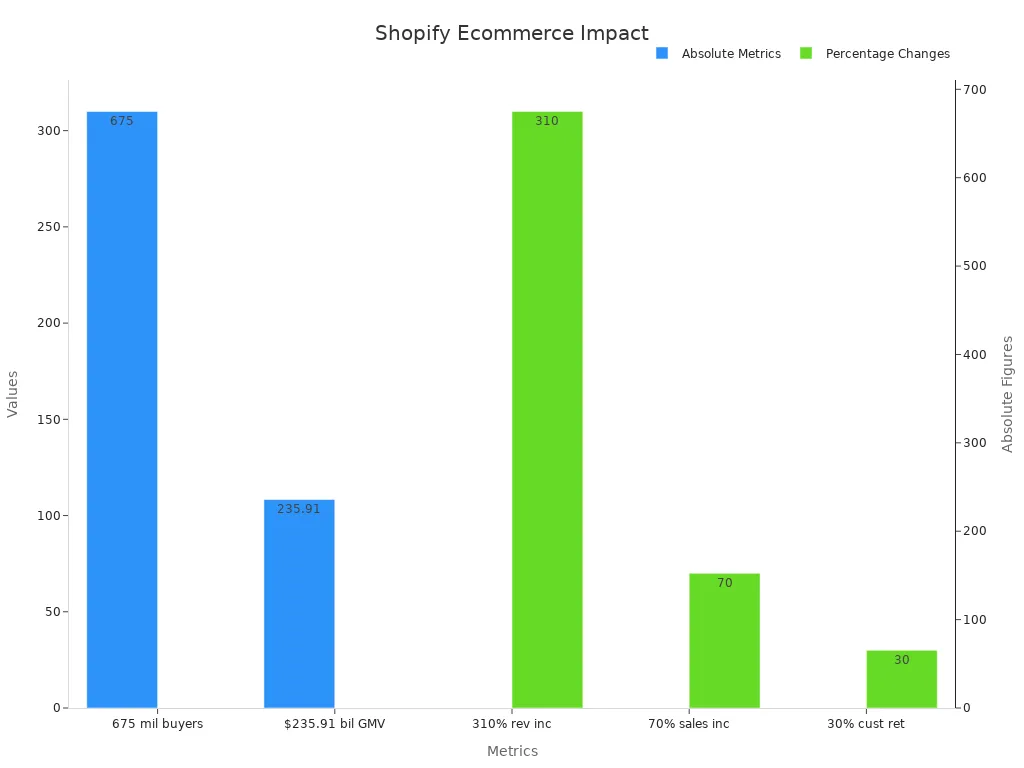
Here’s a look at Shopify’s impact on cross-border ecommerce:
|
Evidence Description |
Impact on Cross-Border Ecommerce |
|
675 million buyers facilitated transactions in 2023 |
Indicates a large potential customer base for merchants, enhancing cross-border sales opportunities. |
|
$235.91 billion GMV in 2023 |
Reflects significant consumer trust and comfort in purchasing through Shopify, facilitating international transactions. |
|
310% increase in revenue for Memobottle after switching to Shopify Plus |
Demonstrates improved global sales efficiency, crucial for cross-border ecommerce. |
|
70% increase in sales for an apparel retailer using AI-driven personalization |
Highlights the effectiveness of tailored shopping experiences in boosting international sales. |
|
30% improvement in customer retention through unified sales channels |
Suggests enhanced customer experience across borders, vital for sustaining international business. |
Shopify’s ability to unify marketplaces and streamline operations has made it a preferred choice for businesses aiming to expand globally. By adopting Shopify, you can tap into a vast customer base and optimize your cross-border ecommerce strategy.
Cross commerce offers you a powerful way to simplify global selling. It helps you overcome challenges in cross-border ecommerce, such as localization, compliance, and logistics. By adopting this strategy, you can unlock opportunities for trade expansion, access new markets, and achieve increased sales. Cross commerce also creates increased sales opportunities by streamlining operations and improving customer experiences.
The global marketplace is growing rapidly, and cross-border ecommerce plays a key role in this growth. By leveraging cross commerce, you position your business to thrive in international markets. This approach ensures you stay competitive while building a sustainable foundation for long-term success.
FAQ
What is cross commerce, and how does it differ from traditional ecommerce?
Cross commerce integrates online and offline sales channels to create a seamless shopping experience. Unlike traditional ecommerce, which focuses solely on online transactions, cross commerce unifies all sales platforms, improving customer satisfaction and operational efficiency.
How does cross commerce simplify cross-border selling?
Cross commerce helps you manage multiple currencies, languages, and regulations. It streamlines operations by integrating logistics, payment solutions, and localization tools, making it easier to sell across borders and reach global customers.
What are the key features to look for in a cross commerce platform?
Look for features like multi-currency support, localization tools, integrated payment gateways, and real-time analytics. These features ensure smooth operations and help you adapt to the unique needs of cross-border markets.
How can cross commerce improve customer experience?
Cross commerce enhances customer experience by offering localized content, multiple payment options, and seamless integration between online and offline channels. Customers enjoy a consistent and personalized shopping journey, increasing trust and loyalty.
Is cross commerce suitable for small businesses?
Yes, cross commerce benefits businesses of all sizes. It provides tools to streamline operations, reduce costs, and expand into new markets. Small businesses can use cross commerce to compete globally without significant investment.
Related content