
Future of E-Commerce in Africa Jumia's Growth Story 2025
Author:XTransfer2025.09.04Future of E-Commerce
Jumia has become a game-changer in Africa's e-commerce landscape. With a total addressable population exceeding 1.2 billion, where 24% of individuals are online, Jumia connects millions to online shopping opportunities. In April 2021, it attracted 32 million monthly visitors, far surpassing competitors like Takealot.com. This dominance has positioned Jumia as a leader in digital innovation across Africa.
Jumia's growth story illustrates its importance for the future of e-commerce. Orders have grown by 21% year-over-year, with Nigeria seeing a 22% increase. Fulfillment expenses per order dropped by 14%, and international items surged by 61%. These achievements highlight Jumia's ability to adapt and lead in a rapidly evolving market.
By empowering businesses and consumers, Jumia is shaping Africa's digital future and demonstrating the transformative potential of e-commerce.
Jumia's Growth Story
Founding and Vision
Jumia, often referred to as the "amazon of africa," was founded in 2012 with a bold vision: to revolutionize the African market by making online shopping accessible to everyone. The founders recognized the untapped potential of e-commerce in Africa, where traditional retail faced challenges like limited infrastructure and fragmented markets. By creating a digital marketplace, Jumia aimed to bridge these gaps and provide a platform where buyers and sellers could connect seamlessly.
The company's value proposition lies in its ability to offer a wide product selection, ranging from electronics to fashion and personal care. This diversity ensures that customers can find almost anything they need in one place. Jumia's vision extends beyond just being a marketplace; it seeks to empower small businesses, foster economic growth, and drive digital transformation across the continent.
Key Milestones in E-Commerce Expansion
Jumia's journey has been marked by significant milestones that highlight its growth and expansion in the e-commerce sector. Over the years, the company has achieved remarkable success in scaling its operations and reaching millions of customers.
-
Small businesses across Africa have benefited immensely from Jumia's platform. For example, a fashion retailer in Kenya saw a dramatic increase in sales after joining Jumia.
-
Jumia has introduced international brands to the African market, enhancing cross-border trade and giving consumers access to a wider selection of products.
-
The platform has played a pivotal role in promoting online shopping, which has, in turn, boosted internet usage and spurred growth in sectors like finance and logistics.
-
By fostering innovation, Jumia has contributed to the growth of Africa's tech ecosystem, encouraging the emergence of startups and creating jobs.
These milestones underscore Jumia's commitment to driving ecommerce sales and transforming the African market.
Market Presence Across Africa
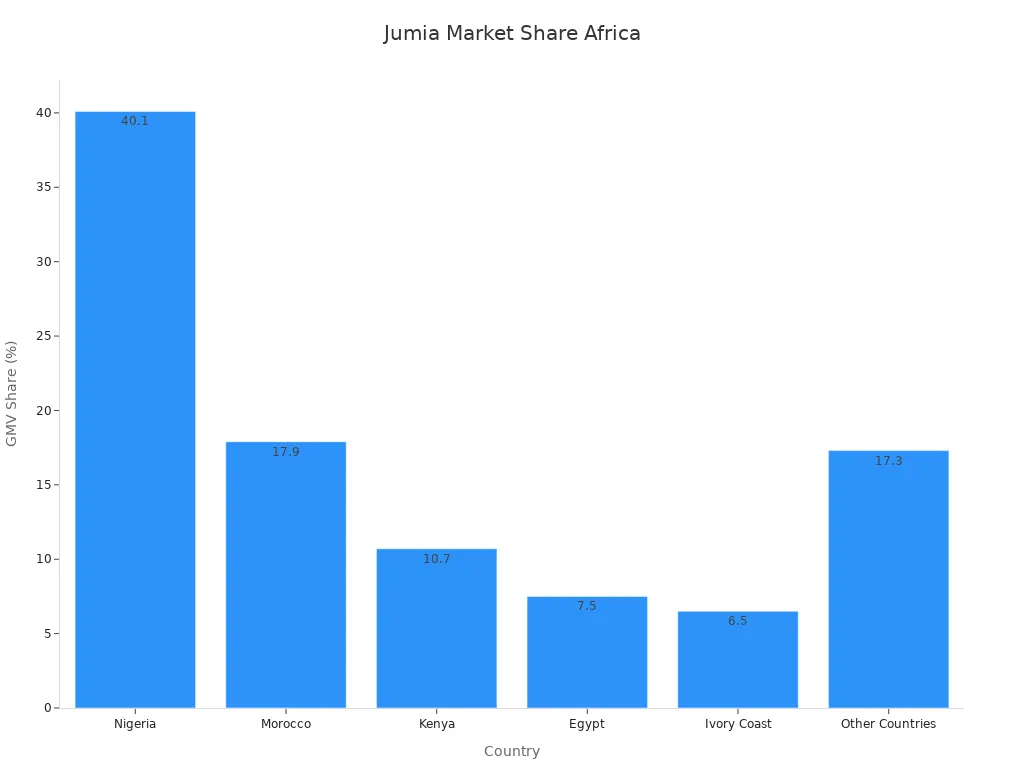
Jumia's market presence spans multiple countries, making it a dominant player in the African market. The company's operations are strategically distributed to maximize its impact and reach.
|
Country |
Market Share (GMV) |
|
Nigeria |
40.1% |
|
Morocco |
17.9% |
|
Kenya |
10.7% |
|
Egypt |
7.5% |
|
Ivory Coast |
6.5% |
|
Other Countries |
17.3% |
Jumia's dominance in Nigeria, with a 40.1% market share, highlights its strong foothold in one of Africa's largest economies. The company's ability to adapt to local needs has been a key factor in its success. Additionally, Jumia's wide product selection caters to diverse consumer preferences, further solidifying its position as a leader in ecommerce.
Jumia's product categories also reflect its versatility and appeal to a broad audience:
|
Product Category |
Contribution to GMV |
|
Electronics |
28.4% |
|
Personal Care |
19.1% |
|
Hobby and Leisure |
15.2% |
|
Fashion |
14% |
|
Furniture and Household Goods |
9.4% |
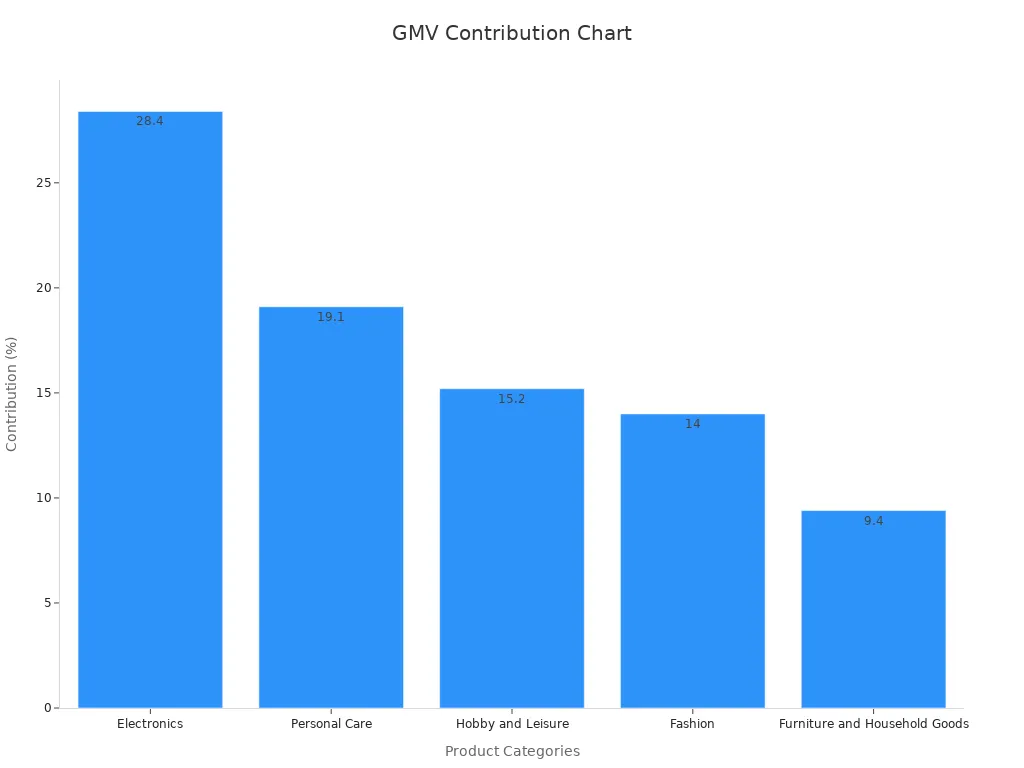
By maintaining a strong presence across Africa and offering a diverse selection of products, Jumia continues to lead the ecommerce revolution on the continent.
Innovative Strategies Powering Jumia
Logistics Solutions for African Markets
Jumia has revolutionized logistics in Africa by addressing the unique challenges of the continent. You might already know that delivering goods across vast and diverse terrains can be difficult. Jumia's extensive delivery network ensures reliable delivery to both urban and rural areas. This network covers multiple regions, making it easier for you to access products no matter where you live.
The platform also supports entrepreneurs by offering user-friendly tools for inventory management. These tools help businesses track stock levels efficiently, ensuring they never run out of popular items. Additionally, Jumia has invested in technology and analytics to optimize its operations. For instance, its last-mile delivery solutions ensure that your orders arrive on time, enhancing your online shopping experience.
Jumia's fulfillment centers streamline storage and distribution for sellers. These centers make it easier for businesses to manage their products and focus on growth. The company also simplifies the return process with a dedicated returns management system. This system improves customer satisfaction by making returns hassle-free. By focusing on logistics, Jumia provides end-to-end convenience for both buyers and sellers.
Mobile Commerce and Digital Accessibility
Mobile commerce is transforming how you shop online in Africa. Jumia has embraced this trend by making its platform mobile-friendly. Over 60% of e-commerce transactions in Africa are expected to happen through mobile devices by 2025. This shift highlights the importance of mobile-first strategies in reaching more customers like you.
Jumia's mobile app offers a seamless shopping experience. It allows you to browse products, make secure payments, and track your orders with ease. The app is designed to work well even in areas with limited internet connectivity, ensuring that more people can enjoy the benefits of online shopping. With 623 million unique mobile subscribers projected in Africa by 2025, Jumia is well-positioned to tap into this growing market.
Internet penetration varies across the continent, with Southern Africa at 68% and Middle Africa at 25%. Despite these differences, Jumia continues to expand its reach. The platform's focus on mobile accessibility ensures that even regions with lower internet penetration can participate in the e-commerce revolution. This approach not only boosts sales but also promotes digital inclusion.
JumiaPay and Financial Inclusion
JumiaPay is more than just a payment solution; it’s a tool for financial inclusion. This service allows you to make secure payments for your purchases, giving you peace of mind. In Q3, 35.7% of all orders on Jumia were completed using JumiaPay, up from 34.1% the previous year. This growth shows how much users trust the platform for their transactions.
JumiaPay has expanded its services to meet diverse needs. For example, you can use it to book bus tickets in Nigeria or pay tuition fees in Egypt. These features make it easier for you to manage everyday tasks without leaving your home. The platform also supports small businesses by offering access to credit. Sellers can use their business data to qualify for loans, helping them grow and thrive.
In the latest quarter, JumiaPay facilitated 489 loans for small- to medium-sized businesses. This number is more than double what it was in the same quarter last year. By providing financial services, Jumia empowers entrepreneurs and promotes economic growth. Its focus on secure payments and financial inclusion makes it a key player in Africa's digital economy.
Jumia's Role in Africa's Digital Economy
Supporting Small Businesses and Entrepreneurs
Jumia empowers small businesses across Africa by providing them with a platform to reach millions of customers. As a seller, you can showcase your products to a broader audience, increasing your sales and visibility. Many local businesses have experienced significant growth after joining Jumia. For example, a small retailer in Kenya expanded its customer base and doubled its revenue within months.
Jumia also offers tools to help you manage your business efficiently. Features like inventory tracking and analytics allow you to monitor sales trends and optimize your operations. By connecting sellers with buyers, Jumia fosters a thriving e-commerce ecosystem that supports entrepreneurship and drives economic growth.
Job Creation and Economic Growth
Jumia’s initiatives have created thousands of jobs in logistics, technology, and customer service. If you’re looking for employment opportunities, Jumia’s expanding operations provide a chance to work in a dynamic and growing industry. The company’s presence in 14 countries has strengthened local economies by boosting commerce and creating new career paths.
In addition to direct employment, Jumia’s platform supports small businesses, which in turn hire more workers to meet growing demand. This ripple effect contributes to the overall economy, making e-commerce a vital driver of growth in Africa.
Advancing Digital Transformation
Jumia plays a key role in advancing Africa’s digital economy. Its Gross Merchandise Volume (GMV) reached $181 million in Q1 2024, reflecting the increasing adoption of e-commerce. Revenue rose by 19% to $49 million during the same period, showcasing the platform’s impact on the economy.
JumiaPay has revolutionized payments by offering secure and accessible options for transactions. With a 52% surge in processing volume, it simplifies payments for you and promotes financial inclusion. By operating in 14 countries, Jumia enhances local shopping experiences and connects communities to the digital marketplace.
Jumia’s efforts in digital transformation not only improve access to e-commerce but also pave the way for a more connected and inclusive economy.
Challenges and Opportunities for Jumia
Overcoming Infrastructure and Connectivity Barriers
Infrastructure and connectivity challenges remain significant hurdles for Jumia's operations. Limited access to roads and broadband connectivity affects the convenience of online shopping. In Nigeria, poor transportation infrastructure often delays product delivery, making it harder for you to receive orders on time. Across Africa, 52% of businesses report inadequate internet connectivity as a major obstacle to e-commerce revenue. These issues highlight the need for innovative solutions to improve delivery reliability and expand access to online shopping.
Jumia addresses these challenges by investing in logistics networks that cover urban and rural areas. The company uses technology to optimize delivery routes, ensuring faster and more efficient service. By focusing on infrastructure improvements, Jumia enhances convenience for both buyers and sellers, making e-commerce more accessible across the continent.
Addressing Economic and Consumer Behavior Challenges
Economic conditions and consumer behavior also shape Jumia's growth. Many customers hesitate to shop online due to concerns about product quality and trust in digital payments. Additionally, fluctuating economic conditions can reduce demand for non-essential items, impacting sales.
To overcome these challenges, Jumia builds trust by offering secure payment options like JumiaPay. The platform ensures transparency in product descriptions and reviews, helping you make informed decisions. Jumia also adapts its product offerings to meet changing demand, focusing on affordable and essential items during economic downturns. These strategies strengthen consumer confidence and drive demand for online shopping.
Strategies for Sustainable Growth
Sustainability is central to Jumia's long-term growth. The company promotes recycling among sellers and customers, encouraging the use of eco-friendly materials and responsible disposal of packaging waste. Investments in renewable energy projects and reforestation initiatives help offset carbon emissions, positively impacting communities.
Jumia minimizes packaging waste by using sustainable materials, making e-commerce more environmentally friendly. Training programs for sellers focus on logistics optimization and eco-friendly practices, ensuring that you benefit from a greener shopping experience. Strategic partnerships also allow Jumia to access new markets and expand its reach, broadening product offerings and meeting growing demand.
By prioritizing sustainability, Jumia not only addresses environmental concerns but also builds a foundation for lasting growth. These efforts ensure that e-commerce continues to thrive while benefiting communities and the planet.
The Future of E-Commerce in Africa

Jumia's Vision for 2025
Jumia envisions a future where e-commerce becomes a cornerstone of Africa's economy by 2025. The company aims to expand its reach, ensuring that even rural areas benefit from digital marketplaces. By leveraging its logistics network and mobile-first approach, Jumia plans to make online shopping accessible to millions more. Its focus on sustainability will also play a key role, with initiatives to reduce packaging waste and promote eco-friendly practices.
Jumia's vision includes empowering small businesses further. By offering advanced tools for inventory management and analytics, it seeks to help sellers optimize their operations. The company also plans to enhance its financial services, enabling more entrepreneurs to access credit through JumiaPay. These efforts align with its goal of fostering economic growth and digital inclusion across the continent.
Emerging Trends in African E-Commerce
The future of e-commerce in Africa will be shaped by several emerging trends. Businesses are increasingly using market research to understand consumer behavior, which varies by region and culture. Personalization is becoming a key strategy, allowing companies to tailor shopping experiences to meet your unique needs.
Rapid growth in sectors like fintech and mobile commerce is also driving change. Mobile devices now dominate internet access, making mobile-first strategies essential. Competitive analysis helps businesses position themselves effectively in a diverse market. Additionally, insights from research guide product development and pricing strategies, ensuring that offerings align with consumer demand.
Technology's Role in Shaping the Future
Technology will play a pivotal role in the future of e-commerce. Mobile money innovations have already transformed financial accessibility, making transactions seamless and secure. Localized platforms are gaining traction, as they cater to cultural nuances and build trust among users.
Social media integration is another game-changer. Businesses are leveraging online communities to boost sales and engage with customers. Government initiatives are also fostering growth, although regulatory challenges remain. A data-driven approach to assessing e-commerce readiness reveals that countries like Nigeria and Kenya are leading the way, thanks to strong digital infrastructure.
Jumia stands as a cornerstone in Africa's e-commerce evolution. Its innovative strategies empower you to access goods and services conveniently, bridging gaps in infrastructure and connectivity.
-
Economic Impact: E-commerce drives job creation and supports small businesses, fostering growth across the continent.
-
Future Outlook: By 2025, Jumia aims to expand its reach, enhance financial inclusion, and promote sustainability.
FAQ
1. What makes Jumia different from other e-commerce platforms in Africa?
Jumia focuses on solving Africa-specific challenges like logistics and connectivity. Its mobile-first approach ensures accessibility, even in areas with limited internet. You can also benefit from JumiaPay, which offers secure payments and financial services tailored to local needs.
2. How does Jumia support small businesses?
Jumia provides tools for inventory management and analytics. These features help you track sales trends and optimize operations. Sellers also gain access to millions of customers, boosting visibility and revenue. JumiaPay offers loans to entrepreneurs, enabling business growth.
3. Is Jumia environmentally friendly?
Jumia promotes sustainability by using eco-friendly packaging and supporting recycling initiatives. It invests in renewable energy projects and reforestation programs. These efforts reduce carbon emissions and create a greener shopping experience for you.
4. Can I shop on Jumia without a computer?
Yes! Jumia’s mobile app lets you shop conveniently using your smartphone. The app works well in areas with limited internet, ensuring you can browse products, make payments, and track orders anytime, anywhere.
5. How does Jumia ensure secure payments?
JumiaPay uses advanced encryption to protect your transactions. It offers multiple payment options, including mobile money and credit cards. You can shop confidently knowing your financial information is safe.
Related content