
Connecting Global Supply Chains to Enhance Resilience
Author:XTransfer2025.09.08Connecting Global Supply Chains
Resilience is vital for connecting global supply chains facing frequent disruptions. Recent data highlights the urgency of this need: only 36% of supply chain managers expect inventories to normalize by the end of 2023, while 76% of manufacturers already use digital tools to gain transparency. Businesses that connect their supply chains overcome inefficiencies and adapt quickly to challenges. For example, Toyota’s ‘just-in-time’ system demonstrated adaptability during Japan’s 2011 earthquake, recovering faster than competitors. A connected approach ensures your supply chain remains agile and prepared for future uncertainties.
Understanding the Connected Global Supply Chain
What Defines a Connected Supply Chain?
A connected supply chain integrates technology, processes, and stakeholders to create a seamless flow of information and goods. It ensures that every part of the supply chain, from suppliers to customers, operates as a unified system. This approach relies on real-time data sharing, advanced analytics, and digital tools to improve decision-making and efficiency.
Key performance indicators (KPIs) help define the success of a connected supply chain. These metrics measure various aspects of performance, such as delivery accuracy, cost efficiency, and customer satisfaction. Below is a table highlighting some essential KPIs:
|
KPI Name |
Description |
|
On-Time, In-Full (OTIF) |
Measures the percentage of orders delivered on time and in full, indicating delivery performance. |
|
Inventory Turnover |
Indicates how often inventory is sold and replaced over a period, reflecting inventory efficiency. |
|
Lead Time |
The total time taken from order placement to delivery, crucial for assessing supply chain responsiveness. |
|
Perfect Order Rate |
The percentage of orders delivered without any issues, reflecting overall supply chain performance. |
|
Cash-to-Cash Cycle Time |
The time taken between outlaying cash for raw materials and receiving cash from product sales. |
These KPIs demonstrate how a connected supply chain enhances operational efficiency and customer satisfaction. By focusing on these metrics, you can build a more resilient supply chain capable of adapting to disruptions.
The Role of Connectivity in Building Resilience
Connectivity plays a critical role in creating a resilient supply chain. It allows you to respond quickly to disruptions, such as natural disasters or market fluctuations, by providing real-time visibility and collaboration across the supply chain. A connected network of global supply chains ensures that information flows seamlessly, enabling better coordination and faster decision-making.
Recent case studies highlight the importance of connectivity in enhancing resilience. For example:
-
Collaborative supplier relationships and diversified sourcing significantly reduce downtime during crises.
-
Italian firms that prioritized connectivity during recent disruptions experienced lower costs and faster recovery times.
-
Companies with high-performing supply chains achieve 15% lower costs and greater revenue growth compared to their peers.
These findings emphasize that connectivity is not just a technological upgrade but a strategic necessity for building a resilient supply chain.
Why Connectivity Is Essential in a Globalized Economy
In today’s globalized economy, supply chains span multiple countries and involve numerous stakeholders. This complexity makes connectivity essential for maintaining efficiency and competitiveness. A connected global supply chain enables you to monitor performance, optimize operations, and adapt to changing market conditions.
Statistics further validate the importance of connectivity:
-
63% of companies do not use technology to monitor supply chain performance, leading to inefficiencies.
-
81% of supply chain professionals believe analytics can reduce costs.
-
73% of supply chains face pressure to improve delivery capabilities.
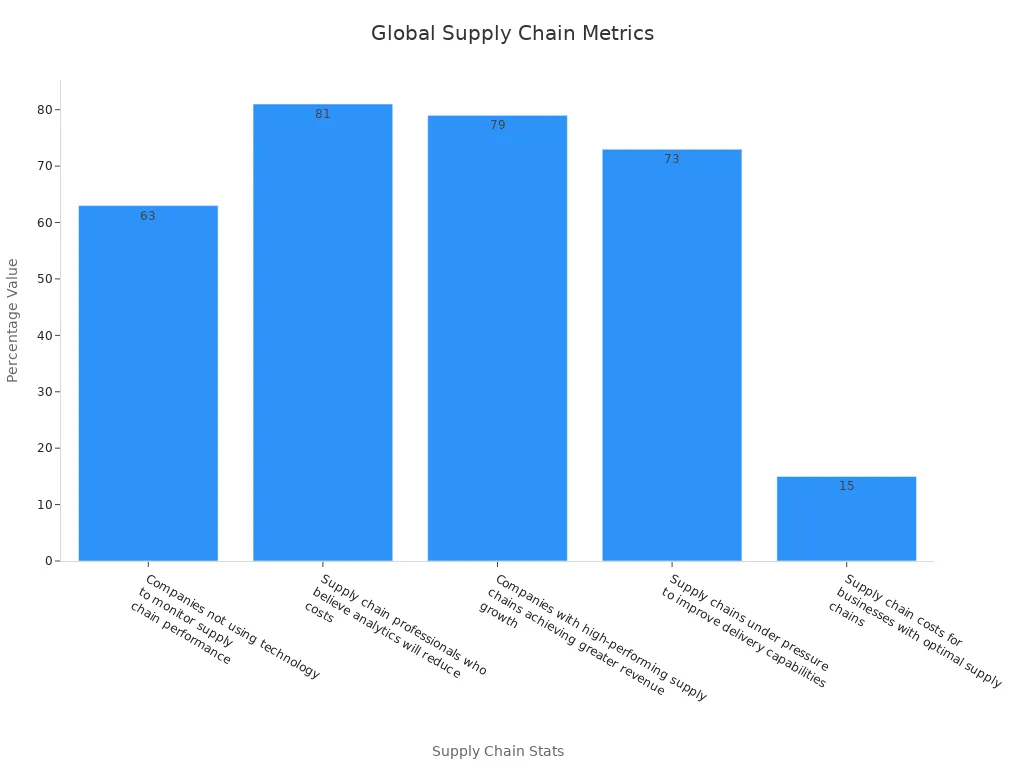
By connecting global supply chains, you can overcome these challenges and unlock new opportunities for growth. A connected supply chain fosters collaboration, reduces costs, and enhances customer satisfaction, making it a cornerstone of success in a globalized economy.
Challenges in Traditional Supply Chains
Limited Visibility Across the Supply Chain
Traditional supply chains often lack the transparency needed to make informed decisions. Limited visibility creates inefficiencies, stockouts, and customer dissatisfaction. Fragmented data across systems costs companies over $600 billion annually due to inconsistent reporting. Manual data entry further complicates the issue, leading to outdated information and miscalculations in stock levels.
-
Siloed data prevents real-time updates, making inventory management challenging.
-
Collaboration with suppliers becomes difficult when systems and processes differ.
-
Global supply chains struggle to meet customer expectations without real-time visibility.
Improving supply chain visibility is essential for overcoming these challenges. By connecting systems and enabling real-time data sharing, you can reduce inefficiencies and enhance customer satisfaction.
Operational Inefficiencies and Delays
Operational inefficiencies in traditional supply chains often result in delays that disrupt business operations. These inefficiencies stem from outdated processes, poor communication, and a lack of integration between stakeholders. For example, shipping delays during the Red Sea Crisis averaged 10–14 days, increasing costs and disrupting trade flows by $6 billion weekly.
A 35% increase in supply chain lead times has also been reported, significantly impacting industries reliant on just-in-time manufacturing. These delays highlight the need for modernized systems and better coordination to streamline operations and reduce costs.
Dependence on Outdated Systems
Outdated systems remain a significant barrier to supply chain efficiency. Legacy tools and manual processes hinder collaboration and slow down decision-making. The following table highlights key metrics that underscore these challenges:
|
Metric Description |
Percentage |
|
FP&A leaders who believe plan accuracy could improve with collaboration |
41% |
|
Teams involving stakeholders in both planning and reforecasting |
26% |
|
Leaders agreeing that lack of real-time data blocks collaboration |
24.84% |
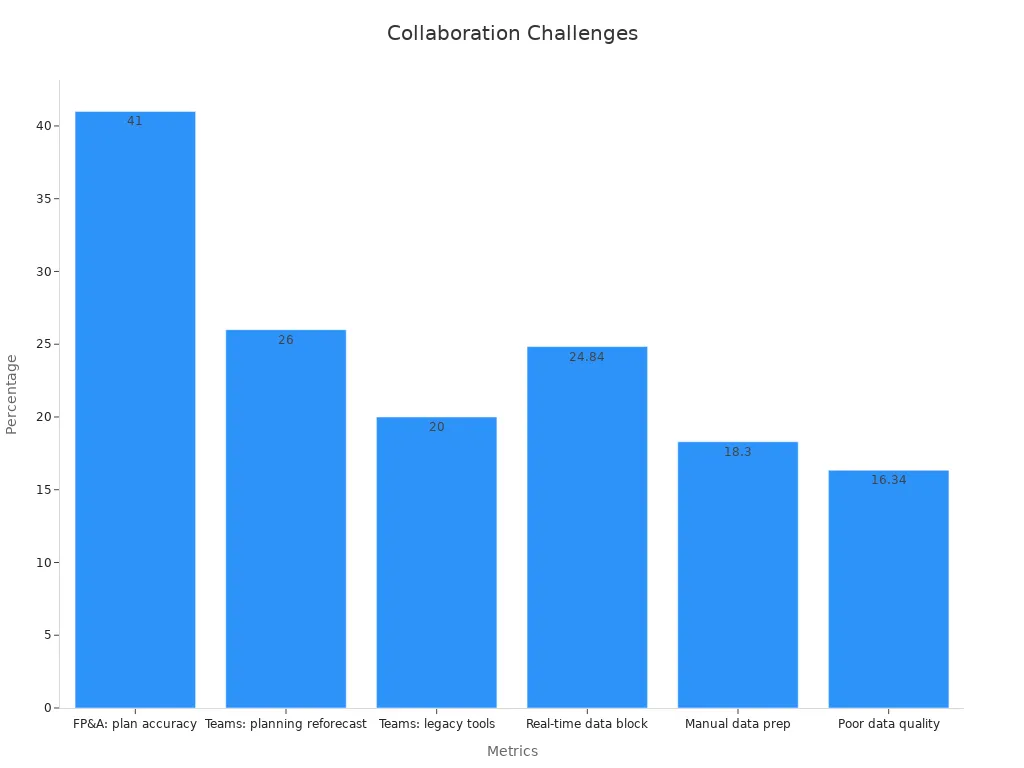
Dependence on outdated systems not only increases inefficiencies but also limits your ability to adapt to disruptions. Upgrading to modern, connected systems can help you overcome these challenges and build a more resilient supply chain.
Lack of Collaboration Among Stakeholders
A lack of collaboration among stakeholders often weakens traditional supply chains. When suppliers, manufacturers, and distributors fail to work together effectively, inefficiencies arise. Misaligned goals, poor communication, and siloed operations create barriers that slow down processes and increase costs. You may find it challenging to meet customer demands when stakeholders do not share critical information in real time.
Collaboration is essential for aligning priorities and ensuring smooth operations. Without it, you risk facing issues like duplicated efforts, missed deadlines, and inventory imbalances. For example, if suppliers do not communicate production delays, manufacturers may overpromise delivery timelines. This misstep can lead to dissatisfied customers and damaged reputations.
Multiparty collaboration offers a solution to these challenges. By fostering partnerships across the supply chain, you can create a unified network where stakeholders share data and insights. Digital platforms play a key role in enabling this level of connectivity. Tools like cloud-based systems allow you to centralize information, making it accessible to all parties involved. This transparency improves decision-making and reduces the likelihood of errors.
To enhance collaboration, you should focus on building trust among stakeholders. Regular communication, shared objectives, and mutual accountability strengthen relationships. When everyone works toward a common goal, the supply chain becomes more resilient and efficient. By prioritizing collaboration, you can overcome traditional barriers and unlock new opportunities for growth.
Strategies for Connecting Global Supply Chains
Leveraging Digital Technologies for Integration
Digital technologies are revolutionizing supply chain transformation by enabling seamless integration across global networks. These tools enhance visibility, improve decision-making, and optimize operations. By adopting emerging technologies, you can create a connected supply chain that adapts to disruptions and meets customer demands efficiently.
Several technologies have proven their effectiveness in supply chain optimization:
-
Internet of Things (IoT): Real-time tracking and monitoring provide enhanced visibility into inventory and shipments.
-
Big Data Analytics: Actionable insights help forecast demand and streamline processes.
-
Blockchain Technology: Secure and transparent transaction records build trust among stakeholders.
-
Artificial Intelligence (AI): Predictive analytics and automation improve decision-making and operational efficiency.
-
Robotic Process Automation (RPA): Automating repetitive tasks frees up resources for strategic activities.
For example, a global fashion retailer leveraged digitalization to increase its market share by over 28% and doubled its operating profit within three years. Third-party logistics (3PL) providers also play a vital role in enhancing visibility and optimizing supply chains. Their services enable effective collaboration, ensuring smoother operations across global networks.
By integrating these technologies, you can achieve a connected supply chain that delivers real-time insights, reduces costs, and improves customer satisfaction.
Implementing a Phased Approach to Connectivity
Transforming your supply chain into a connected network requires careful planning. A phased approach ensures that changes are implemented gradually, minimizing disruptions and maximizing benefits. This strategy allows you to address challenges step by step while building a resilient supply chain.
Recent studies highlight the effectiveness of phased connectivity. One company shared its experience, stating:
"As far as the Laundry & Home Care business is concerned, we have been transforming our supply chain in different phases over several years, and in the current phase we are really digging deep into digital. We stand humbly, like many other companies, at the beginning of a big and long transformation journey."
To implement a phased approach:
-
Assess Current Systems: Identify gaps and inefficiencies in your supply chain.
-
Set Clear Goals: Define objectives for each phase, such as improving visibility or enhancing collaboration.
-
Prioritize Technologies: Focus on tools that address immediate needs while laying the foundation for future upgrades.
-
Monitor Progress: Use key performance indicators (KPIs) to measure success and adjust strategies as needed.
This method ensures that your supply chain transformation aligns with your business goals and adapts to evolving market conditions.
Enhancing Collaboration Across Global Partners
Collaboration is the cornerstone of a connected supply chain. When global partners work together effectively, they create a unified network that drives efficiency and resilience. Enhanced collaboration fosters trust, improves communication, and aligns priorities among stakeholders.
Successful partnerships rely on several factors:
|
Factor |
Description |
|
Complementarity of expertise |
Ensures that partners bring different skills and knowledge to the table. |
|
Mutual benefits |
Partners gain advantages that motivate collaboration. |
|
Internet connectivity |
Facilitates communication and resource sharing among partners. |
|
Interactivity of design |
Engages participants actively, enhancing learning and collaboration. |
|
Reduction of social interaction anxiety |
Creates a comfortable environment for collaboration. |
For instance, digital platforms enable real-time data sharing, allowing suppliers, manufacturers, and distributors to coordinate efforts seamlessly. Cloud-based systems centralize information, making it accessible to all parties. This transparency reduces errors and improves decision-making.
To enhance collaboration, focus on building strong relationships with your partners. Regular communication, shared objectives, and mutual accountability create a foundation for success. By prioritizing collaboration, you can overcome traditional barriers and unlock new opportunities for growth.
Utilizing Financial Solutions Like XTransfer for Seamless Transactions
Global supply chains rely on efficient financial systems to ensure smooth operations. Cross-border transactions often involve complexities like currency conversions, high fees, and compliance with international regulations. These challenges can slow down your supply chain and increase costs. Financial solutions like XTransfer simplify these processes, enabling seamless transactions and enhancing supply chain connectivity.
How XTransfer Simplifies Cross-Border Payments
XTransfer provides a one-stop platform for managing cross-border payments. It connects businesses with trusted financial institutions worldwide, offering services that were once exclusive to large multinational corporations. Here’s how XTransfer can transform your financial operations:
-
Cost-Effective Transactions: XTransfer reduces transaction fees, helping you save money on international payments.
-
Streamlined Processes: The platform automates payment workflows, eliminating manual errors and delays.
-
Currency Support: It supports multiple currencies, allowing you to transact with global partners effortlessly.
-
Compliance Assurance: XTransfer ensures compliance with international financial regulations, reducing risks for your business.
Benefits of Financial Integration in Supply Chains
Integrating financial solutions like XTransfer into your supply chain offers several advantages. These benefits go beyond cost savings and directly impact your supply chain’s resilience and efficiency:
|
Benefit |
Description |
|
Faster Payments |
Speeds up transactions, ensuring timely payments to suppliers and partners. |
|
Improved Cash Flow |
Enhances cash flow management by reducing delays in receiving payments. |
|
Enhanced Transparency |
Provides real-time visibility into financial transactions across the supply chain. |
|
Stronger Partner Relationships |
Builds trust with global partners through reliable and efficient payments. |
By leveraging these benefits, you can create a more connected and resilient supply chain.
Why Choose XTransfer for Your Business?
XTransfer stands out as a financial solution tailored for global enterprises. It empowers businesses of all sizes to access premium financial services. Here’s why you should consider XTransfer:
-
Scalability: Whether you’re a small business or a large corporation, XTransfer adapts to your needs.
-
Security: Advanced encryption and fraud detection ensure your transactions remain secure.
-
User-Friendly Interface: The platform’s intuitive design makes it easy for you to manage payments.
-
Global Reach: XTransfer connects you with financial institutions worldwide, expanding your business opportunities.
Real-World Impact of XTransfer
Many businesses have already experienced the transformative impact of XTransfer. For example, a mid-sized manufacturing company reduced its transaction costs by 30% after adopting XTransfer. The company also reported faster payments to suppliers, which improved production timelines and customer satisfaction.
By choosing XTransfer, you can overcome financial barriers and unlock new opportunities for growth. Seamless transactions not only enhance your supply chain’s efficiency but also strengthen your position in the global market.
Call to Action: Explore how XTransfer can revolutionize your financial operations. Take the first step toward a connected and resilient supply chain today.
Benefits of a Connected Supply Chain
Real-Time Visibility and Transparency
Real-time visibility transforms how you manage your supply chain. It provides instant access to data, enabling you to monitor every stage of the process. This transparency ensures that you can identify inefficiencies and bottlenecks that might otherwise go unnoticed. For example:
-
Transparency depends on visibility; without it, you cannot achieve a clear view of your supply chain.
-
Suppliers lacking transparency hinder your ability to track operations effectively.
Access to real-time data also helps you make informed decisions. You can spot risks early and address them before they escalate. This proactive approach enhances operational efficiency and strategic planning. By improving supply chain visibility, you gain a competitive edge in today’s fast-paced market.
Faster Response to Disruptions
A connected supply chain allows you to respond quickly to unexpected disruptions. Real-time data enables you to adjust operations and minimize downtime. Metrics from recent studies highlight the impact of connectivity:
|
Metric |
Before Implementation |
After Implementation |
Improvement (%) |
|
Lead Time Variability (days) |
4.5 |
2.3 |
48% |
|
Inventory Turnover Ratio |
3.2 |
4.5 |
40% |
|
Forecast Accuracy (%) |
75 |
90 |
20% |
|
Order Fulfillment Lead Time |
8 days |
5 days |
37.5% |
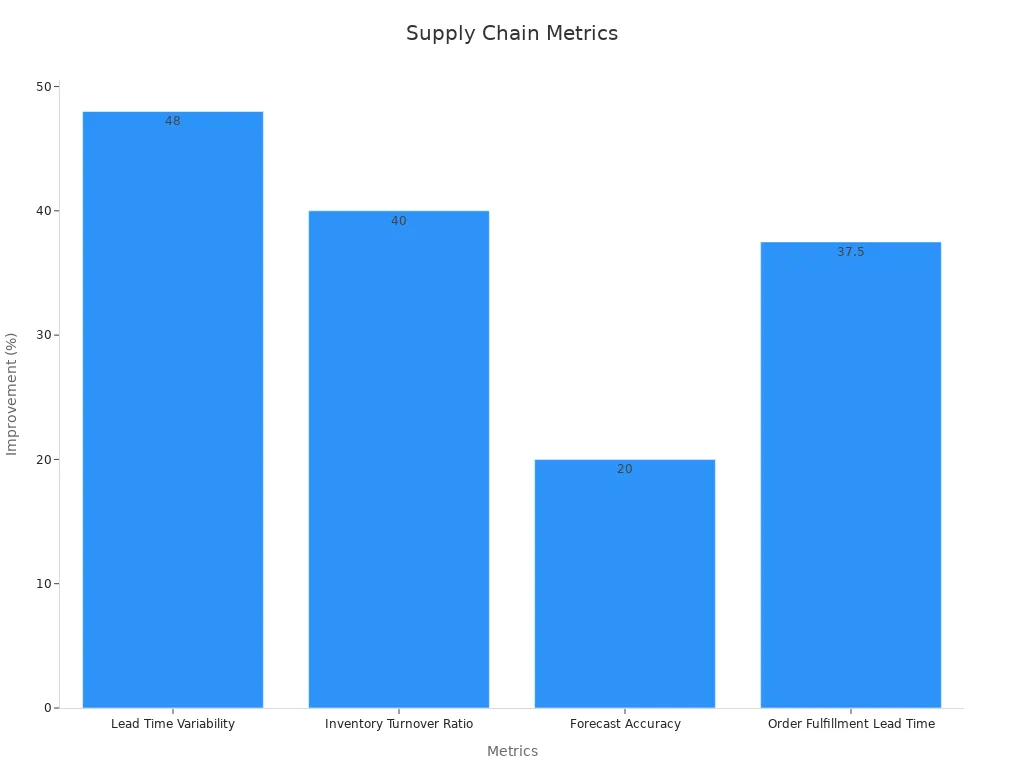
These improvements demonstrate how connectivity reduces delays and enhances your ability to meet customer demands. Faster responses not only protect your reputation but also strengthen relationships with stakeholders.
Cost Optimization and Operational Efficiency
A connected supply chain optimizes costs by improving resource allocation and reducing waste. Accurate forecasting minimizes excess inventory, cutting storage and obsolescence costs. Real-time insights also allow you to allocate resources more effectively. The following table highlights key benefits:
|
Benefit |
Description |
|
Improved Inventory Management |
Accurate forecasting reduces excess inventory, minimizing storage costs. |
|
Efficient Resource Allocation |
Precise demand insights enable optimal use of resources. |
|
Agility in Operations |
Real-time data allows quick adjustments to market changes. |
By streamlining operations, you can reduce expenses and improve profitability. These efficiencies position your business for long-term success in a competitive global market.
Strengthened Relationships with Stakeholders
Building strong relationships with stakeholders is essential for a resilient and efficient supply chain. A connected supply chain fosters trust and collaboration by ensuring transparency and seamless communication. When you prioritize stakeholder relationships, you create a network that works together to achieve shared goals.
How Connectivity Enhances Stakeholder Relationships
A connected supply chain enables real-time data sharing, which keeps all stakeholders informed. Suppliers, manufacturers, distributors, and customers can access the same information, reducing misunderstandings and delays. For example, if a supplier faces production issues, they can immediately notify you through a shared platform. This allows you to adjust your operations and avoid disruptions.
Benefits of Stronger Stakeholder Relationships
When you strengthen relationships with stakeholders, your supply chain becomes more efficient and adaptable. Here are some key benefits:
-
Improved Collaboration: Stakeholders work together to solve problems and optimize processes.
-
Increased Trust: Transparency builds confidence, making stakeholders more willing to invest in long-term partnerships.
-
Faster Decision-Making: Shared data allows for quicker responses to challenges.
-
Enhanced Customer Satisfaction: A well-coordinated supply chain ensures timely deliveries and high-quality service.
Real-World Example
Consider a global electronics company that implemented a connected supply chain. By sharing real-time data with suppliers and distributors, the company reduced lead times by 20%. This improvement strengthened relationships across the supply chain and boosted customer satisfaction.
By focusing on connectivity and collaboration, you can build a supply chain that not only withstands disruptions but also thrives in a competitive market.
Connected global supply chains have transformed how businesses navigate disruptions and improve efficiency. The COVID-19 pandemic exposed vulnerabilities, but companies like Apple demonstrated resilience by diversifying suppliers and expanding manufacturing globally. This shift toward agile and adaptable supply chains highlights the importance of embracing digital transformation.
By adopting connected systems, you can enhance visibility, streamline operations, and build stronger partnerships. Tools like XTransfer simplify financial integration, ensuring seamless cross-border transactions. Take the first step today to future-proof your supply chain and thrive in an unpredictable world.
FAQ
What is a connected supply chain?
A connected supply chain integrates technology, processes, and stakeholders to share real-time data. This approach ensures seamless communication, better decision-making, and improved efficiency across all stages of the supply chain.
How does connectivity improve supply chain resilience?
Connectivity enhances resilience by providing real-time visibility and faster responses to disruptions. It allows you to identify risks early, adjust operations quickly, and maintain smooth workflows during unexpected challenges.
Why should small businesses adopt connected supply chains?
Connected supply chains level the playing field for small businesses. They provide access to advanced tools, improve efficiency, and reduce costs. Solutions like XTransfer also simplify cross-border payments, making global operations more accessible.
What role does technology play in supply chain connectivity?
Technology drives connectivity by enabling real-time tracking, data sharing, and automation. Tools like IoT, AI, and blockchain improve visibility, streamline operations, and foster collaboration among stakeholders.
How can XTransfer benefit my supply chain?
XTransfer simplifies cross-border payments, reduces transaction costs, and ensures compliance with international regulations. It enhances financial transparency and strengthens relationships with global partners, making your supply chain more efficient and resilient.
Related content