
China Enhances Cross-Border Trade for Global Connectivity
Author:XTransfer2025.09.02Advancing China’s Trade
China has emerged as a global leader in advancing China’s trade and cross-border trade infrastructure, creating new opportunities for businesses worldwide. You can see its impact in numbers: global trade activity in goods reached $5.9 trillion USD in 2023, accounting for 20 percent of the world total. Investments have also surged, with foreign direct investment stock hitting $5.5 trillion. These advancements not only strengthen connectivity but also transform how you engage in international trade, making processes faster and more efficient. As China's strategic initiatives continue to reshape global markets, they pave the way for deeper economic integration and growth.
Advancing China’s Trade Through Key Government Initiatives
Policy Reforms for Streamlined Trade Facilitation
China has implemented significant policy reforms to simplify trade facilitation. These reforms aim to reduce barriers and create a seamless environment for cross-border transactions. For example, the government has focused on upgrading trade infrastructure and simplifying customs procedures. These efforts have led to smoother transactions and reduced operational costs for businesses.
|
Policy/Initiative |
Description |
Expected Impact |
|
Upgrading Trade Infrastructure |
Enhancing physical and digital infrastructure |
Smoother cross-border transactions, reduced costs |
|
Simplifying Customs Procedures |
Streamlining customs processes |
Faster clearance, fewer delays |
|
Regulatory Framework Refinement |
Improving trade regulations |
Increased predictability and transparency |
These reforms have made trade facilitation more efficient. By addressing bottlenecks in customs and refining regulations, China has created a predictable and transparent trade environment. This benefits businesses by reducing delays and operational challenges.
Establishment of Free Trade Zones and Pilot Programs
Free trade zone development has been a cornerstone of China’s strategy to advance its trade. These zones provide businesses with a controlled environment to test new policies and practices. The establishment of free trade zones has attracted foreign investment and improved regulatory transparency.
|
Measurable Outcome |
Description |
|
Increased Foreign Investment |
Free trade zones have boosted investment opportunities through a negative list system. |
|
Regulatory Transparency |
Pilot programs have simplified regulations, making it easier for foreign capital to enter. |
|
Opening of Shipping Market |
International shipping markets have become more accessible to foreign investors. |
These zones also support the Belt and Road Initiative by promoting standardization and enhancing global logistics. As a result, businesses can access international markets more easily, fostering economic growth and connectivity.
Regulatory Advancements in Digital Trade and E-Commerce
China has embraced digital trade and e-commerce to strengthen its global trade position. The government enacted the Electronic Signature Law to facilitate online transactions. This law has enhanced both domestic and international e-commerce activities. Additionally, China has invested in digital infrastructure to support economic growth through e-commerce.
-
Over 120,000 businesses operate in cross-border e-commerce pilot zones.
-
More than 2,500 overseas warehouses support international trade operations.
-
Customs bottlenecks have been reduced, improving operational efficiency for businesses.
China’s leadership in e-commerce initiatives has also helped domestic enterprises upgrade and access global markets. By promoting international collaboration, China aligns its trade objectives with its political and economic goals. These advancements not only benefit businesses but also strengthen China’s position as a global trade leader.
Transforming Cross-Border Trade with Major Infrastructure Projects
Expansion of Cross-Border Railways and Logistics Hubs
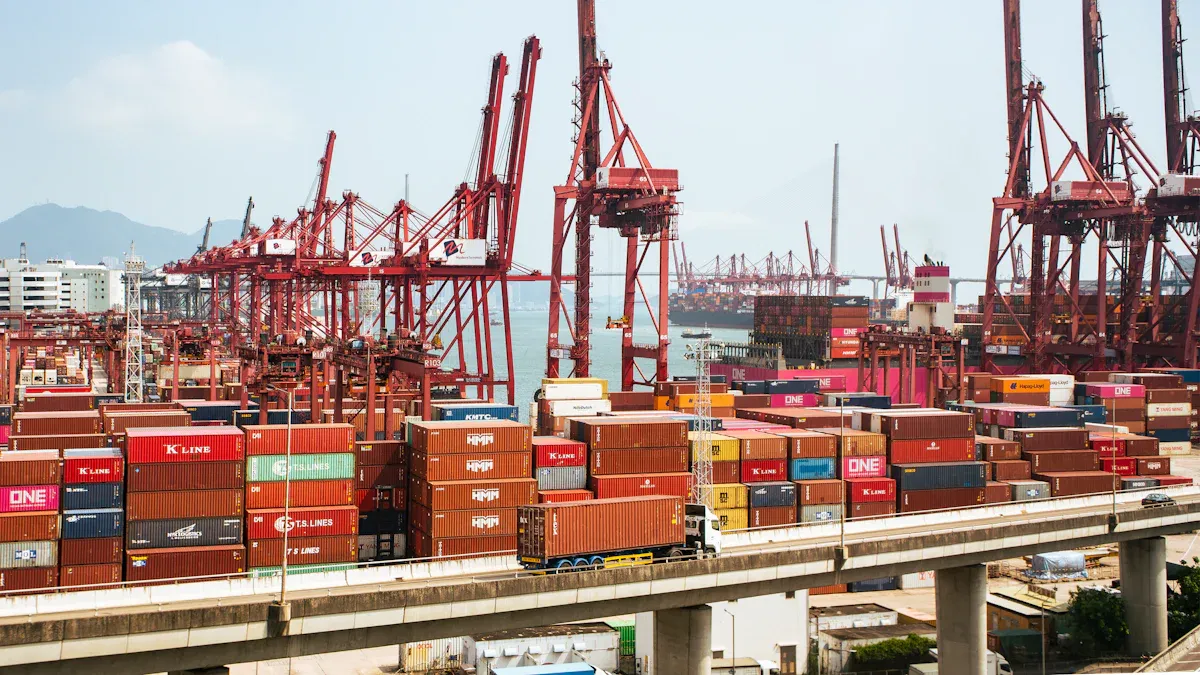
China has revolutionized cross-border trade by expanding its railway networks and logistics hubs. These cross-border railway projects have significantly reduced transit times and improved cargo handling capacity. For instance, the transit time for goods has dropped from 26 hours to just 8 hours, representing a 69% reduction. Additionally, cargo handling capacity has doubled, increasing from 250 containers per day to 500 containers per day. These advancements make rail freight a more efficient and cost-effective option for businesses.
|
Metric |
Previous Benchmark |
New Benchmark |
Percentage Change |
|
Transit Time (hours) |
26 |
8 |
69% reduction |
|
Cargo Handling Capacity |
250 containers/day |
500 containers/day |
100% increase |
|
Freight Cost Reduction (%) |
N/A |
30% |
N/A |
The Belt and Road Initiative (BRI) has played a pivotal role in these developments. This ambitious project connects 147 countries, covering two-thirds of the global population and 40% of global GDP. The China-Pakistan Economic Corridor (CPEC), a key component of the BRI, links China to Gwadar Port and involves an investment of $62 billion. These projects enhance transportation efficiency and strengthen global trade networks.
By investing in cross-border railway projects, China has created a robust infrastructure that supports seamless trade. These railways not only reduce costs but also improve the reliability of transportation, making it easier for you to move goods across borders.
Development of Cross-Border E-Commerce Zones
China has also focused on developing cross-border e-commerce zones to boost trade. These zones provide businesses with the infrastructure and support needed to engage in international e-commerce. Over 165 cross-border e-commerce comprehensive pilot zones have been established, involving more than 120,000 business entities. Additionally, China has developed over 1,000 industrial parks and 2,500 overseas warehouses to facilitate trade.
Despite this growth, regional disparities remain. Provinces like Guangdong and Beijing lead in cross-border e-commerce development, while western provinces lag behind. This highlights the need for targeted policies to address these disparities and ensure balanced growth across the country.
These e-commerce zones simplify trade processes and provide businesses with access to global markets. By leveraging these zones, you can expand your reach and tap into new opportunities in international trade.
Investments in Port Modernization and Smart Customs Systems
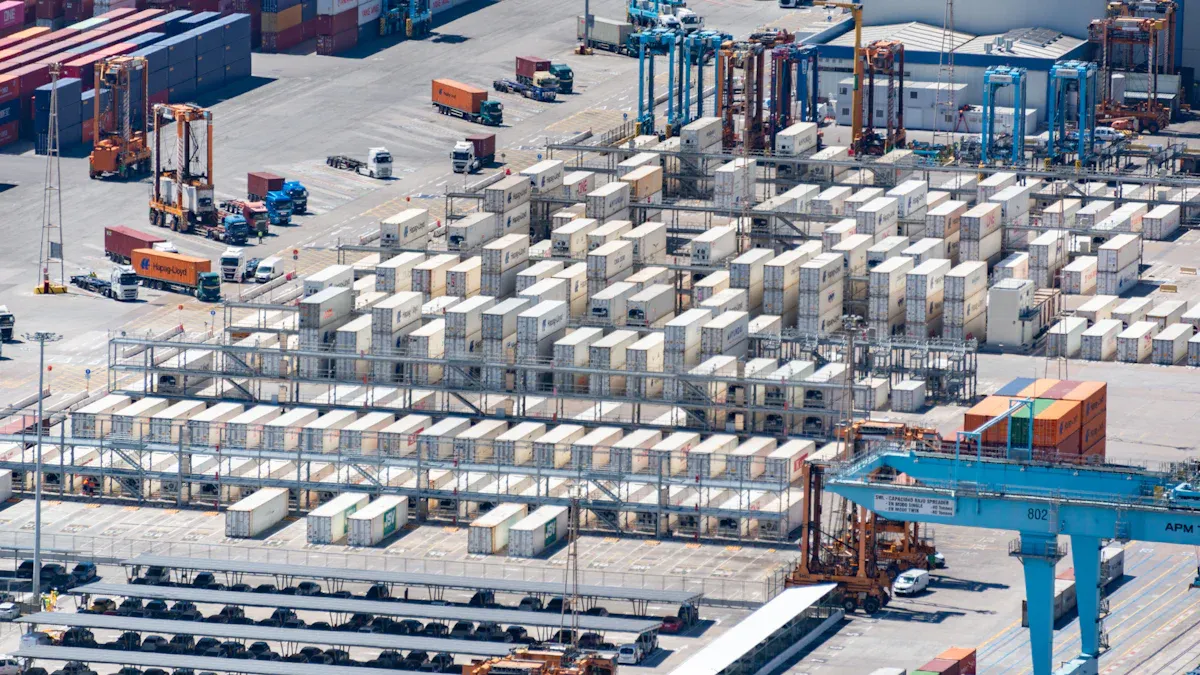
China has made significant investments in modernizing its ports and implementing smart customs systems. These investments enhance port capacity and efficiency, allowing for larger cargo volumes and faster processing times. Automation and digital tracking systems reduce operational costs and shipping times, making trade more efficient.
-
Modern port facilities stimulate local economies by creating jobs and driving economic growth.
-
Automation reduces total process time, improving overall efficiency.
-
Digital tracking systems enhance transparency and reduce delays in cargo handling.
The mathematical model E = k × (T + I) demonstrates how efficiency (E) increases with technology (T) and infrastructure (I) investments. By modernizing ports and adopting smart customs systems, China has created a trade environment that benefits businesses and supports global connectivity.
These advancements make it easier for you to navigate the complexities of international trade. With reduced costs and improved efficiency, you can focus on growing your business and reaching new markets.
Economic and Trade Benefits of Enhanced Cross-Border Infrastructure
Boosting Trade Efficiency and Reducing Costs
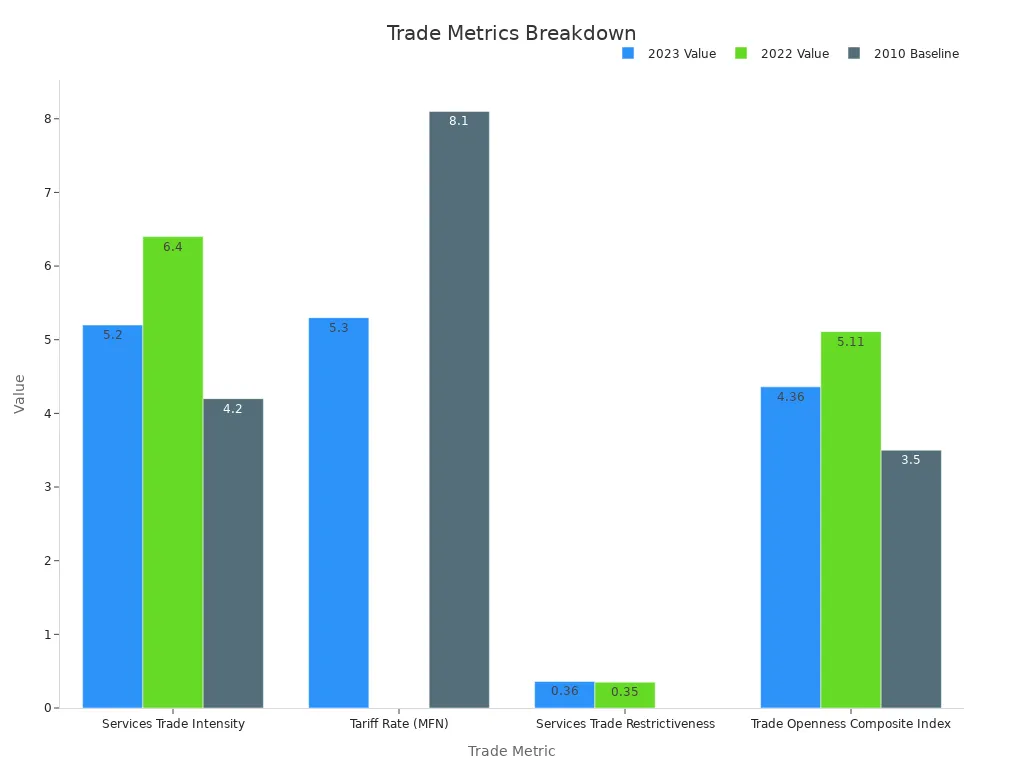
Enhanced cross-border trade infrastructure has significantly improved trade efficiency while reducing costs. China's investments in modernizing ports, expanding railways, and adopting smart customs systems have streamlined international trade processes. These advancements have lowered tariff rates and improved trade openness, as shown in the table below:
|
Metric |
2023 Value |
2022 Value |
2010 Baseline |
|
Services Trade Intensity |
5.2% |
6.4% |
4.2% |
|
Tariff Rate (MFN) |
5.3% |
N/A |
8.1% |
|
Services Trade Restrictiveness |
0.36 |
0.35 |
N/A |
|
Trade Openness Composite Index |
4.36 |
5.11 |
3.50 |
These improvements make it easier for you to move goods across borders, saving time and money. By reducing trade barriers, China has created a more accessible and efficient environment for businesses worldwide.
Supporting SMEs in Accessing Global Markets
Small and medium-sized enterprises (SMEs) benefit greatly from China's cross-border trade advancements. Improved infrastructure, such as roads and digital systems, ensures better market access. Additionally, simplified customs processes reduce the time required to obtain import licenses. Key data points include:
-
Market access indicators assess the quality of infrastructure like ICT and electricity.
-
The percentage of firms viewing customs as obstacles has decreased.
-
Women-owned businesses have gained leads and accessed new markets through promotional events.
These developments empower SMEs to compete in international trade, fostering economic growth and inclusivity.
Strengthening Regional and Global Trade Partnerships
China's efforts have strengthened trade partnerships on a regional and global scale. Initiatives like the Regional Comprehensive Economic Partnership (RCEP) have increased trade volumes among member countries. Tariff reductions under RCEP are expected to boost economic output and connectivity. For example:
-
The elimination of tariffs has expanded trade routes and supply chains.
-
Economic growth from these partnerships has led to increased foreign investment.
By fostering collaboration, China has positioned itself as a key player in global trade, creating opportunities for businesses like yours to thrive in interconnected markets.
Broader Implications of China’s Trade Advancements
Shaping New Trade Routes and Supply Chains
China’s trade advancements are reshaping global supply chains and creating new trade routes. These developments have led to significant increases in trade flows. For example:
-
Total trade with China is expected to grow by 21% after the signing of terminal operating contracts.
-
Exports to China could rise by 76% over 12 years if Chinese firms manage all terminals at a port.
-
However, countries allowing full control of terminals by Chinese firms saw a 19% drop in exports to other global markets.
These shifts highlight how China’s infrastructure investments and partnerships are influencing global trade patterns. By leveraging these new routes, you can access faster and more efficient supply chains, ensuring your goods reach international markets with ease.
Enhancing Competitiveness of Chinese and Global Enterprises
China’s trade initiatives are boosting the competitiveness of both domestic and global enterprises. The country’s focus on advanced manufacturing and export strategies has positioned it as a leader in global markets. The table below illustrates key trends:
|
Trend |
Description |
|
Shift in Trade Dynamics |
China is strengthening its export competitiveness in advanced economy markets. |
|
Export Similarity |
Chinese exports now align with sophisticated product categories in the euro area. |
|
Import Patterns |
China is importing fewer goods from advanced economies, limiting their market opportunities. |
These trends show how China’s economic strategies are transforming global trade dynamics. For your business, this means adapting to a competitive landscape where innovation and efficiency are essential for success.
Promoting Sustainable and Inclusive Trade Growth
China’s trade advancements also emphasize sustainability and inclusivity. Investments in green technologies and renewable energy are reducing the environmental impact of trade. Additionally, initiatives like cross-border e-commerce zones are empowering small and medium-sized enterprises (SMEs) to participate in global markets. Women-owned businesses, in particular, are gaining new opportunities through targeted programs and events.
By prioritizing sustainable practices, China is setting an example for responsible economic growth. These efforts create a more inclusive trade environment, allowing businesses like yours to thrive while contributing to a greener future.
Challenges in Advancing China’s Cross-Border Trade Infrastructure
Navigating Regulatory and Bureaucratic Hurdles
You may encounter significant regulatory and bureaucratic challenges when engaging in cross-border trade with China. The country’s focus on self-sufficiency often leads to policies that prioritize reducing economic vulnerabilities. While this approach strengthens internal stability, it complicates trade relations with developed nations. For instance, customs procedures can become cumbersome due to inconsistent regulations and lengthy approval processes. These hurdles slow down customs clearance, increasing costs and delays for businesses.
Economic disparities within China further exacerbate these challenges. With a per capita GDP that is one-seventh that of the United States and an average wage of $1.52 per hour, large portions of the population live in relative poverty. This economic imbalance limits the resources available for infrastructure upgrades, creating bottlenecks in trade facilitation.
Addressing Geopolitical Tensions and Trade Disputes
Geopolitical tensions pose another major obstacle to advancing China’s trade infrastructure. The ongoing strategic competition between the United States and China disrupts global supply chains. Both nations have adopted restrictive trade practices, particularly in high-tech industries. Concerns over dual-use goods with potential military applications further complicate trade negotiations.
The decoupling scenario, where both countries aim to reduce dependence on each other, has led to a significant drop in trade volumes. Even non-critical goods face barriers, making it harder for businesses to maintain stable supply chains. These tensions highlight the need for you to diversify trade partnerships and explore alternative markets to mitigate risks.
Balancing Economic Growth with Environmental Concerns
China’s rapid economic growth often conflicts with its environmental goals. Projects like the South-North Water Transfer and the West–East Electricity Transmission aim to address resource distribution while promoting development. However, balancing these initiatives with sustainability remains a challenge.
China plans to increase natural gas consumption to 15% by 2030, signaling a shift toward cleaner energy. Yet, the approval of 218 GW of new coal power plants between 2022 and 2023 raises questions about its commitment to achieving net zero emissions by 2060. Investments in 5G networks and high-speed rail demonstrate progress in connectivity, but environmental concerns persist. For businesses like yours, understanding these dynamics is crucial for aligning with sustainable trade practices.
China’s advancements in cross-border trade infrastructure have reshaped global connectivity. These efforts create faster, more efficient trade routes, offering you opportunities to expand into international markets. However, challenges like regulatory hurdles and environmental concerns require careful navigation. Platforms like XTransfer simplify this process by providing seamless and cost-effective financial solutions. With XTransfer, you can focus on growing your business while overcoming the complexities of cross-border trade.
FAQ
What is cross-border trade, and why is it important?
Cross-border trade involves the exchange of goods and services between different countries. It drives economic growth by connecting global markets, creating jobs, and fostering innovation. For businesses, it opens opportunities to reach international customers and expand their operations.
How do China’s cross-border e-commerce zones benefit businesses?
These zones provide infrastructure and support for international trade. They simplify processes like customs clearance and offer access to global markets. Businesses can use these zones to reduce costs, improve efficiency, and grow their customer base.
What role does technology play in cross-border trade?
Technology enhances cross-border trade by streamlining logistics, automating customs, and improving transparency. Digital platforms and smart systems reduce delays and costs, making it easier for businesses to operate globally. They also enable real-time tracking and secure transactions.
How can small businesses compete in cross-border markets?
Small businesses can leverage digital tools, e-commerce platforms, and government initiatives to access global markets. Simplified customs processes and infrastructure improvements make it easier for them to trade internationally. Participating in cross-border e-commerce zones can also provide additional support.
What challenges should you expect in cross-border trade?
You may face regulatory hurdles, geopolitical tensions, and environmental concerns. Navigating customs procedures and adapting to different trade policies can be complex. Diversifying trade partnerships and using platforms like XTransfer can help you overcome these challenges.
Related content