
What is the Purpose of a Bank Account Opening Certificate
Author:XTransfer2025.12.04Bank Account Opening
When you engage in bank account opening, the bank provides a certificate to confirm its creation. This document acts as proof that your account is officially active and recognized. You might need it for legal purposes or when conducting business transactions. For businesses, it ensures compliance with regulations, while individuals use it to simplify administrative tasks. By presenting this certificate, you can confidently verify your account status in various situations.
What Is a Bank Account Opening Certificate?
Definition and Overview of the Certificate
A bank account opening certificate is an official document issued by a bank to confirm the creation of a new account. This document serves as proof that the account exists and is active. It includes essential details such as the account holder's name, account number, and the date the account was opened. Banks issue this certificate to both individuals and businesses, ensuring that they have a formal record of their financial relationship.
For businesses, this certificate plays a critical role in establishing credibility. It demonstrates that the business has a legitimate bank account, which is often a prerequisite for conducting financial transactions. For individuals, it provides a reliable way to verify their account status when required for administrative or legal purposes.
Importance for Businesses and Individuals
The bank account opening certificate holds significant value for both businesses and individuals. It acts as a vital document in various scenarios where proof of account ownership is necessary. Here are some key applications:
-
Opening a Business Bank Account: Businesses often need this certificate to open additional accounts or manage multiple financial operations.
-
Applying for Business Loans: Lenders require proof of account ownership to ensure the applicant has the legal authority to request a loan.
-
Entering into Contracts: Many contracts, especially in business, demand verification of the account used for transactions.
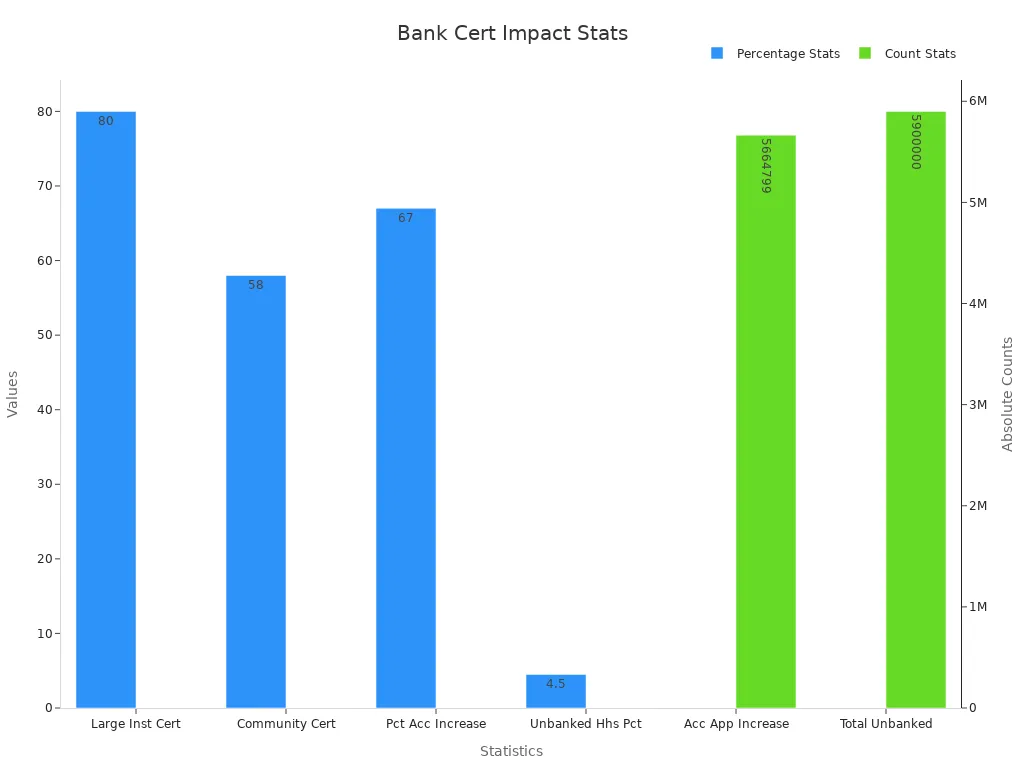
Statistical data highlights the importance of such certificates. For example, 80% of new customers at large institutions and 58% at community institutions open Bank On-certified accounts. These accounts provide a secure and verified way to manage finances. Additionally, the number of accounts opened increased by 5,664,799 in the previous year, reflecting a 67% growth. This trend underscores the growing reliance on formal banking documentation.
For individuals, the certificate simplifies administrative processes. It can be used to verify account details when applying for government benefits, renting property, or even during legal proceedings. By providing a clear and official record, the certificate ensures smooth interactions in these situations.
Are There Fees for a Bank Account Opening Certificate?
Typical Fee Structures Across Banks
When you request a bank account opening certificate, the fees can vary depending on the bank. Some banks provide this document as a complimentary service, especially for new customers. Others may charge a small fee to cover administrative costs. The amount often depends on the type of account you hold. For example, premium or business accounts may include this service for free, while basic accounts might require a payment.
Banks usually disclose these fees upfront, so you can check their fee schedule before making a request. In some cases, the cost may also depend on how you request the certificate. For instance, online requests might be cheaper than in-person visits. Always confirm the charges to avoid surprises.
Free vs. Paid Certificates: What You Should Know
Understanding whether the certificate is free or paid helps you plan better. Free certificates are common for personal accounts or when banks offer promotions. These can save you money, especially if you need multiple copies. However, paid certificates often come with added benefits, such as faster processing or additional details included in the document.
If you’re running a business, paying for a certificate might be worth it. It provides official proof of your account, which is essential for contracts or financial transactions. On the other hand, individuals might prefer free options if they only need the certificate for basic administrative tasks. Always weigh the cost against the value it provides to make the best choice.
What Information Is Included in a Bank Certificate?
Key Details Found in the Certificate
A bank certificate contains essential information that verifies your account's existence. This document typically includes the following details:
-
Account Holder's Name: Your full legal name as registered with the bank.
-
Account Number: A unique identifier for your account.
-
Date of Account Opening: The exact date when the account was created.
-
Bank Details: The name and address of the issuing bank.
-
Account Type: Whether it is a savings, checking, or business account.
-
Official Stamp or Signature: A stamp or signature from the bank to authenticate the certificate.
These details ensure the certificate serves as reliable proof of your account. Banks include this information to meet legal and financial standards, making the document universally accepted.
How the Information Is Used in Financial and Legal Contexts
The information in a bank certificate plays a vital role in various scenarios. You might need it to prove your account ownership when applying for loans or entering into contracts. Businesses often use it to establish credibility with partners or regulatory authorities. For example, when bidding for government projects, companies must provide proof of their financial standing.
In legal contexts, the certificate can act as evidence during disputes or audits. It confirms that the account exists and is linked to you. This document also simplifies administrative tasks, such as registering for government benefits or verifying your identity for official purposes. By presenting this certificate, you can navigate these processes with ease and confidence.
How to Obtain a Bank Account Holder Certificate
Step-by-Step Guide for In-Person Requests
Obtaining this certificate in person involves a straightforward process. You can follow these steps to ensure a smooth experience:
-
Visit Your Bank Branch: Go to the branch where you hold your account. Carry a valid ID and any documents the bank might require.
-
Request the Certificate: Approach the customer service desk and inform them that you need a bank account holder certificate. Specify the purpose of the request if needed.
-
Provide Necessary Details: Share your account number and confirm your identity. Some banks may ask for additional information, such as proof of account balance or the reason for obtaining the certificate.
-
Pay Any Applicable Fees: If the bank charges a fee, make the payment. The staff will inform you about the cost upfront.
-
Collect the Certificate: Once processed, the bank will issue the certificate. You may receive it immediately or be asked to return later for collection.
How to Request the Certificate Online
Many banks now offer online services to simplify the issue of a bank account holder certificate. This method is convenient and saves you a trip to the branch. Here’s how you can request it online:
-
Log In to Your Online Banking Portal: Use your credentials to access your account through the bank’s website or mobile app.
-
Navigate to the Certificate Request Section: Look for an option labeled “Account Services” or “Document Requests.” This section usually includes the option to request a bank account holder certificate.
-
Fill Out the Request Form: Provide the necessary details, such as your account number and the type of certificate you need. Some banks may allow you to specify whether you need financial proof or proof of account balance.
-
Pay Any Fees Online: If there’s a fee, you can pay it directly through the portal. The system will guide you through the payment process.
-
Download or Receive the Certificate: Once processed, the bank will either email the certificate to you or make it available for download in your account dashboard.
Using Xtransfer for Simplified Financial Processes
If you’re looking for a more streamlined way to handle financial proof and documentation, Xtransfer offers an excellent solution. This platform specializes in simplifying financial processes for businesses, including the ways of obtaining it. Here’s how Xtransfer can help:
-
Centralized Financial Management: Xtransfer consolidates your financial operations, making it easier to manage multiple accounts and transactions.
-
Quick Access to Documentation: The platform allows you to request and obtain essential documents, such as a bank account holder certificate, without the hassle of visiting a branch or navigating complex online portals.
-
Enhanced Security: Xtransfer ensures your data remains secure while providing you with reliable proof of account ownership.
-
Time-Saving Features: By automating many administrative tasks, Xtransfer helps you focus on your core business activities.
Using Xtransfer can be particularly beneficial for businesses that require frequent documentation or need to provide proof of account balance for various transactions. It’s a modern solution designed to meet the demands of today’s fast-paced financial environment.
A bank account opening certificate provides you with essential proof of your account's creation. This document ensures you meet legal and financial requirements, whether you're an individual or a business. By understanding the fees, contents, and steps to obtain it, you can simplify the process and avoid unnecessary delays. For businesses, platforms like Xtransfer offer a convenient way to manage financial operations and access important documentation. This approach saves time and keeps your financial processes organized.
FAQ
What is the purpose of a bank certificate?
A bank certificate confirms your account's existence and details. It serves as proof for legal, financial, or administrative purposes. You can use it to verify your account ownership when applying for loans, entering contracts, or fulfilling regulatory requirements.
How long does it take to get a bank certificate?
The time varies by bank. Some issue it instantly, while others may take a few days. Online requests often process faster. Check with your bank for specific timelines to avoid delays.
Can you request a bank certificate for multiple accounts?
Yes, you can request a bank certificate for each account you own. Ensure you provide the correct account details for each request. Some banks may charge separate fees for multiple certificates.
Is a bank certificate valid indefinitely?
No, a bank certificate typically has a validity period. Most banks specify this on the document. Always confirm the validity before using it for official purposes to avoid complications.
Do all banks charge for a bank certificate?
Not all banks charge for a bank certificate. Some offer it free for new customers or specific account types. Others may charge a fee. Review your bank’s fee schedule to understand the costs involved.
Related content