
What is Lift On Lift Off (LoLo)? Definition, Principles, and Applications
Author:XTransfer2026.01.05LoLo
One-Sentence Definition
Lift On Lift Off (LoLo) is a cargo handling method in maritime shipping in which cranes are used to lift goods vertically onto and off vessels, making it especially suitable for containers, heavy machinery, and oversized or irregular cargo, particularly in ports with limited infrastructure.
What Is Lift On Lift Off (LoLo)?
Lift On Lift Off, commonly referred to as LoLo, describes both a cargo handling technique and the vessels designed to support it. In LoLo operations, cargo is loaded and unloaded using cranes, either installed on the ship itself or provided by the port. The cargo is lifted vertically, rather than being driven or rolled onto the vessel.
This method differs fundamentally from Roll On Roll Off (RoRo) shipping, which relies on ramps and wheeled cargo. Because LoLo does not require cargo to be mobile, it is widely used for non-wheeled, heavy, or irregularly shaped goods. As a result, LoLo plays an essential role in international trade and global logistics, especially where port facilities are basic or underdeveloped.
How LoLo Shipping Works
The Role of Cranes in LoLo Operations
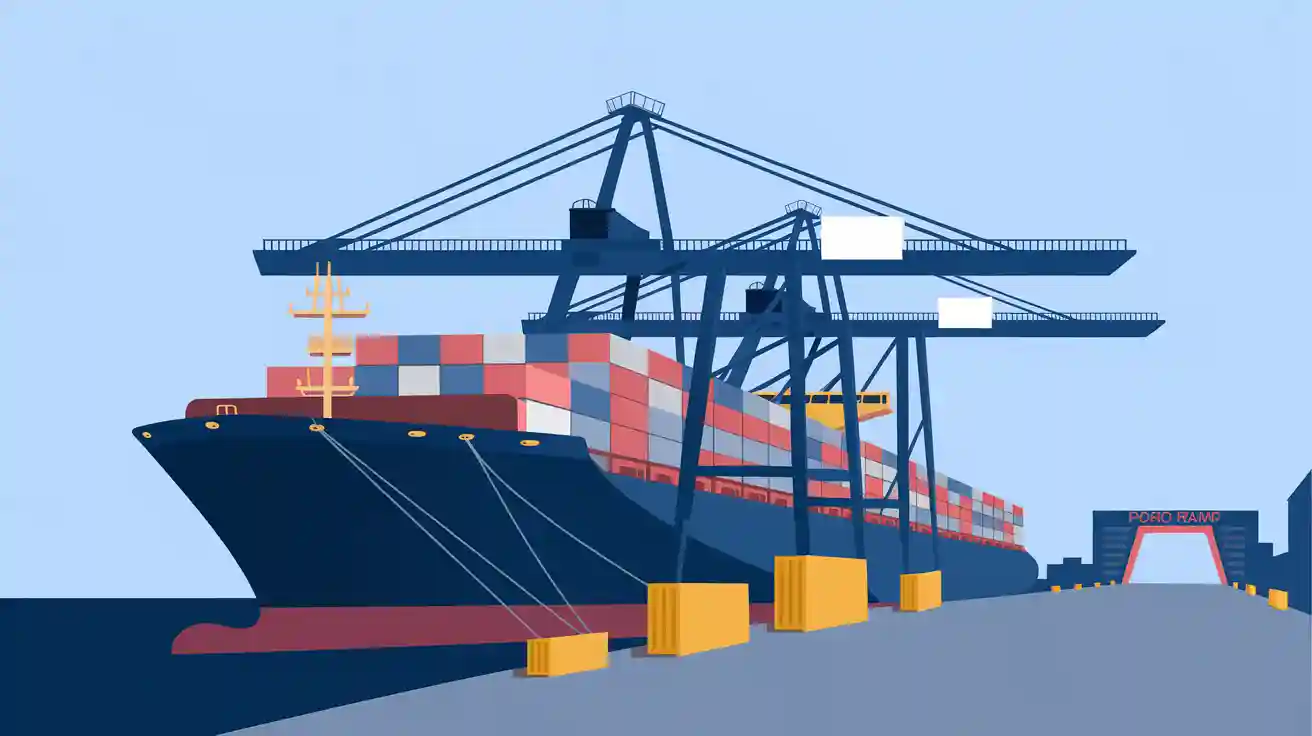
Cranes are the core component of any LoLo operation. Depending on the vessel type and port conditions, different cranes may be used. Jib cranes offer rotational flexibility and are commonly installed on geared vessels. Derrick cranes, often motor-driven, are designed for lifting very heavy cargo. In large container terminals, gantry cranes mounted on rails are used to handle standardized containers efficiently.
The vertical lifting process allows precise placement of cargo in the ship’s hold or on deck, reducing the risk of cargo shifting during transit.
Geared Vessels and Port Infrastructure
Many LoLo vessels are geared vessels, meaning they are equipped with their own onboard cranes. This enables them to operate independently of port equipment and makes them highly valuable in regions where shore-based cranes are unavailable or unreliable.
Because of this self-sufficiency, LoLo shipping can function in ports with minimal infrastructure. This flexibility significantly expands the range of accessible ports for exporters and importers, particularly in emerging markets.
Types of Cargo Suitable for LoLo
LoLo shipping is commonly used for containers, heavy industrial machinery, construction equipment, and break bulk cargo. It is particularly effective for oversized or unusually shaped goods that cannot be driven onto a ship or loaded using standard ramps.
In many international trade scenarios, LoLo is the preferred option for project cargo and capital equipment, where size, weight, and handling precision are critical factors.
Real-World Applications of LoLo
LoLo in International Trade
LoLo vessels are widely used in global trade routes to transport industrial equipment, manufacturing machinery, and containers. Export-oriented manufacturing economies, such as China, rely heavily on LoLo shipping to move complex cargo to overseas markets, especially when destination ports lack specialized RoRo facilities.
Practical Case Example
Consider a Chinese exporter shipping oversized industrial machinery to an overseas buyer. Due to the cargo’s size and weight, a LoLo vessel is selected to ensure safe handling. In this scenario, cross-border freight payments are often settled through B2B fintech platforms such as XTransfer, which provide secure, compliant, and cost-efficient international payment solutions for exporters.
LoLo Compared with RoRo Shipping
Key Differences Between LoLo and RoRo
The primary distinction between LoLo and RoRo lies in the loading method. LoLo uses vertical lifting by cranes, while RoRo relies on horizontal movement via ramps. This makes LoLo more suitable for containers and heavy or bulky items, whereas RoRo is typically used for wheeled vehicles and drivable machinery.
LoLo generally requires less port-side infrastructure and offers greater flexibility in port selection. However, it is usually slower than RoRo due to additional handling steps. From a safety perspective, LoLo provides strong cargo stability, while RoRo cargo may face higher risk if not properly secured. In terms of environmental impact, LoLo operations are often considered more eco-friendly due to lower emissions per unit of cargo.
Industry Trends: Automation and Smart LoLo Logistics
Digitalization and Efficiency Improvements
Modern LoLo operations are increasingly adopting automation and smart logistics technologies. Motion-compensated cranes, digital cargo planning systems, and integrated port management platforms are improving efficiency, safety, and operational transparency.
These technological advances are helping LoLo remain competitive in global supply chains, particularly for complex and high-value cargo that requires careful handling.
Related Concepts in Maritime Logistics
LoLo is closely related to several key logistics concepts, including Roll On Roll Off shipping, break bulk cargo, container shipping, geared vessels, and port operations. Together, these elements form the foundation of modern maritime logistics and international trade.
Supporting Global Trade and Payments
Efficient cargo handling is only one part of successful international trade. Secure and reliable payment systems are equally important. XTransfer provides compliant, low-cost, and efficient cross-border payment solutions for B2B exporters and importers worldwide, helping businesses streamline international transactions and support global logistics operations.
Related content