
What is Electronic Data Interchange (EDI)?
Author:XTransfer2026.01.08Electronic Data Interchange
One-Sentence Definition
Electronic Data Interchange (EDI) is the automated, computer-to-computer exchange of standardized business documents—such as purchase orders, invoices, shipping notices, and payment instructions—between organizations, without manual intervention.
What Does EDI Mean in Global Trade in 2026?
In 2026, EDI continues to play a critical role in global trade and international procurement. Despite the rise of APIs and cloud-based integrations, EDI remains the preferred solution in many industries where standardization, compliance, and data accuracy are essential. For global buyers, EDI enables structured data to flow directly between internal systems and those of suppliers, logistics providers, and financial partners, reducing delays and operational risk in cross-border transactions.
How Does EDI Work Between Trading Partners?
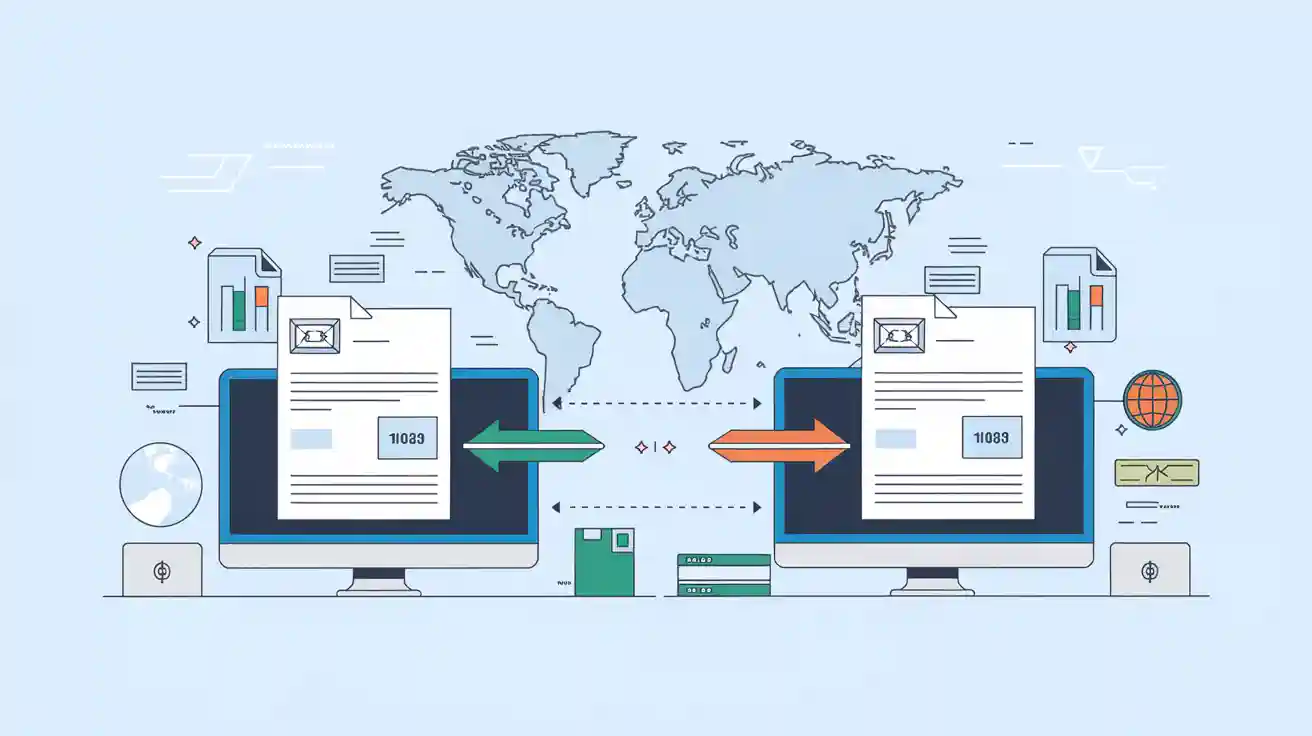
EDI operates on a predefined and highly structured workflow. A business system generates a document such as a purchase order, which is then translated into a standardized EDI format. This document is transmitted securely to a trading partner, whose system automatically receives, interprets, and processes the data. Because both parties agree on formats and communication rules in advance, transactions can be executed quickly and consistently without human re-entry or manual verification.
What Are the Core Components of an EDI System?
Standardized Data Formats
EDI relies on globally recognized standards to ensure interoperability. ANSI X12 is predominantly used in North America and is based on numeric transaction codes, while EDIFACT serves as the international standard across Europe and Asia, using alphanumeric message structures. These standards allow buyers and suppliers in different regions to exchange documents with a shared understanding of data meaning.
Secure Transmission Methods
EDI documents are transmitted through secure communication protocols such as AS2, FTP, or SFTP, as well as through Value-Added Networks. These methods ensure data confidentiality, integrity, and traceability, which are especially important in regulated industries and international trade environments.
EDI Translation and Integration
EDI translation software converts internal business data into EDI-compliant messages and translates incoming EDI documents back into formats that enterprise systems can process automatically. When integrated with ERP or financial systems, this enables end-to-end automation from order placement to settlement.
Trading Partner Agreements
Before EDI exchange begins, trading partners define the document types, standards, transmission methods, and validation rules they will use. These agreements create predictability and reduce disputes, supporting long-term supplier relationships and scalable procurement operations.
How Is EDI Used in Real-World Global Commerce?
EDI is widely used to automate high-volume and repetitive transactions, including purchase orders, order confirmations, shipping notices, invoices, and remittance advice. In cross-border payments and financial technology, EDI is increasingly applied to automate payment instructions, compliance reporting, and reconciliation processes. Platforms such as XTransfer incorporate EDI-based logic to streamline international payment workflows, helping global buyers reduce manual processing and improve accuracy in multi-currency transactions.
How Does EDI Compare with API and SWIFT in 2026?
EDI, APIs, and SWIFT address different integration needs. EDI excels in standardized, document-based, batch data exchange at scale. APIs are better suited for real-time, flexible integrations and modern cloud-native systems. SWIFT focuses on secure financial messaging between banks. In practice, many global trade environments use EDI alongside APIs, combining reliability with real-time visibility.
Why Should Global Buyers Care About EDI?
For global buyers, EDI offers operational efficiency, scalability, and compliance. By eliminating manual data handling, EDI reduces errors and processing time while supporting auditability and regulatory requirements. In complex international supply chains, EDI remains a trusted infrastructure layer that enables consistent and secure collaboration across borders.
Related Concepts
EDI is closely connected to several key technologies and standards, including APIs for real-time integration, EDIFACT and ANSI X12 as core EDI standards, Value-Added Networks for document transmission, ERP integration for automation, and SWIFT for interbank financial messaging. Understanding how these components interact helps global buyers build resilient and future-ready procurement systems in 2026.
Ready to streamline your cross-border payments and automate your business transactions? Discover how XTransfer can help your company achieve secure, efficient, and compliant global trade settlementshttps://www.xtransfer.com/.
Related content