
Understanding the 2025 Minimum Wage Hikes and Their Broader Impact
Author:XTransfer2025.12.25Minimum wage
The 2025 minimum wage increase is set to impact millions of workers and businesses across the United States. Approximately 22,247,000 workers, or 15% of the wage-earning workforce, will see their paychecks grow. On average, each affected worker could gain an additional $3,200 annually, contributing to a total wage boost of $70 billion. These changes are not just numbers—they represent a significant shift in economic opportunity for low-income earners.
For businesses, understanding the implications of this wage hike is crucial. Research shows that higher wages can reduce employee turnover and improve productivity. Studies also reveal that raising the minimum wage often stimulates consumer spending, fueling economic growth without causing significant job losses. By grasping these dynamics, you can better prepare for the challenges and opportunities ahead.
Federal Minimum Wage in 2025
Current federal minimum wage and its unchanged status
The federal minimum wage has remained at $7.25 per hour since 2009. This unchanged rate makes it one of the longest periods without an adjustment in U.S. history. While the cost of living has risen significantly over the years, the federal rate has not kept pace. In 2025, many states are stepping in to address this gap. A total of 21 states are increasing their minimum wages, reflecting a growing trend of states setting higher rates than the federal standard.
For workers in states that follow the federal minimum wage, this stagnation can mean limited financial growth. You may find it harder to meet basic needs, especially as inflation continues to affect everyday expenses. Understanding these dynamics is crucial for navigating the evolving wage landscape.
Key industries affected by the federal minimum wage
Certain industries feel the effects of the federal minimum wage more than others. Sectors like retail, hospitality, and food services employ a large number of minimum wage workers. These industries often rely on entry-level positions, making them particularly sensitive to wage policies.
If you work in these industries, you may experience direct benefits from state-level wage increases. However, businesses in these sectors often face challenges in balancing labor costs with profitability.
Federal versus state-level wage policies
The divide between federal and state wage policies continues to grow. While the federal minimum wage remains static, many states are taking action to implement higher rates. This creates a patchwork system where wages vary significantly depending on where you live. For example, some states align with the federal rate, while others adopt progressive increases to address local economic conditions.
This state-by-state minimum wage approach highlights the importance of staying informed about local policies. If you live in a state with higher wages, you may enjoy better financial opportunities. On the other hand, workers in states adhering to the federal rate may face greater economic challenges.
State-Specific Minimum Wage Changes
States with the largest minimum wage increases
In 2025, several states are leading the charge with significant minimum wage increases. Hawaii stands out with a $2.00 hike, bringing its minimum wage to $14.00. This change translates to an annual pay boost of $1,380 for workers. Washington also sees a notable increase of $0.54, raising its minimum wage to $16.28, one of the highest rates in the country. Other states like Maryland, New Jersey, and Upstate New York have reached $15.00, aligning with their progressive wage policies.
Michigan recorded a $0.23 increase, bringing the minimum wage to $10.33, with an annual wage boost of $216.
In Washington, the minimum wage rose by $0.54 to $16.28; no annual wage boost data is provided.
For Maryland, New Jersey, and Upstate New York, the minimum wage is listed as $15.00, while data on the size of the increase and the annual wage boost is not available.
These minimum wage updates reflect a growing commitment to improving pay for workers. If you live in one of these states, you may experience better financial stability and increased purchasing power.
States maintaining the federal minimum wage
While many states are increasing their minimum wages, others continue to adhere to the federal minimum wage of $7.25. States like Georgia and Wyoming have even lower state minimum wages at $5.15, though the federal rate applies to most workers. Alabama, Louisiana, Mississippi, South Carolina, and Tennessee lack state-level minimum wage laws entirely, defaulting to the federal standard.
In Georgia and Wyoming, the minimum wage is listed as $5.15, with no state-level increase in place.
Alabama, Louisiana, Mississippi, South Carolina, and Tennessee do not have a state minimum wage, and the federal minimum wage applies in these states.
If you live in one of these states, you may face challenges in meeting basic needs due to stagnant wages. Employers in these regions may also struggle to attract and retain talent as neighboring states offer higher pay.
Regional trends in wage policies
Across the United States, regional trends in wage policies reveal a shift toward higher minimum wages. States on the West Coast, such as California and Washington, lead with rates exceeding $16.00. In contrast, Southern states often maintain the federal minimum wage or lack state-specific policies. This disparity highlights the economic differences between regions.
Globally, wage growth trends show stabilization. In the United States, salary growth projections for 2025 hover around 4%, balancing inflation and competitive needs. This aligns with similar trends in the United Kingdom and Germany, while countries like Brazil and China show smaller upward adjustments.
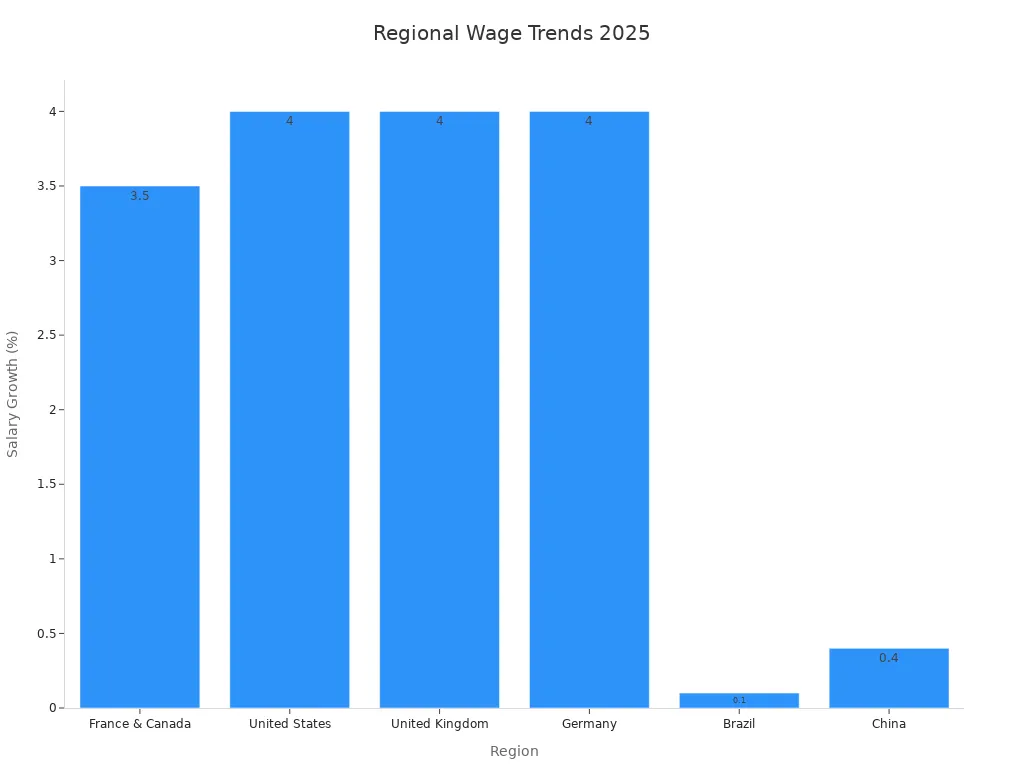
Understanding these trends can help you navigate the state-by-state minimum wage landscape. Whether you're a worker or an employer, staying informed about wage increases ensures you can adapt to changing economic conditions.
Impact on Workers
Benefits of wage increases for workers
Minimum wage increases bring significant benefits to workers, especially those in low-income brackets. Higher wages improve your ability to meet the rising cost of living, offering greater financial stability. Research shows that raising the federal minimum wage positively impacts workers' income while having minimal effects on unemployment rates. For example:
-
Companies like Costco and Trader Joe’s demonstrate that paying above minimum wage can lead to profitability through effective management.
-
In manufacturing, strategies like agile production enhance productivity and workforce stability.
-
Higher wages reduce employee turnover, creating a more experienced and reliable workforce.
A higher minimum wage also strengthens your connection to your employer. This stability often translates into better job security and access to health benefits. In labor markets where employers control wages, increases in the minimum wage have even been linked to higher employment rates. These benefits extend beyond individual workers, contributing to a healthier economy.
The data show the estimated number of workers affected and the corresponding additional annual income by jurisdiction.
At the state level, approximately 14.47 million workers are affected, with an estimated additional annual income of $82.18 billion.
At the local level, about 3.56 million workers are affected, generating an estimated $28.58 billion in additional annual income.
In total, an estimated 18.03 million workers are affected nationwide, with combined additional annual income reaching approximately $110.76 billion.
Challenges faced by workers despite higher wages
While wage increases offer many advantages, challenges remain. Workers in low-wage sectors, such as retail and hospitality, often face poor working conditions and high turnover rates. These issues persist even with higher pay, highlighting the need for broader improvements in job quality. Many workers leave their jobs in search of better wages and conditions, reflecting dissatisfaction with their current roles.
In the care sector, staffing shortages in nursing homes and long-term care facilities reveal ongoing struggles. Despite the potential for higher wages, you may experience burnout and poor working environments. These factors contribute to decisions to leave these jobs, showing that wage increases alone cannot solve all challenges.
Impact of wage increases on different demographics
The impact of wage increases varies across demographic groups, often addressing long-standing inequities. Workers in historically underpaid communities, including women and people of color, benefit significantly from minimum wage updates. These changes help reduce racial and gender pay gaps, promoting fair pay practices.
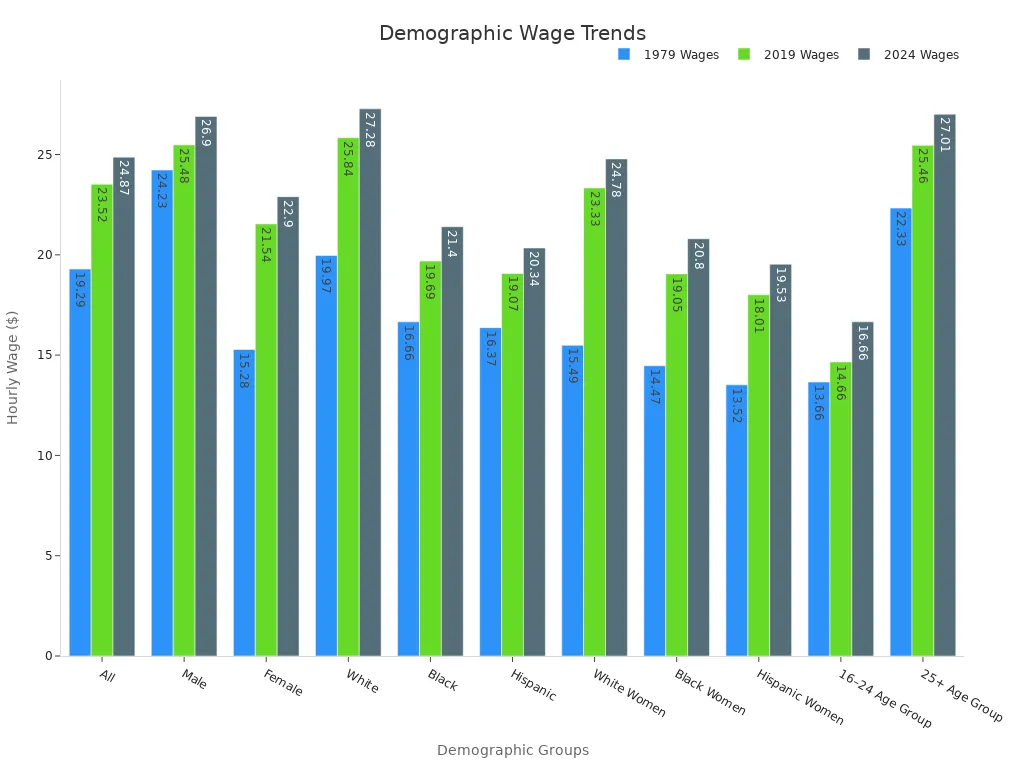
These statistics highlight how wage increases can create a more equitable economy. For younger workers, the 16–24 age group sees the largest percentage growth, reflecting the importance of fair pay practices for early career development.
Impact on Businesses
Challenges for small businesses and startups
Small businesses and startups often face significant challenges when minimum wage increases take effect. Higher labor costs can strain already tight budgets, especially for businesses operating in competitive markets. If you run a small business, you might find it difficult to balance paying higher wages while maintaining profitability. This is particularly true in industries like retail and food services, where profit margins are often slim.
In states with higher minimum wages, businesses may need to adjust their pricing strategies. Raising prices can help offset increased labor costs, but it risks alienating price-sensitive customers. Additionally, small businesses may struggle to compete with larger companies that have more resources to absorb these changes. For startups, the challenge lies in managing limited capital while attracting skilled workers in a competitive hiring environment.
Opportunities to attract and retain talent
Despite the challenges, wage increases present opportunities for businesses to attract and retain top talent. Offering competitive pay can make your business more appealing to job seekers. Research shows that job postings with disclosed salaries see a 30% increase in application rates. Transparency in pay not only attracts more candidates but also builds trust with potential employees.
The evidence outlines the relationship between salary levels, transparency, and workforce outcomes.
Competitive salaries are identified as a key factor influencing whether prospective employees apply for or accept job offers. Data indicate that job postings which disclose salary information receive approximately 30 percent more applications than those that do not.
The evidence also shows a link between compensation levels and employee retention. Competitive and clearly defined pay structures are associated with lower turnover rates and greater workforce stability. In addition, employees are more likely to remain with an employer when compensation is perceived as fair and commensurate with their work.
Higher wages also reduce turnover rates, which can save your business money in the long run. Retaining experienced employees means you spend less on recruitment and training. Fair compensation fosters loyalty and commitment, creating a more stable and productive workforce. By offering competitive pay, you position your business as an employer of choice in your industry.
Strategies for managing higher labor costs
Managing higher labor costs requires strategic planning. As an employer, you can adopt several approaches to ensure your business remains profitable while complying with minimum wage updates. Start by analyzing your labor cost data. Identify peak business hours and adjust staffing levels accordingly to optimize efficiency. Accurate time tracking can also help you reduce unnecessary overtime expenses.
Investing in employee skill development is another effective strategy. Skilled employees are more productive, which can offset the impact of higher wages. Consider implementing a pay-for-performance model to reward high performers and encourage efficiency. Automation tools can also streamline operations, reducing the need for manual labor and lowering overall costs.
Here are some actionable steps you can take to manage labor costs effectively:
-
Determine peak business hours and staff accordingly.
-
Gather accurate data on labor costs, overtime, and more.
-
Invest in employee skill development.
-
Implement an accurate time tracking process.
-
Standardize your business processes.
-
Track labor cost trends in your industry.
-
Use software to automate your business operations.
By adopting these strategies, you can navigate the challenges of higher labor costs while maintaining a competitive edge. These adjustments not only help your business adapt to wage increases but also contribute to a more sustainable and efficient operation.
Broader Economic Impact of Wage Increases

Effects on inflation and consumer spending
Minimum wage increases often raise questions about their impact on inflation and consumer spending. While higher wages can lead to increased labor costs, research shows that these changes are unlikely to cause inflation to exceed the Federal Reserve's target. This is because current labor market conditions do not support runaway inflation. Instead, wage growth may temporarily outpace inflation due to a "catch-up effect," where wages adjust for years of stagnation.
According to the data, wage growth is not expected to have a significant impact on inflation dynamics in the near term. The findings also note a catch-up effect, under which wages may temporarily rise faster than inflation based on historical patterns.
Higher wages also enhance consumer spending. Workers in the lowest income quintile, for example, experience a 14.4% increase in wage income, which translates to a 9.9% rise in spending. This boost in purchasing power drives demand for goods and services, benefiting the broader economy. However, businesses may respond by raising prices to offset higher labor costs, a phenomenon known as wage-push inflation. This cycle can lead to moderate price increases across the market.
Potential changes in employment rates
The relationship between minimum wage increases and employment rates remains a topic of debate. Some argue that higher wages could lead to job losses as businesses cut costs. However, studies suggest that modest wage increases often have minimal effects on employment. In fact, higher wages can improve job retention by reducing turnover. This stability benefits both workers and employers, particularly in industries like retail and hospitality.
For states implementing significant minimum wage updates, the impact on the economy may vary. Regions with higher wages often see stronger consumer spending, which can offset potential job losses. By creating a more stable workforce, these states may experience long-term economic growth.
Long-term economic implications
Over time, wage increases can reshape the distribution of earnings across the workforce. Since 1979, the bottom 90% of earners have seen a 44% growth in wages, while the top 1% experienced a staggering 182% increase. Despite this progress, the share of total wages held by the bottom 90% has declined from 69.8% in 1979 to 60.7% in 2023. Minimum wage updates aim to address this imbalance by redistributing income more equitably.
These changes also help workers keep pace with the cost of living, ensuring that wages reflect economic realities. By boosting consumer spending and reducing income inequality, wage increases contribute to a healthier and more balanced economy.
Practical Advice for Workers and Businesses
Tips for workers to benefit from wage increases
As minimum wage updates take effect, you can take proactive steps to maximize the benefits. Start by understanding how the changes impact your pay. Research your state’s wage policies to determine if you qualify for higher earnings. Resources like the U.S. Bureau of Labor Statistics or Glassdoor can help you compare salaries in your field. This knowledge allows you to advocate for fair wages confidently.
Consider improving your skills to increase your earning potential. Many industries reward workers who pursue certifications or training programs. For example, gaining expertise in technology or healthcare can open doors to higher-paying roles. Additionally, budgeting wisely ensures that you make the most of your increased income. Focus on reducing debt and building savings to secure long-term financial stability.
Strategies for businesses to adapt to wage changes
For businesses, adapting to wage increases requires strategic planning. Begin by analyzing your labor costs and identifying areas for improvement. Streamlining operations can help you manage expenses without compromising quality. For instance, automation tools can reduce manual tasks, allowing you to allocate resources more efficiently.
Investing in employee retention is another effective strategy. Higher wages often lead to reduced turnover, as shown by an 8% decrease in turnover rates in Seattle following wage increases. Offering competitive pay and fostering a positive work environment can help you retain skilled workers. Transparent communication about pay policies also builds trust and loyalty among employees.
Resources for navigating the new wage landscape
Navigating the evolving wage landscape requires access to reliable resources. Tools like "Leading Through Change" provide guidance for HR professionals and executives to manage workforce trends effectively. "Achieving Your Full Potential" offers evidence-based strategies to overcome challenges and maximize opportunities. Additionally, "Pay Transparency in the U.S." emphasizes the importance of clear communication about pay programs to foster trust.
-
Leading Through Change: A resource for HR professionals to navigate workforce trends.
-
Achieving Your Full Potential: A holistic guide with strategies for professional growth.
-
Pay Transparency in the U.S.: Insights on integrating fair pay practices into employee communications.
These resources equip you with the knowledge to adapt to wage changes, whether you are advocating for fair wages or managing a business.
The 2025 minimum wage changes bring significant shifts across the U.S. Twenty-three states will raise their minimum wages, with increases ranging from $0.25 in Ohio and Montana to $2.15 in Michigan. These adjustments aim to address inflation and reduce income inequality. For workers, preparation means understanding your rights and maximizing new opportunities. Businesses must adapt by managing costs and retaining talent. These changes not only improve financial stability for millions but also stimulate consumer spending, fostering economic growth. By staying informed, you can navigate this evolving landscape effectively.
FAQ
What is the federal minimum wage in 2025?
The federal minimum wage remains $7.25 per hour in 2025. It has not changed since 2009. However, many states have implemented higher minimum wages to address inflation and cost-of-living increases.
How do state minimum wages differ from the federal rate?
States can set their own minimum wages above the federal rate. For example, Washington’s minimum wage in 2025 is $16.28, while states like Georgia and Wyoming still adhere to the federal minimum of $7.25 for most workers.
Who benefits the most from minimum wage increases?
Low-income workers, especially women and people of color, benefit significantly. These increases help reduce income inequality and improve financial stability for historically underpaid groups.
Do higher wages lead to job losses?
Research shows modest wage increases usually have minimal effects on employment. Higher wages often reduce turnover and improve job retention, which benefits both workers and employers.
How can businesses manage higher labor costs?
Businesses can optimize operations by using automation, adjusting staffing during peak hours, and investing in employee training. These strategies help balance increased wages with profitability.
Related content