
Bank Slip Functions and Importance Simplified
Author:XTransfer2025.12.04Bank Slip Functions
A bank slip is a document that records financial transactions between you and your bank. It serves as proof of deposits, withdrawals, or payments linked to your bank account. Deposit slips, often pre-printed with account details, simplify the deposit process for both you and the bank. These slips ensure accurate record-keeping by acting as a receipt for customers and helping banks maintain a daily ledger of deposits. By using a bank slip, you enjoy transparency and confidence in your financial transactions.
Understanding Bank Slips
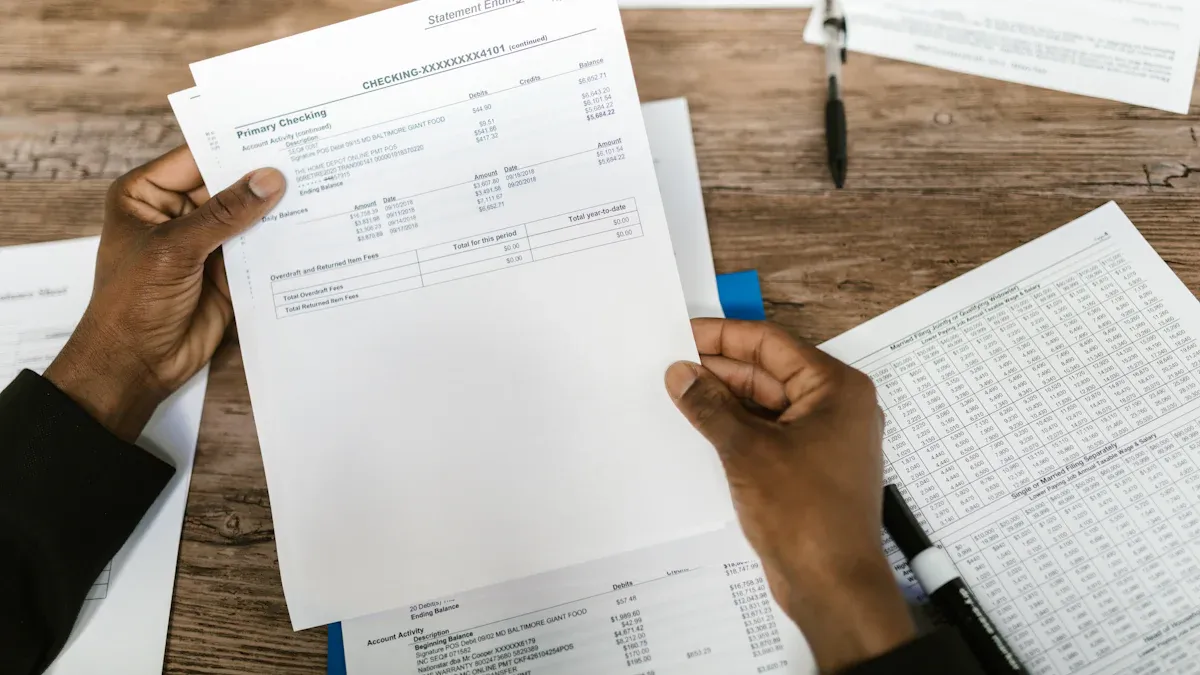
What Is a Bank Slip?
A bank slip is a document that helps you track financial transactions with your bank. It acts as a record of money you deposit, withdraw, or transfer. When you use a bank slip, you create a paper trail that ensures your transactions are accurate and properly documented. This slip is often used during deposits to confirm the amount of money added to your account.
Types of Bank Slips
Bank slips come in different forms, each serving a specific purpose. Here are the most common types:
-
Deposit Slips: These are used when you deposit money into your account. They include details like the amount, account number, and date.
-
Withdrawal Slips: These slips help you withdraw money from your account. They ensure the bank processes your request correctly.
-
Payment Slips: You use these slips to make payments, such as paying bills or transferring funds to another account.
-
Transfer Slips: These are used for transferring money between accounts, whether within the same bank or to another bank.
Each type of slip plays a role in keeping your financial activities organized and transparent.
Common Uses of Bank Slips
Bank slips are essential for various financial tasks. Here are some of their common uses:
-
Depositing Money: You use a deposit slip to add cash or checks to your account. It ensures the bank records the deposit accurately.
-
Tracking Transactions: Bank slips help you monitor your deposits, withdrawals, and payments. They provide a clear record of your financial activities.
-
Resolving Disputes: If there’s ever a question about a transaction, your bank slip serves as proof. It can help you clarify any discrepancies.
-
Record-Keeping: You can use bank slips to maintain a personal record of your financial transactions. This makes it easier to manage your budget and track your spending.
Bank slips simplify your banking experience and ensure your transactions are handled with precision.
How Bank Slips Work
Key Components of a Bank Slip
A bank slip contains essential details that ensure your transactions are recorded accurately. These details include:
-
Account Information: Your account number and name identify where the transaction is applied.
-
Transaction Type: Whether it’s a deposit, withdrawal, or payment, this section specifies the purpose of the slip.
-
Amount Details: The exact amount of cash, checks, or other funds involved in the transaction.
-
Date and Signature: The date confirms when the transaction occurred, while your signature authorizes it.
Each component plays a role in ensuring your transaction is processed correctly and documented for future reference.
The Process of Using a Deposit Slip
Using a deposit slip is straightforward and ensures your deposits are handled efficiently. Follow these steps:
-
Fill Out the Slip: Write your account number, name, and the date. Specify the amount of cash and checks you’re depositing.
-
List Check Details: If you’re depositing checks, list each check’s amount separately. This helps the bank verify the total.
-
Calculate the Total: Add up the cash and checks to get the total deposit amount. Double-check your math to avoid errors.
-
Submit the Slip: Hand the completed deposit slip and the funds to the bank teller. They will process your deposit and provide a receipt.
How Bank Slips Ensure Transaction Accuracy
Bank slips act as a safeguard for your financial transactions. When you use a deposit slip, you create a written record of the deposit. This record helps the bank verify the amount and ensures it is credited to the correct account. If any discrepancies arise, the slip serves as proof of the transaction.
By requiring you to fill out specific details, bank slips minimize errors and miscommunication. They also provide a clear trail for tracking deposits, withdrawals, and payments. This accuracy builds trust between you and your bank, ensuring your money is managed responsibly.
Importance of Bank Slips in Banking
Role in Financial Transparency
Bank slips play a vital role in ensuring financial transparency. When you use a deposit slip, it creates a clear record of the transaction. This record helps you and your bank track the movement of money. For example, when you deposit cash or checks, the slip confirms the exact amount added to your bank account. This transparency builds trust between you and the bank.
Additionally, bank slips make it easier to verify transactions. If you notice an error in your account balance, you can refer to the slip as proof. This process ensures that all deposits, withdrawals, and payments are accurate and accounted for. By using bank slips, you maintain a transparent relationship with your bank and avoid confusion in your financial dealings.
Contribution to Record-Keeping
Bank slips are essential tools for keeping accurate financial records. Each slip provides a snapshot of a specific transaction, whether it’s a deposit, withdrawal, or payment. When you collect and organize these slips, you create a detailed history of your financial activities.
This record-keeping helps you manage your finances effectively. For instance, you can use deposit slips to track how much money you’ve added to your account over time. Similarly, withdrawal slips help you monitor your spending. These records are especially useful when preparing budgets or reviewing your financial goals.
Banks also rely on these slips for their internal records. They use the information to update your account and maintain their daily transaction logs. This system ensures that both you and the bank have accurate and consistent records.
Use in Auditing and Legal Documentation
Bank slips serve as valuable documents during audits and legal proceedings. Auditors often review these slips to verify the accuracy of financial statements. If you’re ever audited, your deposit slips and other bank records can demonstrate that your transactions are legitimate.
In legal situations, bank slips can act as evidence. For example, if there’s a dispute over a payment or deposit, the slip provides proof of the transaction. This can help resolve conflicts quickly and fairly.
By keeping your bank slips organized, you prepare yourself for unexpected situations. Whether it’s an audit or a legal matter, these documents ensure that your financial activities are well-documented and defensible.
Benefits of Using Bank Slips
Accuracy in Financial Transactions
Using a bank slip ensures your financial transactions are accurate and reliable. When you fill out a deposit slip, you provide detailed information about the amount of cash or checks being deposited. This process minimizes errors and creates a clear record of the transaction. Banks use this information to reconcile accounts, reducing the chances of discrepancies.
Automated systems further enhance accuracy by matching transactions with bank slips. This reduces manual entry errors and improves the reliability of financial records. For example, operational statistics show that automated reconciliation processes save time and improve accuracy.
|
Benefit |
Description |
|---|---|
|
Improved Accuracy |
Automated transaction matching reduces manual entry errors, enhancing the reliability of financial records. |
|
Time Savings |
Automation of reconciliation processes saves significant time, allowing focus on other business areas. |
|
Enhanced Fraud Detection |
Quick identification of discrepancies aids in early fraud detection, protecting financial health. |
By using bank slips, you ensure your deposits are processed correctly and your financial records remain error-free.
Proof of Payment and Deposits
Bank slips serve as reliable proof of payment and deposits. When you deposit money into your account, the bank provides a receipt that confirms the transaction. This receipt acts as evidence that the deposit was successfully completed.
Legal precedents also highlight the importance of bank slips. For instance, the Supreme Court’s decision in Gleckman v. United States established that bank deposits can be used as proof of income. This makes bank slips essential for documenting taxable income and resolving disputes.
|
Evidence Type |
Description |
|---|---|
|
Legal Precedent |
The Supreme Court’s decision in Gleckman v. United States established the bank deposits method as an acceptable method of proving income. |
|
Documentation |
Bank slips serve as proof of periodic deposits reflecting current year income, which is crucial for establishing taxable income. |
Keeping your bank slips organized ensures you have proof of your financial activities whenever needed.
Simplified Financial Management
Bank slips simplify financial management by providing a clear record of your transactions. Each deposit slip helps you track the money added to your account, making it easier to monitor your cash flow. You can use these records to identify outstanding payments or deposits and plan your budget effectively.
Accurate records also streamline financial reporting. Banks rely on reconciled records to generate insightful reports, which help you make informed decisions about your finances. Regular use of bank slips ensures your financial records are up-to-date and compliant with regulations.
|
Benefit |
Description |
|---|---|
|
Streamlined Financial Reporting |
Accurate reconciled records facilitate the generation of insightful financial reports. |
|
Better Cash Flow Management |
Regular reconciliation helps monitor cash flow, identifying outstanding payments and deposits. |
|
Easier Audit Preparation |
Maintains a clear audit trail, simplifying the audit process for financial records. |
By using bank slips, you gain better control over your finances and reduce the risk of errors or non-compliance.
Modern Alternatives to Bank Slips

Digital Receipts and Online Banking
Digital receipts have become a popular alternative to traditional bank slips. When you make a deposit or payment online, your bank generates a digital receipt. This receipt records the transaction details, including the amount, date, and account information. You can access these receipts through your online banking portal or email, making it easier to track your financial activities.
Online banking platforms simplify the process further. You can deposit funds, pay bills, or transfer money without visiting a physical branch. These platforms provide instant confirmation of your transactions, ensuring accuracy and transparency. With over 1.75 billion digital banking accounts processing $1.4 trillion annually, online banking has become a cornerstone of modern financial management.
Mobile Payment Confirmations
Mobile payment apps offer another convenient alternative to bank slips. When you deposit money or make a payment using apps like Venmo or PayPal, you receive instant confirmation on your device. These confirmations include transaction details, such as the recipient, amount, and time.
Over 76% of Americans now use mobile banking apps, highlighting their growing popularity. These apps allow you to deposit funds or pay bills with just a few taps. They also reduce the need for paper slips, making them an eco-friendly choice. Mobile payment confirmations ensure your transactions are recorded accurately and accessible whenever you need them.
Comparing Traditional and Digital Methods
Traditional bank slips and digital alternatives each have unique advantages. Bank slips provide a tangible record of your deposits and withdrawals, which can be useful for auditing or legal purposes. However, they require manual handling and storage, which can be time-consuming.
Digital methods, on the other hand, offer speed and convenience. You can deposit money, pay bills, or transfer funds instantly, with automated systems ensuring accuracy. Banks adopting digital transformation have seen a 20%-40% reduction in operating costs, reflecting the efficiency of these methods. Additionally, the closure of 1,646 physical branches annually in the US since 2018 underscores the shift toward digital banking.
|
Trend/Statistic |
Description |
|---|---|
|
Digital Banking Growth |
Projected net interest income of digital banks worldwide to reach $2.09 trillion by 2029. |
|
Digital Banking Accounts |
1.75 billion accounts processing $1.4 trillion annually, equating to $2.7 million per minute. |
|
Branch Closures |
An average of 1,646 physical branches closed each year in the US since 2018. |
|
Mobile Banking Usage |
Over 76% of American customers utilize mobile banking apps. |
|
Cost Reductions |
Banks adopting digital transformation see a 20%-40% reduction in operating costs. |
While traditional bank slips remain relevant for certain situations, digital alternatives provide unmatched convenience and efficiency. Choosing the right method depends on your needs and preferences.
Bank slips remain essential tools for managing your financial activities. They help you track deposits, withdrawals, and payments while ensuring your bank account stays accurate and transparent. By using these slips, you create a reliable record of your transactions, which simplifies budgeting and supports legal or auditing needs.
Modern banking alternatives, like digital receipts and mobile payment confirmations, offer convenience and speed. However, traditional bank slips still hold value in situations requiring tangible proof. Choosing the right method depends on your preferences and the specific needs of your financial management.
FAQ
1. Why should you keep your bank slips?
Bank slips act as proof of your financial transactions. They help you resolve disputes, track deposits, and maintain accurate records. Keeping them ensures you have evidence for audits or legal matters.
2. How long should you keep bank slips?
You should keep bank slips for at least three years. This timeframe ensures you have documentation for audits, tax filings, or disputes. For significant transactions, consider keeping them longer.
3. Are digital receipts as reliable as paper slips?
Yes, digital receipts are equally reliable. They provide instant transaction records and are easy to store. Many banks offer secure online portals where you can access these receipts anytime.
4. Can you use a bank slip for tax purposes?
Absolutely! Bank slips help verify income and expenses during tax preparation. They serve as evidence for deductions or taxable income, ensuring compliance with tax regulations.
5. What should you do if you lose a bank slip?
Contact your bank immediately. They can provide a duplicate record of the transaction. Most banks maintain digital copies of slips, ensuring you can retrieve the information when needed.
Related content