
Cyber Monday or Black Friday Decoding the Best Deals
Author:XTransfer2025.09.16Cyber Monday
When it comes to holiday shopping, Black Friday and Cyber Monday offer two distinct experiences. Black Friday shines for in-store deals, with 76.2 million shoppers hitting physical stores in 2023—a 4.5% jump from last year. It’s perfect for grabbing big-ticket items at steep discounts. Cyber Monday, on the other hand, dominates online shopping. In 2023, it set a record as the largest online spending day in U.S. history, raking in $12.4 billion in sales. If tech gadgets or Buy-Now-Pay-Later options are on your list, Cyber Monday is your go-to day. Your choice depends on what—and how—you prefer to shop.
Timing and Focus: Black Friday vs Cyber Monday

Start and End Times
Timing plays a big role in how you approach Black Friday and Cyber Monday. Black Friday typically kicks off early, with some retailers like Walmart opening their doors as early as 6 AM on November 29. Others, like Best Buy, start their sales even earlier, sometimes days before the official date. Cyber Monday, however, operates on a different schedule. For example, Walmart begins its Cyber Monday deals at 5 PM for members and 8 PM for non-members, giving you a chance to shop after work.
This difference in timing means you can plan your shopping around your schedule. If you’re an early bird, Black Friday might be your best bet. But if you prefer a more relaxed evening shopping experience, Cyber Monday has you covered.
|
Retailer |
Event |
Start Time (ET) |
End Time (ET) |
|
Walmart |
Black Friday |
November 29, 6AM |
N/A |
|
Walmart |
Cyber Monday |
December 1, 5PM (members), 8PM (non-members) |
N/A |
|
Best Buy |
Black Friday |
November 21 |
N/A |
|
Best Buy |
Cyber Monday |
December 1 |
N/A |
In-Store vs Online Shopping Trends
Your shopping environment can make or break your experience. Black Friday is known for its intense, crowded in-store atmosphere. You’ll find doorbuster deals that create a sense of urgency, often leading to impulse buys. Cyber Monday, on the other hand, offers a more relaxed online shopping experience. You can compare prices, read reviews, and make strategic decisions without the pressure of a bustling store.
In 2023, online shopping surged by 29% on Cyber Monday as many people returned to work and shopped from their desks. Mobile shopping peaked on Black Friday, while Cyber Monday saw more purchases made on laptops and desktops. This shift highlights how consumer behavior adapts to the shopping environment.
|
Aspect |
Black Friday |
Cyber Monday |
|
Shopping Environment |
Intense, crowded in-store experience |
Relaxed, online shopping environment |
|
Consumer Behavior |
Impulse buying, quick decisions |
Strategic shopping, price comparison |
|
Audience |
Broader audience, in-store shoppers |
Tech-savvy, online shoppers |
Retailer Strategies for Each Day
Retailers use different strategies to attract you on Black Friday and Cyber Monday. On Black Friday, many stores focus on exclusive in-store deals to drive foot traffic. These deals often include high discounts on big-ticket items like TVs and appliances. Cyber Monday, however, leans heavily on online-exclusive promotions. Retailers optimize their websites, offer free shipping, and highlight tech gadgets to appeal to online shoppers.
Inventory management is another key focus. Retailers must ensure they have enough stock to meet demand, especially on Black Friday. Data inaccuracies can lead to delays and frustrated customers. On Cyber Monday, the emphasis shifts to smooth online operations, ensuring websites can handle high traffic without crashing.
|
Pricing Strategy |
Description |
|
Exclusive |
Retailers offer unique deals not available elsewhere. |
|
Moderately Promotional |
A balanced approach with some promotions but not overly aggressive. |
|
Hi-Lo |
High regular prices with occasional deep discounts. |
|
EDLP (Everyday Low Price) |
Consistent low prices without promotional sales. |
|
Aggressive |
Frequent and significant discounts to drive traffic. |
Retailers also adapt their pricing strategies based on consumer preferences. For example, aggressive discounts are common during Black Friday to attract cost-sensitive shoppers. On Cyber Monday, you’ll notice a mix of moderately promotional and exclusive deals, especially on tech products.
Product Categories and Deals

Black Friday Sales Highlights
Black Friday is famous for its jaw-dropping doorbusters and massive sales on big-ticket items. If you're hunting for a new TV, refrigerator, or gaming console, this is your day. Retailers like Walmart and Target often slash prices on these products, making them irresistible. In 2024, Black Friday sales hit $10.8 billion, marking a 10.2% increase from the previous year. This shows how much shoppers love the thrill of grabbing those limited-time deals.
You’ll also find incredible discounts on clothing, home appliances, and beauty products. Many stores offer early bird specials, so arriving early can help you snag the best deals. However, the most exciting part of Black Friday is the doorbusters. These are deeply discounted items available in limited quantities. They’re designed to get you into the store, but you’ll need to act fast because they sell out quickly.
|
Product Category |
Typical Discount Range |
Examples of Deals |
|
Electronics |
30%-50% |
TVs, laptops, gaming consoles |
|
Home Appliances |
20%-40% |
Refrigerators, washers, dryers |
|
Clothing & Accessories |
40%-70% |
Winter coats, shoes, handbags |
|
Beauty Products |
25%-50% |
Makeup kits, skincare bundles |
Cyber Monday Deals Breakdown
Cyber Monday is your playground if you prefer shopping from the comfort of your couch. It’s the ultimate day for tech lovers, with online retailers offering exclusive deals on gadgets, software, and accessories. In 2024, Cyber Monday sales reached a record $13.3 billion, a $0.9 billion increase from the previous year. This makes it the biggest online shopping day of the year.
What makes Cyber Monday special is the variety of deals you can find. From smart home devices to noise-canceling headphones, the discounts are hard to resist. Many retailers also offer free shipping, making it even easier to save. Plus, you can take your time comparing prices and reading reviews before hitting "Add to Cart." Unlike Black Friday, you won’t have to deal with crowds or long lines.
|
Product Category |
Typical Discount Range |
Examples of Deals |
|
Tech Gadgets |
20%-50% |
Smartwatches, headphones, tablets |
|
Software & Subscriptions |
30%-60% |
Antivirus, streaming services |
|
Home Office Equipment |
25%-45% |
Desks, chairs, monitors |
|
Toys & Games |
15%-40% |
Board games, video games, puzzles |
Overlapping Discounts
Here’s a little secret: many deals overlap between Black Friday and Cyber Monday. According to recent market analyses, about 66.5% of Cyber Monday deals were also available on Black Friday. This means you don’t always have to choose one day over the other. If you miss a deal on Black Friday, there’s a good chance you’ll find it again on Cyber Monday.
Some categories have more overlap than others. Power Tools & Hand Tools lead the pack, with 78.5% of deals appearing on both days. On the other hand, Toys & Games have the least overlap, with only 56.9% of deals available on both days. Knowing this can help you plan your shopping strategy and avoid missing out on the best prices.
-
Categories with High Overlap:
-
Power Tools & Hand Tools: 78.5%
-
Electronics: 72.3%
-
Home Appliances: 70.1%
-
-
Categories with Low Overlap:
-
Toys & Games: 56.9%
-
Beauty Products: 60.4%
-
Clothing & Accessories: 62.8%
-
By understanding these trends, you can decide whether to shop on Black Friday, Cyber Monday, or both. Either way, you’ll find plenty of opportunities to score amazing deals.
Pros and Cons of Black Friday Shopping
Benefits of Black Friday Deals
Black Friday is a shopper’s paradise if you’re looking for massive discounts on big-ticket items. Retailers use this day to clear out inventory and attract customers with jaw-dropping deals. For you, this means snagging that 65-inch TV or high-end laptop at a fraction of the price. It’s not just about saving money; it’s about getting more value for every dollar you spend.
Retailers also use Black Friday to introduce new products. This gives you a chance to grab the latest gadgets or appliances before they hit regular shelves. The day is a win-win for both shoppers and sellers. While you enjoy the discounts, retailers boost their sales and engage with new customers. In fact, Black Friday sales are often seen as a reflection of the country’s economic health. When people shop confidently, it shows they’re willing to spend on non-essential items.
Another perk? The thrill of the hunt. Black Friday shopping is an experience. Whether you’re lining up at 5 AM or browsing online for doorbusters, the excitement is unmatched. It’s a day where you can find deals that aren’t available any other time of the year.
Challenges of Shopping on Black Friday
While Black Friday offers incredible discounts, it’s not without its challenges. One major issue is the overwhelming crowd. If you’re shopping in-store, you’ll likely face long lines, packed aisles, and limited stock. Popular items sell out quickly, leaving many shoppers disappointed. The intense atmosphere can also lead to impulse buying, which might leave you regretting your purchases later.
Another challenge is the authenticity of the deals. Studies show that 44% of consumers believe Black Friday discounts are misleading. Some retailers inflate original prices to make the discounts look bigger than they actually are. This makes it crucial for you to research prices beforehand to ensure you’re getting a genuine deal.
Excessive marketing is another downside. Many shoppers report feeling bombarded with emails and ads during Black Friday. In fact, 44% of consumers say they receive too many promotional emails, which can be frustrating. Younger shoppers, especially Gen-Z, often regret their purchases, with 60% admitting they’ve made poor decisions during past Black Fridays.
|
Statistic |
Description |
|
44% of consumers believe Black Friday deals are misleading. |
Concerns about the authenticity of discounts. |
|
44% of consumers say they received too many Black Friday emails. |
Excessive marketing leads to frustration. |
|
47% of consumers want stricter rules on discounts. |
Demand for more transparency in promotions. |
Despite these challenges, Black Friday remains a favorite for millions of shoppers. With a bit of planning and caution, you can navigate the chaos and make the most of the day.
Pros and Cons of Cyber Monday Shopping
Advantages of Cyber Monday Sales
Cyber Monday is a dream come true for online shoppers. You can skip the chaos of crowded stores and shop from the comfort of your home. In 2023, Cyber Monday sales hit $12.1 billion in the U.S., showing how much people love this day. Mobile commerce made up 45% of those sales, proving that smartphones are becoming the go-to shopping tool. If you’re planning your holiday shopping, Cyber Monday is perfect. Over half of shoppers use this day to check off their gift lists.
Free shipping is another big win. Around 65% of consumers say it’s a deciding factor when making purchases. Many retailers offer free shipping on Cyber Monday, making it easier for you to save. Plus, you can take your time comparing prices and reading reviews. No rush, no pressure—just smart shopping.
Exclusive online deals make Cyber Monday even better. From tech gadgets to software subscriptions, you’ll find discounts that aren’t available any other time. Americans spent a record $11.3 billion on Cyber Monday in 2022, with the average shopper spending between $113 and $147. These numbers highlight the growing shift toward online shopping and the power of Cyber Monday promotions.
|
Metric |
Description |
|
Sales Revenue |
$12.1 billion in 2023, marking a 5.8% increase from the previous year. |
|
Mobile Commerce |
45% of sales made via smartphones, showing the rise of mobile shopping. |
|
Free Shipping Influence |
65% of shoppers say free shipping impacts their buying decisions. |
|
Average Spending |
Consumers spent between $113 and $147 on Cyber Monday in 2022. |
Drawbacks of Cyber Monday Shopping
While Cyber Monday offers great deals, it’s not without its challenges. The surge in online transactions creates a perfect storm for fraudsters. Increased transaction volume overwhelms traditional fraud detection systems, making it easier for scams to slip through. Fraud tactics also evolve during peak shopping days. Techniques like account takeovers and identity theft become more common, requiring businesses to stay ahead of the game.
Shopping urgency can lead to hasty decisions. You might rush to grab a deal and end up falling for scams. Even legitimate customers sometimes show unusual behavior, complicating fraud detection. Businesses also face challenges managing sales across multiple platforms. Each platform has its own vulnerabilities, making it tough to maintain consistent fraud prevention.
Limited resources add to the problem. Smaller businesses often lack the tools to handle fraud during Cyber Monday. This can lead to financial losses and burnout for employees trying to keep up. While Cyber Monday is convenient, it’s important to stay cautious and shop smart.
|
Drawback |
Description |
|
Increased Transaction Volume |
High sales volume overwhelms fraud detection systems, increasing scam risks. |
|
Evolving Fraud Tactics |
Fraudsters adapt methods like account takeovers and identity theft during peak shopping days. |
|
Consumer Urgency |
Hasty decisions during Cyber Monday can lead to scams or poor purchases. |
|
Multiple Sales Channels |
Managing transactions across platforms with different vulnerabilities is challenging. |
|
Limited Resources |
Smaller businesses struggle with fraud prevention, leading to financial losses and employee burnout. |
Tips for Maximizing Savings
Preparing for Black Friday
Getting ready for Black Friday can make all the difference in how much you save. Start by researching the deals you want ahead of time. Many retailers release their ads early, so you can plan your shopping list. Focus on big-ticket items like TVs or appliances, as these often come with deep discounts. Don’t forget to check store hours and policies. Some stores open as early as 6 AM, and knowing their return policies can save you headaches later.
If you’re shopping online, make sure the retailer’s website is mobile-friendly. Many shoppers use their phones to grab deals, and a smooth experience can help you check out faster. Also, keep an eye out for loyalty programs. These often offer early access to sales or extra discounts. Personalization strategies, like signing up for email alerts, can also help you snag exclusive deals.
Preparing for Cyber Monday
Cyber Monday is all about online shopping, so preparation is key. Start by bookmarking your favorite retailers’ websites. This saves time when deals go live. Look for coupon codes, as 57.7% of shoppers believe these lead to the best savings. Websites like Honey or RetailMeNot can help you find these codes quickly.
Set up accounts on the websites you plan to shop from. This speeds up the checkout process and reduces the risk of missing out on limited-time offers. Also, enable notifications for flash sales. Many retailers offer time-sensitive deals that can save you even more. Don’t forget to compare prices across multiple sites. Tools like CamelCamelCamel can track price history and ensure you’re getting the best deal.
General Money-Saving Strategies
Whether it’s Black Friday or Cyber Monday, some strategies work for both. First, stick to your budget. It’s easy to get carried away with all the deals, but planning your spending helps you avoid regret later. Use cashback programs or rewards cards to save even more. Many credit cards offer points or cashback on holiday shopping, which adds up over time.
Loyalty programs are another great way to save. These often include perks like price matching or exclusive discounts. If you’re shopping for private label brands, you’ll find they’re often cheaper but still high-quality. Finally, invest in quality over quantity. A well-made product might cost more upfront but saves you money in the long run.
|
Savings Technique |
Description |
|
Loyalty Programs |
Exclusive discounts and rewards for members. |
|
Cashback Offers |
Earn money back on purchases through credit cards or apps. |
|
Price Matching |
Retailers match competitors’ prices to give you the best deal. |
|
Private Label Brands |
Affordable alternatives to name-brand products without sacrificing quality. |
Black Friday and Cyber Monday each have their strengths, and your choice depends on what you’re shopping for. Black Friday is perfect if you’re after in-store deals on big-ticket items like TVs or appliances. While in-store shopping saw a resurgence in 2021, 77% of Black Friday shoppers still preferred online shopping, showing how digital platforms are becoming the go-to choice for many. However, the thrill of grabbing doorbusters in person remains unmatched for some.
Cyber Monday, on the other hand, is a haven for tech enthusiasts and online shoppers. With exclusive discounts on gadgets and free shipping offers, it’s ideal for those who value convenience. Sales tracking data also shows a steady increase in weekend spending after Black Friday, with Sunday spending reaching 78% of Friday’s total in 2024. This trend highlights how online shopping continues to dominate the holiday season.
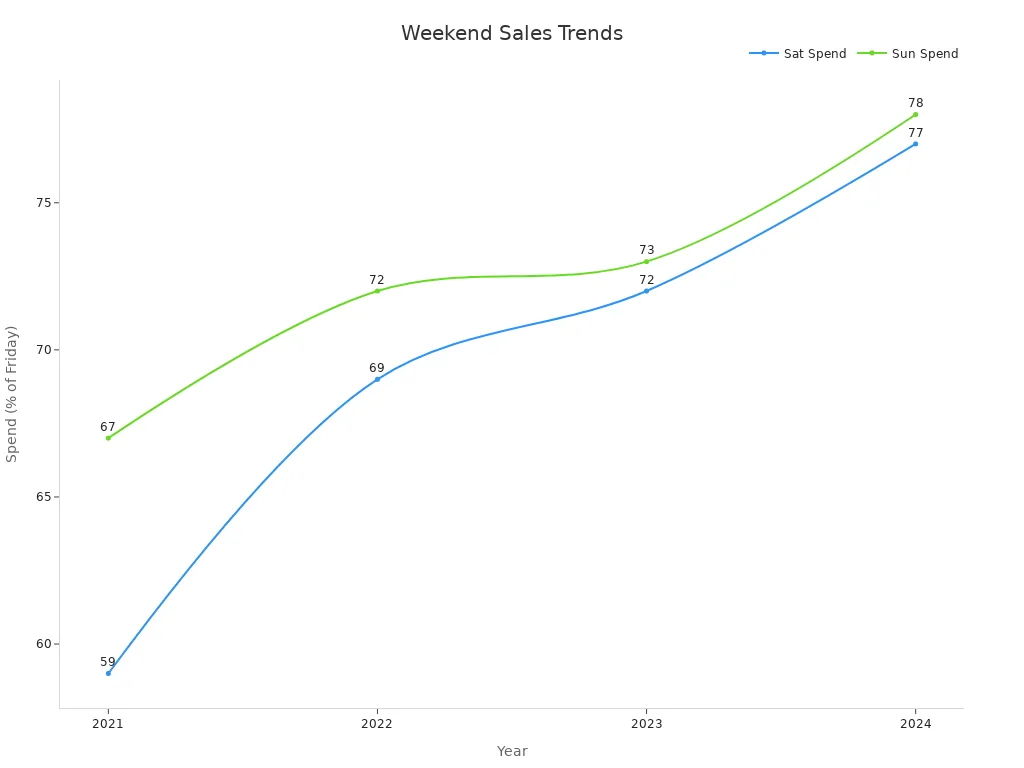
To make the most of these shopping events, plan ahead and research deals. Whether you’re braving the crowds or shopping from your couch, choosing the day that aligns with your goals will help you score the best savings.
FAQ
What is the main difference between Black Friday and Cyber Monday?
Black Friday focuses on in-store shopping and discounts on big-ticket items like TVs and appliances. Cyber Monday, however, is all about online shopping, offering exclusive deals on tech gadgets and software. Your choice depends on whether you prefer shopping in person or online.
Are Black Friday deals better than Cyber Monday deals?
It depends on what you're shopping for. Black Friday often has better discounts on large items like furniture and electronics. Cyber Monday excels in tech-related deals and online exclusives. Comparing prices during both events can help you find the best savings.
Can I shop online during Black Friday?
Yes, many retailers offer online deals on Black Friday. However, the day is traditionally known for in-store shopping. If you prefer avoiding crowds, you can still find great discounts online. Just remember, Cyber Monday is specifically designed for online shoppers.
Do Black Friday and Cyber Monday deals overlap?
Yes, many deals overlap between the two days. For example, about 66.5% of Cyber Monday discounts are also available on Black Friday. If you miss a deal on Friday, you might still find it online during Cyber Monday.
Which day is better for tech deals: Black Friday or Cyber Monday?
Cyber Monday is generally better for tech deals. Online retailers often highlight discounts on gadgets, software, and accessories. However, Black Friday also offers great deals on electronics, especially in-store. It’s worth checking both days for the best prices.
Related content