
The Evolution of Currency Composition in Global Reserves
Author:XTransfer2025.12.12Foreign Exchange Reserves
Understanding the evolution of foreign exchange reserves helps explain how global financial systems adapt to economic changes. Reserve currencies influence trade, investments, and international stability. For instance, the euro's rise as an alternative to the dollar marked a significant shift in the global monetary system. Trade flows and financial markets also shape reserve composition, reflecting the interconnectedness of economies. While the composition of reserves evolves gradually, this stability provides valuable insights for policymakers and economists.
What drives these changes? Trade patterns, geopolitical decisions, and economic priorities play critical roles. Monitoring these factors reveals how nations manage reserves to ensure economic resilience.
Historical Evolution of Currency Composition
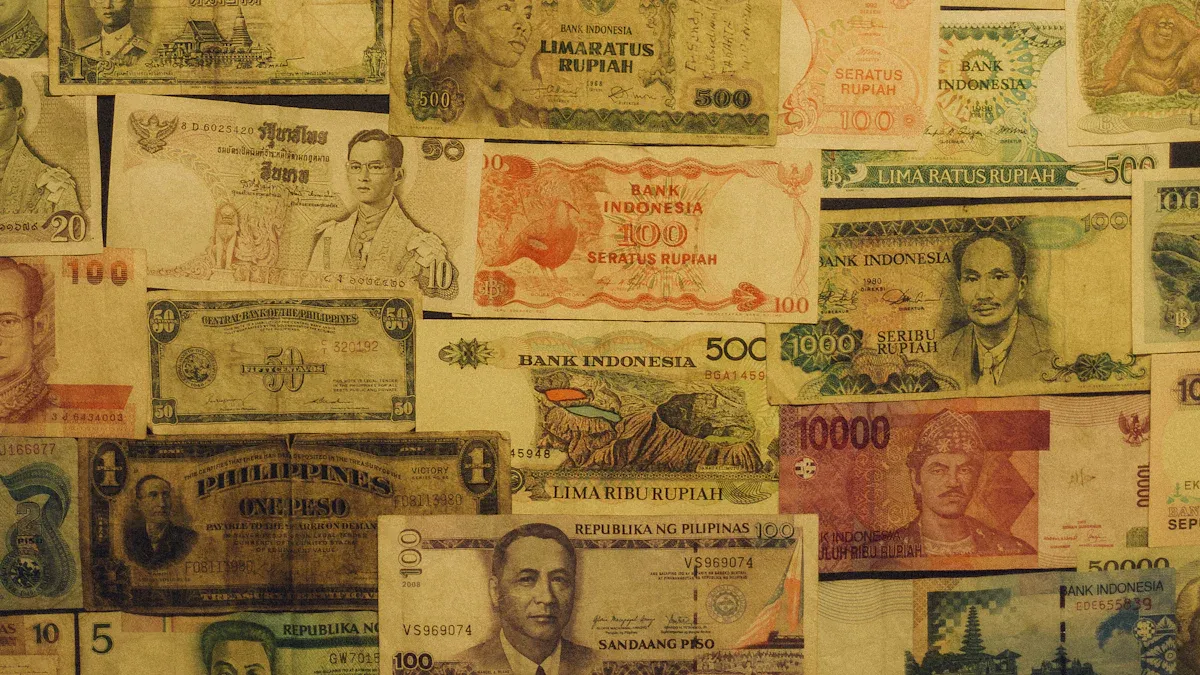
The British pound's dominance in the 19th and early 20th centuries
During the 19th and early 20th centuries, the British pound reigned as the world's leading reserve currency. This dominance stemmed from the United Kingdom's economic and trade power during the era.
-
The UK, despite having only 2.5% of the global population, contributed 20% of the world's income.
-
It controlled over 40% of global exports, making the pound a natural choice for international trade and reserves.
The British Empire's vast colonial reach further solidified the pound's role. Many colonies and trading partners relied on the pound for transactions, reinforcing its position in global reserves. However, the pound's dominance began to wane as other economies, particularly the United States, gained prominence.
The US dollar's rise post-World War II and the Bretton Woods system
The US dollar emerged as the dominant reserve currency after World War II, largely due to the Bretton Woods Agreement of 1944. This agreement established the dollar as the primary reserve currency, replacing the British pound. The dollar's strength was backed by the United States' robust economy and its vast gold reserves.
-
Today, approximately 60-70% of global trade invoicing occurs in US dollars, highlighting its continued importance in international trade.
-
The dollar's widespread use in trade and finance created a strong demand for it in foreign exchange reserves.
The Bretton Woods system also pegged many currencies to the dollar, further cementing its role. Although the system ended in 1971, the dollar's dominance persisted, supported by the United States' economic and political influence.
The euro's emergence and its impact on foreign exchange reserves
The introduction of the euro in 1999 marked a significant shift in the currency composition of global reserves. As the official currency of the European Union, the euro quickly gained traction as an alternative to the US dollar.
-
A 2005 survey revealed that many central banks planned to diversify away from the dollar, with the euro being a preferred choice.
-
The euro's appeal lies in factors such as the EU's comparable GDP to the US, trade openness, and the European Central Bank's focus on controlling inflation.
Research shows that the euro's share in international reserves has grown, particularly in developing countries. This trend reflects its increasing role in global finance, challenging the dollar's dominance in some regions.
Historical events shaping currency composition (e.g., oil shocks, financial crises)
Global events have significantly influenced the currency composition of foreign exchange reserves. These events often reshape economic priorities and alter the demand for specific currencies.
The oil shocks of the 1970s serve as a prime example. When oil prices surged due to geopolitical tensions in the Middle East, oil-exporting nations accumulated vast reserves of US dollars. This occurred because oil was priced and traded in dollars, reinforcing its dominance as the global reserve currency. Many central banks increased their dollar holdings to facilitate trade and stabilize their economies during this volatile period.
Financial crises have also played a pivotal role. The 1997 Asian financial crisis, for instance, highlighted the risks of over-reliance on certain currencies. Several Asian economies faced severe currency devaluations, leading to a reevaluation of reserve strategies. Many countries began diversifying their reserves to include a broader mix of currencies, reducing their vulnerability to future shocks.
The eurozone debt crisis of the early 2010s had a contrasting effect. Concerns over the stability of the euro led some central banks to reduce their euro holdings. This shift highlighted how regional crises can impact the global perception of a currency's reliability.
Historical events like these illustrate the dynamic nature of reserve currency composition. They show how economic shocks and crises influence central banks' decisions, shaping the global financial landscape over time.
Current Trends in the Currency Composition of Foreign Exchange Reserves
The US dollar's continued dominance in global reserves
The US dollar remains the cornerstone of foreign exchange reserves worldwide. Its dominance stems from the stability of the US economy and the unparalleled size of its debt market. Central banks across the globe continue to hold significant portions of their reserves in dollars, ensuring liquidity and security in times of economic uncertainty.
A closer look at recent trends highlights the dollar's enduring role:
|
Evidence |
Description |
|---|---|
|
Dollar's Share |
The US dollar remains the preeminent reserve currency despite a gradual decline in its share of global reserves. |
|
Stability Factors |
The stability of the US economy and the size of the US debt market contribute to the dollar's dominance. |
|
Non-Traditional Currencies |
The rise of nontraditional reserve currencies like the Chinese renminbi has not accelerated the decline of the dollar's share. |
|
Reporting Economies |
149 reporting economies account for 93% of global FX reserves, indicating limited impact from non-reporters. |
|
Active Diversifiers |
By 2023, 46 countries are identified as active diversifiers, but the overall trend shows little change in dollar dominance. |
Despite efforts by some nations to diversify their reserves, the dollar's share remains substantial. Its widespread use in trade and financial transactions reinforces its position as one of the dominant global reserve currencies.
The euro's role as the second most held reserve currency
The euro has established itself as the second most held reserve currency in the world. Its appeal lies in the economic strength of the European Union and the eurozone's commitment to financial stability. Central banks view the euro as a reliable alternative to the dollar, particularly for diversifying their foreign exchange reserves.
Key statistics confirm the euro's position:
-
The euro accounts for approximately 20% of foreign reserve holdings, confirming its position as the second most held reserve currency.
-
Its share in foreign exchange holdings is reported to be 21%, reinforcing its status as a global reserve currency.
-
As of year-end 2020, the euro's share was noted at 21%, compared to 59% for the US dollar.
The euro's role in international reserves reflects its importance in global trade and finance. Its stability and the European Central Bank's policies make it a preferred choice for many nations seeking to diversify their currency composition.
The Chinese renminbi's rise and inclusion in the IMF’s SDR basket
The Chinese renminbi has gained prominence in recent years, marking a significant shift in the currency composition of foreign exchange reserves. Its inclusion in the International Monetary Fund's Special Drawing Rights (SDR) basket in 2016 signaled global recognition of China's economic influence. This move elevated the renminbi to the status of a reserve currency, encouraging central banks to increase their holdings.
Several factors contribute to the renminbi's rise:
-
China's position as the world's second-largest economy has boosted the renminbi's appeal.
-
The Belt and Road Initiative has expanded China's trade relationships, increasing the use of its currency in international transactions.
-
Reforms in China's financial markets have made the renminbi more accessible to foreign investors.
Although the renminbi's share in global reserves remains relatively small, its growth trajectory suggests a gradual shift in the currency denomination of international reserves. As China continues to liberalize its financial system, the renminbi's role in global finance is expected to expand further.
Geopolitical events influencing currency composition (e.g., US-China tensions, Russia-Ukraine war)
Geopolitical events often reshape the global financial landscape, influencing the currency composition of foreign exchange reserves. Conflicts and tensions between nations can alter trade relationships, economic alliances, and reserve strategies. Two recent examples, the US-China tensions and the Russia-Ukraine war, highlight how such events impact reserve currency preferences.
The ongoing US-China tensions have created a ripple effect in global reserves. Many central banks have reassessed their reliance on the US dollar due to concerns over potential sanctions or trade restrictions. Some nations have sought to diversify their reserves by increasing holdings of alternative currencies, such as the euro or the Chinese renminbi. This shift reflects a growing desire to reduce exposure to geopolitical risks tied to the dollar.
The Russia-Ukraine war has also caused significant changes in reserve strategies. Ukraine, heavily reliant on Western support, increased the share of the US dollar in its foreign exchange reserves from about 60% in 2014 to over 80% by 2023. This adjustment underscores the dollar's role as a safe haven during times of conflict. In contrast, Russia reduced its dollar holdings from approximately 40% in 2014 to below 15% by 2021. This decline resulted from Western sanctions and efforts to insulate its economy from dollar-based vulnerabilities. Instead, Russia increased its renminbi holdings from 0% in 2014 to nearly 25% by 2022, reflecting closer economic ties with China.
These examples illustrate how geopolitical conflicts influence reserve currency choices. Nations involved in or affected by such events often adjust their currency denomination to align with shifting alliances or to mitigate risks. The dominance of the US dollar as one of the dominant global reserve currencies remains evident, but diversification trends continue to grow in response to geopolitical uncertainties.
Key Drivers of Changes in Currency Composition
Trade flows and their impact on foreign exchange reserves
Trade flows play a crucial role in shaping the currency composition of foreign exchange reserves. Nations often adjust their reserves based on the currencies used in their trade transactions. When a country conducts significant trade with a reserve-currency nation, its central banks tend to increase holdings of that currency to facilitate payments and reduce exchange rate risks.
Historical analyses highlight the influence of trade flows on reserve strategies. Between 1976 and 1985, researchers examined factors such as exchange rate arrangements, trade flows, and debt service payments. Their findings revealed a strong correlation between trade flows and the currency denomination of reserves.
|
Findings |
Description |
|---|---|
|
Influence of Trade Flows |
Trade flows with reserve-currency countries affect the currency composition of foreign exchange reserves. |
|
Time Period |
The analysis covers the years 1976-1985. |
|
Factors Considered |
Exchange rate arrangements, trade flows, and currency of debt service payments were examined. |
This data underscores how trade relationships influence central banks' decisions regarding reserve currency composition. Countries with diversified trade partners often hold a broader mix of currencies, while those reliant on a single trading partner may concentrate their reserves in that partner's currency.
Central bank strategies and portfolio optimization
Central banks employ strategic approaches to optimize their foreign exchange reserves. These strategies aim to balance liquidity, stability, and returns while minimizing risks. Liquidity ensures that reserves can meet balance-of-payments needs and support currency interventions during economic fluctuations. Stability fosters market confidence in exchange-rate policies, while returns offset the costs of reserve management.
Several statistical insights highlight the importance of central bank strategies:
-
Central banks hold foreign exchange reserves to ensure liquidity for balance-of-payments needs and currency interventions.
-
They aim to uphold market confidence in exchange-rate stability.
-
Generating returns is essential to offset the costs associated with reserve management.
-
Studies indicate that countries with rigorous disclosure practices experience 20% lower borrowing costs.
These strategies reflect the delicate balance central banks must maintain. For example, central banks' holdings often include a mix of currencies to reduce exposure to volatility. Diversification not only mitigates risks but also enhances returns, ensuring long-term financial stability.
Geopolitical motives, including sanctions and alliances
Geopolitical motives significantly influence the currency composition of foreign exchange reserves. Nations adjust their reserve strategies based on alliances, conflicts, and sanctions. These adjustments often reflect efforts to align with strategic partners or insulate against economic vulnerabilities.
Sanctions imposed by one country on another can lead to shifts in reserve holdings. For instance, nations targeted by sanctions may reduce their reliance on the sanctioning country's currency to avoid potential restrictions. Similarly, alliances can encourage countries to increase holdings of their partners' currencies, fostering economic cooperation.
Recent geopolitical events illustrate these dynamics. The Russia-Ukraine war prompted Russia to reduce its dollar holdings and increase its renminbi reserves, reflecting closer ties with China. Conversely, Ukraine increased its dollar reserves to strengthen its economic resilience during the conflict. These examples highlight how geopolitical motives drive changes in currency composition, shaping the global financial landscape.
Technological advancements and the emergence of digital currencies
Technological advancements have revolutionized the financial landscape, paving the way for the rise of digital currencies. These innovations have introduced new possibilities for global reserves, challenging traditional systems and reshaping how central banks manage their assets.
Digital currencies, such as cryptocurrencies and central bank digital currencies (CBDCs), rely on cutting-edge technologies to ensure security, efficiency, and transparency. Blockchain technology, for instance, serves as the backbone of many digital currencies. It creates a decentralized ledger that records transactions securely and prevents tampering. This innovation has gained the attention of central banks, which are exploring ways to integrate blockchain into their reserve management strategies.
The Global Digital Reserve (GDR) exemplifies how technology is transforming currency systems. It utilizes advanced tools like artificial intelligence (AI) to enhance security and operational efficiency. A custom consensus algorithm validates transactions, ensuring both speed and reliability. By combining the stability of fiat currencies with the flexibility of cryptocurrencies, the GDR offers a glimpse into the future of global reserves. These features make it a potential game-changer in the currency composition of foreign exchange reserves.
Central banks worldwide are also experimenting with CBDCs. These digital versions of national currencies aim to provide the benefits of cryptocurrencies while maintaining government oversight. Countries like China have already launched pilot programs for their digital yuan, showcasing its potential to facilitate cross-border trade and reduce reliance on the US dollar. Other nations are following suit, recognizing the strategic advantages of issuing their own digital currencies.
The emergence of digital currencies has also sparked discussions about their impact on global reserves. Unlike traditional currencies, digital currencies offer faster transaction speeds and lower costs. They reduce the need for intermediaries, making them an attractive option for international trade and financial settlements. As more countries adopt digital currencies, central banks may adjust their reserve strategies to include these assets, diversifying their portfolios and reducing risks associated with traditional currencies.
Technological advancements continue to drive the evolution of digital currencies, influencing the currency composition of global reserves. By embracing these innovations, central banks can adapt to the changing financial landscape and ensure long-term stability in their reserve management practices.
Regional Variations in the Currency Composition of Foreign Exchange Reserves
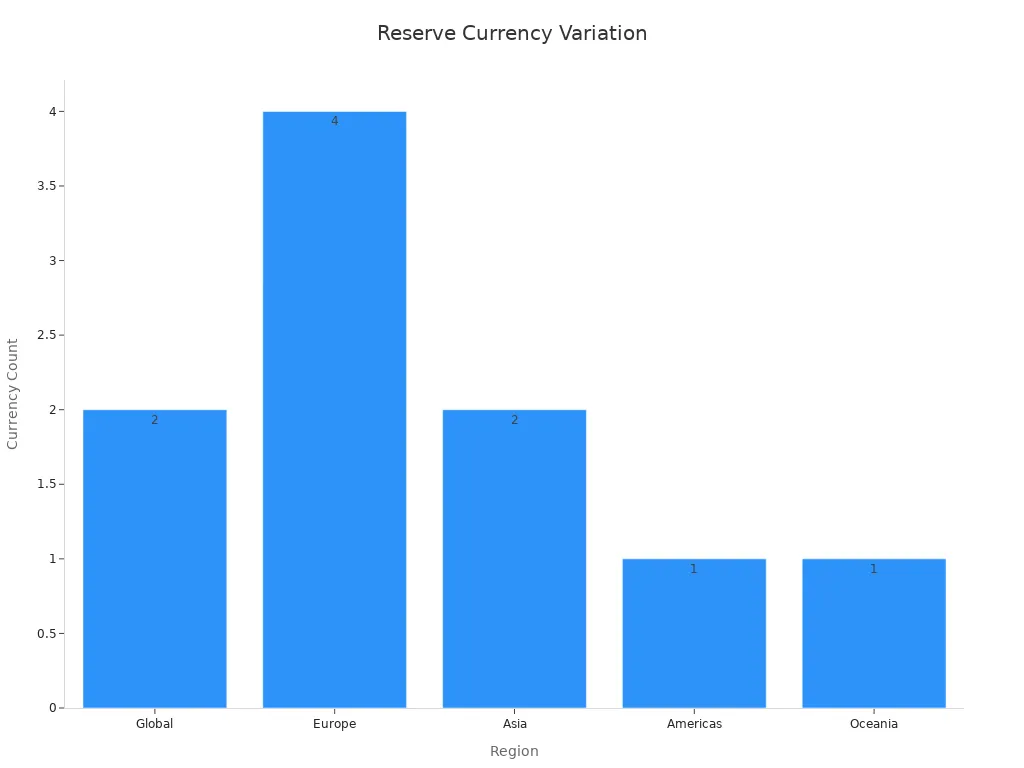
Reserve preferences across Asia, Europe, and the Americas
Different regions exhibit unique preferences in the composition of foreign exchange reserves, reflecting their economic priorities and trade relationships. Asia, for instance, has shown a growing inclination toward the Japanese yen and the Chinese renminbi. The yen has been a reserve currency since 1973, while the renminbi gained traction after its inclusion in the IMF’s SDR basket in 2016.
Europe, on the other hand, has transitioned through several reserve currencies over the decades. The French franc, Deutsche mark, and Dutch guilder dominated until the euro emerged in 1999. The euro now serves as the second most held reserve currency globally, underscoring its importance in European trade and finance.
In the Americas, the US dollar remains the dominant reserve currency, but the Canadian dollar and Australian dollar have gained recognition since 2012. These currencies reflect the growing economic influence of their respective nations.
|
Region |
Reserve Currencies |
Period Covered |
|---|---|---|
|
Global |
US dollar |
1947–2018 |
|
Global |
British pound |
1947–2018 |
|
Europe |
French franc |
Since 1970 |
|
Europe |
Deutsche mark |
Since 1970 |
|
Europe |
Dutch guilder |
Since 1973 |
|
Europe |
Euro |
Since 1999 |
|
Asia |
Japanese yen |
Since 1973 |
|
Asia |
Chinese renminbi |
Since 2016 |
|
Americas |
Canadian dollar |
Since 2012 |
|
Oceania |
Australian dollar |
Since 2012 |
The influence of regional trade agreements and currency blocs
Regional trade agreements and currency blocs significantly impact the composition of global reserves. Alliances like BRICS Plus have accelerated de-dollarization efforts, encouraging member nations to explore alternatives to the US dollar. This shift reflects a broader trend of diversification in reserve holdings.
Customs unions and free trade agreements also play a pivotal role. These arrangements influence trade patterns, which in turn affect reserve currency preferences. For example, agreements that promote intra-regional trade often lead to increased holdings of regional currencies. Recent agreements have provisions that benefit member countries while enhancing exports from nonmembers, creating complex interactions that shape reserve dynamics.
Implications of regional variations for global financial stability
Regional variations in reserve currency composition have profound implications for global financial stability. Diverse reserve preferences reduce the risk of over-reliance on a single currency, enhancing resilience during economic shocks. However, these variations can also create challenges.
For instance, the growing use of the renminbi in Asia reflects China's economic influence, but it raises questions about the stability of reserves in regions heavily reliant on this currency. Similarly, the euro's dominance in Europe strengthens regional stability but exposes global reserves to risks associated with eurozone crises.
Future Outlook for the Currency Composition of Foreign Exchange Reserves
Trends in diversification and the potential decline of US dollar dominance
The global reserve system is witnessing a gradual shift away from the US dollar. Central banks are diversifying their holdings to reduce reliance on a single currency. This trend reflects concerns over geopolitical risks and economic vulnerabilities tied to dollar dominance.
Several indicators highlight this shift:
-
The share of the US dollar in global reserves has dropped from 71% in 2001 to 54.8% in 2024.
-
Central banks have increased gold purchases, exceeding 1,000 tons annually in 2022 and 2023. This figure more than doubles the average of the previous decade.
-
The People's Bank of China has reduced its US Treasury holdings from $1.3 trillion to $780 billion while raising its gold reserves from 1.8% in 2015 to 4.9%.
These developments suggest a growing preference for alternative assets and currencies. Gold's resurgence as a reserve asset underscores the desire for stability during uncertain times. Diversification efforts may continue to reshape the currency composition of foreign exchange reserves in the coming decades.
The evolving role of the renminbi and other emerging market currencies
Emerging market currencies are gaining traction in international reserves. The Chinese renminbi, in particular, has seen significant growth. Its inclusion in the IMF's Special Drawing Rights (SDR) basket in 2016 marked a turning point. The renminbi now accounts for 12.1% of the SDR basket, reflecting its increasing importance in global finance.
China's initiatives, such as the Belt and Road Initiative and Digital Currency Electronic Payment (DCEP), aim to enhance the renminbi's status as a reserve currency. These efforts align with broader trends of de-dollarization. Other emerging market currencies, like the Indian rupee and Brazilian real, are also gaining recognition due to their countries' expanding economic influence.
The rise of these currencies signals a shift in the currency denomination of international reserves. As emerging economies grow, their currencies may play a larger role in global trade and finance, further diversifying reserve holdings.
The impact of digital currencies and central bank digital currencies (CBDCs)
Digital currencies are poised to redefine the global reserve landscape. Central bank digital currencies (CBDCs) offer a secure and efficient alternative to traditional reserve assets. Unlike cryptocurrencies, CBDCs are government-backed, ensuring stability and trust.
China's DCEP initiative exemplifies the potential of digital currencies. By promoting the digital yuan, China aims to strengthen the renminbi's position in international reserves. Other nations are exploring similar strategies. CBDCs could fulfill all characteristics of money—store of value, medium of exchange, and unit of account—better than existing alternatives.
The integration of digital currencies into foreign exchange reserves may accelerate diversification. Their speed, transparency, and cost-effectiveness make them attractive for cross-border transactions. As more countries adopt CBDCs, the currency composition of foreign exchange reserves will likely evolve, reflecting the growing influence of technology in global finance.
Scenarios for the future of global reserves
The future of global reserves presents several possible scenarios shaped by economic, geopolitical, and technological factors. These scenarios highlight the evolving dynamics of reserve currency composition and their implications for global finance.
1. Continued US Dollar Dominance
The US dollar may retain its position as the leading reserve currency. Its stability, liquidity, and widespread use in trade and finance make it a reliable choice for central banks. Nations with strong trade ties to the United States may continue to prioritize dollar holdings. However, gradual diversification efforts could reduce its share over time.
2. Rise of Regional Reserve Currencies
Regional currencies could gain prominence in specific areas. The euro may strengthen its role in Europe, while the renminbi could dominate Asia. Trade agreements and economic alliances may encourage nations to hold more regional currencies. This shift could reduce reliance on the dollar and foster localized financial stability.
3. Emergence of Digital Reserve Assets
Digital currencies, including central bank digital currencies (CBDCs), may redefine reserve strategies. Their speed, transparency, and cost-effectiveness make them attractive for cross-border transactions. Nations adopting CBDCs could integrate them into reserves, creating a new category of digital assets alongside traditional currencies.
4. Diversification Across Multiple Assets
Central banks may diversify reserves across a broader range of assets. Gold, emerging market currencies, and digital currencies could complement traditional reserves. This approach reduces risks associated with over-reliance on a single currency and enhances resilience during economic shocks.
The future of global reserves will likely involve a combination of these scenarios. As nations navigate economic uncertainties, their reserve strategies will continue to evolve, shaping the global financial landscape.
The currency composition of foreign exchange reserves has evolved significantly over time. Historical shifts, such as the British pound's decline and the US dollar's rise, reflect changing global economic powers. Current trends show the dollar's dominance, the euro's stability, and the renminbi's growing influence. Trade patterns, geopolitical strategies, and technological advancements drive these changes.
Diversification offers nations greater financial resilience. Emerging currencies and digital assets may reshape reserves in the future. Policymakers must adapt to these shifts, ensuring stability while embracing innovation.
FAQ
What is the purpose of foreign exchange reserves?
Foreign exchange reserves help countries stabilize their currencies, manage trade imbalances, and respond to economic crises. Central banks use these reserves to influence exchange rates and ensure liquidity during financial disruptions. They also provide confidence to investors about a nation's economic stability.
Why does the US dollar dominate global reserves?
The US dollar dominates due to its stability, widespread use in international trade, and the size of the US economy. Its role as a safe haven during crises and its liquidity in global markets further reinforce its position as the leading reserve currency.
How does trade influence reserve currency composition?
Trade relationships determine which currencies central banks hold. Countries trading heavily with a specific nation often increase reserves in that nation’s currency. This reduces exchange rate risks and ensures smoother transactions, aligning reserves with trade flows.
What role do digital currencies play in reserves?
Digital currencies, including central bank digital currencies (CBDCs), offer faster transactions and lower costs. They reduce reliance on intermediaries and enhance transparency. As adoption grows, central banks may include digital currencies in reserves, diversifying assets and adapting to technological advancements.
Will the US dollar lose its dominance in the future?
The US dollar may face gradual decline as nations diversify reserves. Emerging currencies like the renminbi and digital currencies could gain prominence. However, the dollar's stability and liquidity make it likely to remain a key reserve currency for the foreseeable future.
Related content