
The Evolution of Darty and Its Market Impact
Author:XTransfer2025.09.16Evolution of Darty
The evolution of Darty tells an inspiring story of transformation in the retail industry. Starting from its roots as a small family business, Darty grew into a leading name in electronics and appliances. Over time, its milestones reshaped the market. For example, the acquisition by Fnac in 2016 created a retail giant with nearly 400 stores, setting a new standard for combining online and in-store sales. Today, Darty influences trends in omnichannel retailing, offering valuable lessons for students and college students alike. Its journey highlights the importance of adapting to changing consumer needs.
The Origins and Early Evolution of Darty

Founding of Darty and Its Initial Vision
Darty's story began in the 1950s when the Darty family operated a small fabric shop in Montreuil, near Paris. This humble beginning laid the foundation for what would become a retail powerhouse. In 1957, the Darty brothers decided to expand their business by venturing into the sale of radios and televisions. This bold move marked the formal establishment of the company. Their vision was simple yet ambitious: to provide high-quality products while building trust with customers through exceptional service.
By 1968, Darty achieved a groundbreaking milestone by opening France's first large-surface home appliance store. This innovative approach revolutionized the shopping experience, offering customers a wide range of products under one roof. It also set the stage for Darty's future growth and its ability to adapt to changing consumer needs.
Early Market Position and Competitive Strategy
From the start, Darty positioned itself as a customer-focused retailer. Its ability to combine in-store and online sales later became a defining feature of its competitive strategy. The company leveraged data to understand consumer behavior and respond to market trends effectively. This approach allowed Darty to stay ahead of competitors and adapt to the evolving retail landscape.
The merger with Fnac in 2016 further solidified Darty's market position. Together, they became a dominant player in the retail distribution of electronics and appliances. Analysts noted that this partnership created a leader in omnichannel distribution, blending physical stores with online platforms. This strategy not only addressed the growing preference for online shopping but also set new standards for the retail industry.
Darty's early focus on innovation and customer satisfaction helped it navigate challenges and seize opportunities. Its journey offers valuable lessons for anyone interested in understanding how businesses can thrive in competitive markets.
Key Milestones in the Evolution of Darty
Launch of France's First Large-Surface Appliance Store
In 1968, Darty introduced a revolutionary concept to the retail world by opening France's first large-surface appliance store. This milestone marked a turning point in the evolution of Darty. You might wonder why this was so significant. At the time, most retailers operated small, specialized shops. Darty broke away from this tradition by offering a wide variety of home appliances under one roof.
This approach transformed the shopping experience. Customers no longer needed to visit multiple stores to compare products. Instead, they could explore a diverse range of options in a single location. This innovation not only saved time but also made shopping more convenient.
By prioritizing customer convenience, Darty set a new standard in the retail market. This milestone demonstrated the company's ability to anticipate consumer needs and adapt its business model accordingly.
Expansion into New Markets and Product Categories
Darty's growth didn't stop with appliances. Over the years, the company expanded into new markets and product categories, solidifying its position as a retail leader. You can see this evolution in Darty's decision to include electronics, computers, and even furniture in its offerings.
This diversification allowed Darty to reach a broader audience. For example, when personal computers gained popularity in the 1980s, Darty quickly added them to its inventory. This move attracted tech-savvy customers and positioned the company as a go-to destination for cutting-edge products.
Darty also ventured into international markets, extending its influence beyond France. By entering countries like Belgium and Spain, the company demonstrated its ability to adapt to different consumer preferences.
Introduction of the Darty Marketplace in 2014
In 2014, Darty embraced the digital age by launching its online marketplace. This platform allowed third-party sellers to list their products alongside Darty's own inventory. For you as a consumer, this meant access to a wider range of products without leaving the Darty website.
The marketplace model also benefited Darty. It enabled the company to compete with e-commerce giants like Amazon by offering a similar level of variety. Additionally, the marketplace generated new revenue streams through commissions from third-party sellers.
This move highlighted Darty's commitment to staying ahead in the retail industry. By integrating e-commerce into its business model, the company ensured it could meet the demands of tech-savvy shoppers.
Acquisition by Fnac in 2016 and Its Impact
The acquisition of Darty by Fnac in 2016 marked a significant turning point in the retail industry. You might wonder why this merger was so impactful. By joining forces, Fnac and Darty created one of the largest retail groups in Europe, specializing in electronics, appliances, and cultural products. This move not only strengthened their market position but also reshaped the competitive landscape.
Before the acquisition, Darty had already established itself as a trusted name in home appliances and electronics. Fnac, on the other hand, was a leader in books, music, and multimedia products. By combining their strengths, the two companies offered a more comprehensive product range. For you as a consumer, this meant greater convenience and access to a wider variety of items under one roof.
The merger also brought about operational efficiencies. Fnac and Darty streamlined their supply chains and shared resources, which helped reduce costs. These savings allowed them to offer competitive prices, benefiting you directly. Additionally, the partnership enabled the companies to invest more in innovation and technology, enhancing the overall shopping experience.
One of the most notable impacts of the acquisition was the expansion of omnichannel retailing. Both Fnac and Darty had already embraced online shopping, but their combined efforts took it to the next level. You could now enjoy seamless integration between physical stores and digital platforms. For example, you could browse products online, check their availability in nearby stores, and even opt for same-day pickup. This approach set a new standard for convenience in the retail sector.
The acquisition also influenced the broader market. Competitors had to adapt to the new benchmark set by Fnac Darty. Many retailers began investing in similar omnichannel strategies to keep up. This ripple effect demonstrated how a single merger could drive innovation across an entire industry.
For Darty, the partnership with Fnac reinforced its commitment to customer satisfaction. The company continued to prioritize its signature services, such as the "Darty Contract," which guaranteed reliable after-sales support. This focus on service quality ensured that Darty retained its loyal customer base while attracting new shoppers.
Strategies and Innovations That Shaped Darty's Growth

Customer-Centric Services and the "Darty Contract"
Darty has always prioritized customer satisfaction, and the "Darty Contract" is a prime example of this commitment. This service guarantees reliable after-sales support, ensuring that you feel confident in your purchases. The contract includes benefits like free repairs during the warranty period and quick response times for service requests. These features have made Darty a trusted name in the retail market.
The effectiveness of this approach is evident in its impact on sales performance. For instance:
-
Advisors reported an average increase of 200 euros per month in earnings, equating to a 10% raise on a gross salary of 2,000 euros.
-
This initiative contributed to an additional 100,000 sales annually, generating 1.5 million euros in extra revenue without extra costs.
By focusing on customer-centric services, Darty has set a benchmark for quality and reliability in the retail industry.
Leveraging Technology to Enhance Retail Experiences
Darty has embraced technology to improve your shopping experience. The company uses tools like artificial intelligence (AI) and augmented reality (AR) to create engaging and efficient retail environments. For example, AR allows you to visualize products in your home before making a purchase, boosting confidence and convenience. Studies show that products with AR experiences can increase conversion rates by up to 94%.
Here’s a quick look at how technology enhances retail:
|
Technology |
Description |
|
Artificial Intelligence |
Optimizes operations and enhances customer engagement through data analysis. |
|
Augmented Reality |
Provides immersive shopping experiences, helping you make informed decisions. |
|
Automation |
Streamlines routine tasks, improving efficiency and reducing costs. |
|
Retail Media |
Uses customer data for targeted advertising, increasing marketing effectiveness. |
Darty’s use of these technologies ensures that you enjoy a seamless and modern shopping experience, whether online or in-store.
Strategic Partnerships, Including Fnac Darty and CTS EVENTIM
Strategic partnerships have played a crucial role in Darty's growth. The merger with Fnac in 2016 created a retail powerhouse, combining strengths in electronics, appliances, and cultural products. This partnership improved operational efficiency and expanded product offerings, giving you access to a wider range of items.
Darty also collaborates with companies like Google to enhance e-commerce services. This partnership accelerates digital transformation by integrating advanced data analytics tools. For example, Darty uses GfK's gfknewron Retail platform to analyze sales trends and tailor strategies. These insights allow the company to customize promotions and optimize sales performance across channels.
|
Initiative |
Description |
|
Comprehensive Market Analysis |
Uses GfK tools to analyze trends, providing a competitive edge. |
|
Partnership with Google |
Enhances e-commerce services and accelerates digital transformation. |
|
Tailored Strategies |
Customizes promotions and product strategies based on data insights. |
These partnerships demonstrate Darty’s ability to adapt and innovate, ensuring it remains a leader in the retail market.
Adapting to Omnichannel Retailing and E-Commerce Trends
Darty has successfully adapted to the growing demand for omnichannel retailing and e-commerce. This approach ensures you can shop seamlessly across physical stores, websites, and mobile apps. By integrating these channels, Darty provides a consistent and convenient shopping experience, meeting the expectations of modern consumers.
One key strategy involves optimizing its digital platforms. For example, Darty’s mobile app offers a user-friendly interface, allowing you to browse products, check availability, and make purchases effortlessly. This focus on mobile commerce aligns with current trends, as 79% of smartphone users now shop online using their devices. Mobile app users also convert at a rate three times higher than those using mobile websites, highlighting the importance of a well-designed app.
Darty also emphasizes click-and-collect services, which let you order online and pick up items in-store. This feature combines the convenience of e-commerce with the immediacy of physical shopping. It’s no surprise that 61% of consumers consider click-and-collect essential. Additionally, Darty ensures its staff remains knowledgeable and well-trained, as 73% of shoppers value assistance from informed employees.
The company’s commitment to omnichannel excellence extends to personalized shopping experiences. By analyzing your preferences, Darty offers tailored product recommendations, which can increase conversion rates by up to 70%. This personalization ensures you find what you need quickly and efficiently.
Here’s a quick overview of omnichannel retailing statistics:
|
Evidence |
Statistic |
|
Consumers expecting consistent experiences |
78% |
|
Personalized recommendations boosting sales |
70% |
|
Shoppers valuing knowledgeable staff |
73% |
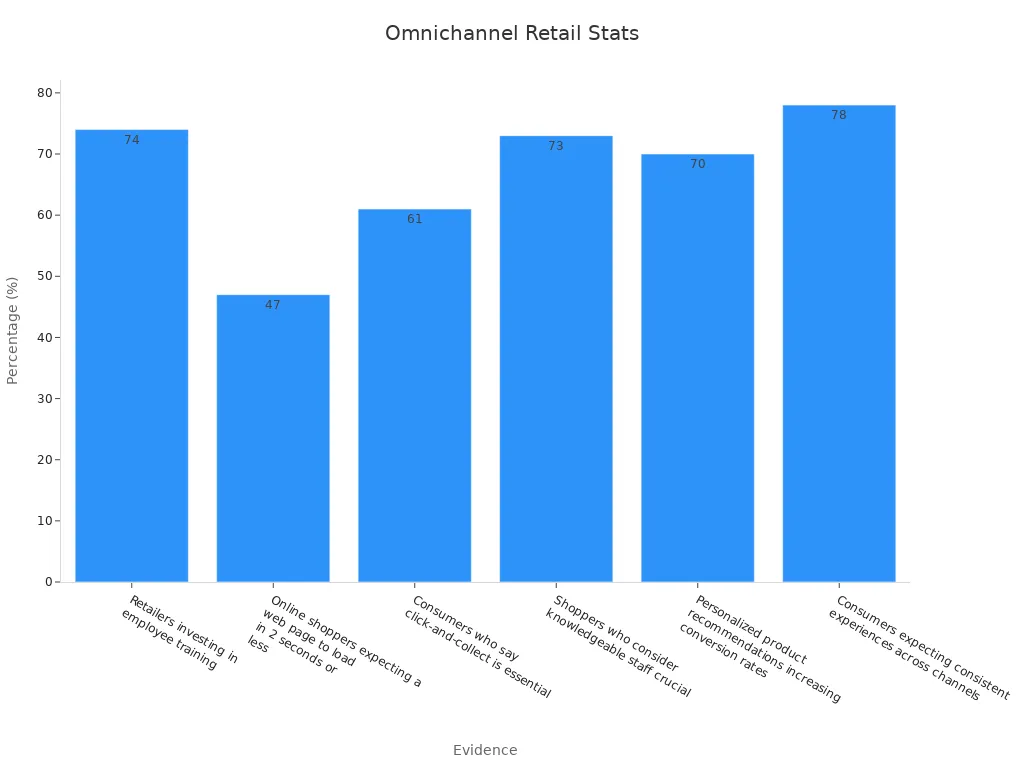
By staying ahead of these trends, Darty continues to set benchmarks in the retail industry. Its ability to adapt ensures you enjoy a seamless and satisfying shopping journey.
Market Impact of Darty's Evolution
Influence on Competitors and Retail Industry Standards
The evolution of Darty has significantly influenced competitors and reshaped retail industry standards. You can see this impact in how other retailers have adopted similar strategies to stay competitive. For example, Darty’s focus on omnichannel retailing pushed competitors to integrate their physical stores with online platforms. This shift created a new standard for convenience and accessibility in the retail market.
Darty’s emphasis on customer-centric services also set a benchmark for quality. Many retailers began offering extended warranties and after-sales support to match Darty’s "Darty Contract." These changes improved the overall shopping experience for you as a consumer.
The merger with Fnac further amplified Darty’s influence. By combining resources, the two companies raised the bar for operational efficiency and product variety. This partnership encouraged other retailers to explore similar collaborations, reshaping market trends and fostering innovation.
Shaping Consumer Expectations in the Retail Sector
Darty’s evolution has played a key role in shaping what you expect from retailers today. The company’s focus on convenience, reliability, and innovation has redefined the shopping experience. For instance, Darty’s large-surface stores introduced the concept of finding everything you need under one roof. This approach made shopping faster and easier, setting a new standard for customer convenience.
The introduction of the Darty Marketplace in 2014 further influenced your expectations. By offering a wide range of products online, Darty showed that e-commerce could be just as reliable as in-store shopping. You now expect retailers to provide seamless online experiences, including fast delivery and easy returns.
Darty’s commitment to after-sales support also shaped your expectations for service quality. The "Darty Contract" ensures you receive reliable assistance long after your purchase. This focus on customer satisfaction has made you more likely to choose retailers that prioritize service excellence.
Contribution to the Growth of Omnichannel and Marketplace Models
Darty has been a driving force behind the growth of omnichannel and marketplace models. By integrating physical stores with digital platforms, Darty created a seamless shopping experience that you can enjoy across multiple channels. This approach has become a standard in the retail industry, with many companies adopting similar strategies to meet your expectations.
The Darty Marketplace, launched in 2014, played a pivotal role in this evolution. By allowing third-party sellers to list their products, Darty expanded its offerings and provided you with more choices. This model also helped Darty compete with e-commerce giants like Amazon, proving that traditional retailers could thrive in the digital age.
Omnichannel retailing has transformed how you shop. You can browse products online, check their availability in stores, and even opt for same-day pickup. Darty’s focus on integrating these channels ensures you enjoy a consistent and convenient experience.
Darty’s contributions to these models have influenced market trends and shaped the future of retail. By prioritizing innovation and adaptability, the company has ensured its relevance in a rapidly changing market.
Darty's journey from a small fabric shop to a retail leader showcases its ability to adapt and innovate. Milestones like the launch of large-surface stores and the introduction of the Darty Marketplace reshaped retail dynamics. These achievements highlight the importance of anticipating consumer needs and embracing change.
Strategic lessons from Darty's evolution include its focus on sustainability, responsible technology use, and energy-efficient models. For example, Fnac Darty integrates ecological clauses into supplier contracts, while generative AI helps reduce environmental footprints. These initiatives reflect a commitment to balancing economic and ecological goals.
Today, Darty continues to influence the retail market. Its omnichannel strategies and customer-centric services set benchmarks for competitors. Whether you're a student exploring business trends or a college student studying retail strategies, Darty's story offers valuable insights into innovation and adaptability.
|
Strategic Initiative |
Description |
|
Implementing Responsible Frameworks |
Fnac Darty is raising awareness about CSRD and integrating clauses into supplier contracts. |
|
Valuing Sustainability |
Accenture emphasizes the importance of considering sustainable value alongside economic outcomes. |
|
Developing New Models |
Focus on energy-efficient technologies aligned with ecological transition goals. |
|
Generative AI Opportunities |
Generative AI can reduce ecological footprints and provide responsible solutions for consumers. |
|
Collective Responsibility |
New models must align with ecological transition and promote responsible technology use. |
FAQ
What is a darty, and why is it popular among students?
A darty is a daytime party, often held outdoors, where students gather to socialize and enjoy music. It has become popular because it combines relaxation and fun in a casual setting. College students often find darties a great way to unwind during weekends.
How does Darty ensure customer satisfaction?
Darty focuses on customer-centric services like the "Darty Contract," which guarantees reliable after-sales support. This includes free repairs during the warranty period and quick service responses. These efforts ensure you feel confident in your purchases and enjoy a hassle-free shopping experience.
What safety advice should you follow at darties?
When having fun at darties, prioritize safety. Stay hydrated, avoid overindulging, and keep an eye on your belongings. Always plan your transportation in advance to ensure you get home safely. Following these tips helps you enjoy the event responsibly.
How can students benefit from Darty’s omnichannel approach?
Students benefit from Darty’s seamless integration of online and in-store shopping. You can browse products online, check availability, and pick them up in-store. This convenience saves time and ensures you find what you need quickly, even during a busy schedule.
Why is Darty’s evolution relevant for college students?
Darty’s journey offers valuable lessons in adaptability and innovation. College students studying business or retail strategies can learn how Darty leveraged technology and customer-focused services to thrive. Understanding these strategies can inspire you to apply similar principles in your future endeavors.
Related content