
What Is the CHF Currency and Where Can You Use It
Author:XTransfer2025.08.20CHF
The CHF currency, known as the Swiss franc, serves as the official money in Switzerland and Liechtenstein. You will also find it used in Campione d'Italia, an Italian area near the Swiss border. Here is a quick look at who uses the Swiss franc:
|
Region |
Population (approximate) |
Currency Usage Status |
|
Switzerland |
Over 8 million |
Official user of Swiss franc |
|
Liechtenstein |
40,457 (as of 31 Dec 2023) |
Official user of Swiss franc |
|
Campione d'Italia |
N/A |
Unofficial user of Swiss franc |
You need the CHF currency for shopping, travel, and business in these places. Many travelers trust it because of its strong reputation. The Swiss franc stands out for stability and reliability. Here are some reasons why:
-
The Swiss National Bank keeps prices stable.
-
Switzerland has a AAA credit rating.
-
The country’s economy is strong and diverse.
-
The Swiss franc often stays strong during global market changes.
Highights
-
The Swiss franc (CHF) is the official currency of Switzerland and Liechtenstein and is also used in Campione d'Italia.
-
CHF is known for its stability, low inflation, and strong value, making it a trusted currency worldwide.
-
You will use coins and banknotes in various denominations for daily purchases, with electronic payments becoming more common.
-
The Swiss franc acts as a safe haven during global crises, often gaining value when other currencies fall.
-
Knowing CHF symbols and codes helps you avoid confusion and makes travel and business transactions smoother.
CHF Currency Meaning
What CHF Stands For
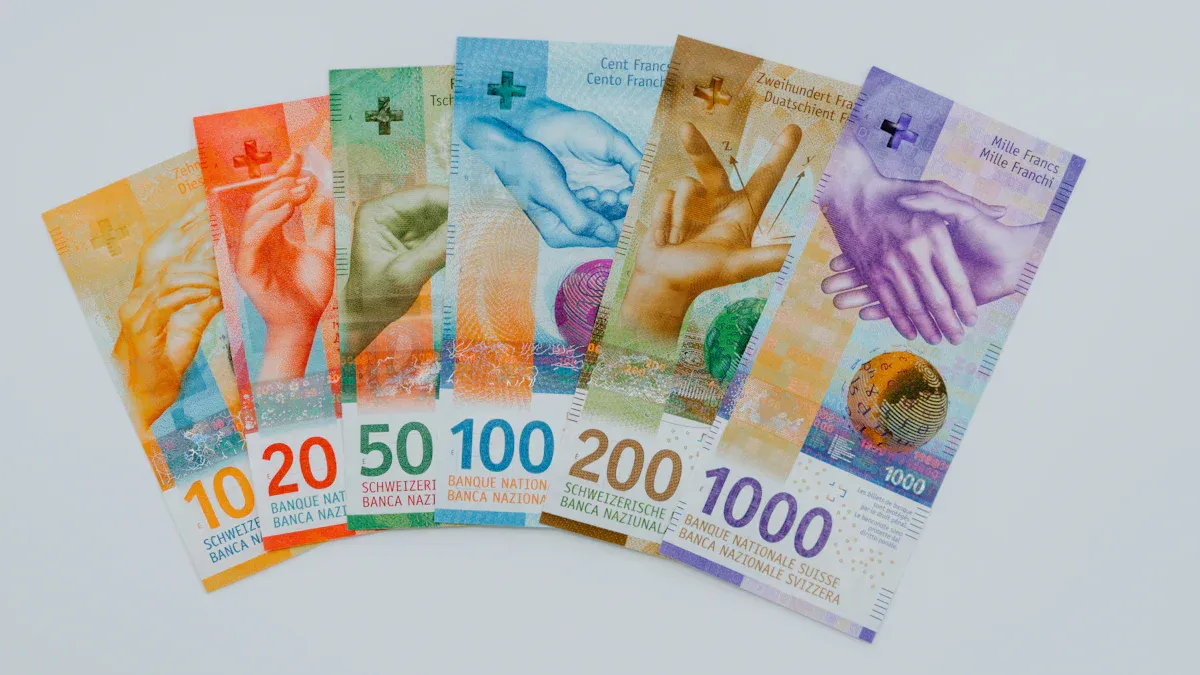
When you see the term CHF, you might wonder what it means. CHF stands for the Swiss franc, which is the official currency of Switzerland and Liechtenstein. The abbreviation comes from the Latin phrase "Confoederatio Helvetica" Franc. This Latin name refers to the Swiss Confederation. People use Latin for official terms in Switzerland because the country has several languages. Using Latin helps keep things neutral and clear for everyone. Banks and financial institutions around the world use CHF as the standard code for the Swiss franc. You will see this abbreviation on currency exchange boards, bank statements, and travel guides. The CHF currency is recognized in English and many other languages, making it easy for you to identify when you travel or do business.
Symbols and Codes
You will notice that the Swiss franc uses specific symbols and codes in global finance. Here are the main ones you should know:
-
The official alphabetic code for the Swiss franc is "CHF."
-
"CH" stands for Switzerland, based on the country’s ISO code, and "F" stands for franc.
-
The ISO 4217 standard sets these codes so that everyone uses the same system worldwide.
-
The symbol "CHF" appears on price tags, receipts, and financial documents.
-
Numeric codes also exist for currencies, but most people use the alphabetic code.
If you plan to visit Switzerland or Liechtenstein, you will use the CHF currency for shopping, dining, and travel. Knowing these symbols and codes helps you avoid confusion and makes your transactions smoother.
Where Is CHF Currency Used
Countries and Regions
You will find the CHF currency as the official money in Switzerland and Liechtenstein. People in these countries use it for everything from buying groceries to paying for public transportation. The Swiss National Bank and Swissmint issue the Swiss franc, making it the legal tender in these areas. You can see this in the table below:
|
Country |
Region |
|
Switzerland |
Western Europe |
|
Liechtenstein |
Western Europe |
Campione d'Italia, a small Italian enclave near the Swiss border, also uses the CHF currency. Even though it belongs to Italy, people there use Swiss francs for daily transactions. This makes travel and shopping easier if you visit this region.
Special Cases
You may notice some unique situations when you use the CHF currency. In Switzerland, many shops and restaurants near the borders accept euros. They often show prices in both Swiss francs and euros. This practice is called dual pricing. It helps travelers from neighboring countries pay more easily.
However, you should know that if you pay in euros, you will likely get your change in Swiss francs. The exchange rate may not always match the official rate, so you might pay a little more. Most places in Switzerland prefer the CHF currency for all transactions.
Some Swiss cities, such as Geneva and Zurich, see many international visitors. These cities often accept major credit cards and sometimes even euros for convenience. Still, you will find that the CHF currency remains the main form of payment everywhere in Switzerland and Liechtenstein.
Daily Use
Coins and Banknotes
When you visit Switzerland or Liechtenstein, you will use coins and banknotes for many purchases. The Swiss National Bank (SNB) issues all banknotes, while Swissmint produces the coins. Only the Swiss federal government can issue the CHF currency, as stated in the Swiss Federal Constitution of 1848.
Here is a table showing the coins and banknotes you will find in circulation:
|
Currency Type |
Denominations in Circulation |
|
Coins |
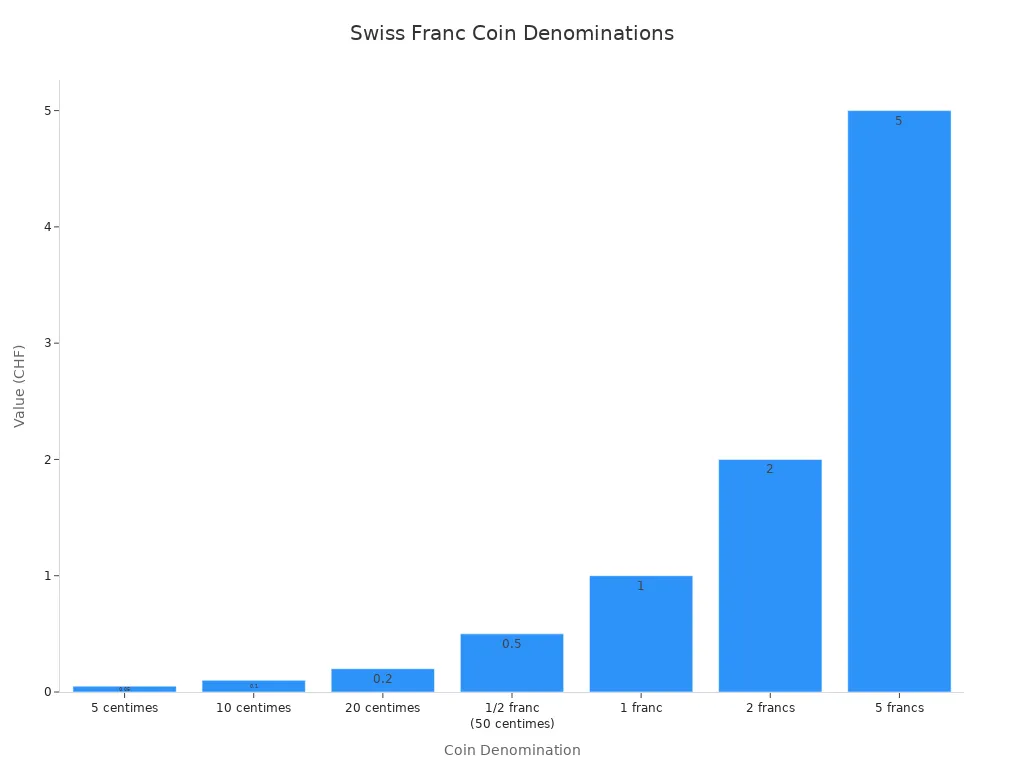
5, 10, 20 cents; 0.5, 1, 2, and 5 francs |
|
Banknotes |
10, 20, 50, 100, 200, and 1,000 francs |
The CHF currency divides into 100 smaller units. People call these subunits centimes (French), rappen (German), centesimo (Italian), or rap (Romansh). You will not see 1 or 2 centime coins anymore, as they have been withdrawn from use.
|
Subunit Name (Language) |
Value in Swiss Francs |
|
Centime (French, International) |
1/100 CHF |
|
Rappen (German) |
1/100 CHF |
|
Centesimo (Italian) |
1/100 CHF |
|
Rap (Romansh) |
1/100 CHF |
Everyday Transactions
You will use the CHF currency for almost every purchase in Switzerland and Liechtenstein. People pay for groceries, meals, and public transport with cash or cards. In 2017, about 45% of retail payments used cash, but electronic payments have become more popular, especially after the COVID-19 pandemic. Today, you can pay with debit cards, credit cards, or even your phone.
Instant Payment systems now let you send money in less than 10 seconds, any time of day. Many Swiss banks support these fast transfers, making it easy to pay bills or split costs with friends. For international transfers, you need the recipient’s name and a special bank account number called an IBAN. Some services, like Wise, offer transparent fees and fair exchange rates for CHF transfers.
The total value of Swiss francs in circulation reached over 509 billion CHF in May 2025. This shows how important the CHF currency is for daily life and business in Switzerland.
Value and Stability
Exchange Rates
You will notice that the CHF currency often stays strong, even when other currencies change quickly. Many factors help keep its value steady. The Swiss National Bank makes important decisions about interest rates. Sometimes, the franc gets stronger even after a rate cut. This shows that more than just interest rates affect the currency. People around the world trust the Swiss franc, especially when they feel unsure about the economy.
Here are some reasons why the Swiss franc’s exchange rate remains stable:
-
The Swiss National Bank’s policies guide the value of the franc.
-
Switzerland usually has low inflation, which helps keep prices steady.
-
The country exports high-value products like medicines and machines.
-
When the world feels uncertain, many people buy Swiss francs as a safe choice.
Safe Haven Status
You will see that the Swiss franc is called a “safe haven” currency. This means people want to hold it when the world faces trouble. During financial crises, the franc often rises in value. For example, in 2015, the Swiss National Bank removed a rule that kept the franc close to the euro. The franc’s value jumped by about 15-20% in just one day. This event showed how quickly the franc can react to big changes.
The table below shows how the Swiss franc compares to the US dollar during crises:
|
Aspect |
Swiss Franc (CHF) |
US Dollar (USD) |
Notes |
|
Safe haven behavior |
Appreciates during global crises |
Less pronounced |
CHF rises more when markets fall |
|
Crisis episodes |
2008, 2015, European debt crisis |
Less asymmetric |
CHF shows stronger response |
|
Exchange rate shock |
2015: +15-20% in one day |
N/A |
Shows CHF’s sensitivity |
Many experts say the Swiss franc is strong because Switzerland stays neutral in world conflicts. The country has a stable economy, no big debts, and a trusted banking system. The Swiss National Bank also steps in to keep the franc steady. The franc often moves in the same direction as gold, another safe asset.
You now know why the Swiss franc stands out in Europe.
-
You use it in Switzerland, Liechtenstein, and Campione d'Italia.
-
The franc is famous for stability, low inflation, and safe haven status.
-
It ranks among the world’s most traded currencies and plays a key role in global finance.
The Swiss National Bank manages the franc carefully, making it a trusted choice for travelers and investors. When you travel or do business, you can rely on its strength and reliability.
FAQ
What does CHF stand for?
CHF stands for "Confoederatio Helvetica Franc." This means Swiss franc. You see this code on price tags, bank statements, and currency exchange boards. It helps you know you are dealing with Swiss money.
Can you use euros in Switzerland?
You can use euros in some shops, hotels, and train stations, especially near borders. Most places prefer Swiss francs. If you pay in euros, you usually get change in francs. The exchange rate may not be the best.
How do you tell Swiss franc coins apart?
Swiss franc coins have different sizes, colors, and numbers. You see the value printed on each coin. For example, a 1 franc coin looks bigger than a 20 cent coin. You can also check the edge and design.
Is the Swiss franc a safe currency?
Yes, the Swiss franc is very safe. People trust it because Switzerland has a strong economy and low inflation. Many investors choose Swiss francs during uncertain times. The Swiss National Bank works hard to keep the currency stable.
Where can you exchange CHF for other currencies?
You can exchange CHF at banks, airports, train stations, and currency exchange offices. Many ATMs also let you withdraw Swiss francs. Always check the exchange rate and any fees before you change your money.
Related content