
PEN Currency Explained: A Complete Guide to the Peruvian Sol
Author:XTransfer2025.08.19PEN
The Peruvian sol, known by its currency code PEN, is the official money of Peru. You can easily use the PEN currency throughout the country, whether you are traveling, relocating, or conducting business there. Peru allows you to exchange PEN currency without any issues. Additionally, you can hold accounts in other currencies as well. Here are some recent exchange rates:
|
Currency Pair |
Exchange Rate (July 25, 2025) |
|
1 Peruvian Sol (PEN) to Euro (EUR) |
0.2395 EUR |
|
1 US Dollar (USD) to Peruvian Sol (PEN) |
3.54 PEN |
Understanding the PEN currency is helpful for everyday purchases and gives you confidence when handling money in Peru.
Highlights
-
The Peruvian sol (PEN) is Peru’s main money. People use it for almost every local payment. Its symbol is S/ and its code is PEN. - Bring both cash and cards when you visit Peru. Cash is better in markets and small towns. Cards work in big stores and places for tourists. - Always look at your bills for safety marks. Do not trade money on the street. This helps keep your money safe and stops scams.
What Is PEN Currency?
Official Status
You may wonder why the PEN currency is official in Peru. The reason is because of a law in Peru. Law No. 25.295 was passed on January 3, 1991. This law made the Nuevo Sol the country’s official money. Later, on December 15, 2015, another law changed the name to just Sol. So, the sol is not just a custom. It is the legal money you use for shopping and paying bills in Peru. The government and the Central Reserve Bank of Peru both say the sol is the national currency. When you see prices or pay for things in Peru, you can trust the PEN currency is real.
Symbol and Code
When you look at prices in Peru, you will see S/. This symbol means the sol and shows the price in the local money. For example, S/ 20 means twenty soles. In banks and business, people use the code PEN for the Peruvian sol. This code helps you find the right money when you exchange or send funds.
Here is a simple table to help you remember:
|
Aspect |
Details |
|
Official Symbol |
S/ |
|
ISO 4217 Currency Code |
PEN |
|
Subdivision |
100 céntimos (1 sol = 100 céntimos) |
|
Banknote Denominations |
10, 20, 50, 100, 200 soles |
|
Coin Denominations |
10, 20, 50 céntimos; 1, 2, 5 soles |
|
Issuing Authority |
Central Reserve Bank of Peru (Banco Central de Reserva del Perú) |
|
Usage in Financial Transactions |
Symbol S/ used on price tags, menus, banknotes, and coins; ISO code PEN used in banking, currency exchange, and financial markets |
|
Currency Role |
Official currency for all local transactions in Peru, helping with daily business |
You will use the PEN currency for almost everything in Peru. Some tourist places may take US dollars, but most want soles. The S/ symbol helps everyone know the price, and the PEN code makes banking and travel simple.
History
Origins
You may ask where the Peruvian sol started. The story is very old. In colonial times, people in Peru used the Spanish real. After Peru became its own country in 1821, it made its own real. Later, Peru made new types of money as the economy changed. By the middle of the 1900s, Peru started using the sol. Sol means "sun" in Spanish. This name links to Peru’s history and how important the sun is in their culture. The sol became a sign of pride for the country. Later, Peru had problems with inflation. The government had to make changes to keep the money strong.
Name Changes
Peru’s money changed names many times because of money problems. Here is a short timeline to help you remember:
-
Sol de Oro: People used this from the 1930s to the 1980s.
-
Inti: Started in 1985 to stop inflation, but did not last.
-
Nuevo Sol: Began in 1991 after hyperinflation, replacing one million intis with one nuevo sol.
-
Sol: In 2015, the government dropped "nuevo" and went back to just "sol."
Each change tried to bring back trust and keep the money safe. The Central Reserve Bank of Peru helped with these changes to fix the economy. Today, you use the sol, which shows Peru’s past and its strength now.
Denominations
Banknotes
You will see five main banknotes when you use soles in Peru. Each one looks unique and tells a story about the country. Here’s what you’ll find in your wallet:
-
S/ 10, S/ 20, S/ 50, S/ 100, and S/ 200 notes are all in circulation.
-
The latest series, which started in 2021, shows off famous Peruvian scientists, humanists, and even native plants and animals. These designs help you learn about Peru’s culture just by looking at your money.
-
Each note has its own color and size, so you can spot them quickly.
-
Older notes, like the 50 Nuevos Soles from 1991-2006, sometimes show places like the Huacachina Oasis. Only notes marked as Nuevos Soles or Soles work for payments today.
Coins
You’ll use coins for small purchases, bus fares, or snacks. Peruvian coins come in several sizes and materials. Here’s a quick guide:
|
Denomination |
Material(s) |
Notes on Usage and Composition |
|
10 céntimos |
Brass |
Still in use |
|
20 céntimos |
Brass |
Still in use |
|
50 céntimos |
Copper–Zinc–Nickel alloy |
Still in use; reeded edge |
|
1 sol |
Copper–Zinc–Nickel alloy |
Still in use; reeded edge |
|
2 soles |
Bimetallic: steel ring, copper–zinc–nickel center |
Still in use; smooth edge |
|
5 soles |
Bimetallic: steel ring, copper–zinc–nickel center |
Still in use; reeded edge since 2009 |
|
1 céntimo |
N/A (removed in 2011) |
No longer widely used |
|
5 céntimos |
N/A (removed in 2019) |
No longer widely used |
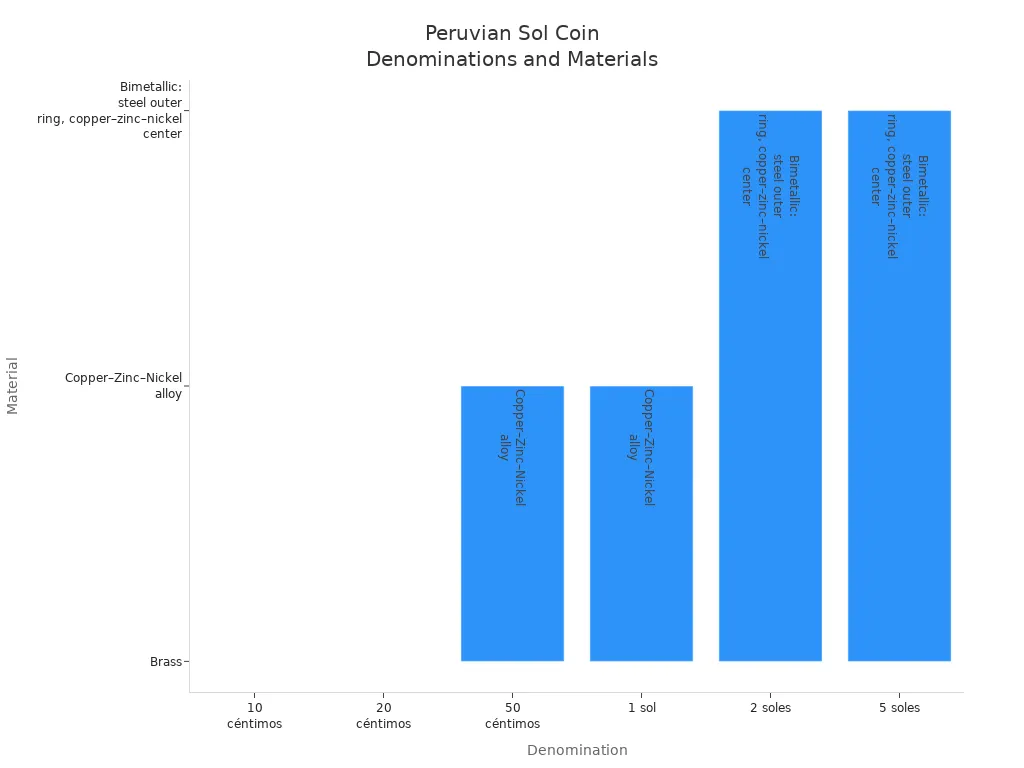
You’ll notice that coins feel different in your hand. Some are heavier, and some have a special edge. Most shops will not accept 1 or 5 céntimos anymore, so you can ignore those. Stick to the coins listed above, and you’ll have no trouble paying for everyday things in Peru.
Security Features
Counterfeit Prevention
You want to make sure the money in your hand is real. The Peruvian sol has many smart features that help you spot a fake bill. When you get a banknote, try these simple checks:
-
Feel the texture: Real Peruvian sol notes use 100% cotton paper. They feel different from regular paper. You can also feel raised ink, especially on the words "Banco Central de la Reserva" and on special tactile strips. This helps people with vision problems, too.
-
Look for the watermark: Hold the bill up to the light. You’ll see a clear image of the person on the note, along with a special object behind them. Fake notes often have blurry or missing watermarks.
-
Check the security thread: Every note has a thin thread running from top to bottom. You’ll see words like "Peru," the value, and "BCP." On bigger bills, the thread shines with tiny fish symbols.
-
Find the number alignment: Look for numbers printed on both sides of the bill. When you hold it to the light, the numbers line up perfectly.
-
Tilt the note: The big number showing the value changes color when you tilt the bill. For example, the 10 soles note shifts from fuchsia to green.
-
Spot the microprinting: With a magnifying glass, you can see tiny words like "Peru" or "BCP" on the note.
-
Use UV light: Under ultraviolet light, you’ll see glowing images and fibers that stay hidden in normal light.
Using PEN Currency
Cash vs. Cards
When you travel in Peru, you will notice that cash is still king in many places. Most small shops, street vendors, and traditional markets prefer cash. You will find it easier to pay for snacks, souvenirs, or bus rides with coins and small bills. The PEN currency is what you will use for these everyday purchases. Many Peruvians trust cash because it is simple and quick. You can hand over a bill and get your change right away.
If you visit bigger stores, restaurants, or hotels, you will see that they accept credit and debit cards. Visa and Mastercard are the most common, but some places also take American Express. In tourist areas and shopping malls, you can often pay with your card. Sometimes, you may see a sign that says there is a minimum amount for card payments. This means you need to spend a certain amount before you can use your card.
You may face some challenges as a foreigner. Many small businesses and rural shops only take cash. If you try to pay with a large bill, they might not have change. It is smart to keep smaller bills like 10 or 20 soles in your wallet. Shops and taxis may not accept damaged or old bills, so check your money before you leave the counter. If you want to avoid scams or fake money, use ATMs from big banks and check your bills for watermarks and special features.
Here is a quick table to help you decide when to use cash or cards:
|
Situation |
Cash |
Card |
|
Street markets |
✅ Preferred |
❌ Rarely accepted |
|
Small shops |
✅ Preferred |
❌ Rarely accepted |
|
Taxis and buses |
✅ Preferred |
❌ Not accepted |
|
Large stores/restaurants |
✅ Accepted |
✅ Accepted |
|
Hotels and tourist spots |
✅ Accepted |
✅ Accepted |
|
Rural areas |
✅ Needed |
❌ Not accepted |
Digital Payments
Digital payments are growing fast in Peru, especially in cities like Lima. You will see more people using their phones to pay for things. Apps like Yape and Plin let you send money to friends or pay at some stores just by using a phone number. These apps work with most major banks, so you can transfer money quickly and safely. Bank transfers are also popular. You can move money between accounts using Immediate Interbank Transfers (IRT), which work any time of day.
If you shop online or in big stores, you might use payment gateways like MercadoPago, PayU, or Niubiz. These platforms let you pay with your card or even with digital wallets. Some stores and taxis in big cities now accept Apple Pay or Google Pay, but you will not find these options everywhere yet.
You may also see services like PagoEfectivo, which let you pay online and then finish the payment in cash at a local shop. This is helpful if you do not have a card or want to avoid online payments.
Digital payments make life easier, but you should stay alert. Always check that you are using official apps and websites. If you have trouble, ask for help at your bank or from someone you trust.
Exchanging PEN Currency
Where to Exchange
You have many options when you want to exchange money for PEN currency in Peru. Some places give you better rates and more safety than others. Here are the most reliable and cost-effective spots:
-
Casas de cambio (exchange houses) in big cities like Lima and Cusco offer great rates and are usually safe. Look for official signs and always ask for a receipt.
-
Banks are very secure, but you might wait longer and get a slightly worse rate.
-
Supermarkets with bank branches sometimes let you exchange money while you shop.
-
Airport exchange counters are easy to find, but they charge high fees and give poor rates. Try to avoid them if you can.
-
Never exchange money on the street. It is risky and you could get fake bills.
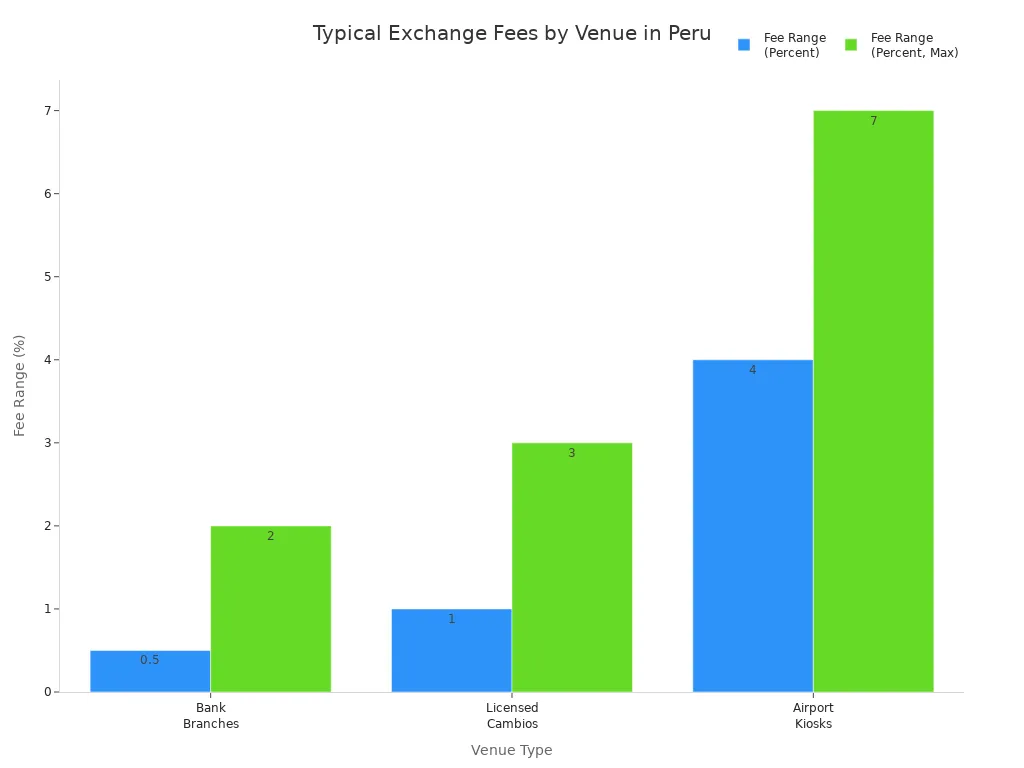
Here’s a quick look at typical fees and safety levels:
|
Venue Type |
Fee Range |
Safety Level |
Rate Transparency |
|
Bank Branches |
0.5-2% |
High |
High |
|
Licensed Cambios |
1-3% |
Secure |
Medium |
|
Airport Kiosks |
4-7% |
Moderate |
Low |
ATMs
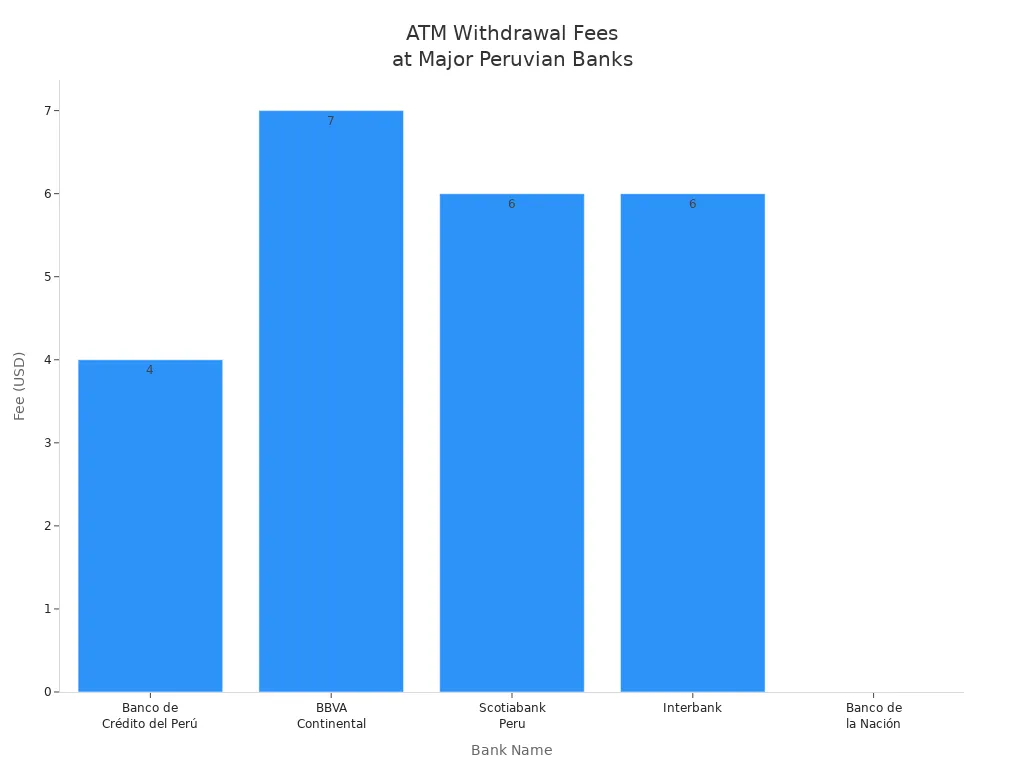
ATMs make it easy to get PEN currency almost anywhere in Peru. You will find them in city centers, banks, malls, and even some small towns. Visa cards work best, but many ATMs also take Mastercard and American Express. Always choose to withdraw in soles, not your home currency, to avoid extra fees.
Most ATMs charge $4 to $10 USD per withdrawal. Fees are higher at airports and hotels. To save money, take out larger amounts less often. Here’s a table to help you compare:
|
Bank Name |
Typical Fee (USD) |
Withdrawal Limit (PEN) |
Notes |
|
BCP |
~$4 |
Up to 700 |
Widely available |
|
BBVA Continental |
~$7 |
N/A |
Major cities and tourist spots |
|
Scotiabank Peru |
~$6 (sometimes free) |
N/A |
Global ATM Alliance member |
|
Interbank |
$4–8 |
N/A |
Good coverage |
|
Banco de la Nación |
$0 |
400 |
Many remote areas |
Foreign Currencies
US Dollar Acceptance
You might wonder if you can use US dollars in Peru. The answer is yes, but only in certain places. Many hotels, hostels, and tour agencies in big cities like Lima, Cusco, and Arequipa will take US dollars. Some restaurants and large department stores also accept them. You may even see prices listed in both soles and dollars at these spots. In tourist areas, paying with dollars is common for big purchases, like booking tours or paying for your hotel stay.
-
US dollars work best for higher-value transactions.
-
Most places that accept dollars also take credit cards, but you might pay extra fees.
-
Always check the exchange rate before you pay. Some businesses use their own rates, which might not be in your favor.
-
Only use clean, crisp bills. Shops and banks often reject torn or worn notes.
-
For small shops, food stands, and markets, you will need soles.
When to Use Soles
You will need Peruvian soles for most daily expenses. Local markets, small stores, taxis, and family-run restaurants almost always want payment in soles. In rural areas, you may not find anyone who takes dollars or cards. Even in cities, you will find it easier to pay for snacks, souvenirs, or tips with cash in soles.
|
Where You Are |
Best Currency to Use |
|
Tourist hotels/tours |
US dollars or soles |
|
Supermarkets |
Soles (sometimes dollars) |
|
Local markets |
Soles |
|
Rural areas |
Soles only |
If you plan to travel outside the main cities, make sure you have enough soles. ATMs may not be available everywhere. Keeping some small bills helps you pay for things quickly and avoid problems with change.
Travel Tips
Budgeting
Traveling in Peru can fit almost any budget. You might spend as little as 96 PEN per day if you travel on a budget, or up to 783 PEN if you want luxury. Most travelers fall somewhere in between. Here’s a quick look at what you might spend each day:
|
Expense Category |
Budget Traveler (PEN) |
Mid-Range Traveler (PEN) |
Luxury Traveler (PEN) |
|
Average Daily Budget |
96 |
263 |
783 |
|
Accommodation |
33 |
94 |
305 |
|
Local Transportation |
10 |
31 |
107 |
|
Food |
39 |
99 |
261 |
|
Entertainment |
31 |
86 |
253 |
|
Alcohol |
7–20 |
17–52 |
48–143 |
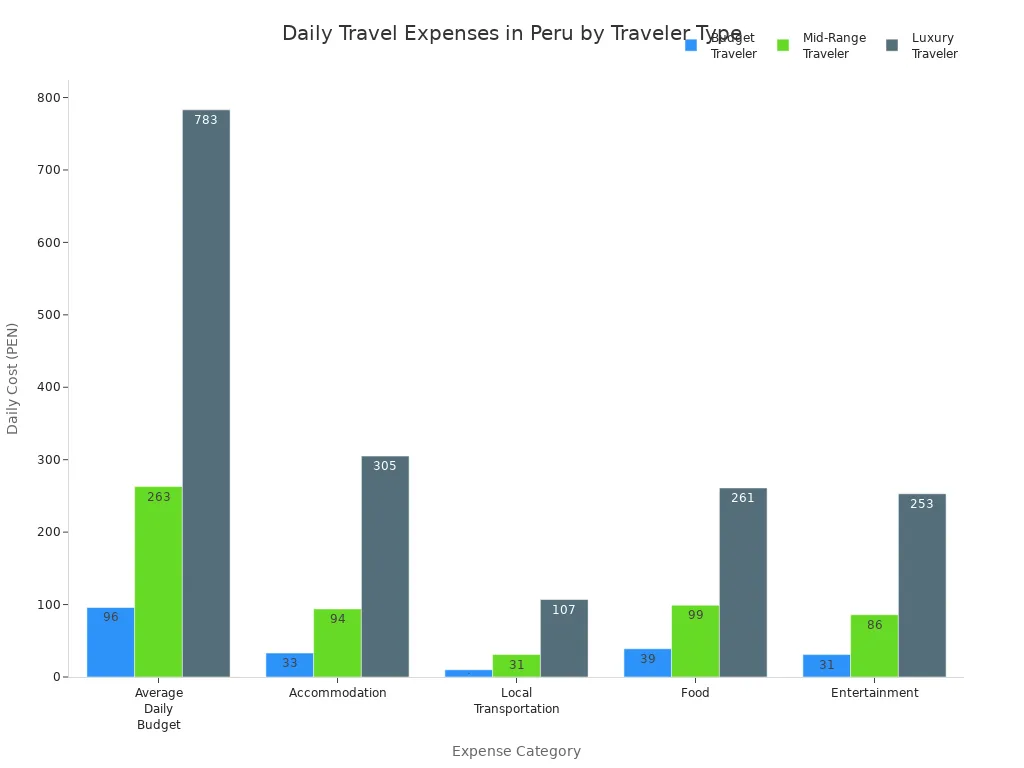
You’ll want to plan for accommodation, food, transportation, and fun. Hostels cost less, while hotels and tours add up fast. Local meals and colectivos (shared vans) help you save. Bring a water bottle with a filter and try to book tours last minute for better deals.
Tipping
Tipping in Peru is not required, but people appreciate it. You should tip in soles, not dollars. Most locals tip 3 to 5 PEN in casual restaurants. In nicer places, a 10–15% tip is common if there’s no service charge. For taxis, just round up the fare. Tour guides usually get 20–40 PEN per day in cities, or 10–20 PEN in rural areas. Carry small bills like 5, 10, or 20 PEN to make tipping easy.
|
Service |
Urban Areas |
Rural Areas |
|
Restaurants |
10–15% tip if no service fee |
Round up the bill |
|
Taxis |
Round up fare |
Optional |
|
Tour Guides |
20–40 PEN/day |
10–20 PEN/day |
Damaged Bills
Shops and taxis in Peru often refuse damaged bills. You should always check your change before you leave the counter. If you get a torn or marked note, ask for a different one right away. Here’s what you can do if you end up with a damaged bill:
-
Ask the merchant to swap the damaged bill for a good one before you leave.
-
Visit a branch of the National Bank of Peru or the Central Reserve Bank to exchange damaged notes.
-
Use banks for exchanging money, including damaged bills, but expect longer lines.
-
Always check your bills for damage and authenticity to avoid problems.
If you follow these tips, you’ll have fewer money hassles and more time to enjoy your trip!
Economic Context
Exchange Rate
When you go to Peru, the exchange rate between the sol (PEN) and the US dollar is important. The sol has not changed much in the last few years. From late 2018 to late 2023, it only dropped about 0.41 PEN against the dollar. This means prices do not jump a lot each month.
If you bring US dollars, your money can buy more when the sol gets weaker. Sometimes, you can save 15–20% on your trip because of the exchange rate. Many tours and hotels show prices in dollars, so you might not notice changes right away. But local food and markets use soles. Eating at local places can cost up to 60% less than eating at tourist restaurants.
Here’s a quick table to show how the exchange rate and prices affect you:
|
Aspect |
Impact/Detail |
|
PEN weakening vs. USD |
Travel is cheaper for people with dollars |
|
Local market prices |
Up to 60% less than tourist restaurants |
|
Exchange rate volatility |
Can change prices in different places |
|
Pricing of tours/services |
Often in USD, but still changes with exchange rates |
|
Traveler advice |
Watch rates, carry PEN for small things, and check for extra fees |
Stability
The Peruvian sol is one of the most steady currencies in Latin America. Peru has a strong trade surplus and lots of international reserves. These things help keep the sol stable. The Central Reserve Bank of Peru controls the sol with a floating exchange rate. They step in if the sol starts to change too much.
Let’s look at some numbers that show why the sol stays strong:
|
Economic Indicator |
Value (mid-2025) |
What It Means |
|
Inflation Rate |
1.69% |
Prices go up slowly |
|
Interest Rate |
4.50% |
Brings in investors |
|
Unemployment Rate |
6.40% |
Shows people have jobs |
|
GDP Growth |
3.9% |
The economy is getting bigger |
|
Trade Balance |
$15 billion surplus |
Peru sells more than it buys |
|
International Reserves |
$75 billion (28% of GDP) |
Good backup for the currency |

Even when politics change, the sol keeps its value better than most South American money. Some people in Bolivia and Brazil use the sol when their own money loses value. If you watch the exchange rate and use banks or ATMs, you will see the sol is safe for your trip or business in Peru.
When you go to Peru, keep these tips in mind for money:
-
Exchange your cash at banks or official casas de cambio. This is the safest way.
-
Look at your bills and check for security features.
-
Bring small bills with you and use cards at big stores.
-
Check exchange rates on trusted websites like Wise or XTransfer.
You will feel sure about handling your money in Peru!
FAQ
Can you use old Peruvian banknotes?
You can only use banknotes marked as "sol" or "nuevo sol." Shops will not accept older notes like "inti" or "sol de oro."
What should you do if an ATM keeps your card?
Stay calm. Visit the bank branch during business hours. Bring your passport and ask staff for help. They will guide you through the process.
Is it safe to carry cash in Peru?
Yes, but keep small amounts in your wallet. Use a money belt or hidden pouch for extra cash. Avoid flashing large bills in public.
Related content