
KES: In Kenya, Does a Wad of Cash Only Buy You One Safari Trip?”
Author:XTransfer2025.08.19KES
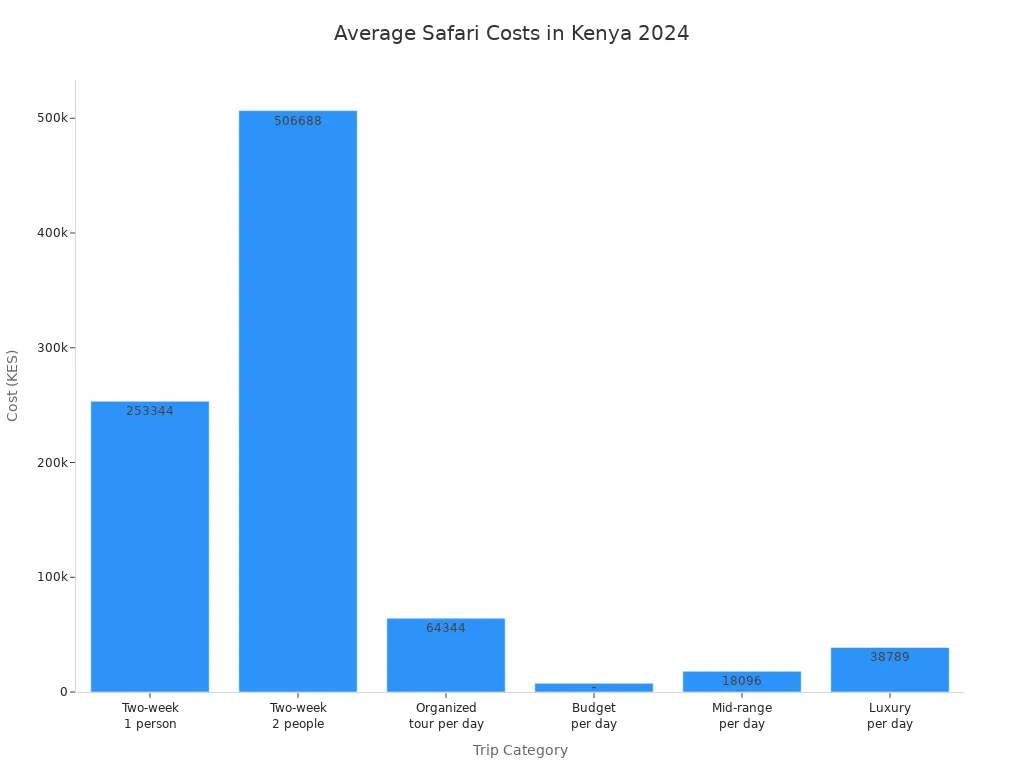
A single wad of kes might not stretch as far as you expect on an african safari. In kenya, safari costs add up quickly. For example, a typical two-week safari for one person can reach over KES 250,000, covering accommodation, food, and transport. See the chart below for average prices:
You often pay big expenses by card or bank transfer, but you still need cash for tips, small purchases, and local travel. Managing your money in kenya means balancing cash, cards, and digital options.
Highlights
-
Safari trips in Kenya can be expensive. You pay for places to stay, park fees, food, and tips. These costs add up fast.
-
Use different ways to pay. Use cards or bank transfers for big things. Use Kenyan shillings cash for tips and small buys.
-
Bring about KES 20,000 to 40,000 in cash. This is for tips, snacks, and rides during a week-long safari.
-
Mobile money services like M-Pesa are safe and easy. You can use them to pay for many things in Kenya.
-
Keep your money safe. Only carry what you need. Use hotel safes. Stay away from risky places when using ATMs or handling cash.
KES and Safari Costs in Kenya
Typical Safari Expenses
When you get ready for a safari in Kenya, you need to plan for many costs. These costs include where you sleep, park fees, food, tips, and souvenirs. You pay for big things like your lodge or park tickets before you go. Most people use a bank transfer or credit card for these payments. You still need cash for tips, small shopping, and some fun activities.
Here is a table that shows the usual price range for safari costs in Kenya:
|
Category |
Price Range (USD) |
Notes |
|
Accommodation |
Budget: $50–$150 per night |
Lodges and campsites |
|
|
Mid-range: $150–$500 per night |
Lodges and tented camps |
|
|
Luxury: $500–$1,500+ per night |
Lodges and exclusive camps |
|
Park Fees |
Masai Mara: $200 (high season), $100 (low season) |
Per adult, varies by season |
|
|
Amboseli: $100 (high), $80 (low) |
Per adult |
|
|
Nairobi National Park: $100 |
Per adult |
|
Meals |
Budget: $5–$15 per meal |
Separate from accommodation |
|
|
Mid-range: $20–$40 per meal |
|
|
|
Luxury: $50–$100+ per meal |
|
|
Tips |
$5–$20 per day |
For guides and staff |
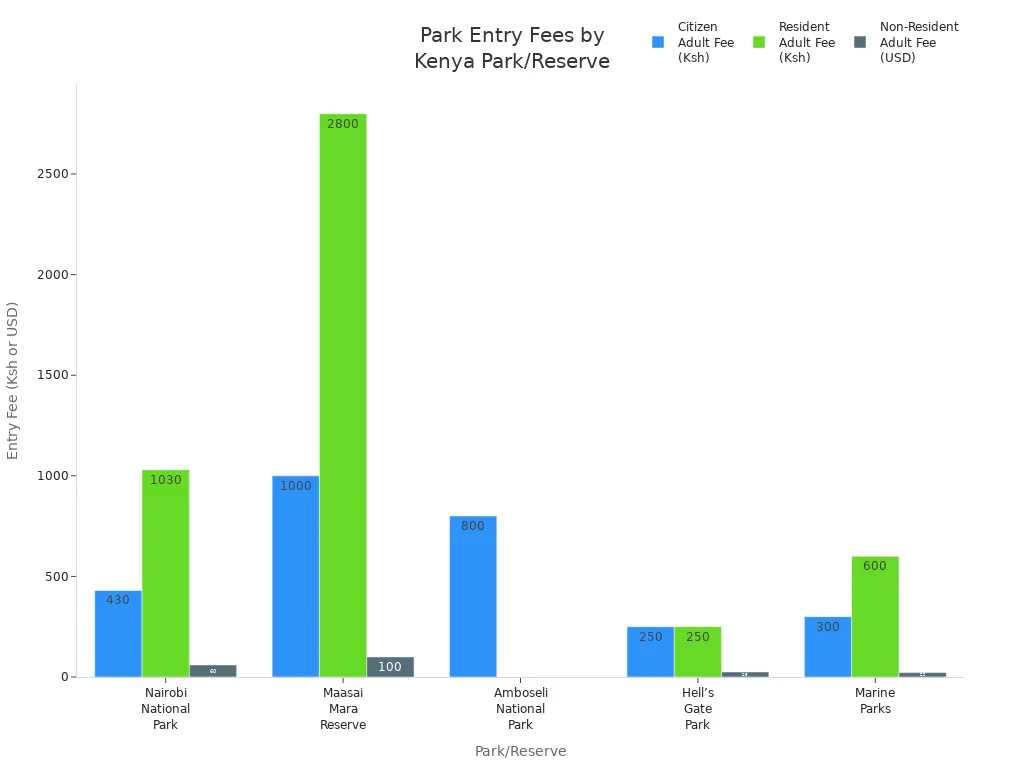
Park fees are different for each park and season. The Maasai Mara costs more when it is busy.
Most safari companies in Kenya want a deposit of about 30-35% when you book. You pay the rest before your trip starts, usually by wire transfer or card. People do not use cash for big payments because it is not safe. Use cash only for tips, snacks, or souvenirs.
U.S. dollars are okay for big safari payments, but only if the bills are newer than 2009 and look good. Many places will not take old, ripped, or marked bills. For small things, you need Kenyan money (KES). Always ask your safari company about how to pay before you travel.
What’s Included and What’s Extra
A normal safari package in Kenya gives you many basics, but you still pay for some extras. Here is what you usually get:
-
A place to stay in a lodge or tented camp near the parks
-
Meals like breakfast, lunch, and dinner
-
Park entry fees
-
Guided tours with wildlife guides
-
Rides during the safari, often in 4x4 vehicles
-
Some activities like game drives, walking safaris, and cultural visits
You should save extra money for things not in most packages:
-
Flights to and from Kenya
-
Spending on souvenirs, snacks, and drinks outside of meals
-
Travel insurance and visa fees
-
Extra activities like hot air balloon rides (about $550), night drives, or more cultural visits
-
Tips for guides, drivers, and lodge staff (usually paid in cash)
-
Laundry, special drinks, and camera fees
-
Flights and airport rides inside Kenya
Using cash, cards, and mobile payments together makes your safari easier. Use Kenyan money for local spending and tips. Use your card for bigger payments. This helps you enjoy your safari without worrying about money.
How Much Cash Should I Carry in Kenya
Budget vs. Luxury Safari
When you plan a safari, you pick budget or luxury. This choice changes how much cash you need. Budget safaris cost less, but you pay for more things yourself. Luxury safaris include more, but you still need cash for tips and small things.
|
Aspect |
Luxury Safari |
Budget Safari |
|
Accommodation |
High-end lodges and villas with luxurious amenities |
Simple lodges, campsites, or guesthouses with basic but clean facilities |
|
Services |
Personalized services including dedicated guides and personal butlers |
Limited or shared services, more self-service or communal experiences |
|
Activities |
Exclusive activities like private game drives, guided walks, hot air balloon rides |
Shared group activities such as game drives and guided walks |
|
Transportation |
Air-conditioned vehicles, private transfers, charter flights |
Shared vehicles, public transport, shuttle services |
|
Dining |
Fine dining with gourmet meals, premium drinks, private dining options |
Self-catering options, local food markets, street vendors |
|
Flexibility |
More flexible itineraries with options for last-minute changes |
Some flexibility but generally more fixed schedules |
|
Location |
Often in conservancies with higher fees supporting community and environment projects |
Mainly in main national parks with more rustic facilities |
|
Cost Implication |
Substantially higher cash outlay for exclusivity and comfort |
Focus on affordability and immersive, adventurous experience |
If you join a budget group tour, you pay less at first. You will need more cash for park fees, snacks, and gifts. Budget trips use simple transport and shared guides. Luxury trips give you private cars and expert guides. Both types mean you must carry some cash, especially far from cities where cards may not work.
Daily Cash Needs
You might ask, "How much cash do I need in Kenya?" For a week-long safari, bring KES 20,000 to 40,000. This covers tips, snacks, gifts, and rides. You need cash for small things, mostly outside big towns.
-
For a 7-day safari, plan to bring:
-
KES 20,000–40,000 for daily spending
-
Extra cash for emergencies or surprises
-
Small bills for tips and shopping
-
Tipping is important on safari. You usually tip your guide $10–$20 each day, or 1,000–2,000 KES. Most guides like tips in USD, but KES is good for local staff. At the end, put your tip in an envelope or a tip box at the lodge.
Your daily cash also pays for laundry, SIM cards, and gifts. Laundry costs about $4 per load. A tourist SIM card with data is about $10. Gifts can be $1 for small things or $50 for handmade crafts. Local rides, like taxis or matatus, cost $5–$15 each trip.
|
Category |
Budget Traveler |
Mid-Range Traveler |
Luxury Traveler |
|
Tips |
$10 |
$15 |
$20 |
|
Souvenirs |
$5–$10 |
$10–$30 |
$30–$100 |
|
Transport |
$5 |
$10 |
$20+ |
You can change USD to KES at banks or use Wise for better rates. Do not change money at airports or hotels because rates are worse. ATMs are easy to find in cities, but not in remote places. Always pick KES at ATMs to avoid extra fees.
Carrying cash in Kenya helps you buy things, but do not carry too much. Use cards or mobile money when you can for safety. Most big safari costs are paid before you arrive. You mainly need cash for tips, small buys, and shopping at local markets.
Managing Money on Safari in Kenya
Using KES, USD, and Cards
You will find that managing your cash in Kenya means knowing where each payment method works best. Most hotels, lodges, and larger shops accept credit or debit cards. Gift shops at popular tourist sites like the Giraffe Center and Blixen Museum also take cards. Many restaurants, such as Tamarind and Boho Eatery, let you pay by card, but you may see a surcharge of 3.5% to 5%. Prepaid safari tours often handle big payments in advance, so you do not need to use your card as much on the spot. Always tell your card company about your travel plans to avoid blocks.
You still need cash for tipping guides, drivers, and staff. Local artisans and markets usually want small bills. Tips are a big part of staff income, so bring clean US dollars or Kenyan shillings. Some border visas and permits also require cash. ATMs are common in cities, but not in remote safari areas.
Mobile Money (M-Pesa)
M-Pesa is a popular mobile money system in Kenya. Many safari lodges and camps now accept M-Pesa for payment. To use it, get a Safaricom SIM card. Show your passport to a Safaricom agent, fill out a form, and insert the SIM into your phone. Dial *234# to set up your account and PIN. You can deposit cash at M-Pesa agents, send money, pay bills, and buy airtime.
M-Pesa lets you hold up to Ksh 500,000, with a daily transaction limit of Ksh 500,000. Fees depend on the amount and type of transaction. Here is a table of common fees:
|
Transaction Amount (Ksh) |
Transfer to M-PESA Users |
Withdrawal from Agents |
|
101 - 500 |
7 |
29 |
|
501 - 1,000 |
13 |
29 |
|
1,001 - 1,500 |
23 |
29 |
|
1,501 - 2,500 |
33 |
29 |
|
2,501 - 3,500 |
53 |
52 |
|
3,501 - 5,000 |
57 |
69 |
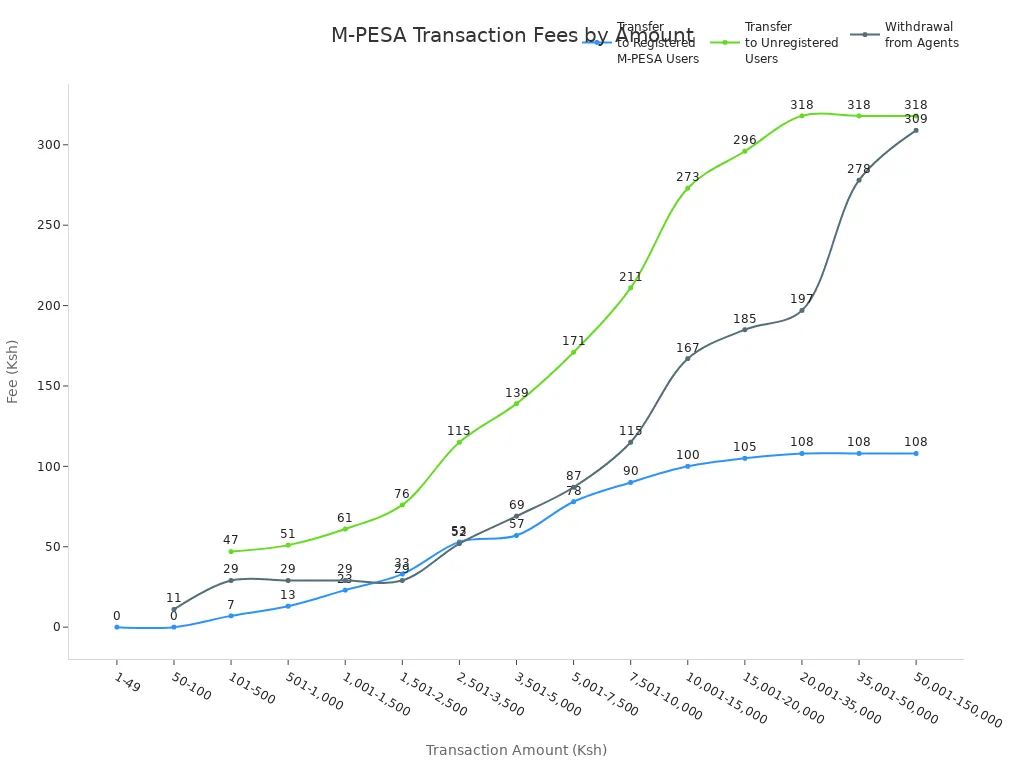
M-Pesa is safe and fast. Always keep your PIN secret and use mobile data for security.
Safety Tips
You should stay alert when handling money. Pickpocketing and scams can happen, especially in crowded places. Keep your cash, passport, and cards in a hidden pouch under your clothes. Use hotel safes for valuables. Do not leave cash or jewelry in your room. Keep bags close and avoid showing valuables in public. Use ATMs inside banks or malls, not on the street. If someone claims to be police, ask for ID. Never agree to pay on-the-spot fines.
You will find that a single wad of KES rarely covers all your travel needs. You should expect to use cash for tips and small purchases, while cards and mobile money help with bigger expenses. Mixing payment methods keeps your money safe and your trip smooth. To manage your budget, follow these tips:
-
Book in advance for discounts.
-
Join group tours to share costs.
-
Limit activities to top wildlife experiences.
-
Organize tips in labeled envelopes.
-
Use public transport when possible.
FAQ
How much cash can you bring into Kenya?
You can bring up to $10,000 USD or the same value in other currencies. If you carry more, you must declare it at customs. Always keep your cash safe and split it between your bags.
Can you use US dollars everywhere in Kenya?
You can use US dollars at hotels, lodges, and some tourist shops. Most local markets, taxis, and small stores only accept Kenyan shillings (KES). Always carry some KES for daily needs.
Is it safe to use ATMs in Kenya?
You can use ATMs in cities and airports. Use machines inside banks or malls for safety. Cover your PIN and check for card skimmers. Avoid using ATMs at night or in quiet areas.
What is the best way to tip safari guides?
Tip your safari guide in cash at the end of your trip. Use clean US dollars or Kenyan shillings. Place the tip in an envelope or give it directly. Guides appreciate tips for good service.
Related content