
BDT in the Global Financial Landscape Navigating Challenges and Opportunities
Author:XTransfer2025.08.19BDT
The BDT (Bangladeshi Taka) is the official currency used throughout Bangladesh. The BDT (Bangladeshi Taka) plays a crucial role in supporting the country’s economic growth and maintaining financial stability. Bangladesh holds the 44th position globally in terms of foreign exchange reserves. By the end of 2024, the nation’s reserves reached approximately 2.382 trillion BDT (Bangladeshi Taka). Although the BDT (Bangladeshi Taka) faces challenges such as depreciation and declining reserves, there are also emerging opportunities for economic improvement and for policymakers to implement positive reforms. The strength of the BDT (Bangladeshi Taka) is vital for Bangladesh’s position in the global financial system.
Highlights
-
The Bangladeshi Taka (BDT) has gotten weaker lately. It lost about 9.5% of its value against the US dollar in 2024. - Foreign exchange reserves have gone up and down. But they are starting to get better. This helps the central bank support the BDT. - Bangladesh has some problems like high inflation and slow economic growth. The country also depends a lot on garment exports. - Money sent from people working abroad is very important. It helps keep the BDT steady and supports the economy. - There are chances to make things better by selling more types of products. Attracting investment and making better rules can help too. Working with other countries can also make the BDT stronger.
BDT(Bangladeshi Taka) Today
Exchange Rate Trends
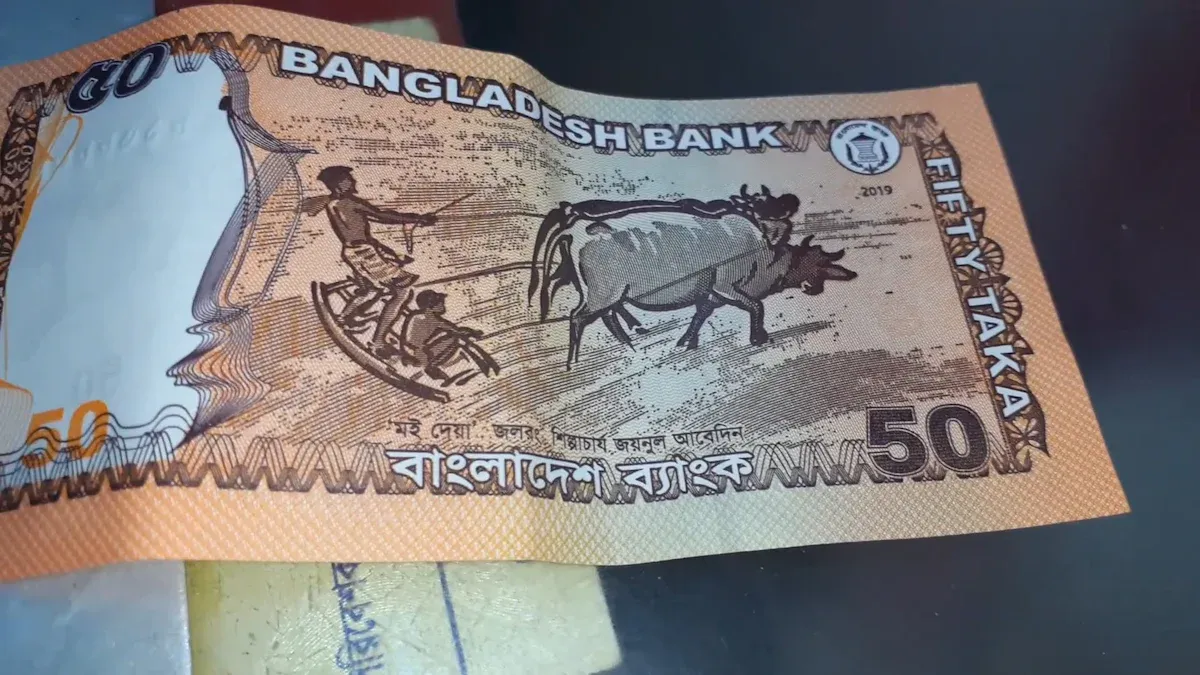
The BDT(Bangladeshi Taka) has changed a lot in value lately. From January to October 2024, one US dollar went from about 109.15 to 119.61 BDT. This means the BDT(Bangladeshi Taka) lost about 9.56% of its value this year. The higher USD/BDT rate shows the BDT(Bangladeshi Taka) is getting weaker. Many big economic factors cause this. The foreign exchange reserves depend a lot on the dollar. This makes the BDT(Bangladeshi Taka) face currency risk. Other things like money supply, interest rates, GDP, trade policy, and central bank actions also matter. The dollar’s big role in reserves makes rates change more. Using more types of currencies and a stronger anchor can help lower these risks. All these things affect the exchange rate and show the problems the BDT(Bangladeshi Taka) faces.
Foreign Reserves
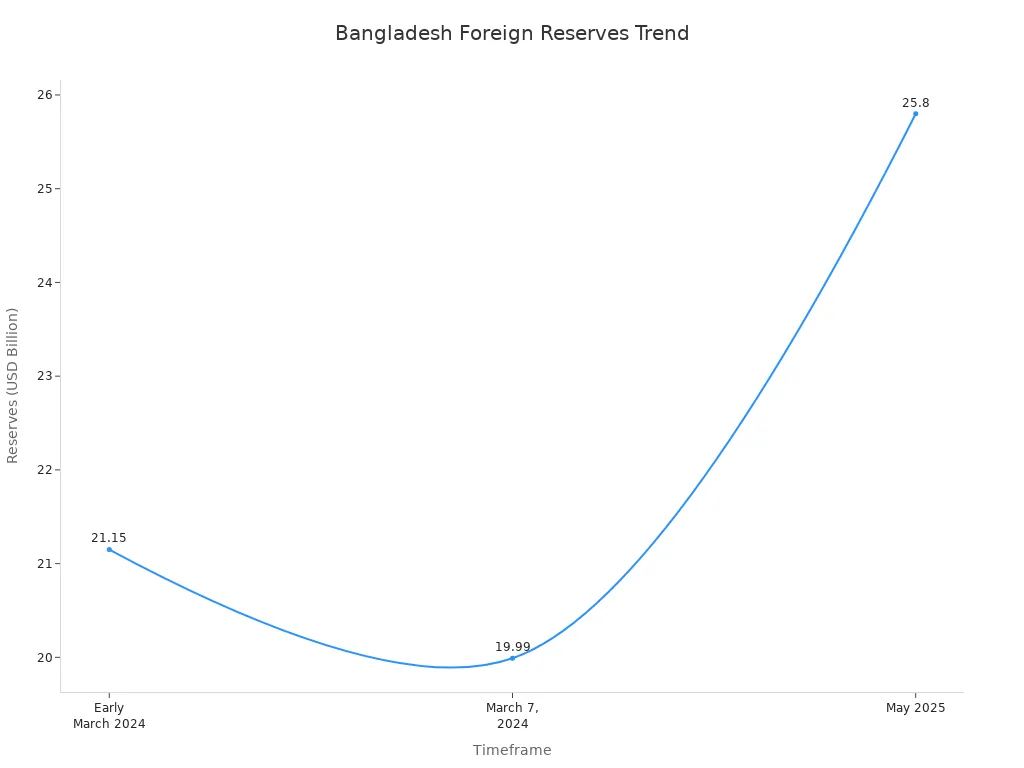
Bangladesh’s foreign exchange reserves have gone up and down but are getting better. In early March 2024, reserves were $21.15 billion. After paying the Asian Clearing Union, reserves dropped below $20 billion by March 7, 2024. By May 2025, reserves grew to about $25.8 billion. This shows things are improving. The table below shows the changes:
|
Timeframe |
Foreign Reserves (USD Billion) |
Key Factors and Notes |
|
March 7, 2024 |
19.99 |
Reserves fell below $20B after a $1.29B ACU import bill payment. |
|
Early March 2024 |
21.15 |
This was the amount before the ACU payment. |
|
July-Jan FY24 |
N/A |
The current account surplus was over $3B, up from a $4.6B loss last year, because imports fell 18% and exports grew 2.5%. |
|
July-Jan FY24 |
N/A |
The trade deficit got smaller, from $13.3B last year to $4.6B. |
|
July-Jan FY24 |
N/A |
The financial account deficit grew to $7B from $0.8B, which hurt reserves even though the central bank tried to help. |
|
May 2025 |
25.8 |
Reserves went up to about $25.8B, showing a bumpy but better trend. |
Economic Indicators
Some important economic indicators show how the BDT(Bangladeshi Taka) is doing and what Bangladesh’s economy looks like. The table below shows recent trends:
|
Economic Indicator |
Trend/Value Summary (Recent Years) |
|
GDP Growth |
Real GDP growth slowed to 4.2% in FY24 from 5.8% in FY23; projected at 3.3% in FY25. |
|
Inflation Rates |
Inflation is high, between 5.3% and 10.9%, which hurts buying power. |
|
Exchange Rate (BDT/USD) |
The BDT(Bangladeshi Taka) has gotten weaker, from about 85 to 120 per USD in ten years. |
|
Fiscal Balance (% of GDP) |
The government keeps having deficits, around -3.6% to -4.8%. |
|
Public Debt (% of GDP) |
Public debt went up from 34.5% to 40.1%. |
|
Current Account Balance |
The deficit got smaller, from $6.12B in FY24 to $432M in FY25, because of more remittances and exports. |
|
Trade Balance |
The trade deficit got better by 4.17% in FY25. |
|
Foreign Direct Investment |
FDI stayed steady, between $1.3 and $1.6 billion USD. |
|
Money Supply Growth (M2) |
Money supply grew between 7.7% and 13.6%. |
|
Unemployment Rate |
Unemployment stayed about the same, between 4.5% and 5.4%. |
Bangladesh sells mostly garments and textiles to other countries. It buys machines and raw materials from abroad. This trade pattern causes trade deficits. These deficits make it hard to keep enough foreign exchange reserves and keep the BDT(Bangladeshi Taka) stable. The government borrows money and gets aid to help with deficits. The central bank tries to keep prices steady and help the economy grow. It changes interest rates and buys or sells foreign money to help the BDT(Bangladeshi Taka). In the last few years, more remittances and export money have helped rebuild reserves and fix the current account. But high inflation and slow GDP growth are still problems. The future depends on good policies and managing reserves well.
Challenges for Bangladesh
External Shocks
Bangladesh faces many outside problems that make the BDT less stable. Big world events, like COVID-19 and fights between countries, have hurt trade and made it harder to sell goods. When prices for things like oil or cotton go up, it costs more to buy them. This makes the BDT weaker, especially if the currency loses value.
-
The knitwear sector earns a lot of money from exports. It needs to buy materials from other countries. If prices go up and the BDT gets weaker, it costs even more.
-
When exchange rates change a lot, exporters feel unsure. They have trouble setting prices and may sell less.
-
If the BDT loses value, exports can be cheaper for other countries. But it also costs more to buy things needed to make those exports, so the good part is smaller.
-
Bangladesh does not have strong financial markets or good ways to protect against currency risk. Exporters cannot easily keep themselves safe from these changes.
-
Data shows that when exchange rates change a lot, export earnings, especially from ready-made garments, drop quickly.
-
Changes in world prices make the BDT weaker by raising import costs and making exchange rates jump. This hurts exports and slows down the economy.
Remittances are very important for the BDT. In the last few years, people sending money home has helped keep the currency steady and pay for imports. The table below shows how remittances have changed:
|
Fiscal Year |
Total Remittance (Million USD) |
Growth Rate (%) |
Remittance as % of GDP |
Remittance as % of Export Earnings |
Remittance as % of Import Payment |
|
FY2019 |
Approx. 16,420 |
9.6 |
4.67 |
41.46 |
29.62 |
|
FY2020 |
Approx. 18,205 |
10.87 |
4.87 |
56.68 |
35.91 |
|
FY2021 |
Approx. 24,778 |
36.10 |
5.95 |
67.14 |
40.83 |
|
FY2022 |
Approx. 21,032 |
-15.12 |
4.57 |
42.71 |
25.49 |
|
FY2023 (Revised) |
Approx. 21,611 |
2.75 |
4.79 |
49.84 |
30.55 |
|
FY2024 (Provisional) |
Approx. 23,912 |
10.65 |
5.21 |
58.59 |
37.81 |
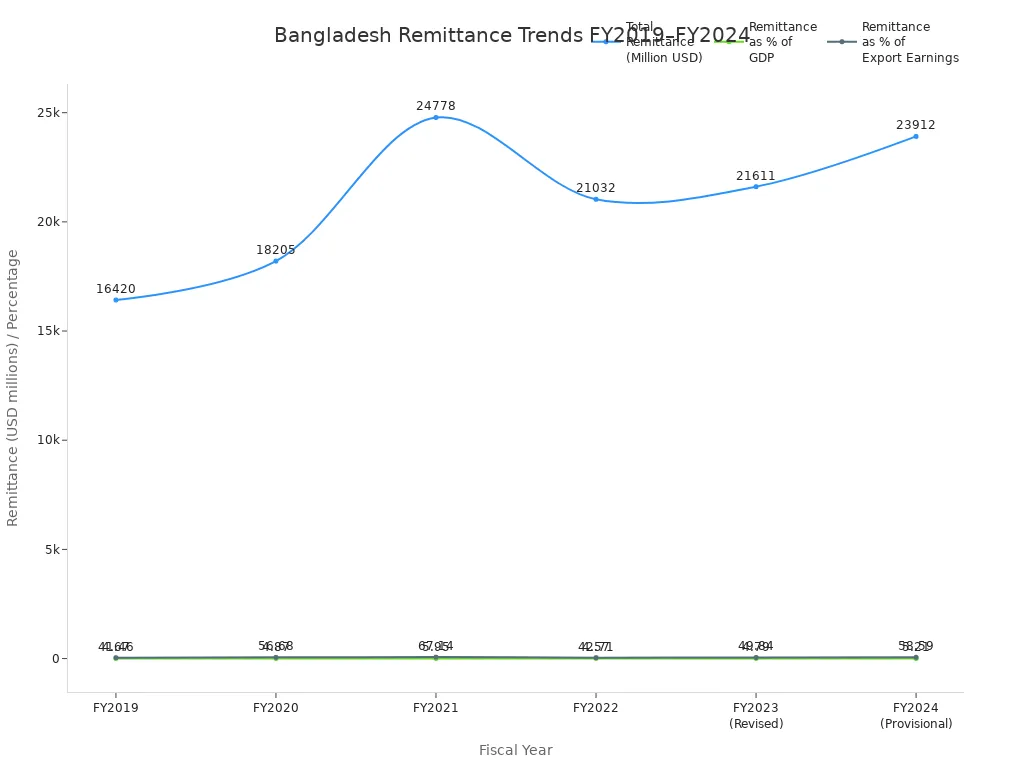
Remittances have helped build up foreign reserves and make exchange rates less jumpy. This help was very important during hard times, like the recent money crisis. But Bangladesh can still get hurt by world problems, and if remittances drop, the BDT could get weak fast.
Policy and Regulation
Bangladesh has tried different rules to help the BDT. The central bank has slowed down the BDT losing value, sold foreign money, and made state companies wait to pay bills in other currencies. The government has also stopped some foreign companies from sending profits home and asked the IMF for help.
|
Domestic Policy Measures |
Description |
Observed Effectiveness |
|
Managed depreciation of the Taka |
Bangladesh Bank let the Taka lose value from 86 to 110 per USD between mid-2022 and early 2024 |
The Taka kept getting weaker, so this did not work well |
|
Selling foreign reserves |
Over USD 7.8 billion sold in H2 2022 to help banks pay for imports |
Slowed down money leaving, but reserves fell from USD 48B (2021) to under USD 21.8B (2023) |
|
Delaying foreign currency payments by state-owned enterprises |
Government made state companies wait to pay bills in other currencies |
Slowed down losing reserves but did not stop it |
|
Restricting/blocking foreign profit remittances |
Stopped or slowed foreign companies from sending profits home |
Less money left, but reserves still dropped |
|
IMF loan and structural reforms |
USD 4.7 billion IMF loan in 2023 with rules for banking changes and better money management |
Tried to help, but banking problems and world issues are still there |
|
Banking sector challenges |
Bad loans went up to USD 14.4 billion by mid-2023, over 10% of all loans |
This makes banks weaker and makes it harder to keep the BDT steady |
Rules about changing money, like capital account convertibility, also matter for the BDT. Bangladesh Bank controls how people change money and send it out of the country. The taka is managed using a group of currencies and money goals, not just one currency. When there are rules on changing and sending money, it can hurt the taka’s value. When reserves got low, stopping money from leaving made the taka lose more value. Since 2012, making some rules easier has helped the taka. The way the exchange rate is managed and the rules help keep things steady and make the taka stronger. The taka can now be changed for other money, but it can still take a long time.
Economic Vulnerabilities
Bangladesh has some inside problems that hurt the BDT. The economy depends a lot on garments, which are about 80% of exports. If something bad happens to this sector, the BDT can get weak. For example, protests and curfews in 2024 almost stopped trade, which made it hard to get foreign money and put pressure on the taka.
-
The current account surplus, mostly from remittances, went down by 8.7% from last year. Both exports and imports dropped a little.
-
Foreign reserves now only pay for about 4.3 months of imports. This means the central bank cannot protect the taka as much.
-
The central bank has used import limits and a new exchange rate system called a crawling peg since May 2024.
-
High inflation, about 10% in early 2024, happened because the taka lost value and energy prices went up.
-
Relying on garments makes the economy easy to hurt by protests and world competition, which makes the taka less steady.
-
The government borrows money at home to pay for deficits, which can make it harder for businesses to get loans and makes the economy weaker.
-
Political problems and protests, like violence and leaders quitting, make trade and investment more risky.
-
The IMF and World Bank have given loans and help to keep reserves up and support the BDT, but problems are still there.
Opportunities Ahead
Export Diversification
Bangladesh can sell more than just garments to other countries. The country is already a leader in garments. But other areas can also help the BDT and lower risks from depending on one thing.
Key areas for selling more products include:
-
Leather and leather products are important in the world market.
-
Pharmaceuticals are growing fast and go to over 160 countries.
-
Plastics give jobs to many people and keep growing.
-
The IT sector uses digital tools and a bigger online economy.
-
Home textiles, farm goods, engineering items, electronics, shipbuilding, ceramics, and bikes are sold to the EU.
-
Selling to new places like Japan, Korea, and India is growing.
These areas can help keep foreign money steady and help the economy grow.
Investment Sectors
Bangladesh has many places where people can invest and help the GDP and BDT.
New areas for investment include:
-
Biotechnology, electronics, pharmaceuticals, chemicals, and clean energy.
-
Making cars and machines for farms.
-
Recycling plastics and making machines for textiles.
-
Big projects like deep seaports, highways, gas pipes, IT parks, and fast trains.
The government helps by making Export Processing Zones, Special Economic Zones, and high-tech parks. Tax breaks and no import taxes make both local and foreign investors interested. These steps can bring in more foreign money, help the economy grow, and make trade better.
Policy Reform
Changing rules is very important for making the country stronger. Bangladesh can do better by:
-
Making rules easier so more people invest.
-
Making banks and trade more open and clear.
-
Helping new ideas and using more digital tools.
International Cooperation
Working with other countries is important for Bangladesh’s money safety.
-
Working with world groups can give help and money.
-
Trade deals with new partners can open markets and sell more things.
-
Learning from other countries can help manage money and make better rules.
These actions can help Bangladesh have a stronger and safer money system.
Strengthening BDT’s Global Role
Economic Resilience
Bangladesh can make its economy stronger by doing some simple things. These steps help keep the Bangladeshi Taka safe from problems and help it grow.
-
The country should not only depend on garments. It should also grow IT, pharmaceuticals, and farming.
-
The government needs to spend money wisely and earn more to keep finances healthy.
-
Helping new ideas and small businesses can make the economy bigger.
-
Teaching people new skills will help them get ready for new jobs.
A crawling peg exchange rate system is useful too. This system lets the BDT change slowly in a set range. Exporters can plan better, and prices do not rise too fast. The BDT stays strong in world trade, which helps keep the economy steady.
Reserve Management
Good reserve management is very important for Bangladesh. The country should:
-
Grow foreign exchange reserves by selling more goods and making new trade deals.
-
Keep the country stable by using smart reserve and money rules.
-
Sell more kinds of products and bring in more foreign investment for steady money.
-
Control rising prices by making money rules tighter.
-
Spend money on better roads, ports, and technology for trade.
Bangladesh Bank has kept reserves above $20 billion by setting the dollar rate and helping remittances come in. Leaders now look for new ways to get foreign money and better deals with other countries.
Monetary Policy
Clear money rules help people trust the BDT. Bangladesh Bank should:
-
Tell people what its goals and actions are.
-
Change interest rates to keep prices steady.
-
Work with the IMF and World Bank to fix bank rules and lower bad loans.
These actions help keep the BDT steady and help the economy grow.
Global Alliances
Bangladesh can make the BDT stronger by working with other countries.
-
Make new free trade deals to sell more goods.
-
Bring in more investment by making taxes easier.
-
Get groups like Bangladesh Bank, BIDA, and NBR to work together.
-
Learn from places like Vietnam and India about trade and investment.
Bangladesh has some problems with the Bangladeshi Taka. These include high inflation and unstable exchange rates. The country also sells only a few types of products to other countries. But there is good news too. Exports are growing, and more people are sending money home. Leaders should make smart changes and manage money carefully. Working with other countries can help the economy grow.
Spending money on education and using new technology can help make things steady. If leaders work together, Bangladesh can have a strong currency and do well in the world’s money system.
FAQ
What is the Bangladeshi Taka (BDT)?
The Bangladeshi Taka (BDT) is Bangladesh’s main money. Bangladesh Bank gives out and controls the BDT. The symbol for it is "৳" and the code is "BDT". People use it to buy and sell things in Bangladesh.
How can travelers exchange BDT safely in Bangladesh?
Travelers should go to banks or official money changers to get BDT. ATMs in big cities are also safe to use.
What affects the value of the BDT?
Many things change the value of the BDT. These include inflation, how much foreign money Bangladesh has, export money, and world prices. The central bank’s rules are also very important.
Can foreigners use digital payments with BDT?
Foreigners can use digital wallets and cards in big cities and tourist spots. Many stores take mobile payments.
Is the BDT expected to become more international in the future?
Experts think the BDT could be used more around the world. This will happen if the economy gets better, digital money grows, and trade with other countries gets stronger.
Bangladesh Bank is looking for new ways to help the BDT be used worldwide.
Related content