
A Simple Guide to COP Currency and Its Uses
Author:XTransfer2025.08.19COP
COP currency means the Colombian peso. It is the official money in Colombia. You will use the Colombian peso to buy things in stores, restaurants, and markets in Colombia. Knowing how much COP currency is worth helps you make good choices when you travel. For example, 1,000 Colombian pesos is about 0.21 euros. You can look at the table below to see the latest exchange rates:
|
Colombian Peso (COP) Amount |
Equivalent in Euro (EUR) Approximate |
|
1 COP |
0.0002133 EUR |
|
100 COP |
0.02 EUR |
|
500 COP |
0.11 EUR |
|
1000 COP |
0.21 EUR |
|
5000 COP |
1.07 EUR |
|
10000 COP |
2.13 EUR |
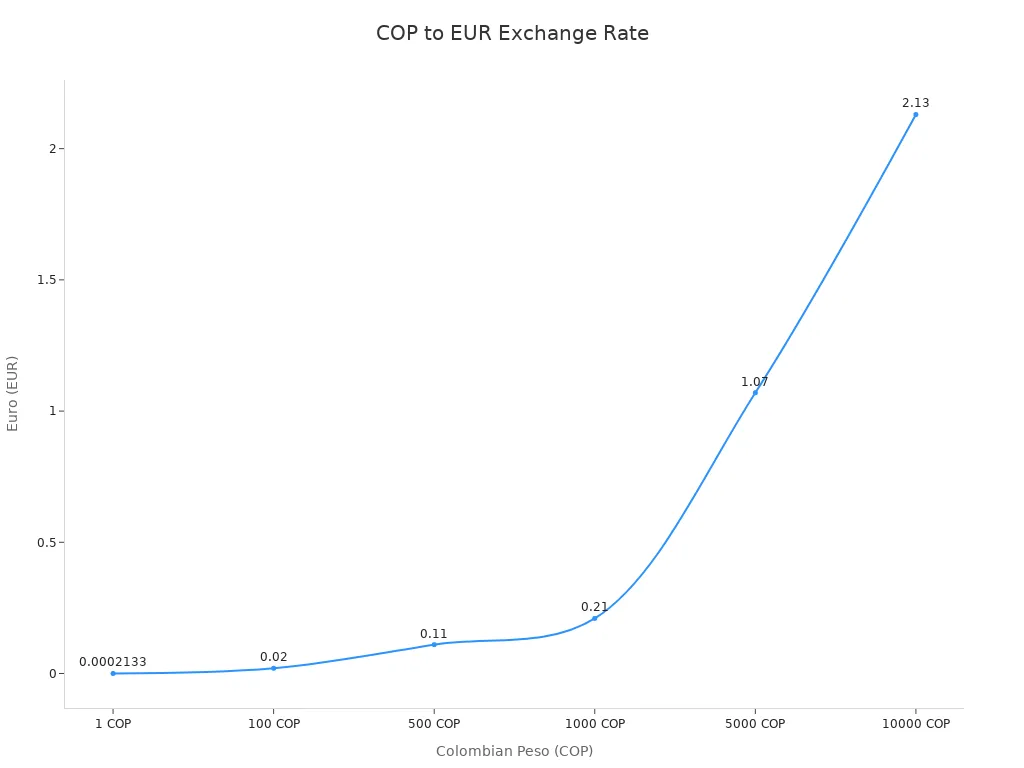
Highlights
-
COP means Colombian peso. It is the main money in Colombia. People use it to buy things and pay for services every day. - You can see '$', 'COP', or 'COL$' on Colombian pesos. These signs help you know it is not another kind of money. - Pay with both cash and cards. Cash is good for small stores and buses. Cards are safer for hotels and big shops. - Exchange your money only at banks or ATMs in malls. This helps you avoid fake money and get a fair price. - Look at Colombian bills for special marks. These include ink that changes color and watermarks. These marks help you know if the bill is real and keep your money safe.
What Is COP Currency?
Meaning and Code
When you look up money in Colombia, you will see "COP currency." COP means Colombian peso. This is the main money used in Colombia. It is very important for Colombia’s economy. The Colombian peso has been around for a long time. After Colombia became free from Spain in 1821, the peso started. At first, it was tied to the Spanish dollar. The Colombian peso changed many times over the years. In 1900, the government made a new peso. This helped stop prices from rising too fast. It also made the economy stronger. The Central Bank of Colombia, called Banco de la República, now takes care of the money. They work to keep the economy strong.
The Colombian peso uses the "$" sign in most places. You might also see "COP" or "COL$" at banks or on exchange boards. The ISO code for the Colombian peso is "COP." People use this code in banks and when trading money with other countries. Here is a table to help you know the symbols:
|
Currency Symbol |
Currency Name |
Country |
Currency Code |
|
$ |
Colombian peso |
Colombia |
COP |
The Colombian peso is split into 100 centavos. But you will not see centavo coins much today. Most things cost whole pesos.
Where It’s Used
If you visit Colombia, you will use COP currency every day. It is the only money you can use in Colombia. You need it to buy food, ride buses, stay in hotels, and shop. People use the Colombian peso everywhere, in big cities and small towns. It helps people live their daily lives and keeps the economy working.
The Colombian peso is also used in some places outside Colombia. In Venezuela, near the border in Táchira, people use the Colombian peso a lot. Here, it is the second most used foreign money after the US dollar. More than 90% of deals in Táchira use the Colombian peso. Some banks in Venezuela even let people open accounts in pesos. This shows the peso is important, not just for Colombia, but for nearby countries too.
The Colombian peso is a sign of trust and safety in the area. It helps Colombia work with its neighbors and makes trade and travel easier. The official money of Colombia is more than just cash—it is a big part of life and the economy.
Key Facts About COP Currency
Symbols and Abbreviations
The Colombian peso uses the "$" symbol in most places. This can be confusing because other countries use "$" too. To help people know it is the Colombian peso, banks use "COL$" or "COP." The code "COP" means "Colombian Peso." People use "COP" in banks and when trading money. If you see "COL$" on a price tag, it means Colombian pesos. It does not mean US dollars or other money. These labels help you not make mistakes when you pay or exchange money. The official money of Colombia uses these signs so you always know what money you have.
Denominations
You will use both coins and bills with the Colombian peso. Coins come in different values for small things. Bills are for bigger amounts and have special pictures. These pictures show important people and places in Colombia. Here is a table to show the types of money:
|
Currency Type |
Denominations in Circulation |
Notes on Features and Versions |
|
Coins |
50, 100, 200, 500, 1,000 pesos |
Some old coins still used; new designs since 2017 |
|
Banknotes |
1,000; 2,000; 5,000; 10,000; 20,000; 50,000; 100,000 pesos |
New bills have better security and new pictures |
In the last ten years, the Central Bank made changes to the money. These changes make it easier and safer to use. Small bills like 100, 200, and 1,000 pesos are now coins. In 2017, a new 100,000 peso bill came out. This bill shows President Carlos Lleras Restrepo and the Cocora Valley. The bank also changed how the bills look. For example, the 20,000 peso bill now says "20 Mil Pesos." The same style is on the 50,000 and 100,000 peso bills. These changes help you know the money fast and make paying easier.
The new bills have strong security features. You will see colors that change, 3D watermarks, tiny letters, and special patterns under UV light. Some bills have raised pictures you can feel. These features stop fake money and keep the economy safe.
-
New coins and bills help you pay for things easily.
-
Security features help you trust your money.
-
The designs show off Colombia’s history and culture.
Issuing Authority
Banco de la República is Colombia’s central bank. This bank makes all the coins and bills you use. It controls how much money is in Colombia and keeps the economy steady. Banco de la República manages the peso’s value against other money. It sets interest rates to stop prices from rising too fast. The bank helps protect the economy when times are hard. It also manages Colombia’s foreign money reserves and can lend money if needed. You can trust Banco de la República to work for Colombia’s good.
Using Colombian Peso
Payment Methods
There are many ways to pay in Colombia. Cash is important for taxis, markets, and small shops. Most hotels, restaurants, and big stores take credit or debit cards. Visa and Mastercard work best in cities. Some places want to see your ID if you use a card. Digital wallets like Nequi are getting popular in Colombia. Mobile payment apps are used more each year. PSE is a top online payment system. It lets you pay online with your bank account. Transfiya lets you send money with just a phone number. People also use PayPal, Google Pay, and OneSafe for shopping online. These choices help you pay safely and manage your money.
|
Payment Method |
Use in Colombia |
|
Cash |
Needed for small purchases and local markets |
|
Credit/Debit Cards |
Accepted in most hotels, restaurants, big stores |
|
Digital Wallets |
Nequi, Google Pay, PayPal, OneSafe, PSE, Transfiya |
Exchanging Money
You can exchange money at airports, malls, and tourist areas in Colombia. Currency exchange offices are easy to find in big cities. ATMs, called "Cajero Automático," are the safest way to get money. They give you the latest exchange rate. ATMs are safer than street exchangers. Most banks do not change money, so use official booths or ATMs. Do not exchange money on the street because of fake bills. Always check your bills for watermarks and color-changing ink. You need your passport or a copy to exchange money. To send money to Colombia, use Western Union or Remitly. These services show the exchange rate and fees before you send money. If you wonder how to send money to Colombia, these are safe ways.
-
Exchange money at official booths or ATMs in Colombia.
-
Bring your passport for currency exchange.
-
Compare rates and fees before sending money to Colombia.
Cash vs. Cards
Cash and cards both have good points in Colombia. You need cash for buses, taxis, and small stores. Cards are safer for hotels and big buys. Debit cards help you watch your spending. They are good for taking out money in Colombia. Credit cards give rewards and help book hotels or rent cars. Some places do not take foreign cards, so keep some Colombian peso with you. ATMs are easy to find in cities and airports. Use ATMs inside banks or stores for safety. Always take out money in Colombian peso to avoid extra fees. Exchange rates can change because of the economy or politics. Check the exchange rate before you travel or send money.
|
Payment Method |
Advantages |
Disadvantages |
|
Cash |
Needed for small shops and transport |
Less secure, risk of loss or theft |
|
Debit Card |
Easy withdrawals, helps control spending |
Not always accepted for hotels or rentals |
|
Credit Card |
Rewards, good for hotels and big purchases |
Fees, not accepted everywhere, risk of debt |
Traveler Tips
ATMs and Safety
You can find ATMs in every city and town in Colombia. The government made sure that even rural areas have at least one bank or ATM. This helps you get cash almost anywhere you travel. When you use an ATM, choose one inside a bank or a busy mall. These places have better security and good lighting. Avoid ATMs in dark or empty spots, especially at night. Always cover your hand when you enter your PIN. Watch for anything strange on the machine, like loose parts or extra devices. If you need to take out a lot of cash, do it less often and keep your money hidden. Try not to count your cash outside the ATM. Carry a backup card and let your bank know you are traveling. These steps help keep your money safe.
-
Use ATMs inside banks or malls with security guards.
-
Avoid isolated or dimly lit ATMs.
-
Do not show large amounts of cash after withdrawing.
-
Stay alert to your surroundings.
Avoiding Counterfeits
Counterfeit money can be a problem in small shops, bars, or taxis. You should learn how to spot fake Colombian peso notes and coins. The most common fake notes are the 20,000, 50,000, and sometimes 100,000 peso bills. Some 1,000 peso coins have also been copied. Real notes have special features like color-changing ink, raised textures, and watermarks. Fake notes often miss these details.
|
Counterfeit Currency Type |
Security Features to Check |
Where Fakes Are Common |
|
20,000-peso note |
Hexagon changes color, texture on note |
Small shops, taxis, bars |
|
50,000-peso note |
Large '50' changes color, texture |
Small shops, taxis, bars |
|
100,000-peso note |
Flower and strip change color |
Small shops, taxis, bars |
|
1,000-peso coin |
Check for weight and design |
Small shops, taxis, bars |
Check for color shifts, watermarks, and raised textures. The Banco de la República website shows all security features. Banks and big stores rarely give out fake money, so try to get change there.
Budgeting Advice
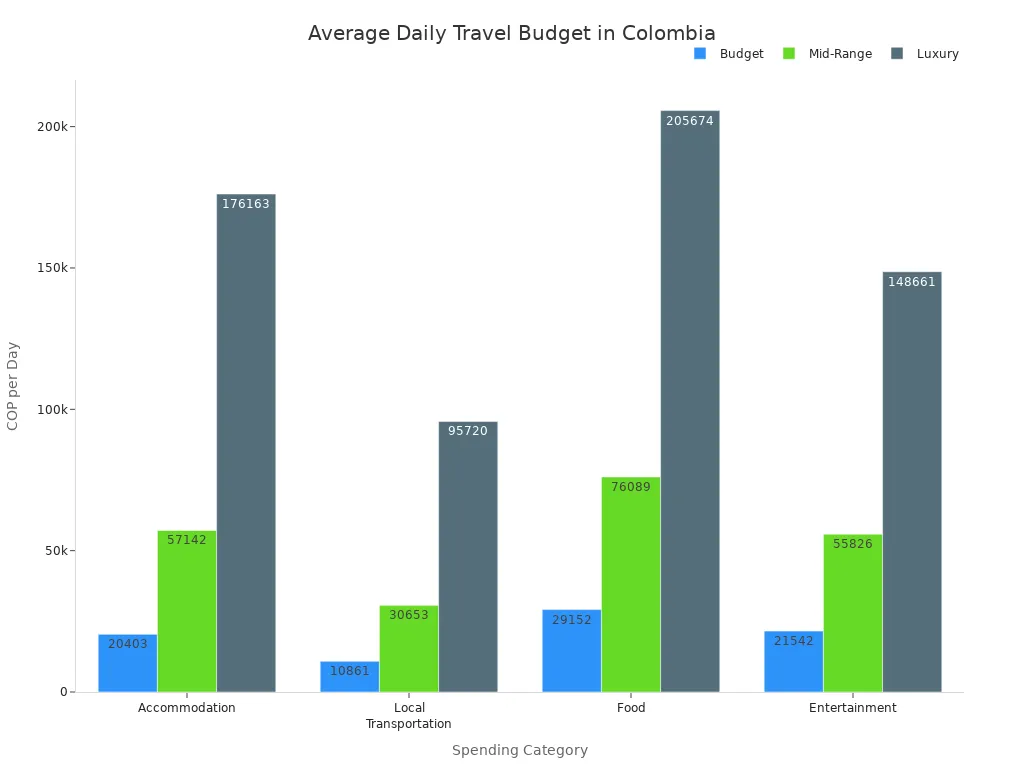
Planning your budget helps you enjoy your trip. You can find cheap street food for about 2,000 to 4,000 pesos. Local meals in diners cost around 12,000 pesos. A meal at a mid-range restaurant can be 40,000 to 80,000 pesos. Public transport rides cost about 2,500 to 3,000 pesos. Accommodation prices start at 20,000 pesos for budget options. If you want to send money to Colombia, use trusted services for the best rates.
|
Category |
Budget (COP) |
Mid-Range (COP) |
Luxury (COP) |
|
Accommodation |
20,403 |
57,142 |
176,163 |
|
Transportation |
10,861 |
30,653 |
95,720 |
|
Food |
29,152 |
76,089 |
205,674 |
|
Entertainment |
21,542 |
55,826 |
148,661 |
You have learned that COP means the Colombian peso. This is the only money you can use in Colombia. Here are some tips to help you with your money:
-
Buy pesos online before you travel. You might get a better deal.
-
Bring both cash and cards, but do not carry too much cash.
-
Use ATMs and exchange places that are official and in bright, safe spots.
-
Change big bills into smaller ones early. Keep small bills ready for small buys.
-
Save this guide on your phone or bookmark it. You can check it fast when you need help.
FAQ
What does COP stand for in currency?
COP stands for Colombian Peso. You will see this code in banks, on exchange boards, and when you check exchange rates. It helps you know you are dealing with Colombian money, not another country’s currency.
Can you use US dollars in Colombia?
You cannot use US dollars for daily purchases in Colombia. Shops, restaurants, and taxis only accept Colombian pesos. You need to exchange your dollars for pesos at official exchange offices or ATMs.
How can you spot a fake Colombian peso bill?
Check for color-changing ink, watermarks, and raised textures. Real bills have clear security features. If you feel unsure, compare the bill to one from a bank. You can also visit the Banco de la República website for more tips.
What is the largest Colombian peso bill?
The largest bill is the 100,000 peso note. You will see President Carlos Lleras Restrepo and the Cocora Valley on it. Many shops may not have change for this bill, so try to carry smaller notes for daily spending.
Do you need to tip in Colombia?
Tipping is not required, but people appreciate it. In restaurants, a 10% service charge often appears on your bill. You can leave extra if you want. Taxi drivers and hotel staff also welcome small tips.
Related content