
A Guide to Sort Code and SWIFT Code Differences in 2025
Author:XTransfer2025.12.05Sort Code
Banking transactions rely on accurate codes to ensure money reaches the right destination. A sort code simplifies domestic payments by identifying the specific bank and branch involved. On the other hand, a SWIFT code facilitates international transfers by pinpointing the exact bank globally. Using the correct sorting code or SWIFT code reduces errors and delays. You can make your transactions seamless by understanding these codes and their roles in the banking process.
Understanding Sort Code
What Is a Sort Code
A sort code is a unique identifier used in banking to direct payments to the correct bank branch. It plays a crucial role in domestic transfers by ensuring that funds are accurately routed to their destination. Each sort code is specific to a bank branch, making it distinct from individual account numbers. For example, when you set up a direct debit or transfer money within the same country, the sort code ensures the transaction reaches the right place.
Historically, sort codes were introduced in the early 20th century to simplify the manual processing of cheques. Back then, they were called the "National Code." By 1957, the banking industry adopted a standardized six-digit format to support automation and improve efficiency as banking operations expanded. This evolution highlights the importance of sort codes in modern banking systems.
Structure and Format of a Sort Code
The structure of a sort code is simple yet effective. It consists of six digits, typically written in the format "XX-XX-XX." Each pair of digits represents specific information:
-
The first two digits identify the bank.
-
The second pair indicates the branch.
-
The final two digits provide additional branch-specific details.
For example, a sort code like "12-34-56" would tell you the bank and branch involved in the transaction. This format ensures clarity and consistency across all domestic banking transactions.
Here’s a table showcasing examples of sort codes and their corresponding banks:
|
Code |
Bank |
|---|---|
|
1 |
Bank of England |
|
2 |
Barclays |
|
3 |
Lloyds Bank |
|
4 |
Midland Bank |
|
5 |
National Provincial |
|
6 |
Westminster Bank |
|
11 |
Martins Bank |
|
15 |
Glyn, Mills & Company |
|
16 |
Williams Deacon's Bank |
|
18 |
Coutts |
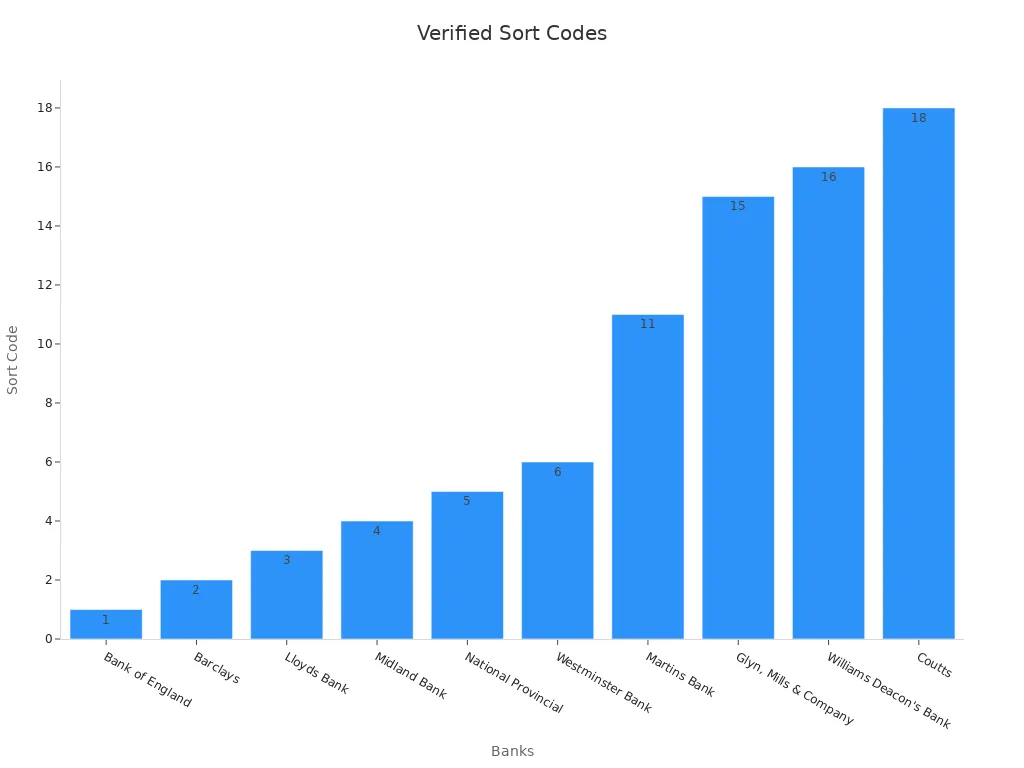
This standardized format makes it easy for banks and customers to process transactions without confusion.
Purpose of a Sort Code
The primary purpose of a sort code is to facilitate domestic transfers. It ensures that payments, such as direct debits, standing orders, and money transfers, are directed to the correct bank branch. Without a sort code, it would be challenging to differentiate between branches of the same bank, leading to errors and delays.
Sort codes are particularly useful for recurring payments like utility bills or subscriptions. They help automate these transactions, saving time and reducing the risk of mistakes. By using the correct bank sorting code, you can ensure your payments are processed smoothly and reach the intended recipient.
Countries That Use Sort Codes
Sort codes are primarily used in countries with banking systems that rely on this unique identifier for domestic transactions. These countries have adopted sort codes to streamline payments and ensure accuracy when routing funds to specific bank branches. Below is a list of countries where you will encounter sort codes:
-
United Kingdom: The UK is the most well-known country for using sort codes. Every bank branch in the UK has a unique six-digit sort code, which is essential for domestic transfers like direct debits and standing orders.
-
Ireland: In Ireland, sort codes are also widely used for domestic banking. They follow the same six-digit format as the UK, making it easy to process payments within the country.
-
South Africa: South African banks use sort codes to facilitate local transactions. These codes help identify the bank and branch involved in a payment.
-
Australia: While Australia primarily uses BSB (Bank State Branch) numbers, these function similarly to sort codes. They help direct payments to the correct bank branch within the country.
Here’s a quick comparison of sort code usage in these countries:
|
Country |
Sort Code Format |
Primary Use Case |
|---|---|---|
|
United Kingdom |
6 digits (XX-XX-XX) |
Domestic transfers |
|
Ireland |
6 digits (XX-XX-XX) |
Domestic payments |
|
South Africa |
6 digits (XX-XX-XX) |
Local transactions |
|
Australia |
6 digits (BSB format) |
Domestic banking |
Understanding where sort codes are used can help you navigate international banking systems more effectively. If you plan to send money to one of these countries, knowing the correct bank sorting code ensures your payment reaches the intended recipient without delays.
Understanding SWIFT Code
What Is a SWIFT Code
A SWIFT code is a unique identifier used in international banking. It ensures that your money reaches the correct bank when making cross-border payments. The term "SWIFT" stands for the Society for Worldwide Interbank Financial Telecommunication. This organization created the SWIFT network to simplify and secure global financial communication.
The origins of the SWIFT code date back to 1971. At that time, 68 banks collaborated on the Message Switching Project to automate international transactions. By 1973, the SWIFT network officially launched, connecting 239 banks across 15 countries. Its rapid adoption was evident by 1979, as it processed over 120,000 messages daily. Today, the SWIFT code remains essential for global banking.
Structure and Format of a SWIFT Code
A SWIFT code consists of 8 or 11 characters. Each part of the code provides specific information about the bank and its location. Here’s how it breaks down:
-
First 4 characters: Represent the bank code. These letters identify the bank's name.
-
Next 2 characters: Indicate the country code. This follows the ISO 3166-1 alpha-2 standard (e.g., "US" for the United States).
-
Next 2 characters: Show the location code. These can be letters or numbers and specify the bank's city or region.
-
Last 3 characters (optional): Represent the branch code. If omitted, the code refers to the bank's primary office.
For example, the SWIFT code "BOFAUS3NXXX" belongs to Bank of America in New York, with "XXX" indicating the main branch.
Purpose of a SWIFT Code
The primary purpose of a SWIFT code is to facilitate international transactions. It ensures that funds are transferred accurately and securely between banks worldwide. Without a SWIFT code, your payment might not reach the intended recipient or could be delayed.
SWIFT codes also play a role in verifying the legitimacy of banks involved in a transaction. This adds an extra layer of security to global financial operations. Whether you're sending money abroad or receiving payments from another country, using the correct SWIFT code is crucial for a smooth process.
Global Reach of SWIFT Codes
The SWIFT code system connects banks across the globe, making international money transfers seamless and secure. It acts as a universal language for financial institutions, ensuring that your funds reach the correct destination, no matter where the recipient's bank is located.
Today, over 200 countries and territories rely on SWIFT codes for international transactions. This widespread adoption highlights the system's importance in global banking. Whether you're sending money to Europe, Asia, Africa, or the Americas, the SWIFT network ensures that your payment is processed efficiently. It eliminates the need for multiple intermediaries, reducing delays and potential errors.
The SWIFT network supports more than 11,000 financial institutions worldwide. These include banks, brokerage firms, and even corporations. This extensive coverage means you can trust the system to handle your international money transfer with precision. For example, if you're transferring funds from the United States to a small bank in a remote part of India, the SWIFT code ensures the payment reaches the correct branch.
One of the key advantages of SWIFT codes is their ability to standardize communication between banks. Each code provides detailed information about the bank's name, country, and branch location. This standardization reduces confusion and enhances the security of international transactions.
As global trade and travel continue to grow, the demand for reliable international payment systems like SWIFT will only increase. By understanding how SWIFT codes work, you can confidently navigate the complexities of cross-border banking.
Key Differences Between Sort Code and SWIFT Code
Geographic Usage of Sort Code vs SWIFT Code
The geographic usage of sort codes and SWIFT codes highlights their distinct roles in banking. Sort codes are specific to the United Kingdom and Ireland. They help identify banks and branches for domestic transactions. If you live in these countries, you likely use a sort code for everyday payments like direct debits or local transfers.
In contrast, SWIFT codes operate on a global scale. They connect banks worldwide, enabling international money transfers. Whether you’re sending funds to Europe, Asia, or the Americas, a SWIFT code ensures your payment reaches the correct bank. This global reach makes SWIFT codes essential for cross-border transactions.
Here’s a table summarizing the geographic usage of these codes:
|
Feature |
Sort Code |
SWIFT Code |
|---|---|---|
|
Geographic Usage |
Used only in the UK and Ireland |
Used globally for international transfers |
|
Format |
Numeric (6 characters) |
Alphanumeric (8 or 11 characters) |
|
Functionality |
Identifies banks within the country |
Primary means for international money transfer |
Understanding where each code is used helps you choose the right one for your transaction. Using the wrong code can lead to delays or failed payments.
Length and Composition of Sort Code and SWIFT Code
The length and composition of sort codes and SWIFT codes differ significantly. A sort code consists of six numeric characters, typically written in the format "XX-XX-XX." Each pair of digits provides specific information about the bank and branch. This simple structure ensures clarity for domestic transactions.
On the other hand, a SWIFT code is more complex. It contains 8 or 11 alphanumeric characters. Each part of the code serves a purpose:
-
The first four characters represent the bank.
-
The next two indicate the country.
-
The following two specify the location.
-
The last three (optional) identify the branch.
For example, the SWIFT code "HSBCGB2LXXX" belongs to HSBC in London, with "XXX" indicating the main branch. This detailed structure ensures accuracy in international money transfers.
The difference in length and composition reflects the scope of each code. Sort codes focus on simplicity for local use, while SWIFT codes provide detailed information for global transactions.
Purpose of Usage for Sort Code and SWIFT Code
The purpose of sort codes and SWIFT codes aligns with their geographic usage. Sort codes are designed for domestic transactions. In the UK and Ireland, they are essential for tasks like setting up direct debits, paying bills, or transferring money between local accounts. Without a sort code, routing payments to the correct bank branch would be challenging.
SWIFT codes, however, are crucial for international money transfers. They ensure that funds move securely and accurately between banks worldwide. For example, if you’re sending money from the United States to a bank in Germany, the SWIFT code identifies the recipient’s bank and branch. This precision reduces errors and speeds up the process.
Here’s a table comparing the purposes of these codes:
|
Code Type |
Purpose |
Usage Location |
|---|---|---|
|
Sort Code |
Domestic transactions |
UK and Ireland |
|
SWIFT Code |
International money transfers |
Global |
Using the correct code is vital. A sort code ensures smooth local payments, while a SWIFT code guarantees successful international transactions. Mistakes in choosing the right code can lead to complications, such as delayed or failed payments.
-
Sort codes are essential for domestic bank transfers between British and Irish account holders.
-
SWIFT codes are necessary for identifying banks during international money transfers.
-
Using the correct code is crucial to avoid complications in transactions.
By understanding the purpose of each code, you can ensure your payments are processed efficiently and reach the intended recipient.
Examples of When to Use Sort Code or SWIFT Code
Knowing when to use a sort code or a SWIFT code can save you time and prevent errors in your transactions. Each code serves a specific purpose, depending on whether you are making a domestic or international payment. Let’s explore some common scenarios to help you understand their usage.
Domestic Payments Within the UK or Ireland
If you are transferring money to someone within the UK or Ireland, you will need a sort code. For example, imagine you are paying your rent to a landlord in London. You would use the recipient’s sort code along with their account number to ensure the payment reaches the correct bank branch. Similarly, when setting up a direct debit for your utility bills, the sort code helps route the payment to the right place.
International Money Transfers
When sending money to another country, you must use a SWIFT code. This code ensures that your payment reaches the correct bank, no matter where it is located. For instance, if you are transferring funds from your account in the United States to a supplier in Germany, the SWIFT code will identify the recipient’s bank and branch. Without it, the payment might get delayed or fail to reach its destination.
Receiving Payments from Abroad
If someone is sending money to you from another country, they will need your bank’s SWIFT code. For example, if a relative in Canada wants to send you money to your account in the UK, they will use the SWIFT code of your bank. This ensures the payment is processed through the international banking system and reaches your account without issues.
Mixed Scenarios
Sometimes, you might need both a sort code and a SWIFT code. For example, if you are receiving an international payment into your UK account, the sender might need your SWIFT code for the global transfer and your sort code to direct the funds to the correct branch. This combination ensures the payment is processed smoothly from start to finish.
Summary of Usage
|
Scenario |
Code Required |
Example Use Case |
|---|---|---|
|
Domestic payments in the UK/Ireland |
Sort Code |
Paying rent, setting up direct debits, or transferring money locally |
|
Sending money abroad |
SWIFT Code |
Transferring funds to a supplier in another country |
|
Receiving international payments |
SWIFT Code |
Receiving money from a relative in a different country |
|
International payment to a UK account |
Both Codes |
Receiving funds from abroad into your UK account |
By understanding these examples, you can confidently decide whether to use a sort code or a SWIFT code for your transactions. Using the correct code ensures your money reaches the intended recipient without delays or errors.
Risks of Using Incorrect Codes
Consequences of Using the Wrong Sort Code
Using the wrong sort code can disrupt domestic transactions. Payments may be sent to the wrong bank branch, causing delays or even failed transfers. For example, if you enter an incorrect sort code while paying a utility bill, the payment might not reach the intended account. This could result in late fees or service interruptions.
Banks rely on automated systems to process transactions. These systems use sort codes to route payments accurately. An incorrect code confuses the system, leading to errors. Financial institutions also screen transactions using tools like watchlists and sanctions lists. Errors in sort codes can trigger alerts, delaying the process further.
To avoid these issues, always double-check the sort code before initiating a payment. Ensuring accuracy saves time and prevents unnecessary complications.
Consequences of Using the Wrong SWIFT Code
Entering the wrong SWIFT code during international transactions can have serious consequences. Payments may be delayed, misdirected, or even lost. For instance, a $10,000 transfer from the United States to China could face delays if the SWIFT code is incorrect. Exchange rate fluctuations during the delay might reduce the amount received.
In some cases, funds may be sent to the wrong bank or account. Imagine a German company paying a French supplier. An incorrect SWIFT code could direct the payment to another account, leading to financial disputes and strained business relationships.
SWIFT codes act as unique identifiers for banks, ensuring secure and accurate transfers. Using the correct code is essential to avoid these costly mistakes.
Common Mistakes to Avoid When Using Sorting Codes
Mistakes with sorting codes often occur due to human error. Here are some common pitfalls and how to avoid them:
-
Entering incorrect digits: Double-check each digit to ensure accuracy.
-
Relying on outdated information: Banks may update their codes. Verify the code with the recipient or your bank before sending money.
-
Misunderstanding the format: Sort codes follow a specific six-digit format (XX-XX-XX). Ensure you input the code correctly.
By staying vigilant and verifying codes, you can avoid the risks associated with incorrect sorting codes.
Tips to Avoid Errors When Using Sort Code and SWIFT Code
Double-Check the Code Before Sending Money
Accuracy is key when entering sort codes or SWIFT codes. A single incorrect digit can misdirect your payment or cause delays. Before confirming a transaction, take a moment to review the code. Compare it with the information provided by the recipient or your bank.
If you’re using online banking, double-check the code in the payment summary screen before clicking "Send." Many banking apps highlight errors, but it’s always better to verify manually. This small step can save you from costly mistakes.
Use Reliable Sources to Verify Sorting Codes
Not all sources of information are trustworthy. Always verify sort codes and SWIFT codes through reliable channels. The recipient’s bank website is a good place to start. Most banks provide tools to confirm their codes.
You can also use official online code verification tools. These tools are designed to validate codes and ensure they match the correct bank and branch. Avoid relying on outdated documents or third-party websites that may not have accurate information.
Consult Your Bank for Assistance
Your bank is one of the most reliable resources for verifying codes. If you’re unsure about a sort code or SWIFT code, reach out to your bank’s customer service team. They can confirm the code and guide you through the process.
Many banks also offer in-branch assistance. If you prefer face-to-face support, visit your local branch and ask for help. Bank representatives can ensure that your payment details are correct before processing the transaction.
By following these tips, you can minimize errors and ensure your payments are processed smoothly. Taking the time to verify codes protects your money and gives you peace of mind.
Use Online Tools for Code Validation
Online tools can simplify the process of validating sort codes and SWIFT codes. These tools help you confirm the accuracy of the codes before initiating a transaction. By using them, you can avoid errors that might delay or misdirect your payments.
Many trusted platforms offer code validation services. These tools allow you to input a sort code or SWIFT code and instantly verify its accuracy. They also provide details about the associated bank and branch. For example, if you enter a SWIFT code, the tool will display the bank's name, country, and location. This ensures you have the correct information before proceeding with your payment.
Using these tools not only saves time but also enhances the security of your transactions. Automated validation catches errors early, preventing complications later. A guide on code analysis tools highlights their importance in identifying issues early. The author, who tested various tools, found that automating reviews improves accuracy and avoids delays. This principle applies to banking as well. Validating codes beforehand ensures smooth and efficient transactions.
Here’s a quick comparison of popular online tools for code validation:
|
Tool Name |
Features |
Availability |
|---|---|---|
|
Bank Code Checker |
Validates sort codes and SWIFT |
Free online |
|
IBAN Calculator |
Checks SWIFT codes and IBANs |
Free and premium |
|
Bank Swift Finder |
Provides bank and branch details |
Free online |
By incorporating these tools into your routine, you can confidently manage your banking transactions. They act as a safety net, ensuring your money reaches the intended recipient without errors or delays.
Sort Codes and SWIFT Codes play essential roles in banking transactions. Each serves a unique purpose, ensuring your money reaches the right destination. Understanding their differences helps you avoid costly mistakes and ensures smooth transfers.
|
Aspect |
Importance |
|---|---|
|
Sort Codes and SWIFT Codes |
Vital for international transactions |
|
Incorrect Codes |
Can lead to delays or loss of funds |
|
Validation Tools |
Essential to ensure accuracy and avoid errors |
Always double-check codes and consult your bank if you're unsure. These steps protect your funds and provide peace of mind.
FAQ
What happens if I use the wrong sort code for a domestic payment?
If you use the wrong sort code, your payment might go to the wrong bank branch. This could delay the transaction or cause it to fail. Always double-check the sort code before sending money to avoid these issues.
Can I use a SWIFT code for domestic transactions?
You don’t need a SWIFT code for domestic payments. SWIFT codes are designed for international transfers. For local transactions, use the sort code and account number to ensure the payment reaches the correct bank branch.
How do I find the correct SWIFT code for an international transfer?
You can find the SWIFT code on your bank’s website, your bank statement, or by contacting your bank directly. Many banks also provide online tools to help you verify the correct SWIFT code for your transaction.
Are sort codes and SWIFT codes interchangeable?
Sort codes and SWIFT codes serve different purposes. Sort codes are for domestic payments within specific countries, while SWIFT codes are for international transfers. You cannot use one in place of the other. Always use the correct code for your transaction type.
What should I do if my payment fails due to an incorrect code?
Contact your bank immediately. Provide them with the transaction details, including the incorrect code you used. They can help trace the payment and guide you on the next steps to recover your funds or resend the payment correctly.
Related content