
What Is Spot Buy Price? A Simple Guide
Author:XTransfer2025.12.04Spot Buy Price
When you hear the term "spot buy price," it refers to the current price at which you can purchase an asset immediately in the market. This price reflects the current market price at a specific moment, allowing you to make quick transactions without waiting for future changes. Spot buy prices play a vital role in real-time trading, where timing is critical. Whether you're buying commodities, stocks, or currency, understanding this price helps you gauge the market's pulse and act swiftly.
Key Features of Spot Buy Price
Immediate Settlement
Spot buy prices enable transactions with immediate delivery, making them ideal for fast-paced markets. When you purchase an asset at the spot price, the settlement typically occurs within one business day. For example, in February 2023, the SEC approved a shift to a T+1 settlement cycle, meaning trades executed on Monday are settled by Tuesday. This faster settlement process is becoming a global standard, with countries like the US, Canada, and Mexico already implementing T+1 cycles as of May 2024. Immediate delivery ensures you receive the asset quickly, reducing risks associated with delays and allowing you to act on real-time market opportunities.
Real-Time Pricing
Spot buy prices reflect the current market price of an asset, providing you with real-time insights into its value. These prices are uniform across markets, ensuring consistency and preventing arbitrage opportunities. For instance, the spot price of gold remains the same whether you’re trading in New York or London, creating a stable environment for transactions. Additionally, spot prices influence futures contracts, helping you lock in prices for future delivery based on current market expectations. By understanding real-time pricing, you can make informed decisions and respond swiftly to market changes.
Market Volatility
Spot prices are highly sensitive to market volatility, which can impact your trading strategy. Indicators like standard deviation, Bollinger Bands, and the VIX measure price fluctuations and provide insights into market conditions. For example, wider Bollinger Bands signal higher volatility, while narrower bands suggest stability. Similarly, the VIX reflects the market's expectation of 30-day volatility based on S&P 500 options prices. By monitoring these indicators, you can anticipate price swings and adjust your approach to minimize risks or capitalize on opportunities. Spot buy prices often fluctuate due to external factors, making it crucial to stay updated on market trends.
Spot Buy Price vs. Futures Price
Timing and Settlement Differences
When comparing spot buy price transactions to futures contracts, timing and settlement are key distinctions. Spot transactions involve immediate settlement, typically within one or two business days. For example, the USD/CAD currency pair often settles in just one day due to its high trading volume and aligned time zones. In contrast, futures contracts settle on a predetermined future date, allowing you to plan ahead but delaying the delivery of the asset.
|
Aspect |
Spot Rate |
Forward Rate |
|---|---|---|
|
Definition |
Current market price for immediate transactions |
Price set for execution on a future date |
|
Timing |
Immediate settlement, usually within two days |
Settlement occurs at a specified future date |
|
Risk Management |
Eliminates risk of adverse price movement |
Used to hedge against future price fluctuations |
|
Example |
Restaurant buying fresh produce immediately |
Agreement for future delivery at a set price |
Spot contracts focus on the current market price and immediate delivery, while futures contracts provide flexibility for long-term planning. This difference makes spot transactions ideal for quick trades and futures contracts better suited for strategic investments.
Risk Management Applications
Spot and futures prices serve different purposes in managing risk. Spot transactions allow you to avoid the uncertainty of future price changes by locking in the current market price. This approach works well when you need an asset immediately or want to avoid potential price increases.
Futures contracts, on the other hand, help you hedge against future price fluctuations. For instance, if you expect the price of oil to rise, you can secure a futures contract at today’s rate to protect yourself from paying more later. This strategy is especially useful for businesses that rely on stable costs, such as airlines purchasing fuel.
The relationship between spot and futures prices also plays a role in risk management. Futures prices often align with spot prices as the contract’s expiration date approaches. This convergence reduces uncertainty and helps you plan more effectively. However, market conditions can create scenarios like contango, where futures prices exceed spot prices, or backwardation, where futures prices fall below spot prices. Understanding these dynamics can help you make informed decisions.
-
Spot prices serve as a reference point for futures contracts.
-
Futures prices converge with spot prices as expiration nears.
-
Contango and backwardation highlight market expectations and risks.
Practical Examples
Spot and futures prices apply to various real-world scenarios. Imagine a coffee shop owner who needs coffee beans immediately. The owner would purchase them at the spot buy price, ensuring quick delivery and avoiding delays. Alternatively, a large coffee distributor might use futures contracts to secure a fixed price for beans months in advance, protecting against potential price increases.
In the stock market, spot prices represent the current value of shares available for immediate purchase. Investors often use this information to make quick decisions. Futures contracts, however, allow investors to speculate on the future value of stocks or hedge against potential losses.
In the commodities market, spot prices determine the immediate cost of goods like gold or oil. For example, a jewelry maker might buy gold at the spot price to meet urgent production needs. Meanwhile, an energy company might use futures contracts to lock in oil prices for the next quarter, ensuring budget stability.
These examples show how spot and futures prices cater to different needs, whether you require immediate access to assets or long-term price stability.
How Spot Prices Are Determined
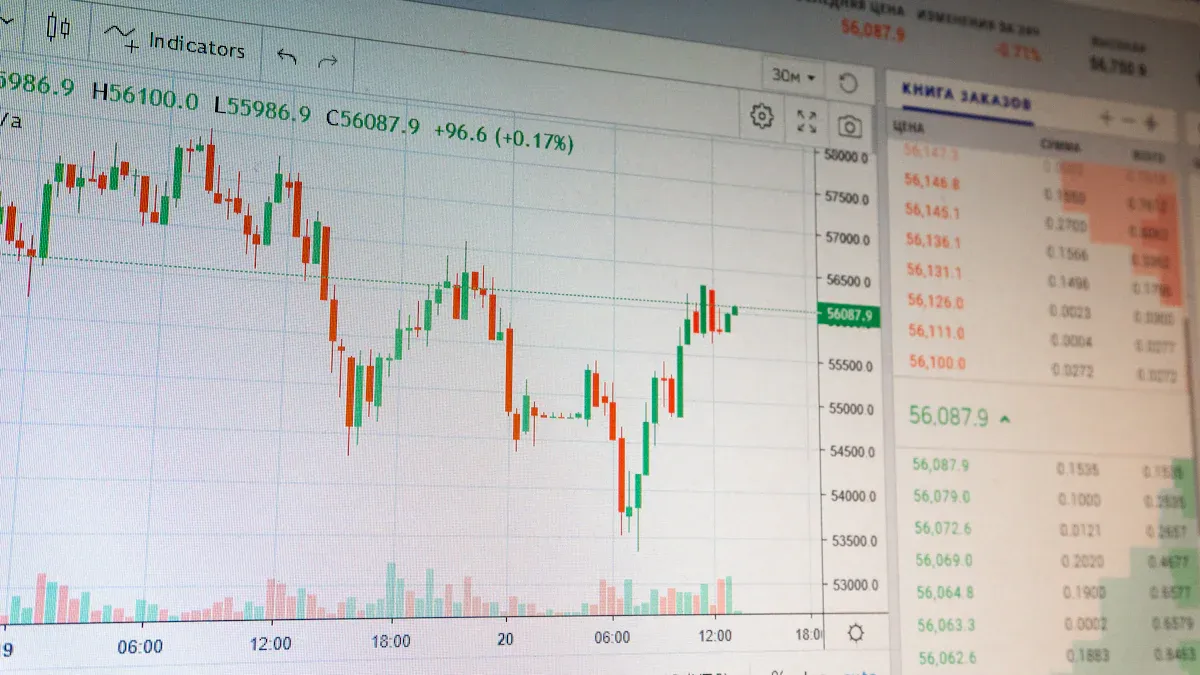
Spot prices are shaped by several factors that influence the immediate value of an asset. Understanding these factors helps you predict price movements and make informed decisions. Let’s explore the key elements that determine spot prices.
Supply and Demand Dynamics
The balance between supply and demand plays a central role in determining spot prices. When demand for an asset rises while supply remains constant, prices tend to increase. Conversely, if demand decreases and supply stays the same, prices usually drop. The same principle applies to changes in supply. For instance:
-
An increase in supply with steady demand lowers prices.
-
A decrease in supply with steady demand raises prices.
This relationship can be summarized in the table below:
|
Scenario |
Effect on Prices |
|---|---|
|
Demand increases, supply constant |
Prices tend to rise |
|
Demand decreases, supply constant |
Prices usually fall |
|
Supply increases, demand constant |
Prices tend to fall |
|
Supply decreases, demand constant |
Prices tend to rise |
Historical data also highlights how supply and demand influence spot prices. For example, gold prices often rise during economic uncertainty due to increased investment demand. In contrast, industrial metals like platinum and palladium see price changes driven by shifts in industrial demand, such as the automotive sector's need for catalytic converters.
The concept of supply and demand has been studied for centuries. Economists like Adam Smith and Alfred Marshall explained how these forces interact to set prices, forming the foundation of modern market economics. By understanding these dynamics, you can better anticipate changes in spot prices.
Role of Market Participants
Market participants, including traders, banks, and hedge funds, significantly influence spot prices. Large institutions often hold substantial positions in futures contracts, which can indirectly impact spot prices. For example, banks like JPMorgan and HSBC trade large volumes of silver futures, swaying the spot price through their activity.
Speculation in futures markets also affects spot prices. When traders expect future price changes, their actions in the futures market influence the behavior of other market participants. This creates a feedback loop where futures prices and spot prices align over time.
You can think of market participants as the driving force behind price movements. Their decisions, whether based on speculation or hedging strategies, shape the immediate value of assets in the spot market.
External Influences
External factors, such as geopolitical events and economic policies, also affect spot prices. Global trade dynamics, for instance, can shift due to political tensions or changes in international agreements. Gita Gopinath, an economist, has noted that these shifts are as significant as those seen after the Cold War, highlighting their impact on global markets.
Natural disasters, technological advancements, and regulatory changes further influence spot prices. For example, a hurricane disrupting oil production can cause spot prices for crude oil to spike. Similarly, advancements in mining technology might increase the supply of metals, leading to lower prices.
By staying informed about external influences, you can better understand sudden changes in spot prices and adjust your strategies accordingly.
Factors Affecting Spot Prices
Economic Indicators
Economic indicators play a significant role in shaping spot prices. Metrics like GDP growth, unemployment rates, and inflation directly influence consumer purchasing power and market demand. For instance, when GDP grows, consumers tend to spend more, increasing demand for commodities and driving up their spot price. Conversely, high unemployment often reduces spending, leading to lower prices.
Central banks also impact spot prices through monetary policies. Interest rate changes can alter borrowing costs, affecting industries reliant on credit. For example, a lower interest rate may boost housing demand, increasing the spot price of construction materials like lumber. By monitoring these indicators, you can better predict price movements and adjust your strategies accordingly.
Seasonal and Cyclical Trends
Spot prices often fluctuate due to seasonal and cyclical trends. Agricultural commodities like wheat and corn experience price changes based on planting and harvesting seasons. For example, wheat prices typically drop during harvest due to increased supply. Similarly, energy prices rise in winter as heating demand increases.
Cyclical trends, such as economic expansions and recessions, also affect spot prices. During economic growth, industries consume more raw materials, raising their spot price. In contrast, recessions reduce demand, causing prices to fall.
|
Type of Cycle |
Description |
|---|---|
|
Seasonal Cycles |
Changes driven by seasons or calendar events, like agricultural harvests. |
|
Economic Cycles |
Phases of expansion, peak, recession, and recovery, influenced by interest rates and policies. |
Understanding these patterns helps you anticipate price changes and make informed decisions.
Technological and Market Access Factors
Advancements in technology and improved market access significantly influence spot prices. Automated trading platforms, for instance, execute trades faster and more efficiently, increasing market liquidity and reducing costs. Direct Market Access (DMA) allows traders to bypass intermediaries, improving control over trades and ensuring better prices.
Smart Order Routing (SOR) further optimizes trades by analyzing real-time market conditions and directing orders to exchanges offering the best prices. These innovations democratize access to markets, enabling more participants to influence spot prices.
By leveraging these technologies, you can gain a competitive edge in trading and better navigate the complexities of spot markets.
Importance of Spot Prices in Different Markets
Spot prices play a crucial role across various markets, providing real-time insights into the value of assets. Whether you're trading commodities, equities, or currencies, understanding spot prices helps you make informed decisions and respond to market changes effectively.
Commodities (e.g., oil, gold)
In the commodities market, spot prices determine the immediate cost of raw materials like oil, gold, and agricultural products. These prices are influenced by factors such as geopolitical events, weather conditions, and seasonal demand. For example, oil prices often rise during geopolitical tensions that disrupt supply chains, while gold prices increase during economic uncertainty as investors seek safe-haven assets.
|
Market Type |
Determination Method |
Influencing Factors |
|---|---|---|
|
Commodities |
Bidding on exchanges like NYMEX or LME |
Geopolitical events, weather, seasonal demand |
Spot prices in commodities also guide futures contracts, helping businesses plan for future costs. For instance, an airline might monitor the spot price of jet fuel to decide when to lock in a futures contract, ensuring budget stability.
Stock and Equity Markets
In stock and equity markets, spot prices represent the current value of shares available for immediate purchase. These prices reflect real-time supply and demand, making them essential for facilitating transactions. Investors rely on spot prices to make quick buying or selling decisions, especially during volatile market conditions.
|
Aspect |
Description |
|---|---|
|
Spot Price |
The immediate price at which assets are traded, crucial for facilitating transactions. |
|
Market Role |
Spot prices are determined by supply and demand, reflecting current market conditions. |
|
Transaction Type |
Transactions are settled at the ruling price, known as the spot price or spot rate. |
Spot prices also help investors calculate market risk and project pricing trends. For example, historical spot price data can reveal patterns that guide future investment strategies.
Foreign Exchange (Forex)
In the Forex market, spot prices indicate the current exchange rate between two currencies. These rates are determined by global trade interactions and monetary policy changes. For instance, a central bank's decision to raise interest rates can strengthen its currency, increasing its spot price.
Forex traders use spot prices to execute immediate currency exchanges, often within seconds. This real-time pricing is vital for businesses involved in international trade, as it ensures accurate cost calculations. For example, an importer might use the spot price of the euro to determine the cost of goods purchased from Europe.
Spot prices in Forex also influence forward contracts, which businesses use to hedge against future currency fluctuations. By understanding spot prices, you can navigate the complexities of global trade more effectively.
Understanding the spot buy price helps you make informed decisions in fast-moving markets. This price reflects real-time supply and demand, influenced by factors like economic trends and market participants. To stay updated, use financial platforms or tools that track live market data. Apps like Bloomberg or TradingView provide instant access to spot prices, ensuring you never miss an opportunity.
FAQ
What is the difference between spot buy price and market price?
The spot buy price refers to the immediate cost of an asset for instant purchase. The market price, however, represents the general price level influenced by all ongoing transactions. Spot prices are real-time, while market prices reflect broader trends.
Why do spot prices change so frequently?
Spot prices change due to supply and demand shifts, market participant actions, and external factors like geopolitical events. For example, a sudden oil supply disruption can cause spot prices to spike within minutes.
Can you predict spot prices accurately?
You cannot predict spot prices with complete accuracy. However, analyzing economic indicators, seasonal trends, and market data can help you make informed guesses about potential price movements.
How do spot prices affect futures contracts?
Spot prices serve as a reference for futures contracts. As the contract expiration date nears, futures prices often converge with spot prices. This relationship helps traders anticipate future market conditions.
Are spot prices the same across all markets?
Spot prices may vary slightly between markets due to transaction costs, time zones, or local demand. However, global commodities like gold or oil often have uniform spot prices across major exchanges.
Related content