
What is Delivered Duty Paid (DDP)? Definition, Key Points & Applications
Author:XTransfer2026.01.07Delivered Duty Paid
What Is Delivered Duty Paid (DDP)?
Q: What does DDP mean in international trade?
A: Delivered Duty Paid (DDP) is an Incoterm where the seller takes full responsibility for delivering goods to the buyer’s specified destination. This includes all transportation costs, export and import customs clearance, duties, taxes, and related fees. Risk and cost transfer from the seller to the buyer only once the goods arrive ready for unloading at the agreed destination. DDP is widely used when buyers want a seamless, all-inclusive delivery and sellers are capable of handling complex import procedures in the buyer’s country.
How Does DDP Work?
Seller’s Responsibilities
Q: What does the seller do under DDP?
A: The seller assumes maximum responsibility throughout the shipping process, including:
-
Arranging and paying for all transportation from origin to the buyer’s destination.
-
Completing export and import customs clearance.
-
Paying all duties, taxes, and fees, including VAT or local import taxes.
-
Bearing all risks until the goods are ready for unloading at the destination.
Buyer’s Responsibilities
Q: What responsibilities does the buyer have under DDP?
A: The buyer’s responsibilities are minimal and mainly include:
-
Unloading the goods at the destination.
-
Assisting with any documents required for import clearance, if mandated by local law.
DDP Process Overview
Q: How does the DDP shipment flow work?
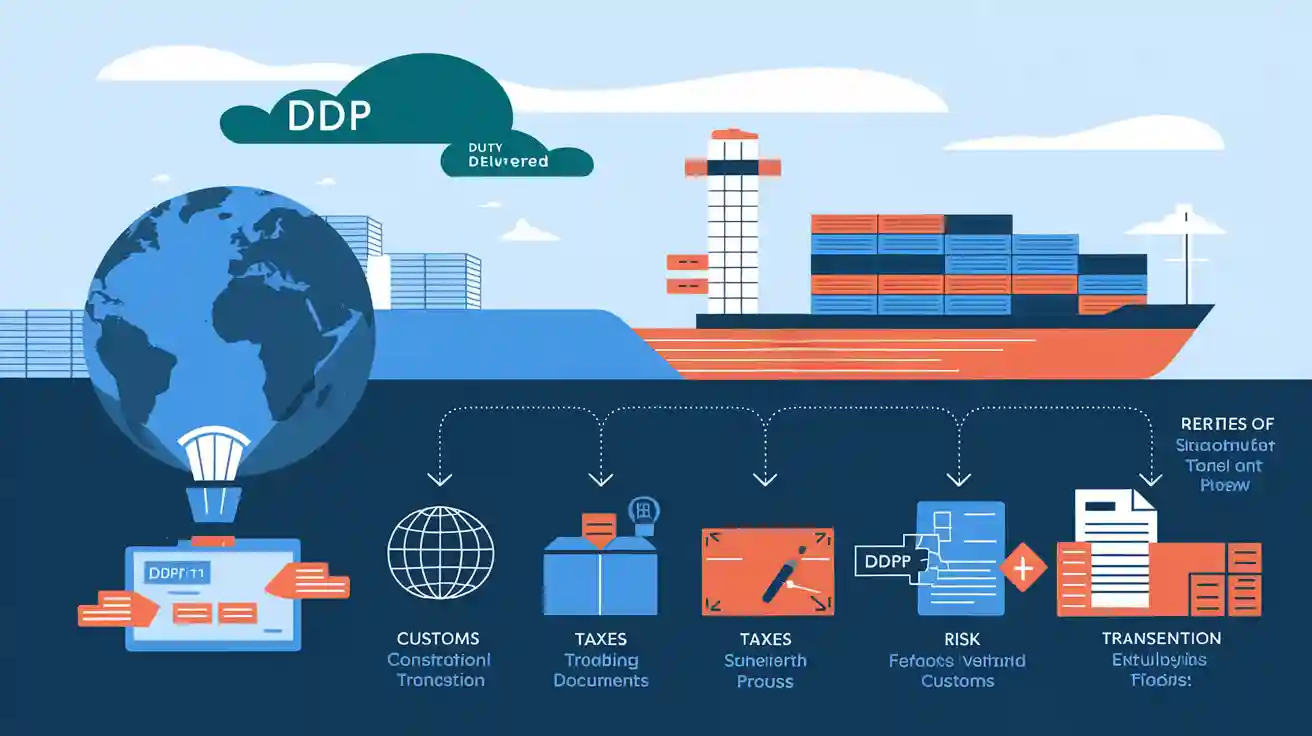
A: The seller manages the entire logistics chain, from the manufacturing site or warehouse to the buyer’s location. Costs and risks transfer only at the final delivery point, ready for unloading. The buyer receives the goods without worrying about customs clearance, duties, or taxes. This is why DDP is often favored for complex cross-border B2B transactions.
Real-World Applications
Q: When is DDP used in international trade?
A: DDP is common in B2B e-commerce, automotive, electronics, and machinery exports, especially when buyers want to avoid unexpected fees or complicated customs procedures.
Example: A Chinese manufacturer shipping machinery to a European warehouse can use DDP. The seller pays all duties and taxes upfront, handles customs clearance, and delivers the goods ready for unloading. The buyer only manages the unloading process.
Role of Payment Platforms: Platforms like XTransfer can streamline DDP transactions by:
-
Facilitating fast, compliant cross-border payments.
-
Handling duties and taxes payments automatically.
-
Providing real-time tracking of funds and payment compliance.
This reduces administrative burden, prevents delays, and mitigates compliance risks for both exporter and importer.
Related Incoterms and Comparisons
Q: How does DDP compare to other Incoterms?
-
DAP (Delivered At Place): Seller delivers goods to the agreed destination, but the buyer handles import clearance and pays duties/taxes.
-
DDU (Delivered Duty Unpaid) – obsolete: Seller delivers, but buyer pays all import duties and taxes.
-
FOB (Free On Board): Seller’s responsibility ends at the port of shipment; the buyer assumes risk and cost from that point.
-
CIF (Cost, Insurance, Freight): Seller pays cost, insurance, and freight to the destination port, but the buyer handles import clearance and duties.
Tip: DDP is the only Incoterm where the seller manages import clearance and pre-pays all import duties, making it the most comprehensive responsibility model for sellers.
Special Considerations
Q: What should sellers consider before using DDP?
-
Legal limitations: Sellers must confirm that they can legally clear goods through customs in the buyer’s country.
-
Local regulations: Import laws, taxes, and documentation requirements vary by country; sellers must clarify these in the contract.
-
Risk assessment: Although DDP provides a competitive advantage for buyers, it exposes sellers to higher cost and liability.
-
Contract clarity: Agreements should clearly outline responsibilities, duties, and risk transfer points to prevent disputes.
Why Choose DDP?
Q: What are the advantages of using DDP?
-
Buyer convenience: Buyers receive goods without handling customs or paying extra fees.
-
Predictable costs: All duties, taxes, and transport costs are prepaid by the seller.
-
Competitive advantage: DDP simplifies cross-border trade, especially for first-time buyers or complex markets.
-
Reduced delays: Properly managed DDP shipments avoid unexpected clearance or payment issues.
Q: What are the risks for sellers?
-
Increased financial responsibility and upfront payment obligations.
-
Exposure to customs or regulatory errors in the buyer’s country.
-
Potential delivery or administrative delays that are fully the seller’s responsibility.
Conclusion
Delivered Duty Paid (DDP) is ideal for sellers who can manage end-to-end logistics, customs clearance, and tax obligations, while offering buyers a hassle-free, all-inclusive delivery.
By using DDP along with cross-border payment platforms like XTransfer, sellers can simplify international trade, ensure compliance, reduce administrative risks, and strengthen relationships with global buyers.
Looking to simplify your cross-border payments and DDP transactions? Discover how XTransfer can help your business manage global trade payments, compliance, and tax settlement efficiently:https://www.xtransfer.com.
Related content