
What is BAC/BACS? Definition, Key Features, and Application in Cross-Border Payments
Author:XTransfer2026.01.15BAC/BACS
BAC/BACS Definition: Multiple Meanings in Financial Contexts
BAC/BACS most commonly refers to Bankers' Automated Clearing Services, a UK-based electronic payment system for processing direct debits and credits between bank accounts. However, BAC can also mean Bank Authorization Code (a payment verification code) or Bank of America Corporation (NYSE: BAC), making context essential for correct interpretation in financial communications.
Why clarity matters: Financial professionals discussing "BAC" might reference completely different concepts—a UK payments officer means the automated clearing system, a card payment processor refers to authorization codes, and an equity trader discusses Bank of America stock. International business documents using these abbreviations without context risk serious misunderstandings affecting payment routing, compliance, or financial analysis.
BACS: The UK's Core Payment Infrastructure
Understanding Bankers' Automated Clearing Services
BACS represents one of the United Kingdom's fundamental payment systems, processing over 6 billion transactions annually worth approximately £5 trillion. Established in 1968, BACS evolved from manual paper-based clearing to become a sophisticated electronic payment network serving the entire UK banking sector.
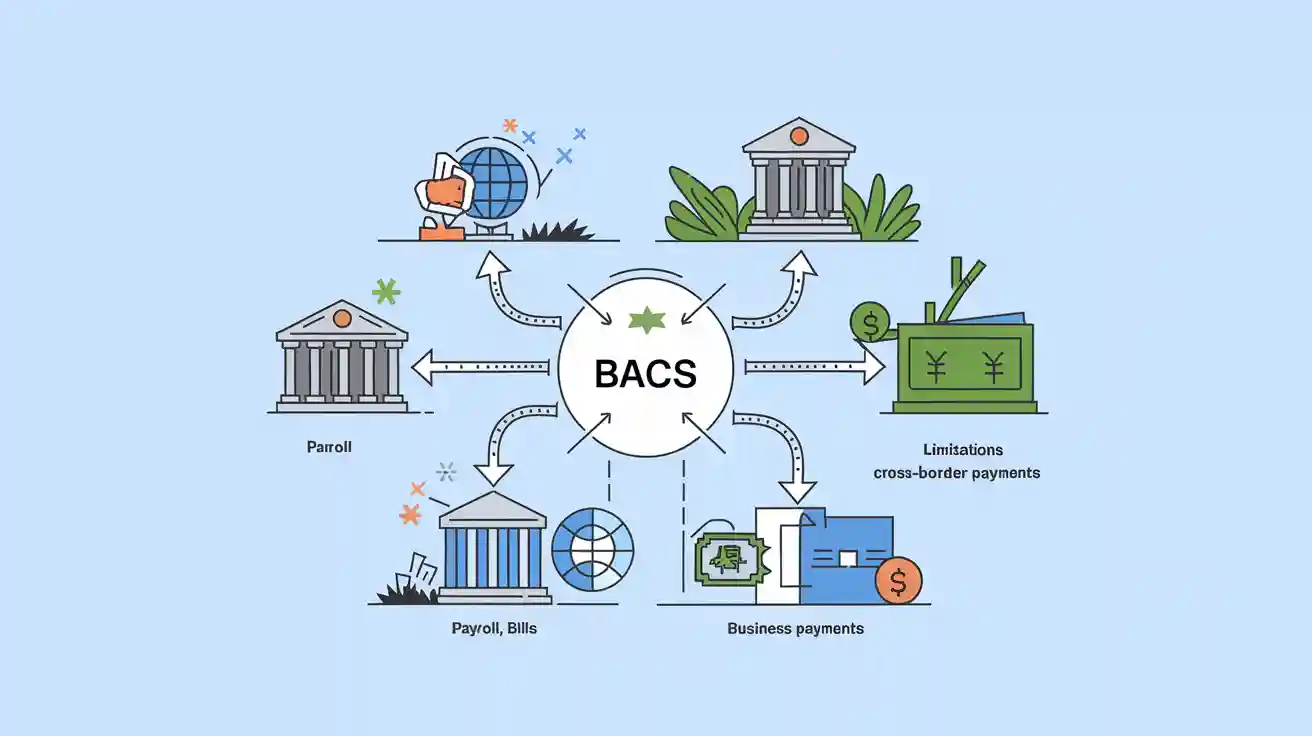
Two primary transaction types dominate BACS processing. Direct Debits allow organizations to collect payments from customers' bank accounts on agreed schedules—utility companies collecting monthly bills, subscription services charging membership fees, or mortgage lenders collecting loan payments. Direct Credits enable businesses to deposit funds into recipients' accounts—employers paying employee salaries, companies paying supplier invoices, or government agencies distributing benefits.
Pay.UK operates BACS as the payment system operator, ensuring technical infrastructure, security standards, regulatory compliance, and dispute resolution mechanisms function properly. This centralized oversight maintains system integrity across thousands of participating financial institutions.
How BACS Payments Work
The three-day processing cycle characterizes BACS transactions. Day 1 (submission day): the paying organization submits payment files to BACS. Day 2 (processing day): BACS processes transactions, routing payment instructions to receiving banks. Day 3 (settlement day): funds transfer between banks and credit recipients' accounts.
This timing predictability helps businesses manage cash flow—companies know exactly when payments will clear, allowing precise coordination of incoming and outgoing cash flows. Payroll departments schedule BACS submissions to ensure employee salaries arrive on specific dates. Suppliers expecting payment on month-end know funds will appear on the third business day after submission.
Batch processing efficiency allows BACS to handle millions of transactions daily at low per-transaction costs. Rather than processing each payment individually as it arrives, BACS accumulates transactions into batches, processing entire batches together. This batch approach trades immediacy for cost efficiency—perfect for non-urgent, predictable payments like monthly salaries or recurring bills.
BACS Technical Requirements
Sort codes and account numbers form the essential addressing information for BACS payments. UK bank accounts are identified by six-digit sort codes designating specific bank branches and eight-digit account numbers identifying individual accounts at those branches. BACS payment instructions must include both for proper routing.
File format standards specify how organizations structure BACS payment data. Standard 18 represents the current BACS file format defining precise layouts for different transaction types, validation rules, and error handling. Organizations submitting BACS payments must generate files conforming to these specifications or use banking software that handles format compliance automatically.
Direct Debit mandates establish authorization framework for BACS Direct Debits. Before collecting via Direct Debit, organizations must obtain signed mandates from payers authorizing specific collections. These mandates specify collection amounts, frequencies, and advance notice requirements, providing consumer protection through the Direct Debit Guarantee Scheme.
Direct Debits: Automated Payment Collection
Direct Debit Mechanics
Direct Debit allows organizations with proper authorization to initiate collections from customers' bank accounts. The collecting organization (service provider) determines collection amounts and timing within mandate parameters, submitting BACS instructions that debit customer accounts and credit the organization's account.
Advance notice requirements typically mandate that organizations notify customers before collecting, usually 10 days prior for variable amounts. This notice allows customers to ensure sufficient funds availability and dispute any unauthorized or incorrect collections before they process.
The Direct Debit Guarantee protects consumers against unauthorized or incorrect debits. If organizations collect without proper authorization, collect wrong amounts, or fail to provide required notice, affected customers can request immediate refunds from their banks. Banks must refund disputed amounts promptly, then investigate validity and potentially charge back to the collecting organization if the dispute proves valid.
Direct Debit Business Applications
Recurring subscription services heavily utilize Direct Debit—streaming services, gym memberships, software subscriptions, insurance premiums, and countless other regular payment arrangements collect via Direct Debit. This automation reduces payment collection costs and improves cash flow predictability compared to invoicing and waiting for manual payments.
Utility companies rely on Direct Debit for residential and business customer collections. Rather than generating monthly invoices and processing diverse payment methods, utilities offer Direct Debit collection providing convenience for customers and guaranteed payment timing for utilities.
Variable Direct Debits accommodate fluctuating amounts like utility bills varying by usage. The organization notifies customers of the upcoming collection amount (meeting advance notice requirements), then submits BACS instructions for the specific amount owed that period.
Direct Credits: Automated Payment Distribution
Direct Credit Operations
BACS Direct Credit enables organizations to deposit funds directly into recipients' bank accounts efficiently. The paying organization submits batch files containing multiple beneficiary details and payment amounts, with BACS routing payments to appropriate receiving banks for account crediting.
Payroll represents the dominant Direct Credit application. UK employers process millions of salary payments monthly via BACS, submitting payroll files several days before payday to ensure employee account crediting on salary day. This reliability makes BACS the standard payroll payment method across UK business.
Supplier payments through Direct Credit streamline accounts payable processes. Rather than issuing individual checks or making separate bank transfers for each supplier, organizations compile supplier payment batches, submit to BACS, and efficiently pay dozens or hundreds of suppliers simultaneously.
Direct Credit Benefits
Payment automation reduces administrative workload compared to manual payment methods. One BACS file submission handles hundreds of payments that would otherwise require individual processing, reducing labor costs and error opportunities.
Audit trails and reconciliation improve through BACS Direct Credit. Each payment includes reference information appearing on recipients' bank statements, helping recipients identify payment sources and purposes. Payers maintain detailed records of submitted files, facilitating reconciliation and audit compliance.
Cost efficiency stems from BACS's low per-transaction fees—typically pennies per payment compared to check issuance costs or individual bank transfer fees. For organizations making thousands of monthly payments, BACS generates substantial cost savings.
BACS Limitations and Alternatives
Geographic and Currency Restrictions
BACS operates exclusively within the United Kingdom and processes only GBP transactions. A London company can pay a Manchester supplier via BACS, but cannot use BACS for payments to Paris, New York, or Shanghai suppliers. International payments require alternative systems like SWIFT.
Currency limitation means even payments between UK entities in non-GBP currencies cannot use BACS. A UK company paying a UK supplier in euros or dollars must use currency-capable payment systems rather than GBP-only BACS.
Speed Limitations
The three-day BACS cycle doesn't suit urgent payments. A business needing same-day supplier payment to secure inventory or prevent service interruption cannot achieve this through BACS. Faster Payment Service (FPS) or CHAPS provide UK alternatives for urgent payments.
Faster Payments Service (FPS) processes UK GBP payments in near-real-time, typically within minutes or hours rather than BACS's three days. However, FPS has lower per-transaction limits (currently £1 million maximum) compared to BACS's unlimited capability, and higher per-transaction costs than BACS.
CHAPS (Clearing House Automated Payment System) provides same-day guaranteed settlement for high-value UK payments. Used primarily for property purchases, large B2B transactions, or time-critical payments, CHAPS costs significantly more than BACS—typically £25-35 per transaction versus pennies for BACS.
BACS vs. International Payment Systems
BACS vs. SWIFT
SWIFT facilitates international payments across 200+ countries and virtually all currencies, while BACS handles only domestic UK GBP payments. A UK exporter receiving dollars from an American customer uses SWIFT, not BACS. A Chinese manufacturer paying a British supplier uses SWIFT-routed payments converted to GBP.
Processing time differences reflect different network architectures. BACS's predictable three-day cycle serves domestic batch processing, while SWIFT international wires typically complete in 1-5 days depending on correspondent banking chains, time zones, and compliance screening. Neither provides truly instant international settlement.
Cost structures differ fundamentally. BACS charges pennies per domestic transaction. SWIFT international wires cost £15-50 in sending bank fees, potential correspondent bank charges, and receiving bank fees, plus foreign exchange spreads if currency conversion occurs. This makes SWIFT expensive for small payments but acceptable for larger international transfers.
BACS vs. ACH
The United States' Automated Clearing House (ACH) network functions as America's BACS equivalent—a domestic batch electronic payment system processing direct debits and credits for payroll, bills, and B2B payments in USD. Both systems share similar architecture, timing, and use cases within their respective countries.
Neither ACH nor BACS handles cross-border payments. A UK company cannot pay a US supplier via BACS or ACH directly. These domestic-only systems require international payment systems like SWIFT to bridge the gap between countries.
BACS vs. SEPA
Single Euro Payments Area (SEPA) processes euro-denominated payments across 36 European countries, dwarfing BACS's UK-only scope. SEPA Credit Transfers and SEPA Direct Debits function similarly to BACS Direct Credits and Debits but across national borders within the eurozone.
SEPA Instant Credit Transfer provides real-time euro payments across SEPA countries, surpassing BACS's three-day timeline. However, SEPA operates only in euros, while BACS handles GBP. Despite Brexit, UK banks can still offer SEPA services for euro-denominated payments, though Sterling remains BACS's domain.
BACS in Business Operations
Payroll Processing
UK employers rely overwhelmingly on BACS for salary payments given its reliability, low cost, and predictable timing. Payroll systems generate BACS-compliant payment files listing all employees, account details, and net pay amounts, submitting these files three days before payday to ensure timely employee payment.
Automation integration between payroll software and banking platforms streamlines this process. Modern payroll systems calculate wages, generate BACS files, and transmit them to banks automatically, with minimal manual intervention. This reduces administrative burden and payment errors.
Supplier Payment Automation
Accounts payable departments batch supplier payments for BACS processing, typically aligning with payment terms and cash flow management. Month-end payment runs compile all suppliers with invoices due, generate BACS files, and submit for processing ensuring suppliers receive payment on agreed schedules.
Payment approvals before BACS submission maintain internal controls. Multi-level authorization workflows verify payment legitimacy, amounts, and beneficiary details before releasing BACS files to banks, preventing fraud or errors.
Customer Payment Collection
Businesses collecting recurring payments—subscription services, membership organizations, installment payment plans—use BACS Direct Debit for reliable automated collection. Once customers authorize Direct Debit mandates, organizations submit regular collection instructions without requiring customer action each payment cycle.
Collection timing optimization aligns Direct Debit submission with customer payment capacity. Many organizations collect shortly after typical salary payment dates when customer accounts are fullest, reducing failed collections from insufficient funds.
BAC: Bank Authorization Code
Authorization Codes in Card Payments
Bank Authorization Code (BAC), distinct from BACS payment system, refers to the approval code that card issuers provide when authorizing payment card transactions. When a merchant processes a credit or debit card payment, the card network sends an authorization request to the issuing bank, which responds with an authorization code if approving the transaction.
Six-digit authorization codes appear on card payment receipts providing proof that the issuing bank approved the transaction at the time of sale. If disputes arise later—customer claims they didn't authorize the purchase—the authorization code evidences bank approval at transaction time.
Declined transactions receive decline codes rather than authorization codes, indicating why the issuer rejected the transaction—insufficient funds, suspected fraud, expired card, or other reasons. Merchants use these codes to understand decline reasons and potentially resolve issues enabling successful payment.
Authorization Code Business Significance
Chargeback disputes often hinge on authorization codes. When customers dispute charges, merchants reference authorization codes proving the issuing bank approved transactions initially. While not guaranteeing chargeback victory (customers might legitimately dispute authorized but fraudulent transactions), authorization codes demonstrate due diligence.
Record retention requirements often specify retaining authorization codes for defined periods, typically matching chargeback timeframe limits (120-180 days for most card networks). This documentation proves essential for dispute resolution and audit compliance.
BAC: Bank of America Corporation
The Bank of America Stock Symbol
Bank of America Corporation trades on the New York Stock Exchange under ticker symbol "BAC," creating another meaning for this abbreviation entirely separate from UK payment systems or authorization codes. Financial analysts, investors, and traders referencing "BAC" in stock market contexts mean Bank of America shares, not payment systems.
Context completely determines meaning. A Bloomberg terminal showing "BAC up 2% today" discusses Bank of America stock performance. A UK business document mentioning "BAC payments" references the automated clearing system. A payment processing report noting "BAC received" refers to authorization codes.
Determining Correct BAC/BACS Meaning
Geographic and Industry Context
UK-based documents discussing domestic payments almost certainly mean BACS automated clearing. American documents referencing payment processing might mean Bank Authorization Codes or Bank of America. Stock market analysis using BAC refers to Bank of America Corporation ticker symbol.
Payment system discussions generally clarify through accompanying terms. "BACS Direct Debit," "BACS payment file," "BACS processing cycle" all clearly reference the UK clearing system. "Authorization code" or "approval code" context indicates Bank Authorization Code meaning.
Preventing Confusion
Spell out abbreviations on first use in multi-audience documents: "Bankers' Automated Clearing Services (BACS)" or "Bank Authorization Code (BAC)" establishes clear meaning preventing confusion. International documents should avoid assuming all readers understand UK payment system abbreviations.
Use full terms in critical communications—payment instructions specifying "BACS Direct Credit" rather than just "BAC payment" eliminate ambiguity about payment routing and execution.
Cross-Border Business Implications
When BACS Doesn't Work
International trade between UK businesses and foreign partners cannot use BACS. A British importer buying from Chinese suppliers must use international payment systems supporting cross-border, multi-currency transactions. BACS's UK-only, GBP-only limitations exclude it from international trade payments.
Alternative payment platforms like XTransfer, Wise (formerly TransferWise), or traditional SWIFT wires handle international payments that BACS cannot. These platforms support multiple currencies, cross-border routing, and compliance with international payment regulations—capabilities BACS lacks by design.
Multi-Currency Business Operations
UK businesses operating internationally need payment infrastructure beyond BACS. A company paying UK employees via BACS, European suppliers via SEPA, American vendors via SWIFT, and Asian partners through specialized payment platforms requires integrated treasury management coordinating these diverse payment systems.
Currency conversion adds complexity to non-BACS international payments. While BACS handles only GBP, international payments require converting between currencies at prevailing exchange rates with associated costs and risks. Currency-specialized payment platforms often provide better rates than traditional banks for these conversions.
BACS Payment System Comparison
| Feature | BACS (UK) | SWIFT (Global) | CHAPS (UK) | FPS (UK) | SEPA (Europe) |
|---|---|---|---|---|---|
| Geography | UK only | 200+ countries | UK only | UK only | 36 European countries |
| Currency | GBP only | All currencies | GBP only | GBP only | EUR only |
| Speed | 3 business days | 1-5 days | Same day | Minutes/hours | 1 day/instant |
| Transaction Limit | Unlimited | Unlimited | Unlimited | £1 million | €999,999,999 |
| Cost (approx) | £0.01-0.50 | £15-50+ | £25-35 | £0.01-5 | €0.01-5 |
| Primary Use | Payroll, bills, regular payments | International trade, large transfers | Property, urgent high-value | Urgent domestic | Eurozone payments |
| Processing Type | Batch | Individual | Individual | Real-time | Batch/instant |
| Settlement | Net settlement | Gross settlement | Real-time gross | Real-time | Varies |
Frequently Asked Questions About BAC/BACS
Can I use BACS to pay international suppliers?
No, BACS only processes domestic UK payments in GBP between UK bank accounts. For international supplier payments, you must use SWIFT wire transfers, specialized payment platforms like XTransfer or Wise, or other international payment systems supporting cross-border, multi-currency transactions.
How long do BACS payments take?
BACS operates on a three-day cycle: submission day, processing day, and settlement day. If you submit a BACS payment on Monday, it typically clears on Wednesday. This predictable timing helps businesses schedule cash flow but doesn't suit urgent payments requiring same-day or immediate settlement.
What's the difference between BACS and Faster Payments?
BACS processes payments over three days in batches with very low costs, suitable for non-urgent, high-volume payments like payroll. Faster Payments processes near-real-time in minutes to hours with higher per-transaction costs and £1 million limit, better for urgent payments. Both are UK-only GBP systems but serve different speed and cost priorities.
Do I need special software to make BACS payments?
Most UK business banking platforms include BACS payment capabilities built-in, allowing file uploads or direct payment entry. Larger organizations often use specialized accounting or payroll software generating BACS-compliant files automatically. Small businesses can typically make BACS payments through standard online banking without additional software.
What does Bank Authorization Code mean in payment processing?
Bank Authorization Code (BAC) is the approval code issued by card-issuing banks when authorizing credit or debit card transactions. This code appears on payment receipts as proof the bank approved the transaction at the time of sale, important for dispute resolution and chargeback defense.
Is Bank of America related to BACS?
No, Bank of America Corporation (stock ticker: BAC) is a major American bank completely unrelated to the UK's Bankers' Automated Clearing Services (BACS). The shared abbreviation "BAC" is coincidental—context determines which one is being referenced in any given communication.
Can non-UK businesses access BACS?
Only businesses with UK bank accounts can send or receive BACS payments, though the business entity itself doesn't need to be UK-registered. A foreign company with a UK branch and UK bank account can use BACS for domestic UK transactions, but BACS cannot process international payments regardless of business nationality.
What happens if a BACS Direct Debit fails?
Failed Direct Debits (typically from insufficient funds) generate "unpaid" notifications to collecting organizations. The organization can resubmit collection attempts, contact customers about payment, or escalate to collection procedures depending on their policies. The Direct Debit mandate remains valid unless customers cancel it.
Related content