
What is a Mutual Recognition Agreement (MRA)?
Author:XTransfer2026.01.15Mutual Recognition Agreement (MRA)
MRA Definition: Reducing Regulatory Duplication Across Borders
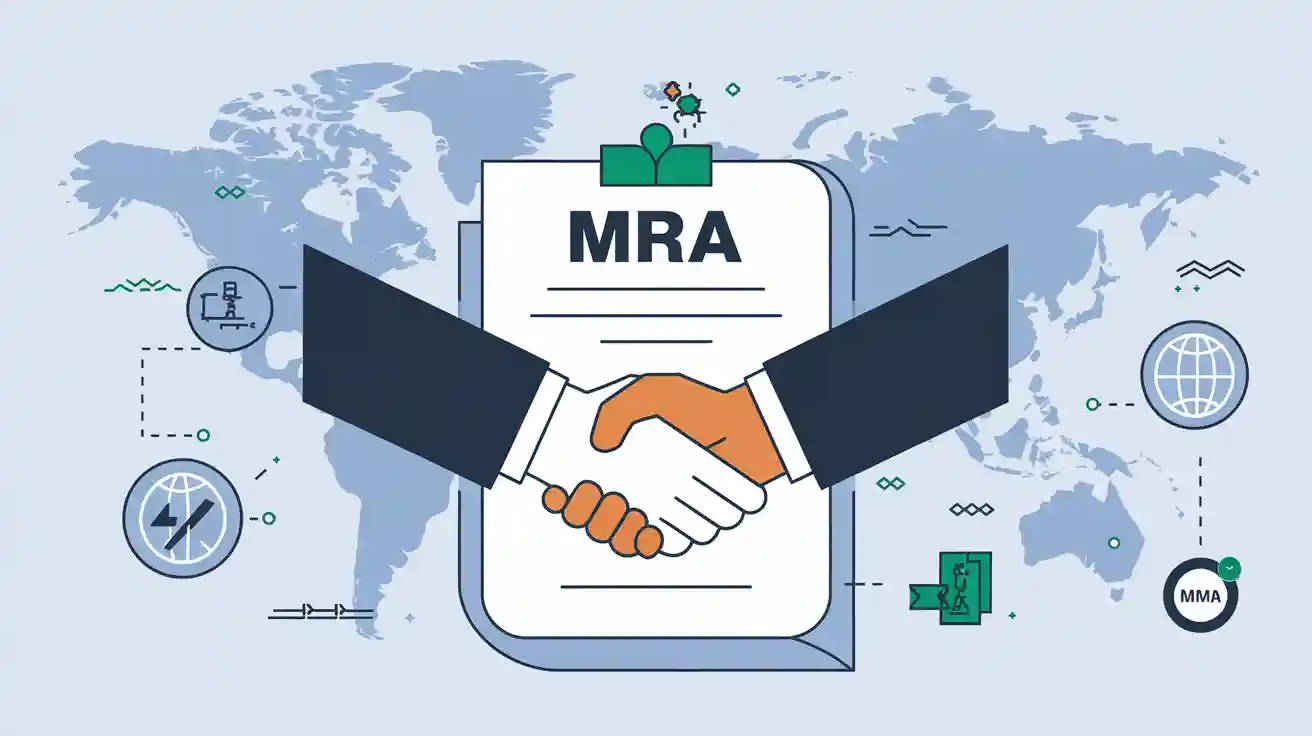
A Mutual Recognition Agreement (MRA) is an international arrangement where two or more countries or organizations agree to recognize each other's conformity assessments, certifications, or regulatory decisions, streamlining cross-border compliance and trade by eliminating redundant testing, inspections, and approvals. MRAs allow products, services, or professionals certified in one jurisdiction to operate in another without repeating entire certification processes, reducing costs and accelerating market access.
Why MRAs matter for global business: International trade traditionally requires businesses to comply with every destination country's unique regulatory requirements—products tested in the origin country must be retested in destination markets, manufacturing facilities inspected by origin regulators face re-inspection by destination authorities, and professionals licensed in one country need separate credentials for another. MRAs break this duplication cycle by establishing mutual trust between regulatory systems, accepting that Partner A's certification process satisfies Partner B's requirements and vice versa.
Understanding MRA Mechanisms and Structure
Core Principles of Mutual Recognition
MRAs operate on reciprocal trust that participating countries' regulatory systems achieve equivalent outcomes even if specific processes differ. Rather than harmonizing regulations to identical standards—which proves politically and practically difficult—MRAs acknowledge that different regulatory approaches can achieve comparable safety, quality, or compliance objectives.
Equivalence assessment precedes MRA establishment. Countries evaluate whether partner regulatory frameworks, testing procedures, inspection methodologies, and enforcement mechanisms provide sufficient rigor and reliability to justify mutual recognition. This assessment typically involves regulatory officials visiting partner facilities, reviewing documentation, observing inspections, and verifying that stated procedures are actually followed.
Scope definition determines what exactly is recognized—entire regulatory systems, specific conformity assessment bodies, particular product categories, or defined procedures. Narrow MRAs might cover only one product type inspected by designated organizations, while comprehensive MRAs recognize broad regulatory equivalence across multiple sectors.
Key Components Every MRA Contains
Conformity standards establish what technical, safety, quality, or regulatory requirements products or services must meet. MRAs don't necessarily require identical standards—they recognize that different standards can achieve equivalent protection or outcomes. For example, electrical safety standards might differ technically between countries but both prevent electrical hazards adequately.
Assessment bodies designation identifies which organizations in each country have authority to conduct recognized inspections, testing, or certifications. Not every laboratory or inspection firm automatically gains recognition—MRAs typically designate specific qualified bodies meeting agreed competency criteria.
Recognition of results forms the MRA's operational core. When designated assessment bodies in Country A issue conformity certificates, Country B accepts those certificates as meeting its requirements without requiring re-testing or re-inspection. This mutual acceptance eliminates regulatory duplication.
Ongoing evaluation and review mechanisms maintain MRA integrity. Periodic audits verify that designated assessment bodies maintain competency, surveillance ensures continued regulatory equivalence, and dispute resolution procedures address disagreements about specific assessments or systemic compliance.
MRAs in Different Sectors
Pharmaceutical and Medical Device MRAs
The U.S. Food and Drug Administration and European Union maintain an MRA for pharmaceutical Good Manufacturing Practice (GMP) inspections. Under this agreement, FDA accepts EU member state inspections of pharmaceutical manufacturing facilities as equivalent to FDA inspections, and vice versa. This eliminates redundant regulatory travel and inspection costs while maintaining drug safety oversight.
Practical impact: A pharmaceutical manufacturer in Germany exporting to the United States previously faced both EU regulatory inspections and separate FDA inspections of the same facilities. The MRA means FDA relies on EU member state inspections, reducing duplicate oversight while maintaining safety standards through mutual regulatory trust.
Medical device MRAs similarly allow conformity assessments conducted in one jurisdiction to satisfy requirements in another. A medical device manufacturer obtaining CE marking in Europe through authorized notified body assessment might gain streamlined access to other markets through MRA recognition, though medical device MRAs often have more limited scope than pharmaceutical agreements.
Engineering and Technical Standards
Engineering professional qualification MRAs allow engineers licensed in one country to practice in another without complete re-credentialing. The Washington Accord, signed by engineering accreditation bodies in multiple countries, recognizes substantial equivalence of engineering degree programs, facilitating mutual recognition of engineering qualifications.
Technical standards MRAs address product conformity assessment. The U.S.-EU MRA for electromagnetic compatibility, safety of equipment, and telecommunications equipment allows designated conformity assessment bodies in each jurisdiction to test and certify products for both markets, reducing duplicate testing requirements for manufacturers.
Authorized Economic Operator (AEO) Programs
Customs authorities worldwide have established AEO programs granting trusted traders benefits including reduced inspections, faster customs clearance, and simplified compliance procedures. MRAs between AEO programs extend these benefits internationally—an AEO certified in China receives preferential treatment in partner countries recognizing Chinese AEO status.
China's AEO mutual recognition network includes the European Union, Singapore, Hong Kong, South Korea, and numerous other trading partners. Chinese exporters with AEO certification experience faster customs processing in these partner markets, reducing delays and costs compared to non-certified competitors.
Financial Services and Fintech
Financial regulatory MRAs remain less developed than product-focused agreements but grow in importance as fintech expands globally. Some countries have established agreements recognizing each other's licensing requirements for financial institutions, allowing licensed firms to operate across borders more easily.
Payment service provider licensing in some jurisdictions gains recognition through MRA-like frameworks. The EU's Payment Services Directive creates "passporting" allowing payment institutions licensed in one EU member state to operate throughout the EU—a form of internal mutual recognition supporting regional payment service integration.
Anti-money laundering (AML) and Know Your Customer (KYC) procedures could benefit from MRA frameworks reducing duplicate verification. Currently, financial institutions conducting KYC on the same customers across multiple jurisdictions repeat similar verification processes. MRAs recognizing equivalent KYC standards could streamline these duplicative checks.
MRAs vs. Other International Agreements
MRA vs. Free Trade Agreement
Free Trade Agreements (FTAs) primarily address tariff reduction, market access, and trade barriers. MRAs specifically target regulatory and conformity assessment recognition. While FTAs might include chapters addressing technical barriers to trade or regulatory cooperation, dedicated MRAs provide deeper, more detailed mutual recognition frameworks for specific sectors.
Complementary rather than substitutive: Countries often negotiate both FTAs and MRAs. The FTA addresses tariffs and market access while separate MRAs handle sector-specific regulatory recognition. For example, EU-Switzerland relations include both free trade arrangements and multiple sectoral MRAs covering various industries.
MRA vs. Harmonization
Regulatory harmonization creates identical standards and procedures across jurisdictions. MRAs avoid requiring harmonization, instead recognizing that different regulatory approaches can achieve equivalent outcomes. Harmonization proves politically difficult and technically complex, while MRAs provide flexibility maintaining national regulatory sovereignty while reducing trade barriers.
Practical difference: Harmonization means Country A and Country B adopt identical electrical safety standards with identical testing procedures. MRAs mean Country A and Country B maintain different electrical safety standards and testing procedures but recognize each other's different approaches as equally protective, accepting each other's certificates.
MRA vs. Unilateral Recognition
Some countries unilaterally recognize foreign certifications or qualifications without requiring reciprocal recognition. Unilateral recognition reflects domestic policy choices rather than negotiated agreements. MRAs establish reciprocal obligations—both parties commit to mutual recognition rather than one party unilaterally accepting foreign credentials.
Stability advantage: MRAs create binding commitments generally more stable than unilateral recognition policies that governments can change without partner consultation. Businesses planning long-term investments prefer MRA certainty over unilateral recognition that might be withdrawn.
Benefits of MRAs for International Business
Cost Reduction Through Eliminated Duplication
Businesses selling products across multiple markets traditionally paid for duplicate testing, inspections, and certifications in each destination. MRAs eliminate these duplicate costs—one conformity assessment satisfies multiple markets' requirements through mutual recognition.
Quantifiable savings: A medical device manufacturer previously paying for European conformity assessment plus separate U.S. FDA processes might save hundreds of thousands of dollars in testing and certification costs through MRA recognition. For manufacturers selling globally, these savings multiply across numerous markets.
Faster Market Access
Regulatory approval timelines often delay market entry by months or years while products undergo destination country testing and approval. MRAs accelerate this timeline by accepting origin country assessments, allowing simultaneous or near-simultaneous market launch across MRA partner countries.
Competitive advantages accrue to first movers in many industries. Pharmaceutical companies racing to launch new drugs gain substantial commercial benefits from months-earlier market access enabled by MRAs eliminating redundant inspections and approvals.
Simplified Compliance Management
Managing compliance across multiple countries with different requirements, documentation standards, and procedural expectations creates administrative complexity and costs. MRAs simplify this by establishing common recognition frameworks reducing compliance variations businesses must navigate.
Professional mobility improves when qualification MRAs allow licensed professionals to work across borders. Engineers, accountants, architects, and other professionals benefit from reduced re-credentialing requirements, facilitating international career opportunities and cross-border service provision.
Challenges and Limitations of MRAs
Scope Limitations and Exclusions
Most MRAs cover specific sectors, products, or procedures rather than providing comprehensive regulatory recognition. A pharmaceutical GMP inspection MRA doesn't extend to medical devices, food safety, or other regulated areas, each potentially requiring separate MRAs.
Product-specific coverage means manufacturers with diverse product lines might benefit from MRAs for some products while facing traditional duplicate compliance for others. The fragmented nature of MRA coverage limits overall simplification compared to hypothetical comprehensive regulatory equivalence.
Maintaining Mutual Trust and Confidence
MRAs depend on sustained confidence that partner regulatory systems maintain equivalent standards. Confidence can erode if one party's regulatory system weakens, if scandals reveal inadequate oversight, or if political pressure undermines regulatory independence.
Suspension mechanisms in MRAs allow parties to suspend mutual recognition if they lose confidence in partner systems. This protection maintains integrity but creates uncertainty—businesses cannot absolutely rely on permanent MRA benefits if suspension remains possible.
Implementation and Operational Complexity
Even with MRAs in place, businesses sometimes struggle with practical implementation. Customs officials, regulatory authorities, or professional licensing boards in partner countries might not fully understand MRA requirements or how to apply them, creating barriers despite formal recognition agreements.
Training and awareness programs help ensure frontline implementers understand and properly apply MRA provisions. Without such programs, MRAs risk remaining "paper agreements" with limited practical impact on actual cross-border transactions.
MRA Impact on Cross-Border Payments and Fintech
Streamlining KYC and AML Compliance
International payment providers like banks or fintech platforms must conduct KYC verification and AML screening for customers across multiple jurisdictions. Each country's requirements differ, forcing institutions to maintain jurisdiction-specific compliance procedures and documentation.
MRAs recognizing equivalent KYC/AML frameworks could allow payment providers to conduct verification once to a recognized standard, with results accepted across MRA partner countries. This would reduce duplicate verification costs, accelerate customer onboarding, and improve user experience without compromising financial crime prevention.
Currently, a Chinese business using cross-border payment platforms might undergo Chinese KYC/AML verification plus separate processes for European, American, or other market access. MRA recognition could consolidate these into a single verification process accepted by all partner jurisdictions.
Regulatory Sandbox Cooperation
Regulatory sandboxes allow fintech companies to test innovative products under relaxed regulations with regulatory oversight. Some countries have established sandbox cooperation agreements allowing firms tested in one country's sandbox to access partner sandboxes more easily—a form of MRA for innovation testing.
Cross-border sandbox frameworks help fintech companies scale internationally by providing clearer pathways from domestic testing to international expansion. Rather than starting from scratch in each country's regulatory process, sandbox MRAs recognize equivalent testing and oversight from partner countries.
Payment License Passporting
Payment institution licensing requirements vary substantially across countries. An institution licensed as a payment service provider in one jurisdiction typically needs separate licenses for other markets, involving duplicate applications, capital requirements, and compliance programs.
MRAs for payment licensing could create "passporting" arrangements where license in one country facilitates streamlined licensing in partners. While comprehensive payment licensing MRAs remain uncommon, regional agreements like EU payment services directives demonstrate this concept's viability.
Platforms like XTransfer operating globally benefit when MRAs reduce compliance complexity for their business customers. If customer businesses hold recognized certifications or credentials in their home countries, MRA frameworks could simplify these customers' onboarding and verification across the payment platform's operating jurisdictions.
Future Developments and Trends
Digital Credentials and Blockchain Integration
Digital technologies could enhance MRA implementation through verifiable digital credentials and blockchain-based certification records. Rather than paper certificates requiring manual verification, digital credentials with cryptographic verification could provide instant, trustworthy evidence of conformity assessment results.
Blockchain-based MRA frameworks might automatically verify and accept conformity assessments across borders through smart contracts implementing MRA recognition logic. This automation could eliminate implementation gaps where human administrators misunderstand or fail to apply MRA provisions properly.
Expanding Geographic and Sectoral Coverage
MRA networks continue expanding geographically as more countries recognize mutual recognition benefits. New bilateral and multilateral MRAs add partners, while existing MRAs often expand sectoral coverage over time as parties gain confidence in mutual recognition.
Emerging economy participation in MRA networks grows as these countries develop robust regulatory systems earning developed country recognition. This expansion helps emerging economy exporters access developed markets more efficiently while providing developed country businesses easier emerging market entry.
Services Sector MRA Development
While goods-focused MRAs are well-established, services sector MRAs lag behind. Professional qualifications, financial services, telecommunications, and other service sectors offer substantial MRA potential not yet fully realized.
Digital services MRAs could address cloud computing, data services, and online platforms where regulatory barriers increasingly fragment global digital markets. As services comprise growing portions of international trade, services MRAs become more economically significant.
MRA Comparison Table
| Aspect | MRA | FTA | Harmonization | Unilateral Recognition |
|---|---|---|---|---|
| Scope | Conformity assessment recognition | Tariffs and market access | Identical standards adoption | One-sided acceptance |
| Legal Binding | Binding on both parties | Binding trade commitments | Binding standards adoption | Policy choice, changeable |
| Flexibility | High - different approaches recognized | Medium | Low - must adopt specific standards | High for recognizing country |
| Implementation Speed | Medium - requires equivalence verification | Slow - comprehensive negotiations | Very slow - full alignment needed | Fast - domestic decision |
| Stability | High - treaty commitment | High - treaty commitment | Very high - embedded in law | Low - policy can change |
| Reciprocity | Required | Required | Required | Not required |
| Typical Sectors | Pharmaceuticals, engineering, customs | All trade sectors | Technical standards | Professional qualifications |
| Regulatory Sovereignty | Maintained | Largely maintained | Partially surrendered | Fully maintained |
Frequently Asked Questions About Mutual Recognition Agreements
What's the difference between an MRA and a free trade agreement?
Free Trade Agreements primarily reduce tariffs and increase market access, while MRAs specifically address regulatory and conformity assessment recognition. FTAs make it cheaper to trade; MRAs make it simpler to comply with regulations. Countries often have both—an FTA handles tariffs while separate MRAs address sector-specific regulatory recognition. Some modern FTAs include MRA provisions as chapters, but dedicated standalone MRAs typically provide deeper, more detailed mutual recognition frameworks.
Do MRAs require countries to have identical regulations?
No, MRAs explicitly avoid requiring identical regulations. Instead, they recognize that different regulatory approaches can achieve equivalent outcomes. Country A might test electrical products one way while Country B uses different testing methods, but both approaches adequately verify electrical safety. The MRA allows each country to maintain its own standards and procedures while accepting the other's different approach as equivalent.
How long does it take to negotiate an MRA?
MRA negotiations typically take 2-5 years depending on scope, sector complexity, and number of parties involved. Simpler bilateral MRAs covering specific products might conclude faster, while comprehensive multilateral MRAs addressing complex sectors like pharmaceuticals require extensive technical discussions, facility visits, and confidence-building. Implementation often begins gradually through pilot programs before full MRA activation.
Can MRAs be suspended or terminated?
Yes, most MRAs include suspension and termination provisions allowing parties to suspend recognition if they lose confidence in partner systems or to terminate agreements entirely with advance notice (typically 6-12 months). Suspensions might be temporary pending investigations or corrective actions, while terminations end the MRA permanently. These mechanisms protect against deteriorating partner regulatory quality.
How do businesses access MRA benefits?
Businesses must use designated conformity assessment bodies listed in the MRA for inspections, testing, or certification. Simply conducting assessments in a partner country isn't sufficient—the work must be done by MRA-recognized organizations. Businesses should verify they're using designated bodies and ensure certificates reference MRA provisions. Some MRAs require specific certificate formats or wording to trigger recognition.
Do MRAs apply to small businesses?
MRAs apply to all businesses regardless of size, though large companies with dedicated regulatory compliance teams might navigate MRA benefits more easily. Small businesses may need assistance understanding how to access MRA recognition—trade associations, chambers of commerce, or government export promotion agencies often provide guidance on using MRAs effectively.
Are there MRAs for cross-border payments and fintech?
Comprehensive payment and fintech MRAs remain uncommon, though elements exist in some regional agreements like EU payment services directives creating internal mutual recognition. Regulatory sandbox cooperation agreements between some countries provide limited mutual recognition for innovation testing. As fintech matures globally, payment licensing and compliance MRAs may develop, particularly for KYC/AML verification processes.
How do MRAs affect customs clearance?
AEO mutual recognition agreements streamline customs clearance by allowing certified trusted traders to receive preferential treatment in partner countries—reduced inspections, faster processing, and simplified procedures. Product conformity assessment MRAs can also simplify customs by eliminating needs for destination country testing certificates, though customs primarily focuses on AEO programs rather than product-focused MRAs.
Related content