
What is a Material Safety Data Sheet (MSDS)?
Author:XTransfer2026.01.09SDS
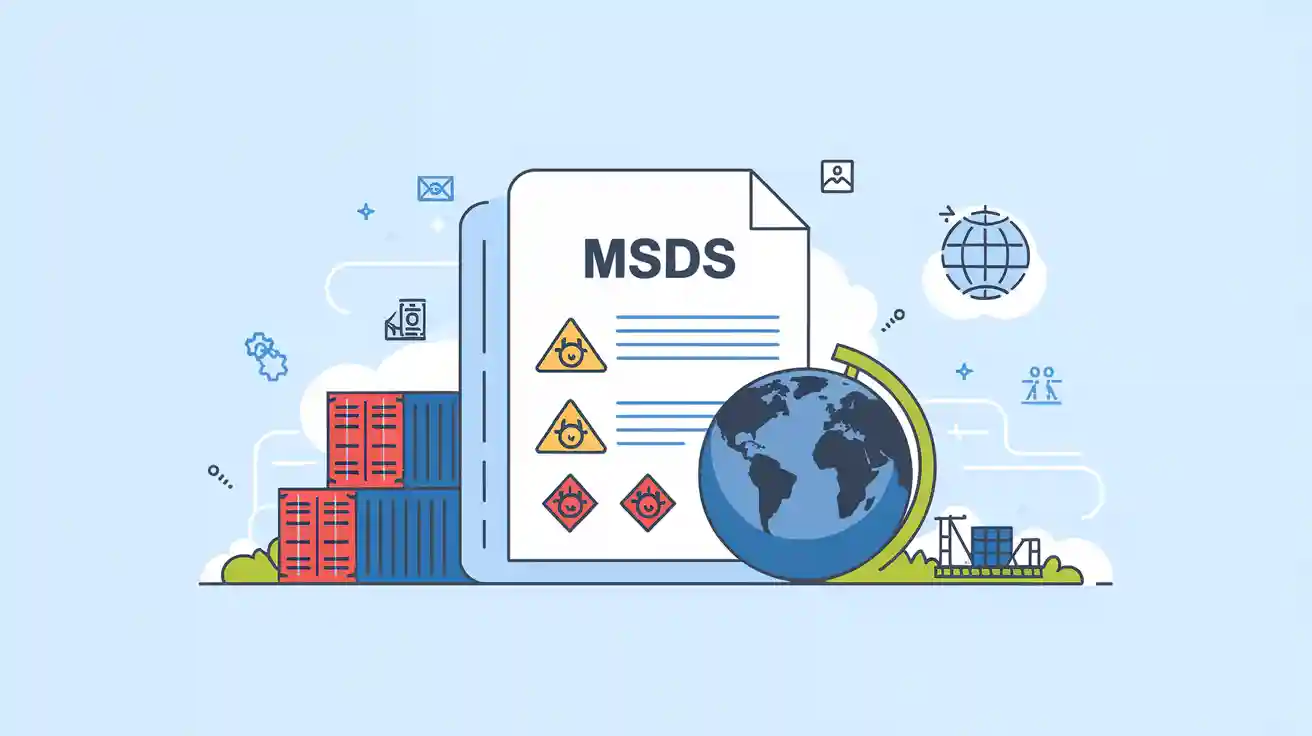
A Material Safety Data Sheet (MSDS), now globally standardized as a Safety Data Sheet (SDS), is an official compliance document that details chemical hazards, safe handling, storage, transport, and emergency measures, forming a mandatory foundation for international chemical trade.
In real-world procurement and sourcing scenarios, global buyers rely on SDS documentation to approve suppliers, clear customs, arrange compliant logistics, and mitigate legal and safety risks when importing chemical products or chemical-containing goods in 2026.
MSDS and SDS as a baseline requirement in international procurement
For procurement professionals, MSDS and SDS are not optional technical attachments. They function as regulatory passports that enable chemical products to move across borders.
An up-to-date SDS allows buyers to:
-
Verify that a product can legally enter the destination market
-
Assess health, safety, and environmental risks before purchase
-
Confirm compatibility with warehouse, transport, and end-use conditions
-
Demonstrate due diligence to regulators, insurers, and internal compliance teams
Without a compliant SDS, sourcing decisions often stop regardless of price or supplier capability.
The transition from MSDS to SDS under global standards
Historically, MSDS formats varied widely by country and supplier. This created ambiguity and compliance risk in cross-border trade.
With the adoption of the United Nations Globally Harmonized System (GHS), SDS has become the internationally recognized standard in 2026.
Key implications of this transition include:
-
A uniform 16-section structure adopted across major markets
-
Harmonized hazard classification and labeling requirements
-
Improved consistency for buyers sourcing from multiple regions
While the term “MSDS” is still widely used in commercial language, SDS is the legally recognized format in most jurisdictions.
Standardized SDS structure and its role in buyer risk assessment
Modern SDS documentation follows a strict 16-section framework, designed to support safety, logistics, and regulatory review.
These sections collectively provide:
-
Product and supplier identification for traceability
-
Hazard classification for workplace and transport safety
-
Ingredient disclosure for regulatory screening
-
Emergency response guidance for incidents
-
Storage, handling, and disposal instructions
-
Transport and regulatory information for customs and carriers
For buyers, this structure enables systematic evaluation rather than ad hoc interpretation of safety data.
MSDS versus SDS in contemporary trade practice
In 2026, the practical distinction between MSDS and SDS lies in regulatory acceptance and operational reliability.
Traditional MSDS documents often:
-
Followed non-standardized formats
-
Varied in depth and terminology
-
Lacked global recognition
SDS documentation, by contrast:
-
Uses a mandatory 16-section GHS format
-
Applies consistent hazard symbols and statements
-
Is widely accepted by customs, carriers, and regulators worldwide
For international buyers, requesting an SDS rather than an MSDS reduces compliance ambiguity and shipment risk.
SDS as a customs, logistics, and payment enabler
In cross-border trade, SDS documentation directly affects execution beyond safety compliance.
An accurate SDS is frequently required for:
-
Customs clearance of chemical and regulated goods
-
Carrier acceptance under IMDG, IATA, or ADR rules
-
Insurance underwriting and liability coverage
-
Buyer-side internal approval workflows
For example, when a Chinese exporter sells chemical products to overseas buyers and receives payment via platforms such as XTransfer, the commercial transaction still depends on the successful exchange of compliant SDS documentation. Payment execution alone does not guarantee shipment release without regulatory clearance.
Common SDS compliance challenges faced by global buyers
Even experienced procurement teams encounter recurring issues related to SDS management.
Typical challenges include:
-
SDS documents not aligned with destination-country regulations such as OSHA or REACH
-
Outdated hazard classifications following regulatory updates
-
Inaccurate or incomplete translations for local authorities
-
Missing transport or disposal information required by logistics partners
Identifying these risks early in the sourcing process prevents costly delays and disputes later.
Integrating SDS verification into supplier qualification processes
In 2026, leading procurement organizations treat SDS verification as part of supplier onboarding rather than a post-purchase formality.
Best practices include:
-
Requiring GHS-compliant SDS versions during supplier evaluation
-
Verifying regulatory alignment with destination markets
-
Ensuring version control and update frequency
-
Linking SDS documentation to logistics and compliance workflows
This approach aligns safety compliance with commercial efficiency and supplier reliability.
Related regulatory and trade concepts connected to SDS
SDS compliance intersects with multiple regulatory frameworks that buyers must understand, including:
-
GHS, which governs global chemical classification and labeling
-
REACH, regulating chemical substances within the European Union
-
OSHA, setting workplace safety standards in the United States
-
IMDG and IATA rules for maritime and air transport of dangerous goods
Together, these frameworks shape how chemical products are sourced, shipped, and accepted globally.
Why SDS knowledge is a strategic capability for buyers in 2026
As regulatory enforcement tightens and supply chains become more transparent, SDS literacy is no longer limited to safety teams.
For buyers, strong SDS understanding enables:
-
Faster supplier approval cycles
-
Reduced compliance and liability exposure
-
More predictable logistics planning
-
Stronger negotiation positions with compliant suppliers
In global trade, compliance certainty increasingly supports commercial competitiveness.
Frequently Asked Questions (FAQ)
What is the difference between MSDS and SDS?
MSDS is an older, non-standardized format, while SDS is the GHS-compliant, globally standardized document required in most markets.
Is an SDS mandatory for all chemical products?
In most countries, yes. Any hazardous chemical or chemical-containing product typically requires an SDS for trade, transport, and workplace use.
Can an SDS be reused for different countries?
Partially. While the structure is standardized, regulatory references and language may need localization for specific markets.
How often should an SDS be updated?
An SDS should be updated whenever new hazard information emerges or when regulations affecting the product change.
Do buyers need to review SDS documents themselves?
Yes. Buyers are responsible for ensuring that SDS documentation meets destination-country requirements before approving suppliers or shipments.
Related content