
What Are Import Rights and Export Rights
Author:XTransfer2025.12.04Import Rights and Export Rights
Import rights and export rights are legal permissions that allow you to participate in cross-border trade. These rights ensure that your business complies with trade laws while facilitating the smooth movement of goods across international borders. For instance, customs compliance rates measure how effectively shipments adhere to regulations, reducing delays and penalties. In 2018, trade between the US and China highlighted the importance of these rights, with a reported discrepancy of nearly $83 billion due to valuation differences and trade fraud. By understanding and managing these permissions, you can avoid such challenges and contribute to transparent global commerce.
Understanding Import Rights and Export Rights
What Are Import Rights?
Import rights refer to the legal permissions that allow you to bring goods into a country from abroad. These rights ensure that your imports comply with customs regulations, tariffs, and other trade laws. Without these permissions, you may face delays, penalties, or even confiscation of your shipments.
For example, when importing goods into the United States, you must follow specific rules set by agencies like U.S. Customs and Border Protection (CBP). These rules include proper documentation, accurate valuation of goods, and adherence to safety standards. Import rights also involve understanding the differences in valuation methods, such as Free on Board (FOB) and Cost, Insurance, and Freight (CIF). These methods impact how trade statistics are calculated and reported.
|
Factor |
Description |
|---|---|
|
Valuation Methods |
Differences in FOB (Free on Board) vs. CIF (Cost, Insurance, and Freight) values affect trade statistics. |
|
Inconsistent Attribution |
Errors in attributing trade partners can lead to discrepancies in reported trade data. |
|
Measurement Errors |
Variations in customs, tax regimes, and exchange rates contribute to inconsistencies in trade statistics. |
Understanding these factors helps you navigate the complexities of international trade and ensures your imports align with legal requirements.
What Are Export Rights?
Export rights grant you the authority to send goods from one country to another. These rights are essential for ensuring that your exports meet the legal and regulatory standards of both the exporting and importing countries.
To export goods legally, you may need an export license. This government-issued document specifies the type and quantity of goods you can export, the destination, and the intended use. For instance:
-
The U.S. Department of Commerce and other regulatory bodies issue export licenses for specific goods.
-
A Destination Control Statement (DCS) may be required to indicate that the goods can only be sent to approved destinations.
-
Electronic Export Information (EEI) must be filed for shipments exceeding $2,500 or when an export license is necessary.
Compliance with these requirements protects you from legal issues and ensures smooth trade operations. Additionally, the Bureau of Industry and Security provides guidelines for filing EEI through the Automated Export System, making the process more manageable.
Importance in Global Trade
Import and export rights play a crucial role in global trade. They create a framework that allows businesses like yours to operate across borders while adhering to international trade laws. These rights also promote transparency and fairness in the movement of goods.
For example, by complying with import and export regulations, you contribute to reducing trade discrepancies caused by inconsistent attribution or measurement errors. This compliance not only benefits your business but also strengthens the global trade system.
Moreover, these rights help you access new markets, expand your customer base, and increase your revenue. They also protect your business from risks such as legal penalties or shipment delays. In a world where international trade drives economic growth, understanding and managing these rights is essential for success.
Legal and Regulatory Frameworks for Export and Import Controls
Key International Trade Laws
International trade laws establish the foundation for export and import controls, ensuring fair practices and compliance across borders. These laws regulate the movement of goods, protect intellectual property, and prevent illegal activities like smuggling. For example, the United Nations has issued guidelines to restrict trade with countries involved in human rights violations. Similarly, the European Union enforces Regulation (EU) 2019/125, which prohibits the trade of goods used for torture or capital punishment. In the United States, export controls include a code of conduct to prevent the misuse of sensitive technologies.
These frameworks not only promote ethical trade but also safeguard global security. By adhering to international trade laws, you can avoid penalties and contribute to a transparent trading environment.
|
Fiscal Year |
Total Import Value for Goods |
Total Entry Summaries |
Total Duty, Taxes, and Fees Collected |
|---|---|---|---|
|
FY 2020 |
$2.42 trillion |
32.8 million |
$78.8 billion |
|
FY 2021 |
$2.8 trillion |
36.9 million |
$93.8 billion |
|
FY 2022 |
$3.35 trillion |
39.1 million |
$111.8 billion |
|
FY 2023 |
$3.32 trillion |
36.6 million |
$92.3 billion |
Role of Government Agencies
Government agencies play a critical role in enforcing export and import compliance. In the United States, agencies like Customs and Border Protection (CBP) oversee import controls, ensuring that goods entering the country meet safety and regulatory standards. CBP also collects duties and taxes, which contribute significantly to the economy. For exports, the Bureau of Industry and Security (BIS) monitors sensitive goods and technologies to prevent misuse.
These agencies collaborate with international organizations to align regulations and streamline trade processes. Their efforts ensure that businesses like yours can operate efficiently while adhering to legal requirements.
Trade Agreements and Tariffs
Trade agreements and tariffs shape the global trading landscape by defining the terms of market access and the cost of goods. Agreements like NAFTA and the EU’s trade policies reduce barriers, making it easier for businesses to expand internationally. However, tariffs—taxes imposed on imports—can impact your bottom line. For instance, the United States has an average Most Favored Nation (MFN) tariff rate of 3.3%, while India’s rate stands at 17%.
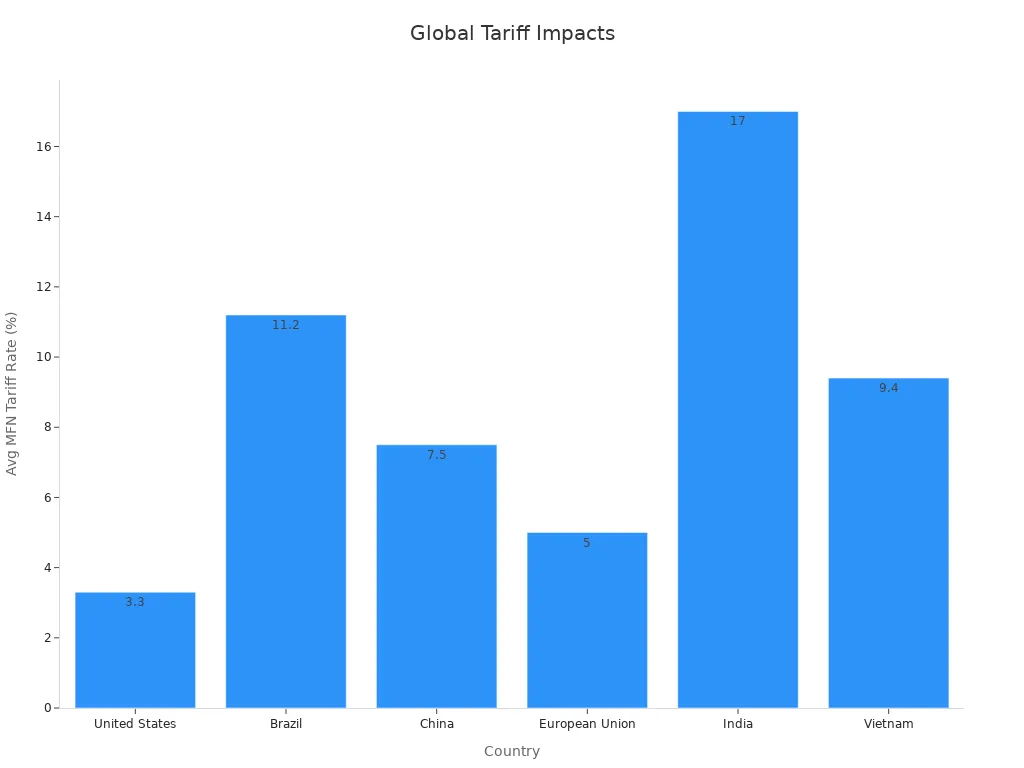
Understanding these factors helps you navigate economic import controls effectively. By staying informed about trade agreements and tariffs, you can optimize your operations and reduce costs.
Processes for Importing to the US and Obtaining Rights
Licensing and Registration Requirements
When importing goods into the United States, you must meet specific licensing and registration requirements. These requirements ensure that your imports comply with international trade laws and align with U.S. regulations. Not all goods require an import license, but certain categories—like agricultural products, firearms, and pharmaceuticals—are subject to stricter controls.
To determine whether your goods need a license, you should consult the agency responsible for regulating your product category. For example, the Food and Drug Administration (FDA) oversees food and medical imports, while the Bureau of Alcohol, Tobacco, Firearms, and Explosives (ATF) handles firearms. Registration with these agencies may also be necessary to obtain the appropriate permissions.
By understanding these requirements, you can avoid delays and penalties while ensuring smooth import operations. Licensing and registration serve as the foundation for import compliance, protecting your business and contributing to transparent trade practices.
Steps to Obtain Import and Export Licenses
Securing import and export licenses involves a step-by-step process that ensures your goods meet legal standards. Here’s how you can navigate this process:
-
Determine License Requirements: Identify whether your goods require an import or export license. Not all products need one, but restricted items like chemicals or electronics often do.
-
Identify the Issuing Agency: Research the agency responsible for regulating your goods. For imports, this could be the FDA or CBP. For exports, agencies like the Bureau of Industry and Security (BIS) may be involved.
-
Submit Your Application: Apply for the license through the relevant agency. Ensure your application includes accurate details about the goods, their value, and their intended use.
Completing these steps allows you to legally import goods or export products while adhering to international trade laws. Agencies like BIS streamline the process by offering online portals for license applications, making it easier for you to comply with regulations.
Documentation and Compliance Essentials
Proper documentation is critical for import compliance and export operations. Without the right paperwork, your shipments may face delays, fines, or even confiscation. Key documents include invoices, packing lists, and certificates of origin. These records verify the authenticity and value of your goods, ensuring they meet regulatory standards.
Compliance metrics play a vital role in monitoring your trade activities. For instance:
-
The Global Bank AML Dashboard uses alerts and reports to reduce compliance backlogs and ensure timely submissions.
-
The European Bank Compliance Risk Heatmap identifies breaches using color-coded metrics, enabling targeted fixes.
-
The Regional Bank KYC Remediation Project achieved nearly 100% completion rates, eliminating regulatory risks.
By leveraging documented procedures and compliance tools, you can enhance your trade operations and build trust with stakeholders. Maintaining accurate records and adhering to regulations protects your business from legal issues and strengthens your position in international trade.
Challenges and Risks of Non-Compliance with Import Controls

Common Challenges in Trade Compliance
Navigating trade compliance can be complex due to varying regulations across countries. Many businesses face difficulties keeping up with frequent changes in export and import controls. For example, the International Trade Administration (ITA) reports that nearly 60% of companies experience delays caused by compliance issues. These delays often stem from diverse legal requirements, inconsistent documentation, and evolving trade agreements.
Other common challenges include ensuring accurate tariff codes and maintaining supply chain transparency. Errors in these areas can lead to shipment delays, financial penalties, or even restrictions on your ability to trade. Staying informed and proactive is essential to overcoming these obstacles.
Legal and Financial Penalties
Non-compliance with import controls can result in severe consequences. Monetary fines are among the most common penalties, with some violations exceeding $1 billion. For instance, Ford Motor Company faced a $13 million fine for failing to notify Customs about pricing adjustments. Other penalties include restrictions on importing or exporting goods, loss of trade privileges, and denial of export licenses.
Criminal charges may also arise from serious violations, further damaging your business's reputation. These penalties highlight the importance of adhering to export and import compliance standards to avoid costly repercussions.
|
Type of Penalty |
Description |
|---|---|
|
Monetary Fines |
Financial penalties for trade compliance violations. |
|
Import/Export Restrictions |
Limitations on trading goods internationally. |
|
Loss of Trade Privileges |
Revocation of rights to engage in international trade. |
|
Criminal Charges |
Legal action for severe non-compliance. |
Impact on Business Operations
Failing to comply with international trade regulations can disrupt your operations. Shipment delays caused by documentation errors or regulatory breaches can harm customer relationships. Financial losses from penalties and restricted access to global markets can threaten your profitability.
For example, Trek Bicycle Corporation incurred over $2 million in penalties for understating dutiable values. Such incidents not only affect your bottom line but also damage your reputation. Prioritizing import compliance ensures smoother operations, enhances customer satisfaction, and protects your business from unnecessary risks.
Best Practices for Trade Compliance
Conducting Compliance Audits
Regular compliance audits are essential for maintaining smooth trade operations. These audits help you identify gaps in your processes and ensure adherence to import controls and export controls. By scheduling audits consistently, you can monitor your trade compliance and address issues before they escalate. For example, companies like ABC Inc. conduct regular audits across their global operations to detect compliance gaps and maintain adherence to updated standards.
Accurate documentation is another critical aspect of audits. Ensuring that your import and export paperwork meets regulatory requirements reduces the risk of penalties. Employee training also plays a vital role. Providing ongoing education about international trade regulations equips your team to handle compliance challenges effectively. Many businesses now integrate technology into their audit processes. Automation tools streamline compliance management, improve efficiency, and reduce human error.
Audits not only protect your business from legal liabilities but also enhance your reputation. By documenting performance metrics, you can demonstrate a robust monitoring program and build stakeholder confidence.
Staying Updated on Regulations
Staying informed about changing trade regulations is crucial for navigating the complexities of international trade. Global trade reached a record $33 trillion in 2024, highlighting the growing importance of compliance. Protectionist policies and trade disputes are on the rise, making it essential for you to stay updated to avoid disruptions in your supply chain.
California’s economy, one of the largest globally, relies heavily on international trade. In 2024, the state exported $183.34 billion to over 225 foreign markets. This underscores the need for businesses to understand export and import controls to remain competitive. Regularly reviewing trade agreements and tariffs helps you adapt to new rules and maintain compliance.
By staying informed, you can make better decisions, avoid costly penalties, and ensure your operations run smoothly.
Leveraging Technology for Trade Management
Technology has become a game-changer in trade compliance. Automation tools simplify complex processes, such as filing documentation and monitoring duties. These systems also reduce human error, ensuring your import compliance remains intact. For instance, trade compliance software allows you to track shipments, manage tariffs, and ensure adherence to export and import compliance standards.
However, adopting new technology comes with challenges. Nearly 47% of businesses report difficulties in securing budgets for modernizing legacy systems. Another 44% face challenges in migrating systems without disrupting operations. Setting clear objectives and measurable goals can help you overcome these hurdles.
Leveraging technology not only improves efficiency but also enhances your ability to adapt to changing regulations. By investing in the right tools, you can streamline your trade operations and stay ahead in the competitive landscape of international trade.
Understanding import rights is essential for smooth and lawful trade operations. These rights not only help you comply with regulations but also open doors to market expansion and government incentives.
|
Benefit of Import License |
Description |
|---|---|
|
Market Expansion |
Helps in the expansion of the market within the local area through new markets. |
|
Compliance Incentives |
Governments may extend monetary incentives to importers with valid licenses. |
|
Simplified Processes |
Many countries have simplified the process of obtaining import licenses to encourage imports. |
|
Exemptions |
Some governments exempt importers from annual compliance if they have valid licenses. |
|
WTO Obligations |
Countries promote imports to fulfill obligations of the World Trade Organization. |
Failing to meet import compliance standards can lead to severe consequences:
-
Non-compliance may result in fines, penalties, or even incarceration.
-
Incorrect duty assessments could cost you up to four times the revenue amount.
-
Missing records might incur fines of up to $10,000 per entry.
By adopting best practices like regular audits and staying updated on regulations, you can avoid these risks. Leveraging technology further simplifies compliance, ensuring your business thrives in global trade.
FAQ
What is the difference between import rights and export rights?
Import rights allow you to bring goods into a country legally, while export rights let you send goods out of a country. Both ensure compliance with trade laws and regulations. Understanding these rights helps you avoid penalties and ensures smooth cross-border trade operations.
Do all goods require an import or export license?
No, not all goods need a license. However, restricted items like firearms, pharmaceuticals, and certain electronics often require one. You should check with the relevant government agency to determine if your goods fall under restricted categories.
How can you ensure compliance with trade regulations?
You can ensure compliance by maintaining accurate documentation, conducting regular audits, and staying updated on trade laws. Using technology like trade compliance software can also help you monitor shipments and manage tariffs effectively.
What happens if you fail to comply with import controls?
Non-compliance can lead to fines, shipment delays, or even criminal charges. For example, incorrect duty assessments or missing records may result in penalties of up to $10,000 per entry. Prioritizing compliance protects your business from these risks.
Why are trade agreements important for businesses?
Trade agreements reduce barriers like tariffs and quotas, making it easier for you to access international markets. They also provide clear rules for trading, which helps you plan operations and reduce costs. Understanding these agreements can give your business a competitive edge.
Related content