
Unlocking Global Trade Trends with IMP Insights
Author:XTransfer2025.12.04IMP(import) in Global Trade
Understanding global trade trends is essential for navigating today’s interconnected economy. You can start by identifying reliable data sources and analyzing key metrics like trade balance. Statistical evidence, such as the theories by Paul Krugman, highlights how factors like increasing returns to scale influence trade. Studies also show that discrepancies in trade data require careful analysis to ensure accuracy. By interpreting these patterns, you gain actionable insights to make informed decisions. IMP(import) in Global Trade offers a structured approach to unravel these complexities, helping you stay ahead in a competitive global market.
Importance of Analyzing Global Trade Trends

Role of IMP Insights in global trade
IMP(import) in global trade plays a pivotal role in helping you decode complex trade patterns. By leveraging IMP Insights, you can access structured data that highlights key economic indicators, such as trade balance and market performance. These insights empower you to identify new and emerging markets, enabling you to make informed decisions about where to allocate resources. IMP Insights also provide clarity on how global trade dynamics shift over time, helping you stay ahead of trends and adapt your strategies to evolving markets.
Benefits of understanding trade balance
Understanding trade balance is essential for evaluating the health of an economy. A positive trade balance indicates that exports exceed imports, which often signals strong production capabilities and competitive markets. Conversely, a negative trade balance may reveal opportunities for growth in specific sectors. By analyzing trade balance data, you can uncover valuable insights into economic indicators like currency strength and consumer demand. This knowledge allows you to optimize your strategies, whether you aim to expand into new and emerging markets or strengthen your position in existing ones.
Strategic advantages of analyzing trade data
Analyzing trade data offers several strategic advantages that can transform your approach to global trade. Algorithms can process vast amounts of data to identify relationships between price, volatility, and risk/reward. For example:
-
Historical data reveals predictable price movements following major announcements, such as Google's price increase after Federal Reserve updates.
-
Market data analysis helps you identify patterns in historical and real-time data.
-
Risk management strategies allow you to evaluate asset volatility and mitigate risks effectively.
-
Algorithmic trading uses quantitative models to automate decisions, giving you a competitive edge.
By integrating these insights into your research, you can make data-driven decisions that enhance your position in global markets. Whether you aim to explore new and emerging markets or refine your strategies in established ones, trade data analysis equips you with the tools to succeed.
Steps to Analyze Global Trade Trends
Identifying reliable global trade data sources
Reliable data sources are the foundation of effective trade analysis. You need access to validated statistics and historical trends to make informed decisions. Several global organizations provide comprehensive trade data:
-
International Monetary Fund (IMF) - Direction of Trade Statistics (DOTS): Offers detailed import and export data, including records dating back to 1947.
-
International Monetary Fund (IMF) - International Finance Statistics: Provides financial statistics that are essential for understanding international trade.
-
World Bank (WB) - TCdata360: Aggregates trade and competitiveness data from over 2,400 indicators, making it a valuable resource for analyzing global trade trends.
These sources ensure that your analysis is based on accurate and up-to-date information. By leveraging these platforms, you can uncover insights into trade balance, market performance, and emerging trends.
Using analytical tools for trade analysis
Analytical tools help you transform raw data into actionable insights. These tools use statistical methods to validate findings and predict future trends. Here’s a breakdown of some commonly used tools and their validation methods:
|
Analytical Tool |
Statistical Validation Method |
|---|---|
|
Performance Measurement |
Evaluates trading strategy performance |
|
Predictive Modeling |
Predicts future asset prices |
|
Backtesting |
Tests trading strategy performance on historical data |
|
Time Series Analysis |
Identifies trends in historical data |
|
ARIMA Models |
Forecasts future values of a time series |
|
Regression Analysis |
Forecasts dependent variable values based on independents |
|
Statistical Significance |
Determines meaningful relationships vs. random correlations |
|
Monte Carlo Simulation |
Estimates key parameters for financial forecasting |
|
R-squared, RMSE, MAE |
Validates model accuracy and consistency |
Using these tools allows you to identify patterns, forecast trade flows, and evaluate risks effectively. For example, time series analysis can reveal long-term trends, while regression models help you understand the relationship between trade balance and economic factors.
Interpreting trade balance and key metrics
Interpreting trade balance requires a combination of statistical and qualitative methods. Key metrics provide insights into economic health and trade dynamics. Here are some techniques used for analyzing trade balance:
|
Analytical Technique |
Description |
|---|---|
|
Statistical Analysis |
Regression models and time-series analysis help identify trends and forecast future trade flows. |
|
Comparative Analysis |
Comparing historical data against current figures reveals underlying economic shifts. |
|
Economic Modeling |
Advanced models like Computable General Equilibrium (CGE) simulate trade policy impacts. |
|
Qualitative Assessment |
Factors like political stability and regulatory changes are crucial for interpreting trade data. |
By combining these techniques, you can uncover the factors driving trade balance changes. For instance, comparative analysis highlights shifts in export and import volumes, while qualitative assessments consider external influences like geopolitical events. These insights enable you to make strategic decisions that align with global trade trends.
Monitoring geopolitical and economic factors
Geopolitical and economic factors significantly influence global trade. Monitoring these elements helps you understand how external events shape trade dynamics. For instance, major geopolitical events like the COVID-19 pandemic disrupted supply chains worldwide. Similarly, Russia's invasion of Ukraine caused fluctuations in energy prices and impacted trade routes. The ongoing competition between the U.S. and China has also reshaped trade policies and alliances.
Economic indicators provide additional insights into trade trends. Rising inflation, currency fluctuations, and shifts in consumer demand directly affect import and export volumes. You can also observe the growing importance of digital trade. Between 2020 and 2021, digitally deliverable services accounted for over 60% of services exports. This shift highlights the increasing role of technology in global trade.
To monitor these factors effectively, focus on key indicators such as trade policies, political stability, and economic performance. Regularly reviewing reports from organizations like the World Trade Organization (WTO) and the International Monetary Fund (IMF) ensures you stay informed about changes that could impact trade. By staying vigilant, you can adapt your strategies to align with evolving global trade dynamics.
Applying time-series analysis for trend identification
Time-series analysis is a powerful tool for identifying trade trends. It uses historical data to predict future patterns, helping you make informed decisions. Several statistical models support this approach, each offering unique benefits:
|
Model Type |
Description |
|---|---|
|
Autoregressive Model |
Uses past values to predict future values. |
|
Moving Average Model |
Averages past data points to smooth out fluctuations. |
|
ARIMA Model |
Combines autoregressive and moving average components with differencing to make the data stationary. |
|
Vector Autoregression Model |
Captures the linear interdependencies among multiple time series. |
|
Hierarchical Time Series Model |
Allows for analysis at different levels of aggregation. |
These models help you analyze seasonal fluctuations, cyclical components, and long-term trends in trade data. For example, ARIMA models are particularly effective for forecasting trade flows by accounting for historical patterns and making the data stationary.
Time-series analysis also enhances forecast accuracy. Businesses use it for budget planning, sales forecasting, and supply chain management. By identifying patterns in trade data, you can anticipate market shifts and adjust your strategies accordingly. This proactive approach ensures you remain competitive in the ever-changing landscape of global trade.
Overcoming Challenges in Trade Analysis
Addressing incomplete or outdated trade data
Incomplete or outdated trade data can hinder your ability to make accurate decisions. Historical trade records, especially those before World War II, often lack reliability. This creates gaps in understanding long-term trends. The World Trade Historical Database addresses these issues by offering comprehensive data on imports and exports dating back to 1800. However, even modern datasets can omit critical components. For instance, services trade, particularly Mode 3 services, is frequently underreported in balance of payments data. This omission undervalues the true scale of global services trade. To overcome these challenges, you should rely on updated databases and cross-reference multiple sources. This approach ensures your analysis reflects the most accurate and complete picture of global trade.
Managing biases in trade interpretation
Biases can distort your interpretation of trade data, leading to flawed conclusions. Common biases include selection bias, where data is chosen based on specific criteria, and confirmation bias, where you might focus only on information that supports your beliefs. Data mining bias occurs when too many strategies are tested on the same dataset, resulting in overfitting. Look-ahead bias arises when future information, unavailable at the time of decision-making, is used.
|
Bias Type |
Explanation |
|---|---|
|
Selection Bias |
Data chosen based on criteria related to the strategy, leading to non-representative samples. |
|
Confirmation Bias |
Interpreting data to confirm existing beliefs while ignoring contradictory information. |
|
Data Mining Bias |
Testing too many strategies on the same dataset, causing overfitting. |
|
Look-ahead Bias |
Using future information unavailable during decision-making, inflating performance metrics. |
To manage these biases, you should adopt rigorous statistical methods and validate your findings with independent datasets. This ensures your insights remain objective and reliable.
Navigating the complexity of global trade dynamics
Global trade dynamics are influenced by numerous factors, making analysis complex. Big data and machine learning now play a crucial role in forecasting economic trends by analyzing massive datasets. Real-time analytics enhances responsiveness, allowing you to adapt quickly to market changes. Additionally, shifts in manufacturing hubs to regions like Southeast Asia and Africa reflect evolving cost efficiencies. Geopolitical factors, such as trade tensions, and technological disruptions, like blockchain, further complicate the landscape.
To navigate these complexities, you should leverage integrated economic models that combine economic, environmental, and social data. This holistic approach provides a clearer understanding of trade impacts. Staying informed about technological advancements and geopolitical developments also helps you adapt your strategies effectively. By embracing these tools and insights, you can better manage the challenges of global trade.
Ensuring compliance with trade regulations
Trade regulations play a critical role in maintaining fairness and transparency in global commerce. As you navigate international markets, ensuring compliance with these regulations protects your business from legal risks and financial penalties. It also fosters trust with partners and customers by demonstrating your commitment to ethical practices.
Regulatory compliance involves adhering to customs laws, tax policies, and trade agreements. For example, customs administrations worldwide have implemented programs to improve tax collection on small shipments. These initiatives have significantly increased compliance rates. The table below highlights the impact of such measures:
|
Before |
After |
|---|---|
|
2% of all packages were taxed (potential revenue loss) |
Collection of taxes by platforms that have joined the compliance program (90% of the total of small shipments) on behalf of the customs administration |
|
No incidence of ICMS. Only 2 out of 27 states used to be taxed |
ICMS collection at a rate of 17% in all states |
|
Lack of completion of DIRs |
Early DIR registration and advance customs clearance |
These improvements show how compliance programs can streamline processes and enhance revenue collection. By staying informed about regulatory changes, you can avoid disruptions in your supply chain and maintain smooth operations.
To ensure compliance, you should monitor updates from trade organizations and government agencies. Tools like automated customs clearance systems can help you meet documentation requirements efficiently. Additionally, training your team on international trade laws ensures that everyone understands their responsibilities. By prioritizing compliance, you safeguard your business and contribute to a more equitable global trade environment.
Applying Trade Insights to Real-World Scenarios
Optimizing supply chain strategies with trade data
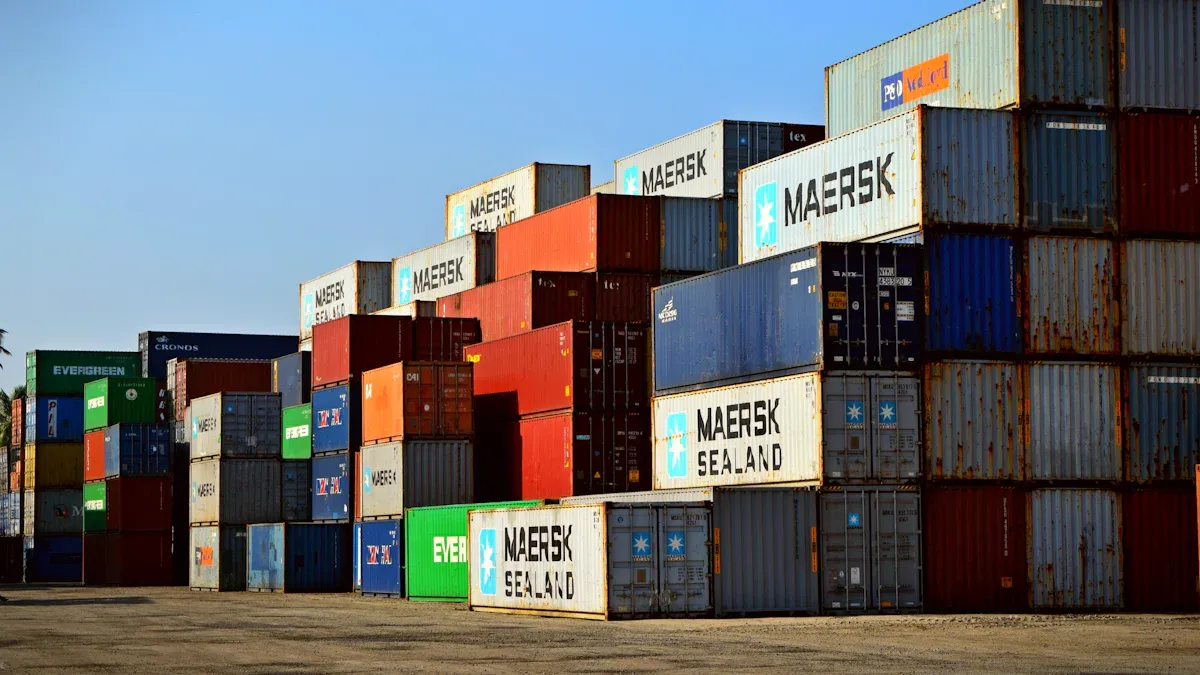
Trade data plays a vital role in optimizing supply chain strategies. By analyzing trade balance and market trends, you can identify inefficiencies and improve operational performance. For example, companies like Toyota and Walmart use trade-off analysis to balance cost, quality, and customer satisfaction. This approach helps them streamline their supply chains and achieve measurable improvements.
|
Industry Example |
Application of Trade-off Analysis |
Quantitative Impacts on Operational Performance |
|---|---|---|
|
Automotive Manufacturing |
Companies like Toyota use trade-off analysis to balance quality and cost through lean techniques. |
Improvements in inventory turnover ratio, order fulfillment cycle time, and cost-to-serve ratio. |
|
Retail and E-commerce |
Retailers like Walmart balance inventory levels with customer service expectations using data analytics. |
Enhanced operational performance metrics as supported by research. |
To optimize your supply chain, start by collecting historical sales data and tracking web traffic. Advanced analytical tools can process this data to uncover patterns and predict future demand. These insights enable you to adjust inventory levels, reduce costs, and enhance customer satisfaction. For instance:
-
Quantitative data includes metrics like sales, revenue, and traffic.
-
Preparation involves gathering historical data and monitoring trends.
-
Analytical tools process large datasets to provide actionable insights.
By leveraging trade data effectively, you can create a more agile and efficient supply chain that adapts to changing market conditions.
Identifying growth opportunities in global trade
Global trade offers numerous opportunities for businesses to expand and thrive. By analyzing trade balance and economic trends, you can identify emerging markets and sectors with high growth potential. For instance, the GDP of emerging markets is projected to reach $53,496 billion by 2026, highlighting significant opportunities for investment and expansion.
|
Statistic Description |
Value |
Year |
|---|---|---|
|
GDP of emerging markets |
$53,496 billion |
2026 |
|
GDP contraction in emerging economies |
-3.3% |
2020 |
|
Expected GDP growth |
6% |
2021 |
|
Expected GDP growth |
5.1% |
2022 |
|
Year-over-year increase in global trade |
10% |
Q1 2021 |
|
Quarter-over-quarter increase in global trade |
4% |
Q1 2021 |
To seize these opportunities, focus on markets with strong economic growth and rising consumer demand. Monitor trade policies and geopolitical developments to identify regions with favorable conditions for business expansion. By staying informed and proactive, you can position your business to capitalize on global trade opportunities.
Mitigating risks using trade balance insights
Trade balance insights are essential for mitigating risks in global trade. By analyzing trade data, you can identify potential threats and develop strategies to address them. Quantitative methods, such as risk assessment and risk scoring, provide valuable tools for evaluating and prioritizing risks.
|
Type of Risk Analysis |
Description |
|---|---|
|
Quantitative Methods |
Assign numerical values to risks, aiding in the mitigation of trade-related risks. |
|
Risk Assessment |
Uses mathematical models and statistical methods to analyze complex systems and assess potential risks. |
|
Risk Score |
Quantifies the level of risk associated with decisions, helping prioritize and mitigate risks effectively. |
Quantitative assessments use mathematical models to analyze the likelihood and severity of potential risks. For example:
-
Risk scores quantify the severity and likelihood of negative events.
-
These scores help prioritize risks and allocate resources effectively.
By leveraging trade balance insights, you can anticipate challenges and implement measures to protect your business. This proactive approach ensures that you remain resilient in the face of uncertainties and maintain a competitive edge in global trade.
Enhancing competitive advantage through predictive analysis
Predictive analysis has become a game-changer in global trade. By leveraging advanced techniques, you can anticipate market trends, make informed decisions, and gain a competitive edge. This approach uses historical and real-time data to forecast future scenarios, enabling you to stay ahead in a rapidly evolving marketplace.
How Predictive Analysis Drives Competitive Advantage
Predictive analysis offers several measurable benefits that can transform your business strategies. Here are some key ways it enhances your competitive position:
-
Data-Driven Innovations: By analyzing customer trends and behaviors, you can uncover new market opportunities. For example, identifying shifts in consumer preferences allows you to tailor your offerings and capture untapped demand.
-
Agile Decision Making: Real-time insights empower you to respond quickly to market changes. Whether it’s adjusting pricing strategies or reallocating resources, predictive analysis helps you make swift, informed decisions.
-
Enhanced Customer Experience: Personalizing services based on predictive insights improves customer satisfaction and loyalty. For instance, e-commerce platforms use these insights to recommend products that align with individual preferences.
Techniques That Deliver Results
Several predictive analysis techniques provide tangible benefits in global trade. These methods help you interpret complex data and make strategic decisions:
|
Technique |
Benefit |
|---|---|
|
Linear Regression |
Helps in forecasting trends and making data-driven decisions. |
|
Neural Networks |
Uncovers complex patterns in data for better predictions. |
|
Decision Trees |
Simplifies decision-making processes by visualizing outcomes. |
For example, linear regression can predict future demand based on past sales data, while neural networks identify hidden patterns in customer behavior. Decision trees, on the other hand, offer a clear visualization of potential outcomes, making it easier to evaluate different scenarios.
Real-World Applications of Predictive Analysis
Predictive analysis has practical applications across industries, particularly in digitalization and e-commerce. By utilizing historical and current data, businesses can forecast trends and drive growth. Insights from predictive analytics also help you anticipate future scenarios, ensuring your strategies remain relevant and effective.
For instance, e-commerce companies use predictive models to optimize inventory management. By analyzing purchasing patterns, they can stock popular items and reduce overstocking. This approach not only cuts costs but also enhances customer satisfaction by ensuring product availability.
In global trade, predictive analysis helps businesses navigate uncertainties. For example, forecasting currency fluctuations enables you to mitigate financial risks. Similarly, analyzing geopolitical trends allows you to adapt your strategies to changing market conditions.
By integrating predictive analysis into your operations, you can unlock new opportunities, minimize risks, and maintain a competitive advantage in the global marketplace.
Analyzing global trade trends involves clear steps that guide you toward actionable insights. Start by identifying reliable data sources and using analytical tools to interpret trade metrics. Monitor geopolitical and economic factors to understand their impact on trade. Time-series analysis helps you uncover patterns and predict future trends. For example, Southeast Asia’s integration into global markets has driven 6.5% GDP growth and reduced poverty by 15%. In contrast, Sub-Saharan Africa faces challenges due to fragile trade infrastructure.
Applying these insights to decision-making ensures you stay competitive. Use trade data to optimize strategies, identify growth opportunities, and mitigate risks. By leveraging IMP Insights, you can navigate the complexities of global trade and position your business for success.
FAQ
What is global trade, and why is it important?
Global trade refers to the exchange of goods and services between countries. It drives economic growth, creates jobs, and provides access to diverse products. By participating in global trade, nations can specialize in producing goods they excel at and benefit from international markets.
How can you identify reliable trade data sources?
You can rely on organizations like the International Monetary Fund (IMF) and the World Bank. These institutions provide validated and comprehensive trade statistics. Always cross-check data from multiple sources to ensure accuracy and reliability.
What tools are best for analyzing trade trends?
Tools like time-series analysis, regression models, and ARIMA models are effective. They help you identify patterns, forecast trade flows, and evaluate risks. These tools simplify complex data, making it easier to interpret and apply insights.
How do geopolitical factors impact trade?
Geopolitical events, such as conflicts or trade agreements, can disrupt supply chains and alter trade policies. Monitoring these factors helps you understand their influence on trade dynamics and adapt your strategies accordingly.
Why is understanding trade balance crucial?
Trade balance shows the difference between a country's exports and imports. A positive balance indicates strong production, while a negative one highlights areas for improvement. Understanding this metric helps you evaluate economic health and make informed decisions.
Related content