
Understanding the BIC Code of Commercial Bank of Ethiopia
Author:XTransfer2025.06.11BIC Code
The BIC Code, or Bank Identifier Code, serves as a unique identifier for banks involved in international transactions. It ensures that your payments and transfers reach the correct financial institution without delays. For the Commercial Bank of Ethiopia, this code plays a critical role in connecting the bank to global financial networks. Using the correct BIC Code guarantees smooth and error-free transactions, saving you time and money. Accuracy matters because even a small mistake can lead to failed payments or misdirected funds.
What is the BIC Code of the Commercial Bank of Ethiopia?
Definition and purpose of the BIC Code
The Bank Identifier Code (BIC) is a unique code that identifies banks worldwide. It ensures that financial transactions, especially international ones, are routed to the correct institution. You can think of it as a global address for banks. This code plays a vital role in facilitating secure and accurate communication between banks. When you use the correct BIC, your payments and transfers reach their destination without unnecessary delays or errors.
For example, if you want to send money to a bank in Ethiopia, the BIC ensures that your funds are directed to the right bank and branch. Without this code, the process could become confusing and prone to mistakes. The BIC is also commonly referred to as the SWIFT code, as it is part of the SWIFT messaging system used by banks globally.
Overview of the Commercial Bank of Ethiopia's BIC Code
The Commercial Bank of Ethiopia, the largest bank in Ethiopia, has its own BIC code. This code connects the bank to the global financial network, enabling it to handle international transactions efficiently. The BIC code for the Commercial Bank of Ethiopia consists of four key components:
|
Component |
Description |
|
Bank Code |
CBET (Commercial Bank of Ethiopia) - Represents the bank's name. |
|
Country Code |
ET - Represents Ethiopia. |
|
Location Code |
AA - Indicates the city (Addis Ababa) where the bank's head office is located. |
|
Branch Code |
FIN - Represents the specific branch of the bank. |
Each part of the code serves a specific purpose. The bank code identifies the Commercial Bank of Ethiopia. The country code highlights Ethiopia as the bank's location. The location code pinpoints Addis Ababa, the city where the bank's headquarters is based. Lastly, the branch code specifies a particular branch, if applicable. Together, these components ensure that your transactions are directed accurately.
Why the BIC Code is essential for international transactions
The BIC code is crucial for international transactions. It ensures that your money reaches the intended recipient without complications. When you send or receive funds across borders, the BIC acts as a guide, directing the transaction to the correct bank and branch. This reduces the risk of errors, delays, or misdirected payments.
For businesses in Ethiopia, the BIC code of the Commercial Bank of Ethiopia is especially important. It allows them to connect with clients and partners worldwide. Whether you're receiving payments from international clients or sending funds abroad, the BIC code simplifies the process. Using the correct code also enhances security, as it ensures that your transaction is processed through the proper channels.
Structure of the BIC Code

Bank Code: Identifying the Commercial Bank of Ethiopia
The first part of the BIC Code is the Bank Code, which identifies the specific financial institution. For the Commercial Bank of Ethiopia, this code is CBET. These four characters represent the bank's name and ensure that your transaction is directed to the correct institution. Think of it as the bank's unique signature in the global financial system.
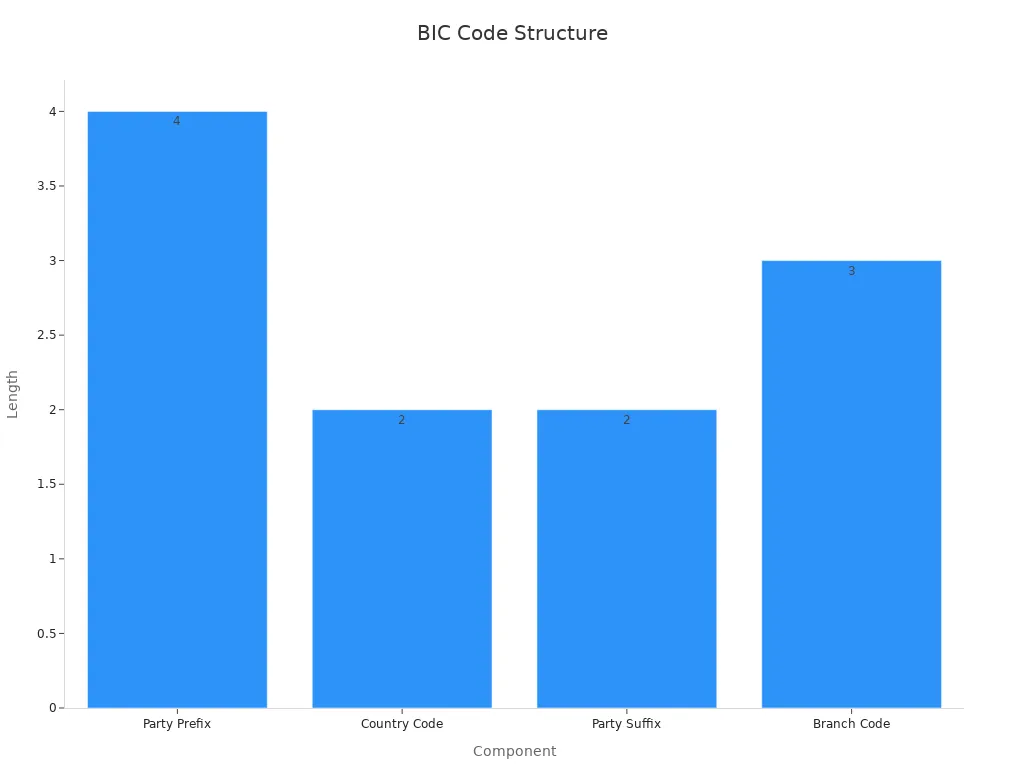
To help you understand how this fits into the broader structure of a BIC Code, here’s a breakdown of its components:
|
Component |
Description |
Length |
Character Type |
|
Party Prefix |
Identifies the business entity |
4 |
Alphanumeric |
|
Country Code |
Indicates the country of the business entity |
2 |
Alphabetic |
|
Party Suffix |
Further identifies the business entity |
2 |
Alphanumeric |
|
Branch Code |
(Optional) Specifies locations/departments within entity |
3 |
Alphanumeric |
Each part plays a role in ensuring your transaction reaches the right destination. The Bank Code is the first step in this process.
Country Code: Representing Ethiopia
The second part of the BIC Code is the Country Code, which indicates the country where the bank operates. For Ethiopia, this code is ET. These two letters follow international standards and make it clear that the bank is located in Ethiopia. This is especially important for international transactions, as it helps route your payment to the correct country.
The Country Code is a critical component of the BIC Code's structure. It ensures that your funds are sent to the right region, avoiding unnecessary delays or errors.
Location Code: Pinpointing the bank's location
The third part of the BIC Code is the Location Code, which pinpoints the bank's specific location. For the Commercial Bank of Ethiopia, this code is AA, representing Addis Ababa, the capital city. This part of the code narrows down the transaction to the bank's headquarters or a specific area.
To visualize how these components work together, here’s a chart showing the lengths of each part of the BIC Code:
The Location Code ensures that your transaction reaches the right place within Ethiopia. It adds another layer of precision to the process, making international banking more efficient.
Branch Code: Identifying specific branches (if applicable)
The final part of the BIC Code is the Branch Code, which identifies a specific branch of the bank. This component is optional but becomes essential when you need to direct a transaction to a particular branch. For example, if the Commercial Bank of Ethiopia has multiple branches in Addis Ababa, the Branch Code ensures that your payment reaches the correct one.
The Branch Code consists of three alphanumeric characters. These characters act as a unique identifier for the branch. If no specific branch is involved, the code defaults to XXX, which represents the bank's main office. This flexibility makes the BIC Code adaptable to various transaction needs.
Here’s a quick breakdown of how the Branch Code works:
|
Scenario |
Branch Code |
Purpose |
|
Sending to the main office |
XXX |
Directs the transaction to the bank's headquarters. |
|
Sending to a specific branch |
Unique code |
Ensures the payment reaches the intended branch. |
|
No branch specified by the recipient |
XXX |
Defaults to the main office for processing. |
The Branch Code is particularly useful for businesses. If you work with a specific branch of the Commercial Bank of Ethiopia, this code ensures that your funds are routed correctly. It also adds an extra layer of precision to international transactions, reducing the risk of misdirected payments.
By understanding the role of the Branch Code, you can ensure that your transactions are accurate and efficient. This knowledge helps you avoid unnecessary complications and keeps your financial dealings smooth.
How to Use the BIC Code for Transactions
Sending international wire transfers
When sending money abroad, using the correct BIC Code ensures your funds reach the intended recipient without delays. The BIC Code acts as a global identifier for the recipient's bank, making the process smooth and secure. To initiate an international wire transfer, follow these steps:
-
Visit your bank or use its online banking platform.
-
Provide the recipient’s full name and address.
-
Enter the recipient’s account number and type (e.g., checking or savings).
-
Include the recipient bank’s BIC or SWIFT Code.
-
Add any additional details, such as the ABA or Routing Number for U.S. transfers or the IBAN for Europe and other regions.
For example, if you are transferring money to a CBE account in Ethiopia, ensure you use the correct SWIFT Code for the Commercial Bank of Ethiopia. This guarantees that your transfer of funds is processed accurately and reaches the right destination.
Receiving payments from abroad
Receiving international payments requires you to provide accurate details to the sender. The BIC Code plays a crucial role in ensuring the funds are routed to your account without issues. Here’s how you can prepare to receive payments:
-
Share your full name and address with the sender.
-
Provide your account number and specify the type of account (e.g., savings or checking).
-
Confirm the correct SWIFT Code for the Commercial Bank of Ethiopia.
-
If applicable, include additional details like the IBAN or Routing Number.
-
Monitor exchange rates to maximize the amount you receive.
-
Understand the fees associated with international transactions to avoid surprises.
-
Initiate the payment process early to prevent delays, especially for time-sensitive transfers.
The process typically involves several steps, including agreement on payment terms, initiation of the transfer by the sender, and processing by intermediary banks. Currency conversion may also occur, which could affect the final amount received. By staying informed, you can ensure a seamless experience when receiving payments from abroad.
Avoiding common mistakes when using the BIC Code
Mistakes in using the BIC Code can lead to failed transactions or delays. To avoid these issues, follow these guidelines:
-
Verify the BIC Code: Always confirm the code with the recipient or their bank. Using an incorrect SWIFT Code can misdirect your funds.
-
Double-check account details: Ensure the recipient’s account number and type are accurate. Errors in these details can cause complications.
-
Understand the requirements: Different countries may have additional requirements, such as IBANs or Routing Numbers. Familiarize yourself with these to avoid incomplete transfers.
-
Be cautious with branch codes: If the transaction involves a specific branch, include the correct branch code. Otherwise, use the default code (XXX) for the main office.
By following these steps, you can minimize errors and ensure your transactions are processed smoothly. Whether you’re sending or receiving funds, accuracy is key to avoiding unnecessary complications.
How Xtransfer simplifies the process
Handling international transactions can feel overwhelming, especially when you need to ensure the accuracy of BIC Codes. This is where Xtransfer steps in to make the process seamless and stress-free. Whether you're sending or receiving payments, Xtransfer provides tools and services that simplify every step.
1. Easy Access to BIC Codes
Xtransfer offers a user-friendly platform where you can quickly find the correct BIC Code for any bank worldwide, including the Commercial Bank of Ethiopia. You no longer need to worry about searching through multiple sources or risking errors. Simply enter the bank's name, and Xtransfer provides the accurate SWIFT/BIC Code you need.
2. Streamlined International Transfers
Xtransfer eliminates the guesswork in international transactions. By integrating the correct BIC Code into its system, it ensures your payments are routed to the right bank and branch. This reduces the chances of delays or misdirected funds. You can focus on your business or personal needs while Xtransfer handles the technical details.
3. Enhanced Security for Your Transactions
Security is a top priority when dealing with international payments. Xtransfer uses advanced encryption and verification methods to protect your financial data. This ensures that your transactions remain secure from start to finish. You can trust Xtransfer to safeguard your sensitive information while ensuring accuracy.
4. Time-Saving Features
Xtransfer saves you time by automating many aspects of the transaction process. For example:
-
It verifies the BIC Code instantly.
-
It checks for errors in the recipient's details.
-
It provides real-time updates on the status of your transfer.
These features allow you to complete transactions faster and with greater confidence.
5. Transparent Fees and Exchange Rates
Hidden fees and unfavorable exchange rates can complicate international payments. Xtransfer provides clear information about transaction costs and currency conversion rates upfront. This transparency helps you plan better and avoid surprises.
|
Feature |
Benefit |
|
Instant BIC Code Verification |
Ensures accuracy and prevents transaction errors. |
|
Real-Time Updates |
Keeps you informed about your payment status. |
|
Transparent Fees |
Helps you avoid unexpected charges. |
6. Support for Businesses in Ethiopia
If you run a business in Ethiopia, Xtransfer can help you connect with international clients and partners. It simplifies the process of receiving payments from abroad by ensuring the correct BIC Code is used. This makes it easier for your business to grow and thrive in the global market.
Why Choose Xtransfer?
Xtransfer combines accuracy, security, and convenience to make international banking easier for you. Whether you're an individual or a business, its platform ensures that your transactions are processed efficiently. By using Xtransfer, you can avoid common mistakes, save time, and enjoy peace of mind.
By choosing Xtransfer, you gain a reliable partner for all your international payment needs.
Importance of Accuracy in Using the BIC Code
Consequences of incorrect BIC Code usage
Using an incorrect BIC Code can lead to serious problems in your financial transactions. When the wrong swift code is entered, your payment may get delayed or even fail to reach the intended recipient. This can disrupt business operations or personal plans, especially when time-sensitive payments are involved. In some cases, the funds may be routed to the wrong bank, making it difficult to recover the money. You might also face additional fees for correcting the error or resending the payment. Ensuring the accuracy of the swift code is essential to avoid these complications.
Tips for verifying the BIC Code
Verifying the BIC Code before initiating a transaction is a simple yet crucial step. Start by confirming the swift code with the recipient or their bank. Many banks provide this information on their official websites or through customer service. You can also use trusted platforms like Xtransfer to look up the correct swift code. Double-checking the code ensures that your payment is routed to the right bank and branch. This small effort can save you from the hassle of dealing with failed transactions or delays.
How Xtransfer ensures secure and accurate transactions
Xtransfer simplifies the process of using swift codes for international transactions. Its platform allows you to quickly find the correct swift code for any bank, including the Commercial Bank of Ethiopia. By integrating accurate codes into its system, Xtransfer ensures that your payments are processed without errors. The platform also uses advanced security measures to protect your financial data. This combination of accuracy and security makes Xtransfer a reliable choice for handling international payments. Whether you are sending or receiving funds, Xtransfer helps you complete transactions with confidence.
Practical Examples of Using the BIC Code

Example of sending money to the Commercial Bank of Ethiopia
Imagine you need to send money to a family member or business partner in Ethiopia. To ensure the funds reach the correct account at the Commercial Bank of Ethiopia, you must provide the bank's swift code. Start by gathering the recipient's account details, including their full name, account number, and branch information. Then, include the swift code for the Commercial Bank of Ethiopia in the transfer form. This code ensures the payment is routed to the right bank and location.
For instance, if you are using an online banking platform, enter the swift code in the designated field. Double-check all the details before submitting the transaction. This step prevents errors and ensures the money reaches its destination without delays. Using the correct swift code simplifies the process and gives you peace of mind.
Example of receiving money from international clients
If you run a business in Ethiopia, receiving payments from international clients becomes easier with the swift code of the Commercial Bank of Ethiopia. Share your account details, including the swift code, with your clients. This code helps their bank identify your bank and process the payment accurately.
For example, if a client in Europe wants to pay for your services, they will need the swift code to complete the transaction. Providing this information upfront ensures the payment reaches your account without complications. Always verify the swift code with your bank to avoid delays or errors.
How Xtransfer supports businesses in Ethiopia
Xtransfer offers valuable support to businesses in Ethiopia by simplifying international transactions. Its platform allows you to find the correct swift code for the Commercial Bank of Ethiopia quickly. This feature ensures your payments are processed accurately. Xtransfer also provides real-time updates, so you always know the status of your transactions.
For businesses, Xtransfer eliminates the guesswork involved in using swift codes. It ensures that payments from international clients are routed correctly. This reliability helps you build trust with your clients and focus on growing your business. With Xtransfer, you can handle global transactions confidently and efficiently.
Understanding the BIC Code of the Commercial Bank of Ethiopia is essential for smooth international transactions. This unique identifier simplifies global banking by ensuring payments reach the correct institution without errors. Accurate use of the BIC Code reduces delays, prevents misdirected funds, and enhances security.
The benefits of using the BIC Code extend beyond convenience. It supports standardization, boosts efficiency, and lowers transaction costs. The table below highlights its advantages:
|
Benefit |
Description |
|
Standardization |
Provides a universally accepted system for identifying banks, simplifying international transactions. |
|
Security |
Unique codes reduce errors and fraud, ensuring legitimate transactions. |
|
Efficiency |
Speeds up processing by reducing verification time for bank details. |
|
Global Reach |
Covers over 11,000 institutions in 200+ countries, facilitating international business. |
|
Cost Reduction |
Lowers transaction costs by minimizing manual intervention. |
|
Support for Financial Messaging |
Used for various financial messages beyond payments, enhancing communication between institutions. |
|
Regulatory Compliance |
Helps banks meet international regulations, maintaining the integrity of the financial system. |
Xtransfer plays a vital role in simplifying this process. Its platform ensures you find the correct BIC Code quickly and securely. By using Xtransfer, you can streamline your transactions, reduce errors, and focus on growing your business or managing personal finances.
FAQ
What is the difference between a BIC Code and a SWIFT Code?
The terms BIC Code and SWIFT Code refer to the same thing. Both identify banks globally for secure international transactions. BIC (Bank Identifier Code) is the official term, while SWIFT Code comes from the SWIFT messaging system used by banks.
Can I use the BIC Code for domestic transactions?
No, the BIC Code is primarily for international transactions. Domestic transfers usually require local identifiers like account numbers or routing codes. Always check with your bank for the correct details when making local payments.
How do I find the BIC Code for the Commercial Bank of Ethiopia?
You can find the BIC Code on the bank’s official website or by contacting their customer service. Alternatively, platforms like Xtransfer provide a reliable way to search for accurate BIC Codes quickly.
What happens if I use the wrong BIC Code?
Using an incorrect BIC Code can delay your payment or send it to the wrong bank. You may need to contact your bank to resolve the issue, which could involve additional fees. Double-checking the code prevents these problems.
Is the Branch Code always required in a BIC Code?
No, the Branch Code is optional. If you don’t specify a branch, the transaction defaults to the bank’s main office. However, include the Branch Code if the recipient requests it for a specific branch.
Related content