
Understanding Domestic Transport Order in 2025 Trade
Author:XTransfer2025.12.04Domestic Transport Order in Trade
A domestic transport order serves as a critical document in managing the movement of goods within a country. It outlines the key details of a shipment, such as the type of goods, pickup location, and delivery destination. You can think of it as a blueprint that guides the transport process, ensuring accuracy and efficiency.
In 2025, its importance in trade has grown significantly. With the rise of e-commerce and complex supply chains, domestic transport orders help streamline logistics operations. They also act as a bridge between domestic and global trade, ensuring smooth coordination across markets.
What is a Domestic Transport Order?
Definition and purpose.
A domestic transport order is a document that organizes the movement of goods within a country. It provides essential details about the shipment, such as the type of goods, pickup location, delivery address, and expected timelines. This document ensures that every party involved in the shipping process has clear instructions. You can think of it as a roadmap that guides the transportation of goods from one point to another.
The purpose of a domestic transport order is to streamline logistics operations. It helps businesses avoid confusion and delays by clearly defining responsibilities. For example, shippers know when and where to send goods, while carriers understand their delivery schedules. This clarity improves efficiency and reduces errors in trade operations.
Differences from international trade documents.
Domestic transport orders differ significantly from documents used in international trade. While both types of documents facilitate the movement of goods, their scope and complexity vary. Domestic transport orders focus on shipments within a single country. They do not require compliance with international regulations or incoterms, which are essential for cross-border trade.
In contrast, international trade documents must address customs requirements, tariffs, and incoterms. For instance, a bill of lading in international trade includes details about the exporter, importer, and shipping terms under incoterms. Domestic transport orders, however, prioritize local delivery details, such as the route and delivery time. This makes them simpler and more straightforward to manage.
Common use cases in trade.
Domestic transport orders play a vital role in various trade scenarios. Businesses use them to manage local deliveries, especially in industries like retail, manufacturing, and e-commerce. For example, a retailer might rely on a domestic transport order to ensure that goods reach their stores on time. Similarly, manufacturers use these orders to transport raw materials between facilities.
E-commerce has further increased the demand for domestic transport orders. With more consumers shopping online, businesses need efficient systems to handle last-mile deliveries. Transportation management systems have become essential for managing these orders. According to industry reports, the freight and order management segment accounted for 25.7% of the revenue share in 2024. This highlights the growing importance of domestic transport orders in trade. Additionally, the reporting and analytics segment is projected to grow rapidly, emphasizing the need for data-driven decision-making in shipping.
Domestic transport orders also support sustainability efforts in trade. By optimizing routes and reducing unnecessary trips, they help businesses lower their carbon footprint. This aligns with global efforts to make shipping more environmentally friendly.
Key Components of a Domestic Transport Order
Essential details included.
A domestic transport order contains critical information to ensure smooth operations. It typically includes shipment details like the type of goods, quantity, and weight. You will also find pickup and delivery addresses, along with specific timelines for each stage of the process. These details help everyone involved stay on the same page.
Another key element is the mode of transport. Whether goods are moved by road, rail, or air, this information ensures proper planning. For instance, transporting fragile items may require special handling instructions. Additionally, the document often specifies the type of containers used, such as refrigerated or standard ones. This ensures the goods remain in optimal condition during transit.
Roles of shippers and logistics providers.
Shippers and logistics providers play distinct roles in managing domestic transport orders. As a shipper, your responsibility is to prepare the goods and provide accurate details for the order. This includes specifying the type of containers required and ensuring the goods are ready for pickup.
Logistics providers, on the other hand, focus on execution. They arrange the transport, track the shipment, and handle any issues that arise. Their expertise in containerization and route optimization ensures timely deliveries. By working together, shippers and logistics providers create a seamless process that benefits everyone involved.
Technology's role in managing DTOs.
Technology has revolutionized how domestic transport orders are managed. Smart transportation systems now enable real-time tracking and efficient service. These systems allow you to monitor shipments and adapt quickly to changes. Coordinated automation is another advancement, paving the way for fully automated transport processes.
Digital transformation has also played a significant role. The pandemic accelerated the adoption of digital solutions, making them essential for logistics. Tools like transportation management systems simplify containerization and improve efficiency. The table below highlights some recent advancements:
|
Advancement Type |
Description |
|---|---|
|
Smart Transportation Systems |
These systems have become essential for agencies, enabling efficient service and quick adaptation. |
|
Coordinated Automation |
This technology is being piloted to potentially lead to fully automated transport without human input. |
|
Digital Transformation |
The pandemic accelerated the need for digital solutions, making them imperative for transportation agencies. |
By leveraging these technologies, you can streamline operations and reduce errors. This not only saves time but also enhances customer satisfaction.
The Role of Domestic Transport Orders in Global Trade
Connecting domestic and international trade.
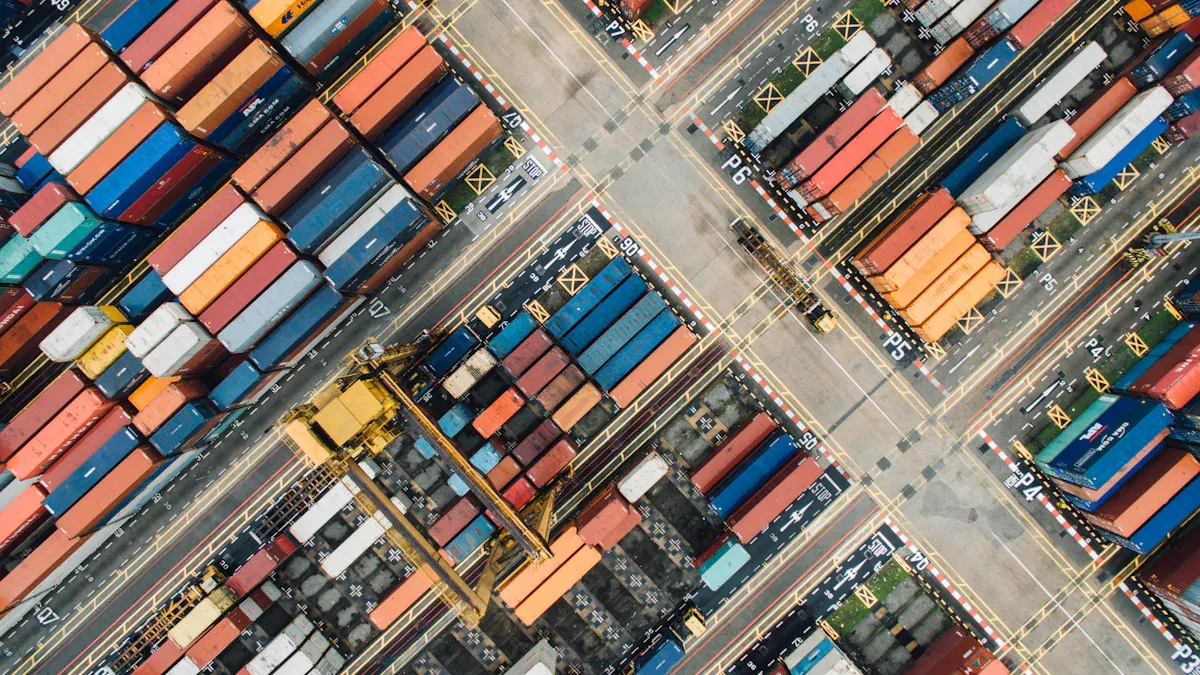
Domestic transport orders act as a vital link between local and international trade. They ensure that goods move seamlessly from domestic suppliers to global markets. For example, when you ship products internationally, the process often begins with a domestic transport order. This document ensures that goods reach ports or airports on time for export. Without it, delays in the domestic leg could disrupt the entire shipping process.
Domestic transport orders also simplify the transition between domestic and international trade systems. They provide clear instructions for handling goods, reducing the risk of errors during containerization. This is especially important in maritime shipping, where precise coordination is essential. By bridging the gap between local and global supply chains, domestic transport orders enhance efficiency and reliability in trade.
Integration with supply chain systems.
Integrating domestic transport orders with supply chain systems has transformed global trade. Advanced transportation management systems (TMS) now optimize routes, improving delivery times and reducing costs. For example, Walmart's supply chain optimization reduced inventory costs by 10% while improving product availability. Similarly, Johnson & Johnson achieved a 15% reduction in transportation costs and a 99.8% on-time delivery rate for temperature-sensitive goods.
You can also benefit from integration by minimizing the need for safety stock. This frees up capital and warehouse space, making your operations more efficient. Integrated solutions enhance inventory management and labor efficiency, leading to significant cost savings. Robust analytics and reporting capabilities further improve compliance tracking, helping you avoid fines and maintain customer satisfaction.
By connecting domestic transport orders with global supply chains, businesses can achieve measurable improvements. These include reduced transportation costs, optimized inventory levels, and enhanced operational efficiency. Such advancements highlight the critical role of domestic transport orders in modern trade.
Impact of sustainability and regulations.
Sustainability and regulations have become central to global trade. Domestic transport orders play a key role in helping businesses meet these challenges. For instance, logistics operations must now comply with stricter environmental regulations. This includes reducing carbon footprints and adopting sustainable practices to avoid penalties.
|
Regulatory Aspect |
Impact on Domestic Transport Orders |
Sustainability Consideration |
|---|---|---|
|
Environmental Regulations |
Increased compliance requirements for logistics operations |
Necessity for sustainable practices to avoid penalties |
|
Supply Chain Sustainability |
Shift in focus towards sustainability as a strategic issue |
Integration of sustainability into logistics planning |
Energy-intensive logistics operations contribute significantly to environmental impact. To address this, you must adopt sustainable practices like route optimization and efficient containerization. These measures not only reduce emissions but also align with global sustainability goals. For example, proactive management standards like ISO 14001 help businesses integrate sustainability into their logistics planning.
Compliance with environmental regulations is critical for maintaining operational sustainability. You need to navigate mechanisms such as obtaining permits, conducting environmental assessments, and adhering to industry standards. By aligning domestic transport orders with these requirements, you can ensure both compliance and sustainability in trade.
Benefits and Challenges of Domestic Transport Orders
Advantages for businesses and logistics.
Using a domestic transport order brings several benefits to businesses and logistics operations. It simplifies the organization of shipments, ensuring that goods move efficiently from one point to another. By providing clear instructions, it reduces errors and minimizes delays in delivery. This is especially important in industries like e-commerce, where timely cargo delivery directly impacts customer satisfaction.
A logistics document management system further enhances these advantages. It improves operational efficiency by streamlining processes and reducing manual errors. You can retrieve essential documents faster, which is crucial for meeting tight shipping deadlines. Additionally, such systems ensure compliance with legal regulations, a critical factor for businesses operating in regulated environments.
Other benefits include better inventory management and cost savings. By optimizing containerization and transport routes, you can lower transport costs and improve resource utilization. These efficiencies make domestic transport orders a valuable tool for modern trade operations.
Common challenges and solutions.
Despite their advantages, domestic transport orders come with challenges. Many organizations struggle to measure the success of data and analytics in logistics. Others lack a consistent mechanism to calculate the return on investment (ROI) for their data systems.
|
Challenge Type |
Percentage of Organizations Affected |
|---|---|
|
Measure success of data and analytics as part of wider solutions |
45% |
|
Have a consistent mechanism to measure data ROI |
<10% |
One common issue involves underutilized technology tools. For example, a transport client discovered inefficiencies in their technology landscape. By identifying strategic priorities and assessing existing challenges, they developed a roadmap for improvement. This structured approach helped them overcome data-related issues and optimize their logistics operations.
To address these challenges, you should focus on integrating advanced analytics into your supply chain. This allows you to track performance metrics and make data-driven decisions. Additionally, investing in employee training ensures that your team can fully utilize available tools, maximizing their potential.
Examples of successful implementation.
Several companies have successfully implemented domestic transport orders to improve their trade operations. For instance, a leading retailer used these orders to streamline container shipping between distribution centers and stores. By optimizing containerization and delivery schedules, they reduced transport costs and improved on-time delivery rates.
Another example comes from the maritime shipping industry. A global shipping company integrated domestic transport orders with its supply chain systems. This allowed them to coordinate containerized trade more effectively, ensuring smooth transitions between ports and international trade networks. Their efforts resulted in reduced delays and enhanced customer satisfaction.
These examples highlight the importance of aligning domestic transport orders with broader logistics strategies. By doing so, you can achieve measurable improvements in efficiency, cost savings, and sustainability.
Optimizing Domestic Transport Orders in 2025

Best practices for businesses.
Adopting best practices ensures your domestic transport orders operate efficiently and align with modern trade demands. Eco-friendly routing reduces carbon emissions and minimizes environmental impact. Fleet management software provides oversight and optimization for vehicle fleets, helping you streamline operations. Loading optimization, such as dock scheduling and 3D load planning, maximizes payloads and prevents cargo damage during container shipping.
Real-time tracking enhances visibility and responsiveness. GPS systems allow you to monitor fleet locations and statuses, ensuring timely deliveries to ports and other destinations. Configurable reporting tools create tailored analytics for key performance indicators, enabling accurate forecasts. Compliance management software ensures adherence to industry regulations, reducing risks in international trade.
|
Best Practice |
Description |
|---|---|
|
Eco-friendly routing |
Identifying the most fuel-efficient routes to reduce carbon emissions and minimize environmental impact. |
|
Fleet management |
Utilizing customized software for comprehensive oversight and optimization of vehicle fleets. |
|
Loading optimization |
Implementing dock scheduling and 3D load planning to maximize vehicle payloads and prevent cargo damage. |
|
Real-time tracking |
Using GPS tracking for better visibility and responsiveness of fleet location and status. |
|
Configurable reporting |
Creating tailored reports and analytics for key performance indicators and accurate forecasts. |
Collaboration also plays a vital role. Assessing your strengths and forming partnerships with logistics providers can enhance service delivery. Companies increasingly rely on cloud services and startups for data solutions, ensuring competitiveness in the evolving transport landscape.
Leveraging automation and technology.
Automation transforms how you manage domestic transport orders. It improves productivity by 48% and reduces operating costs by 42%. Smart transportation systems integrate GPS tracking, route optimization, and automated scheduling, ensuring seamless operations. These systems enhance maritime shipping by coordinating container movements efficiently between ports and international trade networks.
Digital tools simplify container shipping processes. Transportation management systems optimize freight routes, reducing delays and improving cost-effectiveness. Automated reporting tools provide real-time insights into shipment statuses, helping you make informed decisions. By leveraging automation, you can streamline operations and improve customer satisfaction.
|
Metric |
Improvement Percentage |
|---|---|
|
Productivity Improvement |
48% |
|
Operating Cost Reduction |
42% |
Scalability is another advantage of automation. Small and medium-sized businesses can adapt software as they grow or face new requirements. User-friendly interfaces ensure transportation teams can easily navigate systems, maximizing efficiency.
Ensuring compliance with trade regulations.
Compliance with trade regulations is essential for maintaining smooth operations. Customs compliance rates measure the percentage of shipments adhering to customs laws, ensuring effective paperwork. Denied party screening checks trading partners against prohibited party lists, avoiding legal issues. Import/export license management tracks the status and expiry of licenses required for cross-border transactions.
|
Compliance Metric |
Description |
|---|---|
|
Customs Compliance Rate |
Measures the percentage of shipments that comply with customs laws, indicating effective paperwork. |
|
Denied Party Screening |
Involves checking trading partners against prohibited party lists to avoid legal issues. |
|
Import/Export License Management |
Tracks the status and expiry of licenses required for cross-border transactions. |
Aligning domestic transport orders with compliance metrics ensures adherence to incoterms and international trade standards. Proactive management of these metrics reduces risks and enhances reliability in maritime shipping. By integrating compliance tools into your systems, you can navigate regulations effectively and maintain operational sustainability.
Domestic Transport Orders (DTOs) play a pivotal role in ensuring smooth operations in global trade. They connect domestic and international trade systems, enabling seamless shipping processes. Maritime trade alone accounts for 75% of global trade by weight and 50% by value, emphasizing the critical role of DTOs in facilitating this movement. Ports handle billions of tonnes of goods annually, showcasing the economic impact of efficient transport systems.
DTOs offer numerous benefits, such as improved shipping efficiency, reduced costs, and enhanced sustainability. However, challenges like underutilized technology and compliance complexities require strategic solutions. Leveraging automation, integrating advanced analytics, and adopting eco-friendly practices can help you optimize DTOs for modern trade demands.
Looking ahead, technology will continue to transform shipping operations. Real-time tracking, automated systems, and data-driven insights will redefine how you manage transport processes. By staying adaptable and embracing innovation, you can ensure your logistics operations remain competitive in the evolving landscape of international trade.
FAQ
1. What is the main purpose of a Domestic Transport Order?
A Domestic Transport Order organizes the movement of goods within a country. It provides clear instructions for shippers and logistics providers, ensuring accurate delivery schedules and reducing errors. You can use it to streamline operations and improve efficiency in local trade.
2. How does technology improve Domestic Transport Orders?
Technology enhances DTOs through real-time tracking, automated scheduling, and route optimization. Tools like transportation management systems simplify logistics processes and reduce errors. You can use these advancements to save time, lower costs, and improve customer satisfaction.
3. Are Domestic Transport Orders necessary for small businesses?
Yes, DTOs benefit small businesses by improving delivery accuracy and reducing costs. They help you manage shipments efficiently, even with limited resources. Using DTOs ensures smooth operations and better customer service.
4. Can Domestic Transport Orders support sustainability goals?
DTOs optimize routes and reduce unnecessary trips, lowering fuel consumption and emissions. You can align them with eco-friendly practices to meet sustainability goals and comply with environmental regulations.
5. What challenges might arise with Domestic Transport Orders?
Common challenges include underutilized technology and compliance complexities. You can overcome these by integrating advanced analytics, training employees, and adopting automation. These solutions improve efficiency and reduce risks.
Related content