
Major Types of B2C Payment Systems for Global E-commerce
Author:XTransfer2025.12.24B2C in Global Payment
In the fast-paced world of digital commerce, selecting the right payment methods can transform your B2C in Global Payment experience. Popular types of B2C payment systems, such as credit and debit cards, digital wallets, bank transfers, mobile payments, and Buy Now, Pay Later (BNPL), dominate the checkout process for online shopping. Each payment option offers unique advantages that cater to the diverse needs of global customers. For example, mobile eCommerce sales are expected to hit $2.51 trillion in 2025, a 21.25% rise from 2024. Similarly, BNPL transactions in the U.S. are projected to grow from $116 billion in 2023 to $133 billion in 2024. Adopting the right B2C in Global Payment system not only simplifies B2C transactions but also boosts customer satisfaction and sales performance.
Overview of B2C Payment Systems
Understanding B2C Payment Systems
B2C payment systems are the backbone of digital commerce, enabling seamless transactions between businesses and consumers. These systems include various payment methods like credit cards, digital wallets, and mobile payments. Each option caters to different customer preferences, ensuring flexibility and convenience.
Historically, B2C payment systems evolved alongside e-commerce. Early systems relied on traditional wire transfers, which were slow and inconvenient. Today, advancements in technology have introduced faster, more secure options. For example, mobile payment solutions and instant payments have gained popularity due to their efficiency. The shift from traditional methods to modern systems reflects the growing demand for speed and security in online shopping.
|
Performance Metric |
Description |
|
Application fields/flexibility |
Supports diverse purchasing needs, varying by product or service type. |
|
Adoption of the payment tool |
Merchant adoption rates influence customer access to payment systems. |
|
Amount/Plafond |
Transaction value limits affect usability. |
|
Costs |
Costs impact both customers and merchants. |
|
Fraud risk |
Fraud prevention systems are widely adopted to protect merchants. |
Importance of B2C Payments in E-commerce
B2C payments play a critical role in the success of e-commerce. They directly impact the customer experience, influencing satisfaction and loyalty. When you offer multiple payment options, you cater to a broader audience, including those who prefer digital wallets or mobile payments. This inclusivity can drive more sales and improve your brand's reputation.
The global adoption of B2C payment systems continues to rise. The market for cross-border B2C and C2B payments is expected to grow at a compound annual growth rate (CAGR) of 15% from 2025 to 2033. This growth is fueled by increasing e-commerce activity and the demand for secure, fast transactions. As a business owner, you must align your payment systems with these trends to stay competitive.
Efficient B2C payment systems also reduce cart abandonment rates. Customers are more likely to complete their purchases when they encounter smooth, hassle-free payment processes. By prioritizing user-friendly payment methods, you can enhance your online shopping experience and boost revenue.
Major Types of B2C Payment Systems
Credit and Debit Cards
Credit and debit cards remain the cornerstone of business-to-consumer transactions in e-commerce. Their widespread acceptance and ease of use make them one of the most popular types of B2C payment methods. As a consumer, you likely appreciate the convenience of entering card details for instant payments. Businesses benefit from their global reach, as major card networks like Visa and Mastercard operate in nearly every country.
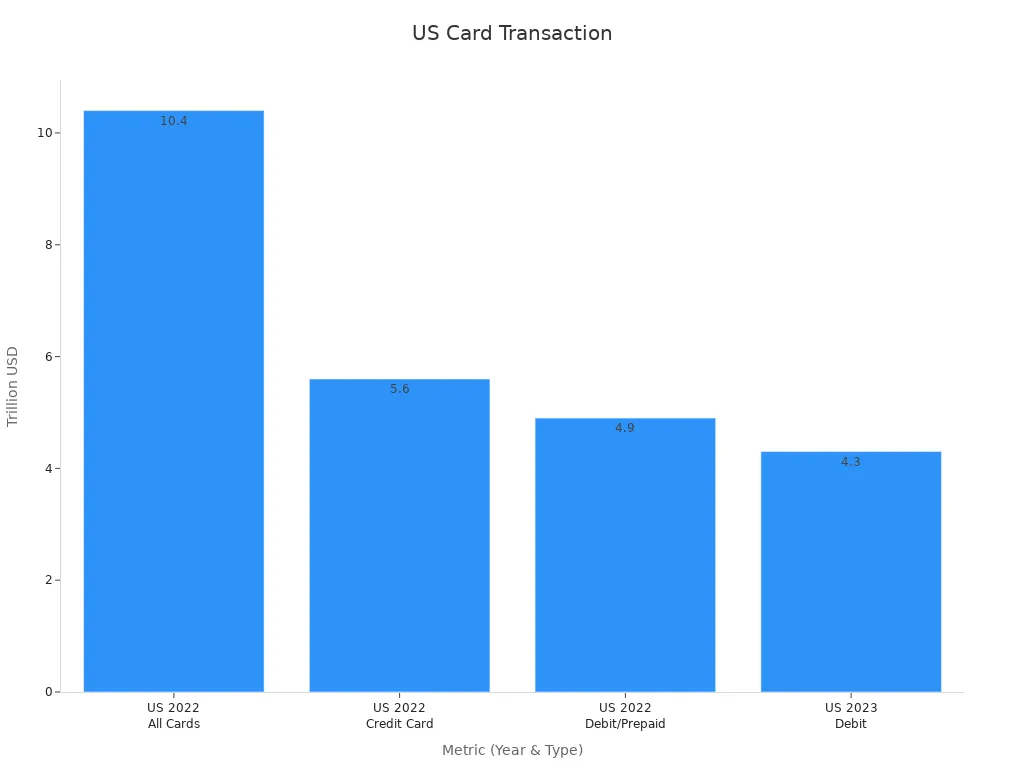
The dominance of credit and debit cards in digital commerce is backed by impressive statistics. In 2022, the purchase volume on these cards in the United States alone reached $10.4 trillion. Credit cards accounted for $5.6 trillion, while debit and prepaid cards contributed $4.9 trillion. The number of transactions using these cards hit 157 billion in 2021, with average transaction values of $96 for credit cards and $43 for debit cards. These figures highlight their critical role in facilitating B2C payments.
Credit and debit cards also offer additional benefits, such as reward programs and fraud protection. Many consumers prefer using credit cards for online purchases due to these perks. For businesses, integrating card payments into your e-commerce platform ensures you cater to a broad audience, enhancing customer satisfaction and driving sales.
Digital Wallets
Digital wallets have revolutionized the way you shop online. These wallets, such as PayPal, Apple Pay, and Google Pay, allow you to store multiple payment methods securely in one place. They eliminate the need to repeatedly enter card details, making the checkout process faster and more convenient.
The adoption of digital wallets in B2C e-commerce has grown significantly. In 2023, they accounted for 50% of global online purchases, and this figure is expected to rise to 61% by 2027. The total value of transactions through digital wallets reached $9 trillion in 2023, with projections exceeding $16 trillion by 2028. This growth reflects their appeal to consumers seeking seamless and secure payment experiences.
For businesses, offering digital wallet options can enhance your brand's appeal, especially among tech-savvy customers. These wallets also support mobile commerce, which is becoming increasingly important as smartphone usage continues to rise. By integrating digital wallets into your B2C payment system, you can stay ahead in the competitive e-commerce landscape.
Bank Transfers
Bank transfers provide a reliable and secure payment method, particularly for high-value transactions. They are especially popular in regions where alternative payment methods are less prevalent. As a consumer, you might choose bank transfers for their straightforward process and trustworthiness.
The efficiency of bank transfers in e-commerce is evident in their growing adoption. ACH (Automated Clearing House) transfers, a common form of bank transfer, have seen annual increases of 8.3% in count and 12.7% in value since 2018. In 2023, ACH payments accounted for nearly $92 trillion, representing 72% of non-cash payments. Faster payment systems have also gained traction, with 83% of businesses and 75% of consumers using them. Nearly half of businesses believe that faster payments help reduce costs.
For your business, incorporating bank transfers into your B2C payment systems can attract customers who prioritize security and simplicity. This method is particularly effective for industries dealing with large transactions, such as real estate or luxury goods. By offering bank transfers, you can cater to a diverse customer base and enhance your payment options.
Mobile Payment Systems
Mobile payment systems have become a cornerstone of modern digital commerce. These systems allow you to make payments directly from your smartphone or tablet, offering unmatched convenience and speed. Whether you're shopping online or paying at a physical store, mobile payments simplify the process by eliminating the need for cash or cards.
The popularity of mobile payment systems continues to grow globally. For instance, 68% of restaurant-goers now prefer contactless or mobile payment methods. Similarly, 66% favor mobile wallets for food-related purchases. Over two-thirds of restaurants have already integrated mobile payment options, and 42% plan to invest in contactless solutions by 2024. In the United States, 46% of consumers primarily use mobile devices for online purchases. Even at events like games in the Fiserv Arena, mobile devices account for 8-10% of order volume per game. These statistics highlight the increasing reliance on mobile payments in everyday transactions.
For your business, adopting mobile payment systems can enhance the customer experience. These systems offer faster checkout times, which can reduce cart abandonment rates. They also support the growing trend of mobile commerce, where consumers use their smartphones for shopping. By integrating mobile payment options, you can cater to tech-savvy customers and stay competitive in the evolving e-commerce landscape.
Buy Now, Pay Later (BNPL)
Buy Now, Pay Later (BNPL) services have revolutionized the way consumers approach online shopping. This payment method allows you to purchase items immediately and pay for them in installments over time. BNPL has gained immense popularity in recent years, especially among younger shoppers who value flexibility in managing their finances.
While BNPL offers convenience, it also comes with potential risks. Research shows that many users do not fully understand the terms of BNPL loans, leading to financial penalties. On average, BNPL users incur $68 more annually in overdraft charges, credit card interest, and late fees compared to non-users. Additionally, BNPL usage can contribute to debt cycles, as it encourages spending beyond one's means. These findings underline the importance of educating yourself about the terms and conditions before using BNPL services.
For businesses, offering BNPL as a payment option can attract customers who might otherwise hesitate to make large purchases. It provides a sense of affordability, encouraging higher sales volumes. However, you should ensure that your BNPL provider communicates the terms clearly to avoid customer dissatisfaction. By balancing the benefits and risks, you can leverage BNPL to enhance your business-to-consumer payment strategy.
Key Features and Benefits of B2C Payment Systems
Security and Fraud Protection
Security is a cornerstone of any successful b2c payment system. When you shop online, you want to feel confident that your sensitive information is safe. Businesses that implement robust security measures not only protect your data but also build trust. Research shows that perceived security significantly influences consumer trust in b2c e-commerce. In fact, 71% of online trust variability stems from factors like security, reputation, and privacy. This means that secure transactions encourage more customers to engage in online shopping, reducing fraud risks.
Modern b2c payment systems use advanced technologies like encryption and tokenization to safeguard your data. These tools ensure that your payment details remain confidential during transactions. For businesses, adopting a secure payment gateway can enhance customer loyalty and reduce the risk of financial losses due to fraud.
Convenience and Speed
Convenience and speed are essential in today’s fast-paced ecommerce environment. You expect payment methods that allow you to complete transactions quickly and effortlessly. Embedded payments, for example, simplify the process by integrating payment options directly into the shopping experience. This not only saves time but also enhances your overall satisfaction.
Businesses benefit from these streamlined processes as well. Faster transactions mean fewer abandoned carts and higher revenues. Electronic payments also reduce operational costs, such as those associated with check distribution and reconciliation. By offering a seamless payment experience, businesses can attract more customers and improve their bottom line.
Accessibility for Global Customers
Accessibility plays a vital role in connecting businesses with a global audience. Digital payment systems make it easier for you to shop from anywhere in the world. They support multiple currencies and payment methods, ensuring that you can complete transactions regardless of your location.
A study highlights the importance of financial inclusion and transaction efficiency in enhancing global customer engagement. Accessible b2c payment systems enable businesses to reach underserved markets, fostering economic growth. For you, this means more opportunities to access products and services that might otherwise be out of reach. By prioritizing accessibility, businesses can expand their reach and build stronger relationships with customers worldwide.
Cost-Effectiveness for Businesses
Cost-effectiveness is a critical factor when selecting B2C payment systems for your e-commerce business. These systems can help you reduce operational expenses while improving efficiency. By choosing the right payment methods, you can streamline processes and allocate resources more effectively.
One way B2C payment systems save money is by automating transactions. Manual payment processing often involves higher labor costs and a greater risk of errors. Automated systems eliminate these inefficiencies, allowing you to focus on growing your business. For example, integrating digital wallets or mobile payments into your platform reduces the need for manual reconciliation, saving both time and money.
Another advantage lies in transaction fees. While some payment methods, like credit cards, come with higher fees, others, such as bank transfers or ACH payments, offer more affordable options. By analyzing your customer base and their preferred payment methods, you can select systems that balance cost and convenience. This approach ensures you minimize expenses without compromising the customer experience.
Additionally, modern payment systems often include built-in fraud prevention tools. These features reduce the financial impact of fraudulent transactions, which can be costly to resolve. For instance, tokenization and encryption protect sensitive data, lowering the risk of chargebacks and associated fees.
Cost-effective payment systems also support scalability. As your business grows, these systems can handle increased transaction volumes without requiring significant additional investment. This scalability ensures you maintain profitability while expanding your operations.
By prioritizing cost-effective solutions, you can optimize your payment processes and improve your bottom line. The right system not only saves money but also enhances your ability to deliver a seamless shopping experience to your customers.
Factors to Consider for B2C Ecommerce Payment Systems
Customer Preferences and Behavior
Understanding customer preferences is crucial when selecting B2C ecommerce payment systems. Different regions and demographics exhibit varying behaviors regarding payment methods. For instance, while 67% of Americans still prefer cash for in-store purchases, digital wallets and mobile payment apps are gaining traction in e-commerce. However, 25% of consumers do not use any mobile payment apps, highlighting the need to offer diverse payment options.
|
Payment Method |
Adoption Rate (US) |
Adoption Rate (Europe) |
|
Digital Wallets |
>50% by 2025 |
N/A |
|
Buy Now Pay Later (BNPL) |
5% |
13.6% by 2024 |
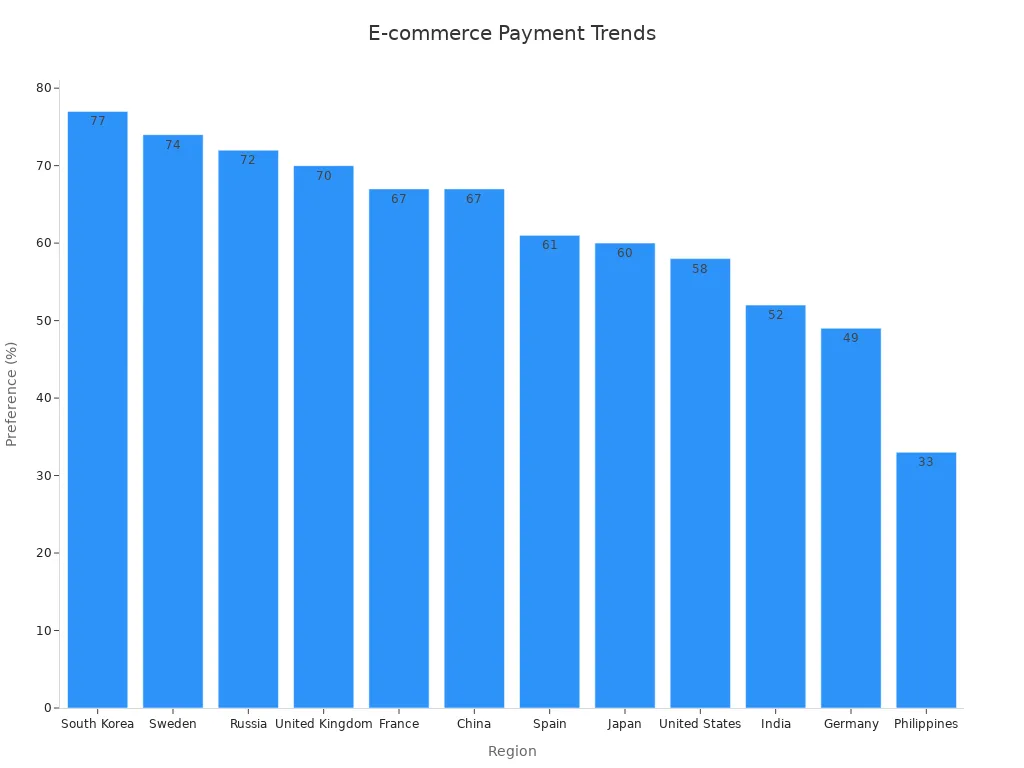
When targeting global markets, you must also consider regional preferences. For example, South Korea leads with 77% of consumers favoring non-cash payments, while Germany lags at 49%. These differences emphasize the importance of tailoring your payment options to meet the expectations of your target audience.
To cater to diverse customer behaviors, you should integrate multiple payment methods into your B2C payment gateway. This approach ensures inclusivity and enhances the shopping experience for a broader audience.
Transaction Fees and Costs
Transaction fees significantly impact both businesses and customers. As a business owner, you must evaluate the costs associated with different payment methods to maintain profitability. For example, in Costa Rica, maximum interchange fees for domestic cards were capped at 2.00%, while the mean Merchant Discount Rate (MDR) for various categories ranged from 4% to 10%. High MDRs often result from limited competition among payment acquirers.
|
Report Name |
Purpose |
|
Payment accounting report |
Details payment lifecycle events and associated fees. |
|
Settlement details report |
Includes payment funds and per-transaction costs. |
|
Monthly invoice |
Summarizes all assessed fees and adjustments for the month. |
|
Balance Platform Accounting Report |
Tracks daily balance changes and events influencing them. |
|
Balance Platform Statement Report |
Provides daily opening and closing balances for accounts with changes. |
The introduction of price controls in some regions has led to an increase in the number of merchants, demonstrating how regulatory measures can influence transaction costs. For your e-commerce business, analyzing these fees and their impact on your bottom line is essential. Opting for cost-effective payment systems, such as ACH transfers or digital wallets, can help you reduce expenses while maintaining a seamless customer experience.
Security and Compliance
Security and compliance are non-negotiable when it comes to B2C payments. Customers expect their sensitive information to remain protected during transactions. Adhering to industry regulations, such as PCI Compliance and GDPR, ensures that your payment gateway meets the highest security standards.
|
Regulation |
Description |
|
PCI Compliance |
Ensures secure handling of credit and debit card transactions. |
|
GDPR |
Regulates the processing of personal data and imposes strict rules on data handling. |
Modern B2C payment systems use advanced technologies like encryption and tokenization to safeguard customer data. These measures prevent unauthorized access and reduce the risk of fraud. For example, tokenization replaces sensitive payment information with unique identifiers, making it useless to hackers.
By prioritizing security and compliance, you not only protect your customers but also build trust in your brand. A secure payment system encourages repeat purchases and enhances customer loyalty, which are critical for long-term success in e-commerce.
Integration with E-commerce Platforms
Integrating payment systems with your e-commerce platform is essential for creating a seamless shopping experience. This process connects your online store with payment gateways, enabling customers to complete transactions effortlessly. A well-integrated system not only simplifies operations but also enhances customer satisfaction.
Why Integration Matters
When you integrate payment systems into your e-commerce platform, you unlock several advantages. First, it improves operational efficiency. Automated payment processes reduce manual errors and save time, allowing you to focus on other aspects of your business. Second, integration enhances the customer experience. Shoppers enjoy a smoother checkout process, which can lead to higher satisfaction and repeat purchases. Lastly, it boosts data reliability. Automated systems transfer data accurately, minimizing human error and providing you with reliable business insights.
Key Challenges in Integration
Despite its benefits, integrating payment systems can present challenges. Compatibility issues often arise when your e-commerce platform and payment gateway use different technologies. For example, older platforms may struggle to support modern payment methods like digital wallets or mobile payments. Additionally, ensuring security during integration is critical. You must protect sensitive customer data while maintaining compliance with industry regulations.
Another challenge involves scalability. As your business grows, your payment system must handle increased transaction volumes without compromising performance. Choosing a flexible solution that adapts to your needs is crucial for long-term success.
Best Practices for Seamless Integration
To overcome these challenges, you should follow best practices for payment system integration:
-
Choose a Compatible Payment Gateway: Select a gateway that aligns with your e-commerce platform's technology. This ensures smooth communication between systems.
-
Prioritize Security: Implement encryption and tokenization to protect customer data during transactions.
-
Test Thoroughly: Conduct extensive testing to identify and resolve potential issues before going live.
-
Focus on Scalability: Opt for a solution that grows with your business, accommodating higher transaction volumes as needed.
By addressing these factors, you can ensure a seamless integration process that benefits both your business and your customers.
Benefits of Integration
When you successfully integrate payment systems, your business reaps significant rewards:
-
Streamlined Operations: Automation reduces manual tasks, saving time and resources.
-
Enhanced Customer Experience: A smooth checkout process improves customer satisfaction and encourages repeat purchases.
-
Accurate Data: Reliable data transfer minimizes errors, providing you with valuable insights for decision-making.
Integrating payment systems with your e-commerce platform is a critical step toward optimizing your online store. By addressing challenges and following best practices, you can create a seamless shopping experience that drives growth and customer loyalty.
Global Trends in B2C Payment Systems
Growth of Mobile Payments
Mobile payments are transforming how you shop and pay. With the rise of smartphones and digital services, mobile payment systems have become a preferred choice for many. These systems allow you to make purchases quickly and securely using your mobile device, whether online or in-store. The global mobile payment market is growing rapidly, driven by increased smartphone ownership and the digitization of financial services.
Asia Pacific leads this trend, thanks to government initiatives promoting mobile payments. The BFSI (Banking, Financial Services, and Insurance) sector is also driving adoption. Forecasts show that mobile payments will continue to expand, with innovations like NFC (Near Field Communication) and QR-based payments gaining traction.
|
Aspect |
Details |
|
Market Growth |
The mobile payment market is experiencing remarkable growth driven by increased smartphone ownership and digitization of payment services. |
|
Leading Sector |
The BFSI sector is leading the mobile payment market. |
|
Global Leader Region |
Asia Pacific is the global market leader due to government initiatives promoting mobile payments. |
|
Forecast Coverage |
The report includes forecasts segmented by payment type (NFC, QR Based, Online Digital Payments, Text-Based) and geography (North America, Europe, Asia Pacific, Latin America, Middle East & Africa). |
|
Key Insights |
The report provides insights into growth rates, market size, and trends supported by industry data. |
By adopting mobile payment systems, you can enjoy faster transactions and a seamless shopping experience. Businesses that integrate these systems can attract tech-savvy customers and stay competitive in the evolving e-commerce landscape.
Expansion of BNPL Services
Buy Now, Pay Later (BNPL) services are reshaping how you manage your finances while shopping. This payment option allows you to buy products immediately and pay for them in installments. BNPL has gained immense popularity, especially among younger shoppers who value flexibility.
The global BNPL market is expanding at an impressive rate. In 2023, it was valued at $378.3 billion and is projected to grow at a CAGR of 40% from 2024 to 2032. By 2030, the market size is expected to reach $1.2 trillion. Over 60% of global users have already tried BNPL, and the user base is projected to hit 900 million by 2027.
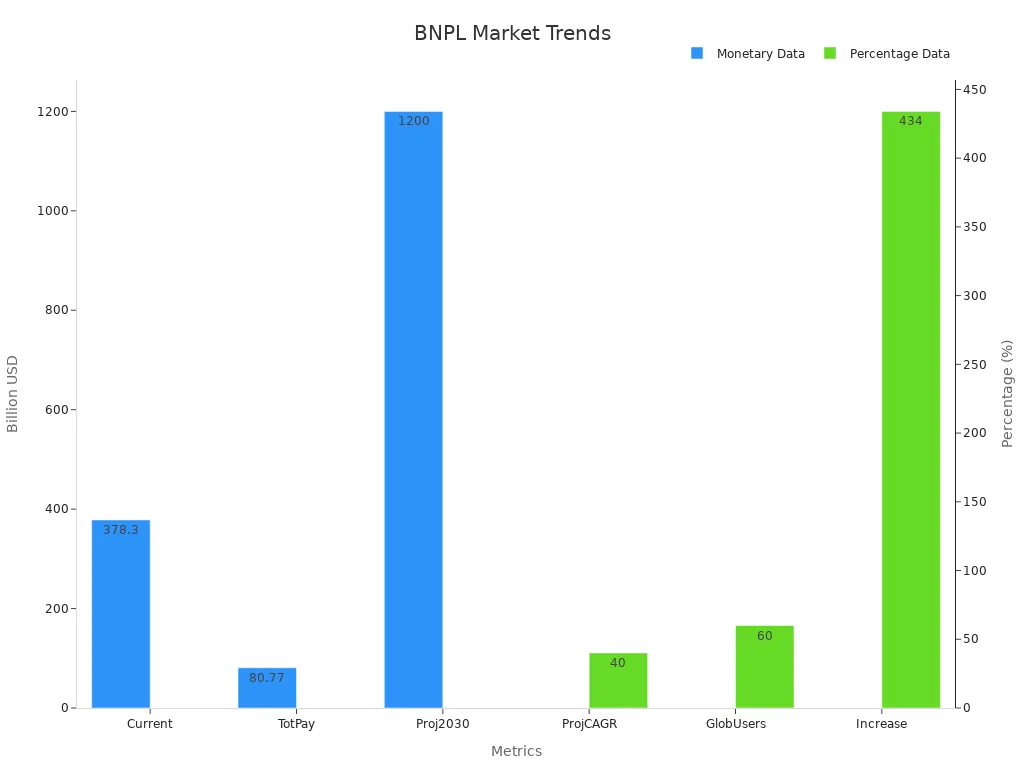
For businesses, offering BNPL can boost sales by making high-value items more affordable. However, you should carefully review the terms and conditions before using BNPL to avoid unexpected fees.
Focus on Security and Fraud Prevention
As online transactions grow, so do concerns about security and fraud. In 2023, consumers reported losses exceeding $10 billion due to fraud, marking a 14% increase from the previous year. Businesses are prioritizing fraud prevention to protect you and maintain trust.
Modern payment systems use advanced technologies like AI and machine learning to detect and prevent fraud in real time. These tools monitor transactions for suspicious activity, ensuring your payments remain secure. Regulations like GDPR and PCI DSS also require businesses to invest in robust security measures.
-
Fraudulent activities in the European Economic Area reached $4.5 billion in 2022.
-
AI advancements are enabling real-time fraud detection.
-
Compliance with data protection laws is critical for businesses in finance and healthcare.
By choosing secure payment options, you can shop with confidence. Businesses that prioritize security not only protect their customers but also enhance their reputation in the competitive e-commerce market.
Cross-Border Payment Solutions
Cross-border payment solutions have become essential for businesses aiming to expand their global reach. These systems enable you to send and receive money across countries quickly and securely. They simplify international transactions, making it easier for you to shop from global e-commerce platforms or send remittances to family abroad.
The rise of digital payments has transformed cross-border transactions. Digital wallets and mobile payment systems are driving this growth. They offer lower fees and faster transfer times compared to traditional methods like wire transfers. Many consumers now prefer digital remittances because they are cost-effective and convenient. The COVID-19 pandemic further accelerated this shift, as disrupted regions relied heavily on digital channels for payments.
Several factors contribute to the increasing demand for cross-border payment solutions. Smartphone usage and internet connectivity are growing worldwide. These advancements make it easier for you to access digital payment platforms. Additionally, the number of migrant workers continues to rise, boosting the need for secure and affordable remittance options. Governments are also promoting digital payments through regulations, encouraging businesses to adopt these systems.
For businesses, cross-border payment solutions open doors to new markets. They allow you to cater to international customers by offering payment methods that suit their preferences. This inclusivity enhances customer satisfaction and builds trust. By integrating these solutions into your e-commerce platform, you can attract a global audience and drive sales.
Cross-border payments are not just about convenience; they are about creating opportunities. Whether you are a consumer seeking fast transactions or a business looking to expand globally, these systems provide the tools you need to succeed in the digital economy.
Choosing the right B2C payment system is essential for your e-commerce success. Credit cards, digital wallets, bank transfers, mobile payments, and BNPL each offer unique benefits. For example, digital wallets provide speed, while BNPL adds flexibility. Aligning these options with your customers' preferences ensures a seamless shopping experience.
By integrating diverse payment methods, you can cater to global customers and drive growth. Always focus on systems that balance convenience, security, and affordability for your business goals.
FAQ
What is the most secure B2C payment method?
Digital wallets and mobile payment systems often provide the highest security. They use encryption and tokenization to protect your data. Additionally, they require authentication methods like biometrics or PINs, ensuring only you can authorize transactions.
How do I choose the best payment system for my e-commerce business?
Evaluate your customers' preferences and behavior. Consider factors like transaction fees, security features, and global accessibility. Choose a system that aligns with your business goals and integrates seamlessly with your platform.
Are mobile payments safe for online shopping?
Yes, mobile payments are safe when you use trusted platforms. They employ advanced security measures like encryption and two-factor authentication. Always ensure your device and apps are updated to reduce risks.
What are the benefits of offering multiple payment options?
Offering multiple payment options increases customer satisfaction. It caters to diverse preferences, reduces cart abandonment, and boosts sales. You also expand your reach to global customers by supporting various payment methods.
Can small businesses afford advanced payment systems?
Yes, many advanced payment systems offer scalable solutions. You can start with basic features and upgrade as your business grows. Some providers also offer cost-effective options tailored for small businesses.
Related content