
How to Build Manufacturer Presence in Global Trade
Author:XTransfer2025.12.04Manufacturer in Global Trade
Manufacturers play a critical role in shaping global trade. They don’t just produce goods; they drive innovation, create jobs, and connect economies. But have you ever wondered how manufacturers can truly thrive on a global scale? The answer lies in seizing global trade opportunities. For instance, studies show that trade liberalization has boosted productivity in countries like Chile and India while lifting millions out of poverty worldwide. These benefits highlight why stepping into international markets is so crucial. To succeed, you need a solid plan that aligns with your goals and the demands of the global market.
Understanding Global Trade Basics
The Role of a Manufacturer in Global Trade
As a manufacturer, your role in global trade goes beyond producing goods. You’re a key player in connecting economies and driving innovation. Manufacturers act as the backbone of international commerce, ensuring products flow seamlessly across borders. Whether you’re exporting finished goods or importing raw materials, your activities shape the global economy.
To understand your role better, let’s look at some fundamental terms that define global trade:
|
Term |
Definition |
|---|---|
|
Imports |
Goods that augment a country's material resources. |
|
Exports |
Goods that diminish a country's material resources by exiting its economic territory. |
|
Re-exports |
Movement of foreign goods, previously imported, from designated areas to the rest of the world. |
|
Re-imports |
Reintroduction of domestically produced goods, previously exported, back into the country. |
|
Gross Exports |
Encompasses both exports and re-exports, providing a comprehensive view of outbound trade activity. |
|
Gross Imports |
Includes all goods entering the country, including re-imported goods, offering a full view of trade. |
|
Trade Disparity |
Differences in reported trade data between countries due to varying recording methods. |
Understanding these terms helps you navigate the complexities of global trade and position yourself as a trusted manufacturer in global trade.
Key Global Trade Opportunities for Manufacturers
Global trade opportunities are everywhere—you just need to know where to look. Here are some ways you can seize them:
-
Identify potential customers or suppliers in foreign markets.
-
Detect where demand for your goods and services will come from.
-
Check for any benefits from regional trade agreements.
-
Research tariffs and regulatory requirements.
Additionally, you can:
-
Spot products, markets, and suppliers with export potential.
-
Explore opportunities for export diversification.
-
Avoid paying duties and taxes at customs when temporarily exporting and importing your products in over 80 countries/customs territories.
These trade opportunities open doors to new markets and help you grow your business globally.
Benefits of Expanding into International Business
Expanding into international business offers manufacturers several advantages. Here’s what you gain:
-
Access to new markets: You can tap into lucrative markets that may not be available domestically.
-
Cost reduction: Operating in countries with lower labor and material costs can significantly reduce expenses.
-
Risk diversification: By working in multiple countries, you can mitigate risks tied to localized economic or political events.
-
Competitive advantages: Being the first to market in a new region gives you an edge over competitors.
These benefits make international business a smart move for manufacturers looking to thrive in global trade.
Identifying Target Markets
Conducting Market Research for Global Trade
Before diving into any international market, you need to understand its landscape. Market research is your compass in global trade. It helps you identify where your products fit and how to align them with customer needs. Start by analyzing the size of the market and its growth potential. Is there enough demand for your products? Are there gaps in the market that you can fill?
Here’s how you can conduct effective market research:
-
Study customer behavior to understand what they value most.
-
Analyze competitors to see what they’re doing right (and wrong).
-
Use online tools to track trends and identify emerging markets.
-
Refine your marketing strategies based on insights from social media and online marketplaces.
By investing time in research, you’ll uncover global trade opportunities that align with your business goals.
Evaluating Market Demand and Competition
Once you’ve identified potential markets, it’s time to evaluate their demand and competition. This step ensures you’re not walking into a saturated market or one with little interest in your offerings.
To assess demand, look at measurable criteria like market size, growth rate, and profitability potential. For example, if you’re entering a market with high demand for sustainable products, your export strategy should focus on eco-friendly solutions.
Here’s a quick guide to evaluating markets:
|
Metric Type |
Description |
|---|---|
|
Level of Interest |
Key relationships made, number of opportunities, pilots |
|
Traction in Market |
Marquee logo wins, customer wins, prioritized prospect wins |
|
Competitiveness/Market Maturity |
Lead-to-opportunity conversion rate, win rate |
|
Top Line Results |
Revenue, bookings, committed revenue exceeding plan of record |
|
Takeaways/Competitive Wins |
Win XX% of deals against competitor X |
|
Capital Efficiency |
Customer acquisition cost, investment multiple, return on investment |
|
Partner/Channel Performance |
Partner interactions, quality partners signed on, co-marketing investment commitments |
Quantitative research is also essential. It helps you analyze consumer behavior, market trends, and the effectiveness of your marketing campaigns. By focusing on numbers, you can make informed decisions and avoid relying on guesswork.
Understanding Cultural and Economic Factors
Cultural and economic factors play a huge role in shaping market trends. Ignoring these can lead to missteps that hurt your brand. For instance, consumer behavior often reflects cultural norms and values. A product that’s a hit in one country might flop in another due to cultural differences.
Here are some cultural and economic factors to consider:
-
Festivals and seasonal events can drive demand for specific products.
-
Social norms influence how people spend and save money.
-
Risk perception varies across cultures, affecting investment and purchasing decisions.
-
Informal networks and traditions can sometimes replace formal systems, especially in developing markets.
Understanding these factors helps you tailor your approach. For example, if you’re targeting a market with strong family traditions, you might emphasize how your product benefits households.
By combining cultural awareness with economic analysis, you’ll unlock international market opportunities that others might overlook. This approach ensures your export success and positions you as a trusted manufacturer in global trade.
Building a Strong Brand Presence

Establishing a strong brand presence is essential for standing out in the competitive world of global trade. Your brand is more than just a logo or tagline—it’s the promise you make to your customers and the reputation you build over time. A well-crafted brand can open doors to new trade opportunities, enhance your business competitiveness, and position you as a trusted manufacturer in global trade.
Crafting a Unique Value Proposition
Your unique value proposition (UVP) is the foundation of your brand. It’s what sets you apart from competitors and tells customers why they should choose you. To craft a compelling UVP, you need to understand what your target audience values most. This involves analyzing market research, customer feedback, and your own strengths as a manufacturer.
Here’s how you can create a UVP that resonates:
-
Identify your strengths: What do you do better than anyone else? It could be superior product quality, innovative designs, or exceptional customer service.
-
Understand your audience: Dive into what your customers care about. Are they looking for affordability, sustainability, or cutting-edge technology?
-
Tailor your message: Use clear and concise language to communicate how your products meet their needs.
For example, if you specialize in eco-friendly manufacturing, your UVP might highlight your commitment to sustainability and how it benefits both the planet and your customers. Research shows that understanding market segments and tailoring offerings accordingly can significantly boost your appeal in international business.
Developing a Global Marketing Strategy
Once you’ve nailed your UVP, it’s time to spread the word. A global marketing strategy ensures your brand message reaches the right audience in the right way. But marketing globally isn’t a one-size-fits-all approach. You need to adapt your strategy to fit the cultural, economic, and social nuances of each market.
Here are some steps to get started:
-
Localize your content: Translate your marketing materials into local languages and adapt them to cultural preferences.
-
Leverage data: Use analytics to understand which channels and messages resonate most with your audience.
-
Invest in storytelling: Share your brand’s journey, values, and mission to create an emotional connection with your audience.
-
Focus on consistency: Ensure your brand message remains consistent across all platforms and markets.
According to research, consistent brand presentation can increase revenue by up to 23%. Additionally, 77% of B2B marketing leaders consider branding critical for growth. By investing in a robust marketing strategy, you can enhance your visibility and drive export success.
Leveraging Digital Platforms for International Visibility
In today’s digital age, your online presence plays a huge role in shaping your brand. Digital platforms allow you to showcase your products, engage with customers, and build trust on a global scale. Whether it’s through social media, e-commerce websites, or online reviews, the internet offers endless opportunities to expand your reach.
Here’s how you can make the most of digital platforms:
-
Social media: Platforms like LinkedIn, Instagram, and Facebook are great for connecting with customers and sharing updates about your brand. Did you know that 54% of social browsers use social media to research products?
-
Online reviews: Encourage satisfied customers to leave reviews. Studies show that 91% of consumers read online reviews, and 84% trust them as much as personal recommendations.
-
Search engine optimization (SEO): Optimize your website to rank higher in search results. This makes it easier for potential customers to find you.
-
E-commerce platforms: Use platforms like Amazon or Alibaba to reach international buyers and simplify the export-import trade process.
A strong digital presence not only boosts brand awareness but also builds credibility. High brand equity can account for up to 30% of a company’s stock market value, making it a critical asset for long-term growth.
By crafting a unique value proposition, developing a tailored marketing strategy, and leveraging digital platforms, you can position yourself as a leader in global trade. These steps will help you connect with customers, seize trade opportunities, and achieve export success.
Leveraging Trade Shows and Partnerships
Trade shows and partnerships are powerful tools for manufacturers looking to expand their presence in global trade. They offer unique opportunities to connect with potential customers, suppliers, and industry leaders while showcasing your products to a broader audience. Let’s explore how you can make the most of these opportunities.
Exploring Global Trade Opportunities Through Trade Shows
Trade shows are a goldmine for discovering global trade opportunities. They allow you to meet face-to-face with buyers, suppliers, and distributors who are actively seeking new products. Did you know that over 90% of trade show attendees are searching for new products? This makes trade shows an ideal platform to showcase your products and tap into export potential.
Here’s a snapshot of the value trade shows bring to international business:
|
Statistic |
Value |
|---|---|
|
The value of the US B2B trade show market will reach |
$16.4 billion in 2020 |
|
Over 90% of trade show attendees are searching for new products |
N/A |
|
75% of businesses have a positive outlook for trade shows |
N/A |
|
47% of marketers value learning more about their industry at trade shows |
N/A |
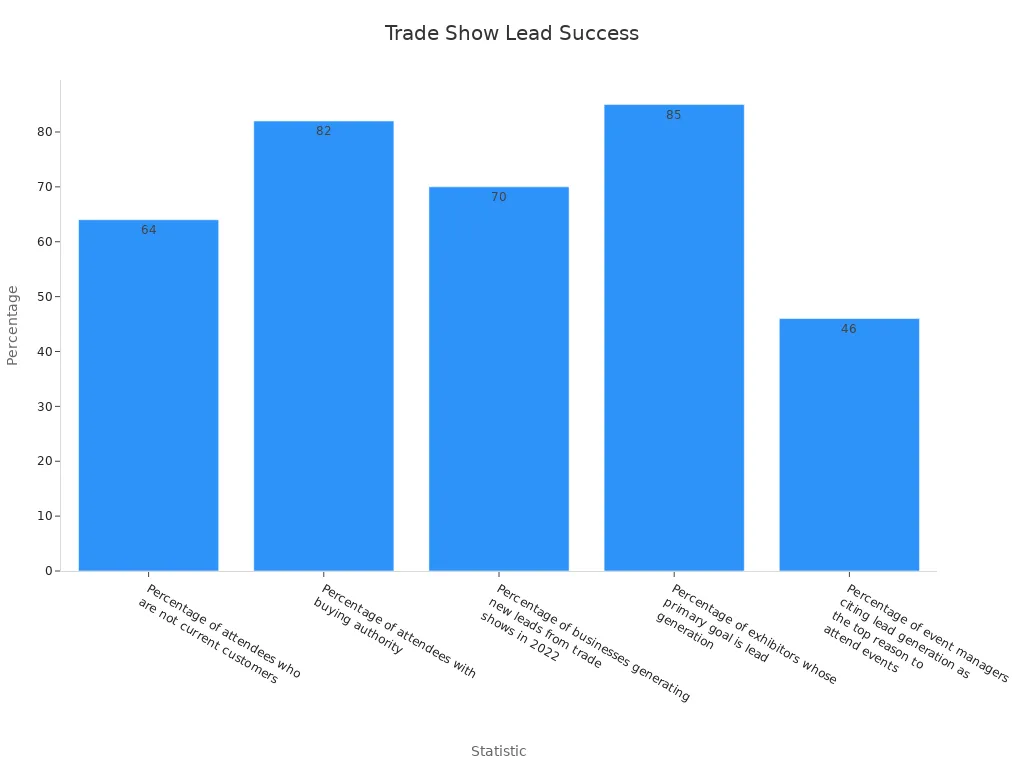
Attending trade shows also helps you refine your export strategy. You can gather insights about market trends, competitor strategies, and customer preferences. Plus, 70% of businesses generate new leads from trade shows, making them a must for anyone looking to sell internationally.
Building Strategic Partnerships in Target Markets
Strategic partnerships can open doors to new trade opportunities and help you establish a foothold in target markets. By collaborating with local suppliers or distributors, you can navigate cultural and economic nuances more effectively. Partnerships also allow you to share resources, reduce costs, and improve operational efficiency.
Here are some measurable outcomes of successful partnerships:
|
Metric |
Expected Outcome |
|---|---|
|
Revenue |
Increase through partnership |
|
Market Share |
Expansion in target markets |
|
Operational Efficiency |
Improvement in processes |
To build strong partnerships, start by defining clear objectives. For example, focus on increasing revenue or expanding your market share. Regularly analyze the partnership’s performance and adjust strategies as needed. This ensures both parties benefit and achieve their goals.
Networking with Key Industry Stakeholders
Networking is essential for building relationships that drive international business. Trade shows, conferences, and industry events are excellent places to meet key stakeholders like buyers, suppliers, and government representatives. These connections can help you identify trade opportunities and gain valuable insights into selling abroad.
When networking, focus on building genuine relationships. Ask questions, listen actively, and share your vision. This approach not only helps you connect with potential partners but also positions you as a trusted manufacturer in global trade.
By leveraging trade shows, forming strategic partnerships, and networking effectively, you can unlock global trade opportunities and position your business for long-term success.
Navigating Legal and Regulatory Requirements
Navigating the legal and regulatory landscape of global trade can feel overwhelming, but it’s a crucial step in expanding your business internationally. Understanding the rules and ensuring compliance will save you from costly mistakes and help you build trust with your partners and customers.
Understanding International Trade Regulations
International trade regulations govern how goods move across borders. They cover areas like contracts, dispute resolution, and trade restrictions. These rules exist to create stability and fairness in global trade. For example, robust legal frameworks ensure that businesses can resolve conflicts and operate with credibility. Without them, trade disputes could spiral out of control, harming the global economy.
Take the Tuna-Danish Case or the Airbus-Boeing Dispute. These cases highlight how trade regulations balance free trade with national interests. They also show why you need to understand these rules before entering new markets. By staying informed, you can avoid penalties and protect your reputation.
Ensuring Compliance with Global Standards
Compliance with global standards isn’t just a legal requirement—it’s a competitive advantage. When you meet international quality and safety standards, you show customers that your products are reliable. This builds trust and opens doors to new markets.
Studies show that face-to-face counseling improves compliance rates significantly, reaching 83% compared to 56% for other methods. This highlights the importance of clear communication and training within your team. Make sure everyone understands the standards you’re aiming to meet. Regular audits and certifications can also help you stay on track.
Managing Tariffs, Taxes, and Documentation
Tariffs, taxes, and documentation are some of the trickiest parts of international trade. A sudden increase in tariffs can inflate your costs, while missing paperwork can delay shipments. For instance, in 2023, a 10% tariff hike added $100,000 to project costs. By 2025, this figure could rise to $200,000 with a 20% increase.
|
Year |
Tariff Rate Increase (%) |
Additional Project Cost ($) |
|---|---|---|
|
2023 |
10 |
100,000 |
|
2024 |
15 |
150,000 |
|
2025 |
20 |
200,000 |
To manage these challenges, keep your documentation organized and up-to-date. Use digital tools to track tariffs and taxes in different regions. Work with customs brokers to streamline the process and avoid costly delays.
By understanding trade regulations, ensuring compliance, and managing tariffs effectively, you can navigate the complexities of international business with confidence.
Building a strong presence in global trade starts with understanding the basics and taking deliberate steps. You’ve learned how research, branding, and compliance can shape your success. Let’s break it down:
|
Strategy |
Importance |
|---|---|
|
Research Local Markets |
Understanding local consumer behavior is crucial for effective branding and compliance. |
|
Adapt Branding Strategies |
Tailoring branding to resonate with diverse cultures enhances market acceptance. |
|
Ensure Compliance |
Adhering to local regulations builds a trustworthy reputation and avoids legal issues. |
By focusing on these strategies, you’ll position yourself as a trusted player in international business. Take action today—explore new markets, refine your brand, and ensure compliance. The global stage is waiting for you!
FAQ
1. Why is market research important for global trade?
Market research helps you understand customer needs, market trends, and competition. It ensures you enter markets with confidence and align your products with demand. Without it, you risk wasting resources on markets that don’t fit your business.
2. How can I ensure compliance with international trade regulations?
Work with legal experts who specialize in global trade. Stay updated on regulations in your target markets. Regular audits and training for your team can also help you avoid costly mistakes.
3. What’s the best way to build trust with international customers?
Focus on quality and consistency. Meet global standards, deliver on promises, and maintain clear communication. Positive online reviews and certifications also boost credibility.
4. Are trade shows worth the investment?
Absolutely! Trade shows let you showcase products, meet potential partners, and learn about industry trends. Over 90% of attendees look for new products, making it a great platform to expand your reach.
5. How can I use digital platforms to grow internationally?
Leverage social media, e-commerce sites, and SEO to increase visibility. Platforms like LinkedIn and Alibaba connect you with global buyers. A strong online presence builds credibility and attracts customers worldwide.
Related content