
A Guide to Lloyds Bank SWIFT/BIC Code for Transfers
Author:XTransfer2025.08.13SWIFT/BIC Code for Transfers
Sending money across countries requires precision, and a SWIFT/BIC code plays a crucial role in ensuring secure international transfers. This unique identifier connects financial institutions worldwide, enabling efficient communication and transactions. For example, the SWIFT network links over 11,000 institutions, processes 35 million transactions daily, and operates with 99.999% reliability. Lloyds Bank uses its SWIFT/BIC code to help you send funds internationally with confidence. It ensures your money reaches the right destination without delays or errors, making it an essential tool for global banking.
What Is a SWIFT/BIC Code?
Definition and Purpose of a SWIFT/BIC Code
A SWIFT/BIC code is a unique identifier used in the financial industry to facilitate secure and accurate international transactions. It ensures that money transfers and communications between banks occur without errors. The term "SWIFT" stands for the Society for Worldwide Interbank Financial Telecommunication, while "BIC" refers to the Bank Identifier Code. These codes are essential for identifying specific banks during cross-border transactions.
Did you know?
SWIFT was established in the 1970s to replace inefficient telex systems. By 1977, it became a cornerstone of global banking, connecting financial institutions worldwide.
The purpose of a SWIFT code is to provide a standardized system for identifying banks. This standardization eliminates confusion and ensures that funds reach the correct destination. For example, Lloyds Bank uses its SWIFT/BIC code to process international payments securely and efficiently.
|
Term |
Definition |
|
SWIFT |
A standardized messaging network for secure international payments, ensuring clarity between banks. |
|
BIC |
Bank Identifier Code, used interchangeably with SWIFT code, uniquely identifying banks for transactions. |
|
ISO 9362 |
An international standard for Business Identifier Codes, designating SWIFT as the BIC registration authority. |
How SWIFT/BIC Codes Facilitate International Transfers
SWIFT/BIC codes play a vital role in global banking. They ensure that money transfers are secure, efficient, and error-free. Here’s how they work:
-
SWIFT codes act as unique alphanumeric identifiers for financial institutions.
-
They enable accurate routing of funds between banks, reducing the risk of delays or mistakes.
-
The SWIFT network guarantees secure communication between banks, maintaining the integrity of the global financial system.
-
Proper use of SWIFT codes streamlines international payments, ensuring funds reach the intended recipient quickly.
In December 2022, SWIFT reported that 44% of its traffic was for payment messages, while 51% was for securities messages. This highlights the critical role SWIFT codes play in facilitating global financial transactions. Additionally, over 11,000 member institutions processed an average of 44.8 million messages daily in November 2022, showcasing the system's reliability and efficiency.
SWIFT vs. BIC: Are They the Same?
You might wonder if SWIFT and BIC codes are different. The answer is simple: they are the same. Both terms refer to the same identifier used for international banking. However, there are slight differences in their origins and usage:
|
Feature |
SWIFT Code |
BIC Code |
|
Origin |
From the SWIFT network |
Defined by ISO 9362 |
|
Usage |
Commonly used in banking |
More frequently used in official documents |
|
Practicality |
Refers to the same identifier |
Refers to the same identifier |
Whether you call it a SWIFT code or a BIC code, its function remains unchanged. It ensures secure and efficient communication between banks, making it an indispensable tool for international transactions.
Lloyds Bank SWIFT/BIC Code Explained
Format of a SWIFT/BIC Code
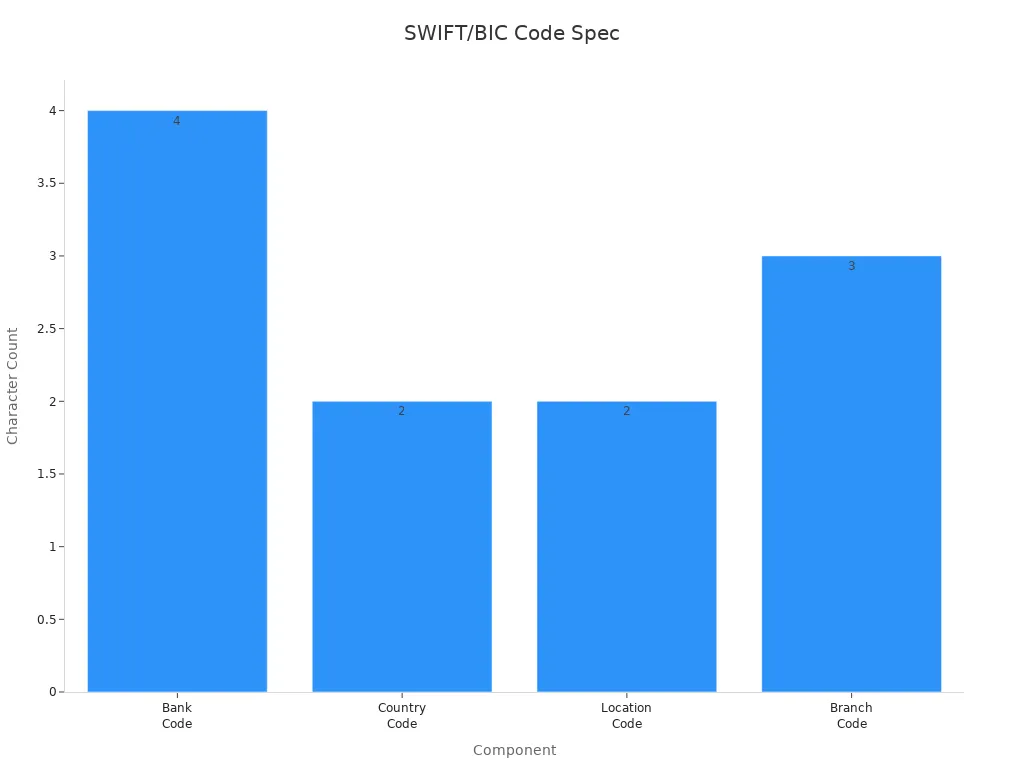
A SWIFT/BIC code follows a standardized format that ensures accurate identification of banks during international transactions. Each component of the code serves a specific purpose, making it easy to pinpoint the exact bank and branch involved in the transfer. Here's how the format is structured:
|
Component |
Description |
|
Bank Code |
The first 4 characters represent the bank code (usually a shortened version of the bank’s name). |
|
Country Code |
The following 2 characters are the country code (signifying the country where the bank is located). |
|
Location Code |
The next 2 characters are the location code (indicating the location of the bank's head office). |
|
Branch Code |
The final 3 characters, which are optional, represent the branch code (identifying a specific branch of the bank). |
For example, Lloyds Bank's SWIFT/BIC code, LOYDGB21Z93, follows this format. The "LOYD" represents Lloyds Bank, "GB" indicates the United Kingdom, "21" specifies the location, and "Z93" identifies the branch.
Example of Lloyds Bank’s SWIFT Code
Lloyds Bank uses specific SWIFT codes to facilitate international transfers. These codes help identify the bank globally and ensure secure transactions. Here’s an example:
-
SWIFT Code: LOYDGB21194
-
Bank Name: Lloyds Bank PLC
-
Country: United Kingdom
-
Branch Address: 1-5 High Street, Oxford, United Kingdom
-
Usage: This code is used for international money transfers and identifying the bank globally.
When you use this SWIFT code, you can confidently send money to Lloyds Bank PLC in Oxford, knowing the transaction will reach the correct destination.
Do Lloyds Bank Branches Have Different SWIFT Codes?
Yes, Lloyds Bank branches may have distinct SWIFT codes. These codes help identify specific branches for transactions, ensuring accuracy in routing funds. For example:
|
SWIFT/BIC Code |
Description |
|
LOYDJEH1 |
SWIFT Code for Lloyds Bank International Limited |
|
LBGTGB22 XXX |
Standard format for Business Identifier Codes (BIC) |
|
LOYDGB21652 |
Identifies the bank and branch for transactions |
If you’re sending money to a particular branch, verify the SWIFT/BIC code beforehand. This ensures the funds reach the intended recipient without delays or errors.
How to Find Lloyds Bank’s SWIFT/BIC Code
Using Online Banking and Mobile Apps
Online banking and mobile apps make it easy to locate Lloyds Bank’s SWIFT/BIC code. When you log into your online banking account, navigate to the section displaying your account details. Here, you can often find the SWIFT code listed alongside your IBAN. Many banks also allow you to download recent bank statements directly from the app or website, where the SWIFT code is typically included. If you’re unsure where to look, use the search function within the app to find relevant information. These tools provide a quick and convenient way to access the details needed for international transactions.
Checking Bank Statements and Official Documents
Your bank statements and official documents are reliable sources for finding Lloyds Bank’s SWIFT/BIC code. Look at the top or bottom sections of your printed or digital statements. Banks often include this information to assist customers with international transfers. Additionally, you can visit Lloyds Bank’s official website, where the SWIFT/BIC code is usually listed under the banking information or help sections. If you prefer a more direct approach, use a SWIFT/BIC finder tool available online. These tools are designed to provide accurate and up-to-date codes for banks worldwide.
Contacting Lloyds Bank Customer Service
If you cannot find the SWIFT/BIC code through other methods, contacting Lloyds Bank’s customer service is a reliable option. You can call their helpline or visit a local branch to speak with a representative. Customer service teams are trained to assist with international transactions and can provide you with the correct SWIFT code for your transfer. Make sure to have your account details ready when you reach out, as this will help the representative locate the information quickly. This method ensures you receive accurate details directly from the bank.
Using Lloyds Bank’s SWIFT Code for International Transfers

Steps to Make an International Transfer
Making an international money transfer with Lloyds Bank’s SWIFT code involves several straightforward steps. Follow this process to ensure your transaction is accurate and secure:
-
Choose Your Transfer Method: Decide whether you’ll use online banking, a mobile app, or visit a branch. Each method offers convenience and reliability.
-
Gather Recipient Details: Collect essential information, including:
-
Full Name: Ensure it matches the account holder’s name.
-
Account Number: Typically 10-12 digits for most accounts.
-
SWIFT Code: Verify the correct SWIFT/BIC code for the recipient’s bank.
-
Address: Provide the recipient’s physical or mailing address.
-
-
Confirm Accuracy: Double-check all details, especially the SWIFT code and account number, to avoid delays or errors.
-
Initiate the Transfer: Enter the details into your chosen platform and confirm the transaction.
Is an IBAN Required Alongside the SWIFT Code?
Yes, an IBAN (International Bank Account Number) is often required alongside the SWIFT code for international transactions. While the SWIFT code identifies the bank, the IBAN ensures the money reaches the correct account. For example, Lloyds Bank uses SWIFT codes like LOYDGB21XXX to identify its branches, but the IBAN specifies the recipient’s account within the bank. Always obtain both details from the recipient to avoid complications during the transfer.
Different countries have unique rules for international wires. Some may require additional information, such as the recipient’s address or proof of identity. Familiarize yourself with these requirements to ensure a smooth transaction.
Avoiding Common Errors in International Transfers
Errors in international transactions can lead to delays or rejected transfers. Avoid these common mistakes to ensure your money transfer proceeds without issues:
-
Typing Mistakes: SWIFT codes are long and complex. Double-check every character to prevent errors.
-
Incorrect Formats: Use the digital format provided by the bank to avoid rejections.
-
Recipient Details: Ensure the recipient’s name, account number, and address are accurate.
If an error occurs, promptly contact Lloyds Bank to rectify the issue. Resend the corrected information and confirm compliance with SWIFT standards. Taking these precautions ensures your transaction is secure and efficient.
Tips for Secure and Accurate Transfers
Verifying the SWIFT/BIC Code Before Use
Ensuring the accuracy of the SWIFT/BIC code is crucial when sending money internationally. A small mistake can lead to delays or failed transactions. To avoid such issues, follow these best practices:
|
Best Practices |
|
Verify SWIFT codes with your bank. |
|
Know branch-specific codes for accuracy. |
|
Maintain detailed transaction records. |
Always double-check the SWIFT code with your bank or use a trusted online tool. If you are unsure about branch-specific codes, confirm them with the recipient. Keeping detailed records of your transactions helps resolve any issues that may arise later.
Ensuring Recipient Details Are Correct
Accurate recipient details are essential for a successful transfer. Even minor errors can result in funds being sent to the wrong account. Follow these steps to ensure everything is correct:
-
Verify the recipient's full name as it appears on their bank account.
-
Check the recipient's account number or IBAN to prevent errors.
-
Pay attention to specific formatting requirements based on the recipient's country or bank.
-
Review all entered details thoroughly before confirming the transfer.
Taking the time to review these details minimizes the risk of errors and ensures your money reaches the intended recipient without complications.
How Xtransfer Simplifies International Transfers
Xtransfer revolutionizes the process of international transactions by addressing the inefficiencies of traditional banking methods. It eliminates barriers for small and medium-sized enterprises (SMEs), making global transfers faster and more reliable. Here’s how Xtransfer compares to traditional banking:
|
Feature |
Xtransfer |
Traditional Banking |
|
Barriers for SMEs |
Eliminates challenges |
Creates barriers (e.g., account opening difficulties) |
|
Processing Times |
Faster and more reliable transfers |
Slower remittance processes |
|
Fees |
Lower and transparent fees |
Steep markups |
|
Currency Conversion |
Real-time rates |
Often involves hidden fees |
|
Technology Utilization |
AI for compliance and efficiency |
Multiple intermediaries involved |
Additionally, Xtransfer offers highly competitive foreign exchange rates, ensuring better value for money. Unlike traditional banks, it provides real-time rates that reflect the actual market, saving you money on every transaction. By streamlining the process, Xtransfer reduces delays and costs, allowing businesses to operate smoothly when paying suppliers or receiving payments from international clients.
Understanding and using the correct SWIFT/BIC code is vital for successful international transactions. These codes ensure that funds reach the intended destination efficiently, with nearly 50 million SWIFT transactions processed daily in 2022. Accurate details, such as the recipient’s name and account information, further reduce errors and delays. When receiving money or sending it abroad, platforms like Xtransfer simplify the process, offering reliability and transparency. By prioritizing precision and leveraging trusted tools, you can navigate global banking with ease and confidence.
FAQ
What is the difference between SWIFT codes and BIC codes?
There is no difference between SWIFT codes and BIC codes. Both terms refer to the same international bank code used to identify banks during global transactions. SWIFT originated from the SWIFT network, while BIC is defined by ISO standards.
Can I use Lloyds Bank’s SWIFT code for all international wire transfers?
Yes, you can use Lloyds Bank’s SWIFT code for international wire transfers. However, ensure you also include the recipient’s IBAN for accurate account identification. Double-check the details to avoid delays or errors.
How do I verify a SWIFT/BIC code before making a transfer?
You can verify a SWIFT/BIC code by checking your bank’s official website, using online banking tools, or contacting customer service. Trusted platforms like Xtransfer also provide accurate SWIFT code information for global banks.
Do I need a branch-specific SWIFT code for Lloyds Bank?
Not always. Some transactions only require the main SWIFT code for Lloyds Bank. However, branch-specific codes may be necessary for certain transfers. Confirm with the recipient or your bank before proceeding.
What happens if I enter the wrong SWIFT code?
Entering the wrong SWIFT code can delay your transfer or send funds to the wrong bank. Contact your bank immediately to correct the error. Always verify the code before initiating a transaction to avoid complications.
Related content