
What is "Ad"? Multi-Industry Definitions and Applications
Author:XTransfer2026.01.15Ad
Ad Definition: One Abbreviation, Multiple Critical Meanings
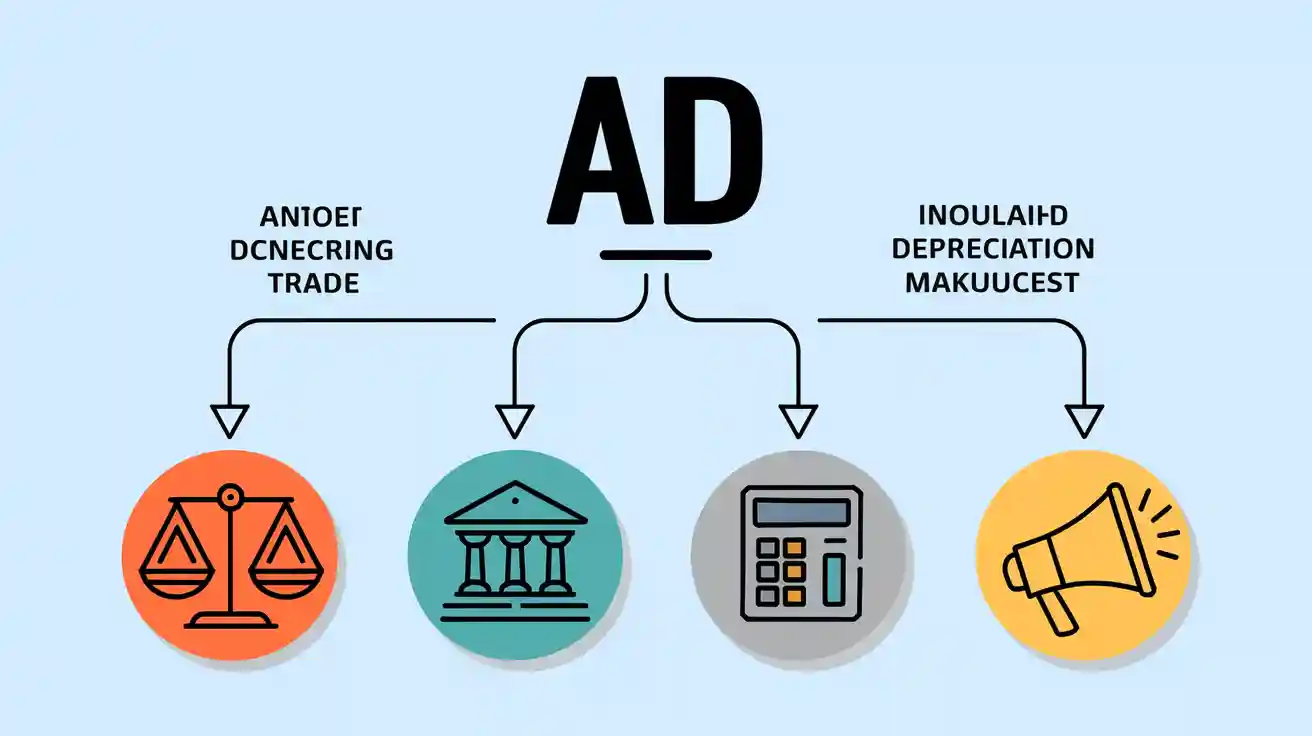
"Ad" is a highly ambiguous abbreviation used across international trade, finance, accounting, and marketing, with meanings ranging from "Antidumping" and "Authorized Dealer" to "Accumulated Depreciation" and "Advertisement," depending on the context. This three-letter combination appears in professional documents worldwide, but its interpretation requires careful attention to the surrounding subject matter and industry to avoid costly misunderstandings in cross-border business operations.
Why this abbreviation creates confusion: Unlike specialized technical acronyms used exclusively within single industries, "Ad" appears across completely unrelated professional fields with entirely different meanings. A trade compliance officer, foreign exchange dealer, corporate accountant, and marketing manager all use "Ad" regularly but mean completely different things. International business documents crossing these professional boundaries require explicit clarification about which "Ad" meaning applies.
Ad in International Trade: Antidumping
Understanding Antidumping Measures
Antidumping (AD) refers to trade protection measures that countries impose when foreign producers sell goods in export markets at prices below fair market value, causing or threatening material injury to domestic industries. These measures typically take the form of additional import duties (AD duties) calculated to offset the dumping margin—the difference between normal value and export price.
Legal framework for antidumping operates through World Trade Organization (WTO) agreements, particularly the Agreement on Implementation of Article VI of GATT 1994 (the Antidumping Agreement). This multilateral framework establishes procedural requirements for antidumping investigations, determination methodologies, and remedy imposition, though individual countries maintain substantial discretion in domestic implementation.
Dumping margin calculation compares the "normal value" (typically the price charged in the exporter's home market or production cost plus reasonable profit) against the export price. If export price falls below normal value by more than de minimis margins (typically 2%), dumping exists. AD duties equal the dumping margin, raising import prices to fair market levels.
Antidumping in Practice
AD investigations begin when domestic industries petition their governments alleging injury from dumped imports. Investigating authorities (like the U.S. International Trade Commission and Department of Commerce, or the European Commission for the EU) examine whether dumping occurred, calculate dumping margins, and determine whether domestic industry suffered material injury causally linked to dumped imports.
Provisional measures can be imposed during investigations to prevent injury during the often-lengthy investigation process (typically 12-18 months). These provisional duties collect funds pending final determination, refundable if authorities conclude no dumping or injury occurred.
AD duty orders specify which products from which countries face additional duties and at what rates. Orders might apply to all exporters from a country or specify company-specific rates based on individual dumping margin calculations. Affected importers must pay AD duties in addition to normal customs duties when clearing imports through customs.
Business Impact of AD Duties
Companies importing products subject to AD duties face significantly increased costs affecting pricing competitiveness and profit margins. A product normally imported at $100 with 5% normal customs duty ($5) faces $105 landed cost. Adding a 25% AD duty increases cost to $130—a 23.8% increase over the normal import cost.
Supply chain decisions respond to AD duty imposition. Importers might shift sourcing to countries not subject to AD orders, though this requires supplier relationship changes and potential quality or logistics adjustments. Some companies absorb AD duties to maintain market share, while others pass costs to customers through higher prices.
Compliance complexity increases under AD orders. Importers must accurately classify products to determine AD applicability, maintain detailed records proving country of origin, and correctly calculate and pay AD duties. Misclassification or underpayment creates customs penalty risks including fines and import privilege suspension.
Ad in Finance and Banking: Authorized Dealer
The Role of Authorized Dealers
Authorized Dealers (AD) are financial institutions licensed by central banks or regulatory authorities to conduct foreign exchange transactions, government securities trading, or other regulated financial activities. The AD designation indicates official approval to handle activities requiring special authorization beyond general banking licenses.
Foreign exchange authorized dealers in many countries hold exclusive rights to provide foreign currency services to customers, execute international wire transfers, and facilitate cross-border payments. Not all banks automatically possess AD status—central banks designate specific institutions meeting capital, expertise, and compliance criteria.
India's foreign exchange system exemplifies AD importance. The Reserve Bank of India categorizes authorized dealers into AD Category-I banks (handling all types of foreign exchange transactions), AD Category-II (money changers), and AD Category-III (non-bank entities authorized for specific remittance services). Only AD Category-I banks can handle most business foreign exchange needs.
AD Functions and Services
Cross-border payment processing represents core AD functions. When businesses need to send or receive international payments, they work with AD banks authorized to execute these transactions in compliance with foreign exchange regulations. The AD verifies transaction legitimacy, ensures proper documentation, and reports to regulatory authorities as required.
Foreign exchange conversion happens through ADs who buy and sell foreign currencies at market-based or regulated rates. Businesses needing to convert export proceeds from dollars to local currency or convert local currency to pay foreign suppliers work through ADs providing these conversion services.
Regulatory compliance support forms another AD role. ADs understand complex foreign exchange regulations, help customers complete required documentation correctly, submit regulatory reports on customers' behalf, and advise on compliance requirements for different transaction types.
Business Considerations When Working With ADs
Selecting appropriate ADs affects service quality, pricing, and compliance outcomes. Different ADs offer varying foreign exchange rates, fee structures, processing speeds, and service levels. Businesses with substantial cross-border payment needs should evaluate multiple ADs for competitive positioning.
Relationship building with ADs helps secure better service. ADs knowing customer business models, transaction patterns, and compliance history can provide faster processing, more competitive rates for high-volume customers, and proactive guidance on regulatory changes affecting customers' operations.
Documentation standards required by ADs reflect regulatory obligations these institutions bear. ADs must verify transaction legitimacy, ensure proper supporting documentation, and file regulatory reports. Customers should understand AD requirements and maintain organized documentation supporting their international transactions.
Ad in Accounting: Accumulated Depreciation
Understanding Accumulated Depreciation
Accumulated Depreciation (AD) represents the total depreciation expense recorded against a fixed asset since acquisition. This contra-asset account appears on balance sheets, reducing the asset's book value from historical cost to net book value (cost minus accumulated depreciation).
Depreciation mechanics allocate asset costs over useful lives rather than expensing entire purchase prices immediately. A $100,000 machine with 10-year useful life and no salvage value depreciates $10,000 annually using straight-line depreciation. After five years, accumulated depreciation reaches $50,000, showing on the balance sheet alongside the asset's $100,000 historical cost.
Balance sheet presentation shows: Property, Plant & Equipment (at cost): $100,000; Less: Accumulated Depreciation: ($50,000); Net Property, Plant & Equipment: $50,000. This presentation maintains visibility of both original investment and accumulated depreciation rather than simply showing net book value.
Depreciation Methods Affecting AD
Straight-line depreciation allocates equal annual depreciation across useful life. The $100,000 machine example above uses straight-line, generating consistent $10,000 annual depreciation and predictable AD accumulation.
Accelerated depreciation methods like declining balance or sum-of-years'-digits front-load depreciation, generating higher early-year depreciation and lower later-year amounts. A $100,000 asset with 5-year life using double-declining balance might depreciate $40,000 year one, $24,000 year two, $14,400 year three, etc., creating AD that accumulates faster initially than under straight-line.
Units-of-production depreciation ties depreciation to actual asset usage rather than time passage. A delivery vehicle expected to drive 100,000 miles might depreciate based on actual miles driven annually. If it drives 20,000 miles in year one, it records 20% of total depreciable cost as depreciation that year. AD accumulates proportionally to usage.
Why Accumulated Depreciation Matters
AD affects financial statement analysis and business decision-making. High AD relative to asset cost suggests assets are older and may need replacement soon. A company with $10 million equipment cost and $9 million AD operates on aging equipment likely requiring capital expenditure for replacement.
Tax implications arise because depreciation reduces taxable income. While AD itself is a cumulative balance sheet account, the annual depreciation expense reducing AD's credit balance flows through the income statement reducing earnings and tax obligations. Tax depreciation methods often differ from book depreciation, creating deferred tax complexities.
Asset disposal accounting uses AD to determine gain or loss. When selling a fully or partially depreciated asset, the difference between sale proceeds and net book value (cost minus AD) creates gain or loss. Selling the $100,000 machine with $50,000 AD for $60,000 creates a $10,000 gain ($60,000 proceeds minus $50,000 net book value).
Ad in Marketing and Advertising: Advertisement
The Ubiquitous Advertisement Abbreviation
Advertisement (Ad) represents promotional content designed to inform potential customers about products or services and persuade them toward purchase or brand engagement. This usage dominates everyday business conversation—"ad campaign," "ad spend," "digital ads," "print ads," and countless similar phrases all use "Ad" as shorthand.
Modern advertising channels span digital (search ads, display ads, social media ads, video ads), traditional media (television, radio, print publications), outdoor (billboards, transit advertising), and emerging formats (influencer partnerships, podcast sponsorships, streaming service placements). Each channel type generates specific "ad" terminology describing its implementation.
Ad spend represents monetary investment in advertising—the budget allocated to creating and distributing promotional content. Companies track ad spend meticulously, analyzing return on ad spend (ROAS) measuring revenue generated per dollar invested in advertising to evaluate campaign effectiveness.
Digital Ad Terminology
Click-through rate (CTR) measures ad effectiveness by calculating the percentage of ad views resulting in clicks. A display ad shown 1,000 times generating 20 clicks has 2% CTR. Higher CTRs indicate more compelling ad creative and targeting.
Cost per click (CPC) represents the price paid for each ad click in pay-per-click advertising models. Google Ads and Facebook Ads typically charge per click rather than per impression, making CPC a critical metric for budget management and campaign optimization.
Conversion rate measures the percentage of ad clicks resulting in desired actions—purchases, form completions, downloads, or other conversion goals. An ad generating 100 clicks with 5 purchases has 5% conversion rate. Optimizing both CTR and conversion rate maximizes ad campaign return on investment.
B2B Advertising Considerations
Business-to-business advertising differs from consumer advertising in targeting, messaging, purchase cycles, and effectiveness metrics. B2B ads target specific companies, job titles, or industries rather than broad consumer demographics, using platforms like LinkedIn, trade publications, or industry websites for precise targeting.
Content marketing overlaps with traditional advertising as B2B companies invest in educational content (whitepapers, webinars, case studies) that function as subtle advertisements building brand authority and generating leads. The line between "content" and "ads" blurs when educational materials ultimately serve marketing objectives.
Attribution complexity in B2B advertising stems from lengthy sales cycles and multiple touchpoints. A prospect might see ads over months before purchasing, making it difficult to determine which ads drove the sale. Multi-touch attribution models attempt to credit various ads appropriately across the customer journey.
Context Clues for Determining Ad Meaning
Industry and Document Type
Document source provides the strongest clue to Ad meaning. Trade policy documents from government agencies almost certainly use Ad for antidumping. Banking or foreign exchange documentation indicates Authorized Dealer. Corporate financial statements point to Accumulated Depreciation. Marketing plans or media buying documents mean Advertisement.
Professional role of the communicator helps interpretation. A customs compliance officer referencing "AD orders" discusses antidumping. A forex trader mentioning "AD banks" means Authorized Dealers. An accountant noting "AD balances" refers to Accumulated Depreciation. A marketing manager discussing "ad performance" means advertisements.
Surrounding Terminology
Words appearing near "Ad" often clarify meaning through context. "AD duties," "AD investigations," or "AD margins" signal antidumping. "AD Category-I," "AD licenses," or "RBI-authorized AD" indicate Authorized Dealers. "AD accounts," "depreciation schedule," or "net book value" point to Accumulated Depreciation. "Ad campaign," "ad creative," or "ROAS" mean Advertisement.
Numerical context provides clues. Percentages following "Ad" in trade contexts likely reference antidumping duty rates. Large monetary figures with "Ad" on balance sheets suggest Accumulated Depreciation amounts. Per-unit costs with "Ad" in marketing documents indicate advertising costs.
Geographic and Regulatory Context
Certain geographic or regulatory contexts make specific meanings more likely. Documents discussing U.S.-China trade tensions probably use Ad for antidumping given the extensive AD duties in that bilateral relationship. Indian regulatory documents frequently reference ADs (Authorized Dealers) given India's comprehensive foreign exchange control system.
International payment documentation might use Ad for Authorized Dealers when describing correspondent banking relationships or foreign exchange execution, but advertisement meaning becomes highly unlikely in these technical financial contexts.
Risks of Ad Ambiguity in International Business
Misinterpretation Consequences
Misunderstanding "Ad" meaning in contracts or communications can create significant problems. A trade agreement clause about "Ad measures" means antidumping protections, not advertising initiatives. Confusing these meanings could lead parties to negotiate or execute agreements based on fundamental misunderstandings about obligations and rights.
Financial miscommunication occurs when accountants and marketers discuss "Ad" without clarifying they mean different things—one discussing balance sheet accounts while the other discusses marketing budgets. This creates alignment failures and resource allocation confusion.
Cross-border payment instructions referencing "Ad" might mean Authorized Dealer banks should handle transactions. Misinterpreting this as advertisement-related could route payments incorrectly or cause confusion about transaction purposes.
Prevention Through Clear Communication
Spell out abbreviations on first use in documents, especially international documents crossing cultural and professional boundaries. "The importer shall pay all antidumping (AD) duties..." or "Payments shall be processed through Reserve Bank of India Authorized Dealers (AD)" eliminates ambiguity from the start.
Use full terms in critical communications even if somewhat repetitive. "Antidumping duties" rather than "AD duties" in import contracts, "Authorized Dealer banks" rather than "AD banks" in payment instructions, "accumulated depreciation" rather than "AD" in financial analysis, and "advertisement spending" rather than "ad spend" in marketing discussions all prevent confusion.
Context establishment at document beginnings helps readers understand which professional domain applies. A preamble stating "This document addresses international trade compliance including antidumping regulations..." prepares readers that "Ad" references will concern antidumping rather than advertisements, banking, or accounting.
Ad in Different Languages and Cultures
Latin and Legal Traditions
"Ad" in Latin means "to" or "toward," appearing in numerous legal and business phrases: ad hoc (for this specific purpose), ad valorem (according to value), ad referendum (subject to reference/approval). These Latin usages occasionally appear in international business documents, adding another layer of potential meaning.
Legal documentation sometimes includes Latin phrases, particularly in common law jurisdictions with English legal traditions. International contracts might reference "ad valorem duties" (customs duties calculated as percentage of value) or "ad hoc committees" (temporary bodies for specific purposes).
International Document Standards
ISO and other international standards organizations generally avoid ambiguous abbreviations in technical standards, but business practice documents don't always follow such rigorous conventions. International trade documentation still frequently uses "Ad" in various contexts, requiring readers to apply contextual interpretation.
Translation complications arise when documents are translated between languages. A translator might interpret "Ad" differently based on their professional background, potentially introducing errors if source document context wasn't clear. Technical translation requires subject matter expertise to interpret abbreviations correctly.
Multi-Meaning Abbreviation Comparison
| Context | Ad Meaning | Common Phrases | Related Terms | Typical Users |
|---|---|---|---|---|
| International Trade | Antidumping | AD duties, AD investigation, AD margin, AD order | CVD (Countervailing Duties), dumping, WTO | Trade compliance officers, customs brokers, importers |
| Finance/Banking | Authorized Dealer | AD Category-I, AD bank, AD license | Forex, FEMA, RBI, correspondent bank | Forex traders, compliance officers, central banks |
| Accounting | Accumulated Depreciation | AD balance, net book value, depreciation schedule | PP&E, depreciation expense, asset write-off | Accountants, CFOs, financial analysts |
| Marketing | Advertisement | Ad campaign, ad spend, ad creative, ROAS | Marketing, CPC, CTR, conversion | Marketing managers, media buyers, advertisers |
| Legal (Latin) | To/Toward | Ad hoc, ad valorem, ad referendum | Per, ex, in re | Lawyers, legal professionals |
Frequently Asked Questions About "Ad"
How do I know which meaning of "Ad" applies in a document?
Examine the document source, subject matter, and surrounding terminology. Trade policy documents mean antidumping, banking documents suggest Authorized Dealer, financial statements indicate Accumulated Depreciation, and marketing materials mean Advertisement. When unclear, look for defining context in surrounding sentences or ask the document author for clarification rather than assuming.
Can "Ad" mean multiple things in the same business context?
Yes, particularly in comprehensive business operations. A company's international trade department deals with antidumping, its treasury team works with Authorized Dealers for foreign exchange, its accounting department tracks Accumulated Depreciation, and its marketing team manages Advertisements. Internal company documents might use "Ad" for different purposes in different sections, requiring careful context attention.
Should I avoid using "Ad" in international business documents?
For critical documents like contracts, compliance filings, or payment instructions, spelling out the full term on first use (and potentially throughout) prevents misunderstanding: "antidumping (AD)" or "Authorized Dealer (AD)" establishes clear meaning. In informal communications where context is clear, abbreviated "Ad" usage is generally acceptable, though clarity always trumps brevity in international business.
What's the difference between AD and CVD in trade?
AD (antidumping duties) address unfair pricing where exporters sell below fair market value. CVD (countervailing duties) address unfair subsidies where governments provide financial support to exporters. Both are trade remedies addressing unfair trade practices, but AD focuses on private company pricing while CVD targets government subsidization. Products can face both AD and CVD simultaneously.
Are Authorized Dealers the same in every country?
No, AD systems vary by jurisdiction. India has comprehensive AD categorization with strict foreign exchange controls. Some countries don't use formal AD designation, instead licensing all banks for foreign exchange operations. Others have AD systems for specific activities like securities trading. Understanding each jurisdiction's specific AD framework matters for compliance.
Does accumulated depreciation ever decrease?
Accumulated depreciation typically only increases as depreciation expense adds to it each period, or resets to zero when assets are sold or fully written off. It doesn't decrease in the sense of reversing previously recorded depreciation. However, the AD contra-asset account balance decreases (is debited) when disposing of assets, as disposing eliminates both the asset cost and its accumulated depreciation from the books.
Is "ad" always capitalized when used as an abbreviation?
Capitalization varies by context and style. In formal documents, industry-specific abbreviations like AD for Antidumping or Authorized Dealer typically capitalize both letters. Accumulated Depreciation in accounting might appear as "AD" or "A/D." Advertisement commonly appears as lowercase "ad" in marketing contexts ("ad campaign"), though style guides vary. Follow your organization's style guide or industry standards.
Can confusion between Ad meanings cause legal problems?
Yes, particularly in contracts or regulatory filings. A trade contract ambiguously referencing "Ad obligations" could be interpreted as antidumping compliance or something else entirely, creating disputes about actual contractual obligations. Payment instructions confusing Authorized Dealer requirements with other meanings could delay or misdirect payments. Always clarify abbreviations in legally binding documents to prevent interpretative disputes.
Related content