
Must-Know Blockchain Developments for the Modern Era
Author:XTransfer2026.01.05Blockchain
Overview of Blockchain Adoption in 2025
Blockchain technology is entering a decisive phase in 2025. Global adoption is accelerating across finance, supply chains, healthcare, and digital infrastructure. Industry surveys show that nearly 90 percent of businesses plan to integrate blockchain technology, while 87 percent intend to increase investment. Worldwide blockchain users are expected to exceed 560 million, and the global market size is projected to reach approximately 55 to 58 billion US dollars.
This rapid adoption is driven by tangible business value. Blockchain reduces transaction costs, improves settlement speed, enhances data integrity, and strengthens security. These benefits increasingly affect both enterprise operations and everyday digital interactions.
Core Blockchain Technology Trends in 2025
Modular Blockchains
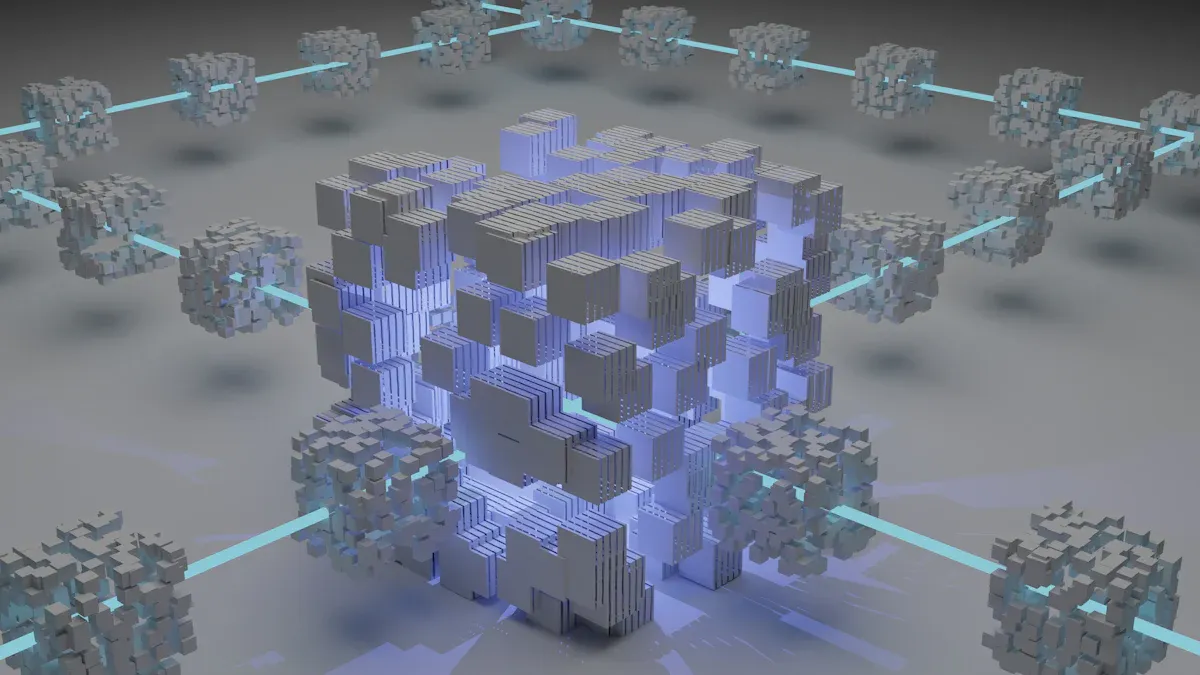
Modular blockchains are reshaping how blockchain systems are designed and scaled. Instead of relying on a single monolithic structure, modular architectures separate consensus, data availability, and execution layers. This approach enables greater flexibility, faster scalability, and lower operational costs.
Projects such as Cosmos, Celestia, and Ethereum rollups demonstrate how modular design supports complex use cases, including decentralized finance, gaming, and AI-driven workloads. By decoupling core functions, developers can optimize performance without compromising security. For businesses, modular blockchains allow faster product iteration and easier customization for industry-specific needs.

Interoperability Across Blockchain Networks
Interoperability has become a foundational requirement for blockchain adoption. In 2025, users and enterprises expect digital assets and data to move seamlessly across multiple blockchains. Technologies such as Polkadot parachains, Cosmos IBC, and cross-chain liquidity protocols enable this connectivity.
Current cross-chain infrastructure processes hundreds of thousands of secure transactions daily and supports billions of dollars in asset transfers. Industry reports indicate that around 65 percent of blockchain projects plan to implement cross-chain functionality by 2025. Interoperability reduces fragmentation, expands market reach, and allows users to access decentralized applications without being locked into a single ecosystem.
Zero-Knowledge Proofs and Privacy Technologies
Privacy-enhancing technologies, particularly zero-knowledge proofs, are becoming standard components of blockchain systems. Zero-knowledge proofs allow users to verify transactions or credentials without revealing underlying data, balancing transparency with confidentiality.
Platforms such as Mina, ZKsync, and StarkNet integrate zero-knowledge architectures to protect user data while maintaining trustless verification. Real-world deployments show that privacy-preserving blockchain systems can significantly reduce operational costs and encourage higher participation rates. In 2025, zero-knowledge proofs are increasingly used in decentralized finance, digital identity, compliance systems, and enterprise data sharing.
AI and Blockchain Integration
AI-Driven Blockchain Applications
The convergence of artificial intelligence and blockchain is a defining trend in 2025. Blockchain provides immutable data records and transparent audit trails, while AI enables advanced analytics and automation.
In healthcare, blockchain-secured AI systems protect patient data while supporting diagnostic tools. In finance, AI-powered fraud detection systems rely on blockchain to ensure data integrity and traceability. In supply chain management, predictive AI models operate on blockchain-based ledgers to optimize routing, compliance, and inventory forecasting.
This integration improves trust in AI outputs and enables decentralized AI training models, reducing reliance on centralized data monopolies.
Blockchain and the Internet of Things
Blockchain adoption within the Internet of Things ecosystem continues to expand. By 2025, a majority of large-scale IoT deployments incorporate blockchain to secure device identities, manage data exchange, and prevent unauthorized access.
Blockchain enhances IoT systems by providing tamper-resistant records and decentralized control mechanisms. Applications span smart homes, energy management, healthcare wearables, transportation networks, and industrial manufacturing. These systems improve efficiency, reduce fraud, and increase resilience against cyber threats.
AI in Crypto Markets and Trading
AI plays a growing role in crypto trading and asset management. Machine learning models analyze market signals, identify trends, and automate trading strategies across volatile crypto markets. AI-powered tools help users manage risk, optimize portfolios, and respond faster to market movements.
As crypto markets grow more complex, AI-driven analytics become essential for both retail and institutional participants seeking competitive advantages.
Real-World Asset Tokenization
Tokenization in Financial Markets
Real-world asset tokenization transforms physical and traditionally illiquid assets into blockchain-based digital tokens. In 2025, tokenization expands across real estate, bonds, commodities, private equity, and alternative investments.
Research indicates that tokenization increases liquidity, lowers entry barriers, and reduces settlement costs. Institutional investors increasingly allocate a portion of portfolios to tokenized assets, while blockchain-based settlement systems generate billions of dollars in annual cost savings. Major asset managers and banks actively deploy tokenized funds and structured products.
Onchain Government Bonds
Governments are adopting blockchain to issue and manage bonds onchain. Blockchain-based bond issuance improves transparency, reduces settlement times, and allows real-time tracking of ownership and payments. Several countries now pilot or launch digital bond programs, providing investors with more efficient access to public debt markets.
Tokenized Loyalty and Retail Programs
Tokenization extends beyond finance into consumer applications. Retailers and banks use blockchain to issue tokenized loyalty points that users can trade, transfer, or redeem across platforms. These programs increase customer engagement and enhance the perceived value of rewards, particularly in premium and cross-border consumer markets.
DeFi, Stablecoins, and Digital Currencies
Evolution of Decentralized Finance
Decentralized finance continues to grow as a parallel financial system. By 2025, millions of users interact with DeFi protocols for lending, borrowing, trading, and yield generation. Total value locked across major platforms exceeds previous cycles, supported by improved security audits and cross-chain liquidity.
DeFi adoption is particularly strong in regions with limited access to traditional banking, where decentralized applications significantly reduce remittance costs and improve financial inclusion.
Stablecoins in Global Payments
Stablecoins dominate blockchain-based payments in 2025, accounting for the majority of crypto transaction volume. Businesses increasingly use stablecoins for cross-border settlements due to lower fees, faster processing, and reduced currency volatility.
Enterprise adoption accelerates across Asia, Latin America, and emerging markets, where stablecoins support international trade, payroll, and treasury management. Payment providers and financial institutions now treat stablecoin infrastructure as a strategic priority.
Central Bank Digital Currencies
Central bank digital currency initiatives expand worldwide. Pilot programs in Asia, Europe, and developing economies explore how blockchain-based digital currencies can improve payment efficiency and financial stability. Retail CBDCs enhance access to digital payments, while wholesale CBDCs streamline interbank settlements and cross-border transactions.
Blockchain Development Trends
Privacy-Focused and Stealth Chains
Privacy-oriented blockchains, often referred to as stealth chains, gain renewed attention in 2025. These networks obscure transaction details and wallet identities to protect user privacy. Advances in cryptography improve performance and usability while maintaining strong anonymity guarantees.
Privacy-preserving blockchains play an important role in regions and industries where confidentiality is critical, including finance, journalism, and digital identity.
Web3 and Decentralized Autonomous Organizations
Web3 adoption accelerates as users demand greater control over data, identity, and governance. Decentralized autonomous organizations enable collective decision-making without centralized authorities. DAOs manage protocols, communities, investment funds, and creative projects through transparent, onchain governance mechanisms.
Millions of users participate daily in Web3 social platforms and DAO ecosystems, signaling a structural shift in how digital communities operate.
Green and Sustainable Blockchain Infrastructure
Environmental sustainability becomes a core design principle. Most new blockchains adopt energy-efficient consensus mechanisms such as proof-of-stake. Some networks actively offset or remove carbon emissions.
These developments address long-standing environmental concerns and support broader institutional adoption, particularly in regions with strict sustainability requirements.
Blockchain Applications Across Industries
Supply Chain Management
Blockchain improves supply chain transparency by enabling real-time tracking and immutable records. Retailers, logistics firms, and manufacturers use blockchain to trace product origins, reduce fraud, and accelerate recalls. These systems enhance consumer trust and operational efficiency.
Healthcare Systems
In healthcare, blockchain secures patient records, enables controlled data sharing, and reduces insurance fraud. Smart contracts allow patients to manage access permissions, while immutable records ensure data integrity across hospitals, labs, and insurers.
Cybersecurity and Data Integrity
Blockchain strengthens cybersecurity by eliminating single points of failure and enabling verifiable audit trails. Enterprises deploy blockchain-based systems for secure backups, identity verification, and tamper-proof logging across digital infrastructure.
Voting, Gaming, and Digital Entertainment
Blockchain supports secure digital voting systems that enhance transparency while preserving voter anonymity. In gaming, blockchain enables true ownership of digital assets, allowing players to trade or transfer items across platforms. These applications create new economic models and community-driven ecosystems.
The Future of Blockchain Technology
Integration with Emerging Technologies
Blockchain increasingly integrates with artificial intelligence, cloud computing, 5G, and digital identity systems. Industrial ecosystems leverage blockchain to coordinate data sharing across global partners while maintaining trust and compliance.
Decentralized Cloud Storage
Blockchain-based storage networks provide secure, privacy-preserving alternatives to centralized cloud providers. Data is encrypted, distributed globally, and controlled by users rather than intermediaries, reducing costs and security risks.
Blockchain Verification Tools
Verification tools built on blockchain allow users to authenticate products, credentials, and digital content. These systems combat fraud in education, supply chains, and collectibles, making verification faster and more reliable.
Challenges and Regulatory Outlook
Regulatory Developments
Clearer regulatory frameworks emerge in 2025, providing guidance for digital asset issuance, custody, and compliance. Improved regulatory clarity boosts investor confidence and accelerates institutional participation.
Security and Compliance Risks
Despite progress, blockchain systems face ongoing security challenges, including smart contract vulnerabilities and governance risks. Enterprises increasingly rely on audits, formal verification, and compliance tooling to mitigate these threats.
Integration and Adoption Barriers
Interoperability, scalability, and talent shortages remain obstacles. However, new middleware solutions, developer tools, and cross-chain standards continue to lower entry barriers for businesses and users.
Conclusion
Blockchain technology in 2025 is defined by maturity, integration, and real-world utility. Modular architectures, interoperability, privacy technologies, AI integration, and tokenization drive adoption across industries. As blockchain continues to evolve, it delivers faster transactions, stronger security, greater transparency, and broader access to digital services.
Staying informed about these trends enables businesses and individuals to navigate the next phase of blockchain innovation with confidence.
Frequently Asked Questions
What is the most important blockchain trend in 2025?
AI and blockchain integration stands out as the most influential trend, enabling secure, intelligent, and automated digital systems.
How does blockchain improve data security?
Blockchain uses cryptographic links and decentralized validation to prevent unauthorized data changes, ensuring integrity and traceability.
Can non-technical users benefit from blockchain?
Yes. User-friendly wallets and applications allow people to use blockchain services without technical expertise.
Why are businesses adopting blockchain rapidly?
Businesses adopt blockchain to reduce costs, improve efficiency, enhance trust, and secure data across complex digital operations.
Related content