
How to Start Global Trade as a Manufacturer
Author:XTransfer2026.01.15Global Trade
Global trade opens doors for manufacturers to reach customers worldwide. Selling your products internationally not only boosts sales but also diversifies your revenue streams. By going global, you can reduce reliance on local markets and tap into regions where demand for your offerings is high. Identifying global trade opportunities is essential for international growth. Start by analyzing how your company's strengths align with market needs abroad. This step will help you take your company global and position yourself for success in international trade.
Assess Readiness for International Trade
Evaluate Product Suitability for Global Markets
Before selling abroad, you must determine if your products meet international market requirements. Start by assessing their quality and compliance with global standards. Products that align with sustainability trends often perform better in international trade. Manufacturers implementing MiFID II sustainability rules report challenges but also gain insights into evolving market demands.
Key factors to consider include:
-
Quality control: Ensure your products maintain consistent quality across borders.
-
Market fit: Evaluate how your product introduction aligns with consumer preferences abroad.
-
Sustainability: Address environmental concerns to attract eco-conscious buyers.
By focusing on these aspects, you can break into global business with confidence.
Understand Cultural and Market Differences
Expanding into international business requires understanding cultural nuances and market dynamics. Miscommunication can lead to financial losses, while effective strategies improve collaboration and productivity.
|
Statistic |
Description |
|---|---|
|
70% |
Multinational teams face language-related conflicts that hinder creativity and efficiency. |
|
20%-25% |
Teams with effective language strategies report increased productivity. |
|
50% |
Executives acknowledge financial losses due to miscommunications. |
|
25% |
Companies like Siemens improve project collaboration efficiency through structured language training. |
Understanding these challenges helps you access international markets more effectively. Tailor your approach to each region to maximize international market opportunities.
Assess Internal Resources and Capabilities
To expand into international business, evaluate your internal resources and capabilities. Focus on factors that provide a competitive edge and support global operations.
|
Metric |
Description |
|---|---|
|
Value |
Resources must enhance revenue or reduce costs. |
|
Rarity |
Unique resources give you an advantage over competitors. |
|
Imitability |
Hard-to-replicate resources ensure long-term success. |
|
Organization |
Internal processes must optimize resource utilization for maximum productivity. |
Assessing these metrics ensures your business is ready for international trade. Strong internal capabilities pave the way for successful product introduction in global markets.
Research Global Trade Opportunities
Conduct Market Research to Identify Target Markets
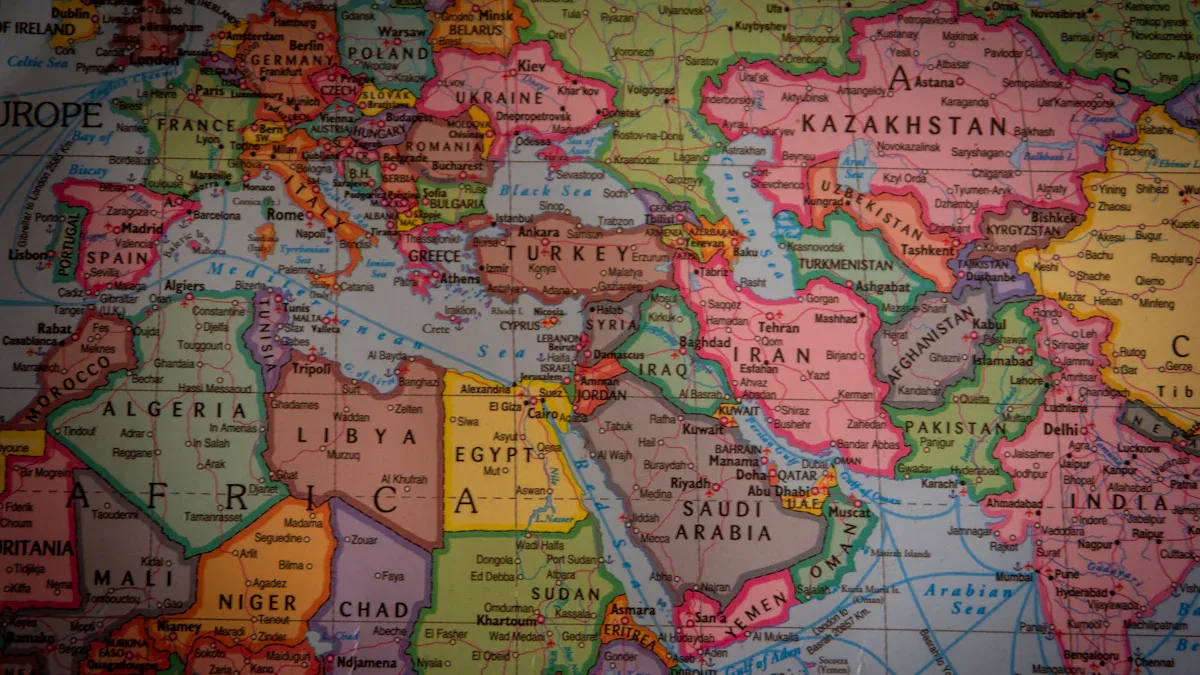
Identifying the right markets is the foundation of a successful import-export business. You need to conduct thorough foreign market research to uncover global trade opportunities that align with your products. Start by analyzing quantitative data to understand market trends, demand potential, and customer preferences. This approach helps you make informed decisions and reduces the risk of entering unsuitable markets.
|
Benefit |
Description |
|---|---|
|
Enhanced Strategic Planning |
Analyzing numerical data helps identify market trends and forecast demand, aiding in informed decision-making. |
|
Accurate Market Segmentation |
Enables precise segmentation of markets based on various data types, allowing tailored marketing strategies. |
|
Market Expansion |
Provides insights into demand potential and competitive landscape for new market entries, crucial for success. |
Focus on regions where your company introduction can resonate with the target international customer. For example, if your product appeals to eco-conscious buyers, prioritize markets with strong environmental awareness. Use tools like government trade databases, industry reports, and online analytics platforms to gather insights. By understanding these factors, you can position your business for success when going global.
Develop a Comprehensive Global Trade Business Plan
A well-structured business plan is essential for entering international trade. It serves as a roadmap for your import-export business and helps attract potential partners. Your plan should outline clear objectives, strategies, and performance indicators to measure success.
|
Objective |
KPI |
Target Timeline |
|---|---|---|
|
Market Entry |
Time-to-Entry |
3 Months |
|
Logistics |
On-Time Deliveries |
95% Efficiency |
|
Compliance |
Regulatory Adherence |
100% Compliance |
Include details about your company introduction, such as your unique selling points and how your products meet the needs of international customers. Highlight your strategies for overcoming challenges like tariffs, cultural differences, and logistical complexities. A strong business plan not only guides your operations but also builds credibility with stakeholders in the global trade ecosystem.
Analyze Competitors in International Business
Understanding your competition is critical when entering international business. Competitor analysis helps you identify market gaps, refine your strategies, and strengthen your position in the global trade landscape. Evaluate key metrics to gain a comprehensive view of the competitive environment.
|
Metric |
Description |
|---|---|
|
Total Addressable Market (TAM) |
Evaluates overall revenue opportunity. |
|
Compound Annual Growth Rate (CAGR) |
Indicates market growth trajectory. |
|
Number of Competitors |
Determines market saturation and entry barriers. |
|
Market Share of Key Players |
Provides insights into dominant players and market fragmentation. |
|
Competitive Advantage |
Assesses unique value propositions of existing competitors. |
|
Ease of Doing Business Index |
Ranks countries based on regulatory environment and business-friendly practices. |
|
Corruption Perceptions Index (CPI) |
Measures perceived levels of public sector corruption. |
|
Economic Stability Metrics |
Includes GDP growth rate, inflation rate, and currency stability. |
For example, analyzing the Total Addressable Market (TAM) helps you estimate the revenue potential in a specific region. Similarly, understanding the Ease of Doing Business Index can guide you toward markets with fewer regulatory hurdles. Use this data to refine your company introduction and craft strategies that set you apart from competitors. By staying informed, you can seize global trade opportunities and establish a strong foothold in international markets.
Navigate Legal and Regulatory Requirements
Comply with International Trade Laws and Regulations
Understanding and adhering to international trade laws is essential for your import-export business. These laws govern what goods can be traded, the permits required, and the documentation needed for compliance. Non-compliance can lead to fines, shipment delays, or even legal issues, which can disrupt your operations.
|
Aspect |
Description |
|---|---|
|
Import/Export Laws |
Dictate what goods can be traded, requiring permits and documentation for compliance. |
|
Tariffs and Duties |
Taxes that affect pricing and profitability; understanding them is crucial for competitive pricing. |
|
Customs Regulations |
Rules governing the entry and exit of goods, ensuring smooth customs processes and avoiding delays. |
|
Potential Consequences |
Non-compliance can lead to fines, shipment delays, and legal issues, impacting business operations. |
To ensure compliance, you should develop a risk management plan that incorporates environmental, social, and governance (ESG) factors. Regular employee training on trade regulations and the use of automation systems can also help reduce human error in documentation. Engaging customs agents with expertise in international business can further streamline the process and mitigate risks.
Understand Tariffs, Duties, and Regional Trade Agreements
Tariffs and duties play a significant role in shaping your export strategy. These taxes influence the landed cost of goods, which directly impacts your pricing and market access. For example, the U.S. collected $66 billion in duties in 2021, highlighting the economic impact of tariffs on global trade.
Customs duties serve multiple purposes, such as revenue generation and protectionism. To navigate these effectively, you need to understand the different types of tariffs:
-
Ad Valorem Tariffs: Calculated as a percentage of the product's value.
-
Specific Tariffs: Fixed fees based on the quantity of goods.
-
Compound Tariffs: A combination of ad valorem and specific tariffs.
Regional trade agreements can also provide opportunities to reduce tariffs and enhance your export potential. Leveraging agreements like NAFTA or the EU Single Market can help you lower costs and improve competitiveness. Accurate HS classification and tariff engineering are additional strategies to optimize your import-export business.
Prepare Essential Export Documentation
Proper documentation is the backbone of a successful export-import trade. Missing or inaccurate paperwork can lead to delays, fines, or even the rejection of shipments. To streamline your export strategy, ensure you prepare the following essential documents:
-
Pro Forma Invoice: A preliminary bill of sale outlining the terms of sale and estimated costs.
-
Export License: A legal authorization required for shipping regulated goods.
-
Packing List: A detailed breakdown of the contents in each package for logistics and customs purposes.
-
Insurance Certificate: Proof that your goods are insured against risks during transit.
-
Export Declaration Form: A mandatory document filed with customs to declare exported goods.
Using technology to automate documentation processes can improve efficiency and reduce errors. Additionally, working with experienced freight forwarders ensures that all paperwork complies with international business regulations. This approach minimizes risks and helps you focus on growing your import-export business.
Build Relationships in Global Trade
Identify Reliable Distributors and Partners
Finding trustworthy distributors and partners is essential for success in global trade. You should go beyond basic corporate profiles and conduct thorough background checks. This includes verifying beneficial ownership and screening for connections to politically exposed persons (PEPs) or individuals on sanctions lists. Such diligence helps you avoid risks tied to sanctioned entities and ensures compliance with international business regulations.
To identify reliable partners:
-
Assess the strengths and weaknesses of potential partner ecosystems.
-
Define strategies that align with your business goals.
-
Engage with diverse partners to enhance resilience and reduce supply chain risks.
Verification of vendors and third parties also minimizes risks like fraud and regulatory violations. By performing due diligence, you can build a network of partners that supports your long-term growth and profitability.
Attend Trade Fairs and Networking Events
Trade fairs offer a unique opportunity to connect with potential partners and expand your international business network. These events allow you to showcase your products, meet distributors, and learn about market trends. Participation in trade fairs has proven to enhance operational performance and foster critical social exchanges.
|
Type of Performance Measure |
Importance Level |
Source |
|---|---|---|
|
Operational Performance |
Highly Valued |
Gerschewski and Xiao (2015) |
|
Non-Financial Measures |
More Important |
Shipley et al. (1993) |
|
Social Exchanges |
Critical Success Factor |
Rice (1992) |
Attending these events not only builds relationships but also strengthens your brand presence in global trade. Prepare by researching attendees, setting clear objectives, and following up with contacts after the event.
Leverage Online Platforms for International Business Connections
Online platforms have revolutionized how businesses connect globally. You can use these tools to find distributors, negotiate deals, and manage partnerships. Platforms like Alibaba, LinkedIn, and Global Sources provide access to a vast network of international business professionals.
To maximize these platforms:
-
Create a professional profile that highlights your company’s strengths.
-
Use analytics tools to identify potential partners and assess their credibility.
-
Engage actively by joining industry-specific groups and participating in discussions.
These platforms also offer data-driven insights that help you make informed decisions. By leveraging online tools, you can scale your partner network efficiently and enter new markets faster.
Tip: Combine online networking with in-person events to build stronger, more reliable relationships in global trade.
Manage Logistics and Supply Chain
Choose Efficient Shipping and Freight Services
Efficient shipping and freight services are critical for the success of your import-export business. Choosing the right service provider ensures timely deliveries, cost savings, and customer satisfaction. Evaluate providers based on key metrics such as cost per shipment, on-time deliveries, order accuracy, and customer satisfaction.
|
Metric |
Description |
|---|---|
|
Cost Per Shipment |
Analyzes transportation, customs, and handling costs to improve strategic planning. |
|
On-Time Deliveries |
Measures the percentage of orders delivered on or before the estimated delivery date. |
|
Order Accuracy |
Ratio of orders accurately delivered without damage or issues during customs. |
|
Customer Satisfaction |
Measures the overall satisfaction of customers with the shipping and freight services provided. |
Partnering with reliable freight forwarders can streamline your logistics. They handle complex tasks like route optimization and customs clearance, allowing you to focus on growing your import-export business.
Navigate Customs and Clearance Processes
Customs clearance is a vital step in international trade. Delays during this process can disrupt your supply chain and reduce customer satisfaction. The customs process typically involves:
-
Inspection of documents
-
Duty calculation
-
Payment of tariffs, duties, and taxes
-
Shipment release to the carrier
To avoid delays, ensure all documentation is accurate and complete. Consider hiring a customs broker to expedite the process. These professionals have expertise in navigating regulations and can help you maintain agility in your import-export business.
Optimize Supply Chain for International Trade
Optimizing your supply chain improves efficiency and reduces costs. Focus on metrics like inventory turnover ratio, lead time, and capacity utilization to identify areas for improvement.
|
KPI Name |
Description |
|---|---|
|
Inventory Turnover Ratio |
Evaluates how fast products move through a company, indicating strong sales strategy and demand. |
|
Lead Time (Order Cycle Time) |
Measures time from order placement to receipt, crucial for assessing supply chain efficiency. |
|
Capacity Utilization |
Measures resource use, helping manage production rates and lower costs, impacting manufacturing performance. |
Strategic improvements can lead to significant benefits. For example, optimizing inventory management can reduce costs by 15-30%, while improving order fulfillment cycles can enhance efficiency by 20-50%. These changes not only boost profitability but also strengthen your import-export business in competitive global markets.
Secure Financing and Mitigate Risks
Explore Financing Options for Global Trade
Securing financing is vital for your import-export business. It helps you manage costs, stabilize cash flow, and reduce risks. You can explore options like equity investment, debt funding, or government programs tailored for manufacturers. For instance, venture debt allows you to raise capital without diluting ownership, while programs like Innovate UK’s Innovation Loans provide structured support for projects costing between £250,000 and £1.6m.
Trade finance plays a critical role in international trade, supporting up to 90% of global transactions. It helps you finance materials, labor, inventory, and receivables from export sales. By leveraging these options, you can ensure your business has the resources to grow and compete in international markets.
|
Aspect |
Description |
|---|---|
|
EWC Financing Usage |
Commonly used for financing materials, labor, inventory, and receivables from export sales. |
|
Cash Flow Stabilization |
EWC financing helps exporters manage cash flow while fulfilling export sales. |
|
Risk Mitigation Necessity |
Risk mitigation is essential due to the risk of non-payment by foreign buyers. |
|
Trade Finance Importance |
Trade finance supports 80-90% of international trade, highlighting its critical role in global markets. |
Use Secure Payment Methods for International Transactions
Choosing secure payment methods protects your import-export business from financial risks. Options like cash in advance, open accounts, and letters of credit offer varying levels of security and convenience. Cash in advance eliminates payment risks but may deter customers. Open accounts maximize sales volume but carry the highest risk of default. Letters of credit balance risks for both parties but can be expensive and time-consuming.
|
Payment Method |
Pros |
Cons |
|---|---|---|
|
Cash in Advance |
No risk of default; cash on hand for refunds or issues. |
May deter customers; can harm cash flow; fewer orders may be received. |
|
Open Account |
Maximizes sales volume; convenient for customers. |
Highest risk of payment default; requires careful risk management. |
|
Letters of Credit |
Guarantees payment; balances risk for both parties. |
Can be expensive and time-consuming to manage. |
Using secure payment methods ensures smooth transactions and builds trust with international business partners.
Manage Risks with Insurance and Contracts
Mitigating risks is essential for protecting your import-export business from financial uncertainties. Trade credit insurance shields you from non-payment risks, especially during economic fluctuations. Contracts also play a key role in managing risks. Clear terms and conditions reduce disputes and ensure compliance with international trade laws.
Proactively addressing risks like market, credit, and liquidity challenges strengthens your financial stability. For example:
-
Market Risk: Changes in the business environment affecting operations.
-
Credit Risk: The risk of clients defaulting on payments, impacting cash flow.
-
Liquidity Risk: Challenges in converting assets to cash quickly when needed.
By combining insurance and well-drafted contracts, you can safeguard your business and focus on growth in international trade.
Market and Sell in International Markets
Develop a Marketing Strategy for Global Trade
A well-crafted marketing strategy is essential for success in global trade. Start by identifying your target audience and tailoring your approach to their preferences. Focus on measurable performance indicators to evaluate your strategy's effectiveness. Key metrics include customer acquisition cost, conversion rates, and brand awareness.
|
KPI |
Description |
|---|---|
|
Customer Acquisition Cost |
Measures the cost associated with acquiring a new customer. |
|
Conversion Rates |
Indicates the percentage of visitors who take a desired action. |
|
Brand Awareness |
Assesses how well customers recognize and recall a brand. |
|
Market Share Growth |
Reflects the company's growth in specific markets compared to competitors. |
|
Customer Retention Rate |
Shows the percentage of customers who continue to do business over time. |
|
Social Media Engagement |
Evaluates interactions and engagement levels on social media platforms. |
To maximize your strategy's impact, emphasize the quality of your messaging and visuals. Highlight your product's unique features and how they meet the needs of international customers. A strong focus on quality will help you stand out in competitive markets.
Leverage Digital Marketing and E-commerce Platforms
Digital marketing and e-commerce platforms offer powerful tools for reaching international audiences. Use targeted ads, search engine optimization (SEO), and email campaigns to drive traffic to your website. Platforms like Amazon, Alibaba, and Shopify can help you showcase your products to a global audience.
Monitor performance metrics to refine your approach. For example, track conversion rates, cart abandonment rates, and average order value to identify areas for improvement.
|
Metric Type |
Metrics |
|---|---|
|
Conversion Metrics |
Conversion Rate by Channel, Cart Abandonment Rate, Average Order Value (AOV), Revenue Per Visit |
|
Retention Metrics |
Customer Lifetime Value (CLV), Repeat Purchase Rate, Customer Retention Cost, Net Promoter Score (NPS) |
By leveraging these tools, you can enhance customer engagement and boost sales in international trade. Always prioritize the quality of your online presence to build trust with potential buyers.
Build a Strong Brand Presence in International Business
A strong brand presence is crucial for long-term success in international business. Focus on creating a consistent brand identity across all platforms. This includes your logo, packaging, and messaging. Customers should associate your brand with reliability and quality.
Invest in storytelling to connect emotionally with your audience. Share your company's journey, values, and commitment to sustainability. Use social media to engage with customers and build a loyal community.
Measuring brand awareness can help you assess your efforts. Metrics like market share growth, customer lifetime value, and return on investment provide valuable insights.
|
Metric |
Description |
|---|---|
|
Market Share Growth |
Percentage of the market captured over time. |
|
Customer Acquisition Costs (CAC) |
The investment required to attract each new customer. |
|
Customer Lifetime Value (CLV) |
Long-term revenue generated from a customer relationship. |
|
Return on Investment (ROI) |
Calculated as: ROI = (Net Profit from Entry / Total Investment) × 100% |
|
Brand Awareness Metrics |
Measuring the visibility and recognition of the brand in the new market. |
By focusing on these strategies, you can establish a strong foothold in international trade and build lasting relationships with customers.
Starting global trade as a manufacturer involves careful planning and execution. Begin by assessing your readiness and ensuring your company introduction aligns with international market demands. Conduct thorough market research to identify opportunities and understand your target audience. These steps lay the foundation for going global successfully.
Take the first step today by evaluating your internal capabilities and exploring potential markets. Use your company introduction to highlight your strengths and connect with international customers. If challenges arise, consult trade experts or leverage online resources to guide your journey. Going global may seem daunting, but with the right approach, it can transform your business.
FAQ
What is the first step to start global trade as a manufacturer?
You should assess your readiness for international trade. Evaluate your product’s suitability, understand cultural differences, and ensure your business has the resources to support global operations. This foundation helps you prepare for the challenges of entering international markets.
How can I identify the best international markets for my products?
Conduct market research to analyze demand, customer preferences, and competition. Use tools like government trade databases and industry reports. Focus on regions where your product aligns with market needs and has the potential to succeed.
What documents are required for exporting goods?
Essential export documents include a pro forma invoice, export license, packing list, insurance certificate, and export declaration form. These ensure compliance with international trade laws and smooth customs clearance. Automating documentation can help reduce errors.
How do I find reliable distributors for global trade?
Attend trade fairs, network at industry events, and use online platforms like LinkedIn or Alibaba. Conduct background checks to verify their credibility. Building strong partnerships ensures smoother operations and long-term success in international markets.
How can I protect my business from risks in international trade?
Use trade credit insurance to safeguard against non-payment. Draft clear contracts to minimize disputes. Choose secure payment methods like letters of credit. These steps help you manage risks and maintain financial stability in global trade.
Related content