
Exploring What is Received in Global Payment
Author:XTransfer2025.12.04received in global payment
Global payment plays a crucial role in today’s interconnected world. It allows you to receive funds, access transaction details, and handle currency conversions seamlessly. Businesses rely on these systems to navigate international markets efficiently. For instance, in 2020, $140 trillion crossed borders, with about 90% of that amount processed through SWIFT. This highlights the immense scale of global payments and their significance in facilitating trade. By understanding these systems, you can enhance your ability to manage cross-border transactions and support your business growth.
Understanding Global Payments

What are global payments?
Global payments refer to the transfer of money across borders between individuals, businesses, or governments. These transactions occur in different currencies and involve various financial systems. They enable you to send or receive funds internationally, making them essential for global trade and commerce. For example, businesses use global payment systems to pay suppliers, receive payments from customers, or manage international payrolls.
The global payment market is growing rapidly. To understand its scale, consider the following data:
|
Year |
Market Size (USD Trillions) |
CAGR (%) |
|---|---|---|
|
2024 |
2.82 |
N/A |
|
2025 |
3.16 |
N/A |
|
2030 |
5.30 |
10.88 |
This growth highlights the increasing importance of global payments in today’s economy. As businesses expand into international markets, the demand for efficient and secure payment solutions continues to rise.
Why are global payments important for businesses?
Global payments play a vital role in helping businesses operate smoothly in international markets. They ensure that you can comply with global regulations, which is crucial for secure transactions and building customer trust. By adopting digital payment systems, businesses can reduce costs and improve efficiency. Digitization eliminates traditional payment inefficiencies, such as delays and errors, leading to better performance.
The projected growth of digital payments to $11.53 trillion in 2024 underscores the need for businesses to adapt to modern payment methods. Faster processing and fewer errors also enhance customer satisfaction, fostering loyalty and helping you expand your market reach. Whether you’re managing international payments for suppliers or customers, global payment systems provide the tools you need to succeed in a competitive global economy.
What is Received in Global Payment?
Funds and their transfer
When you engage in global payment systems, the primary component you receive is funds. These systems ensure that money moves securely and efficiently across borders. Businesses often rely on platforms like Adyen, Wise, and Ant Group to streamline international payments. For example:
-
Adyen simplifies global payments by addressing regional complexities through a unified platform.
-
Wise revolutionizes international payments with transparent pricing and faster transfers, operating in over 80 countries.
-
Ant Group expands Alipay’s services globally, enhancing user engagement.
The demand for cross border payments continues to grow. Projections indicate a 5% annual increase in international transfers until 2027. This growth stems from improved access to financial tools and the need for businesses to adapt to emerging trade corridors.
Transaction details and transparency
Transparency is a cornerstone of global payment systems. You gain access to detailed transaction records, which help you track payments and ensure accuracy. Metrics like adjusted net revenue and operating margins provide insights into the efficiency of these systems.
|
Metric |
Description |
|---|---|
|
Adjusted Net Revenue |
Excludes gross-up related payments to reflect economic benefits to the company. |
|
Adjusted Operating Margin |
Reflects operational efficiency, excluding certain expenses. |
|
Adjusted EPS |
Excludes various acquisition-related expenses to provide a clearer picture of earnings. |
These metrics highlight the importance of transparency in managing international payments. They allow businesses to make informed decisions and maintain trust with their partners.
Currency conversion and exchange rates
Currency conversion is another critical aspect of global payment systems. Exchange rates determine the value of funds when converted between currencies. For instance, the EUR/USD rate currently stands at 1.13459, while GBP/USD is at 1.33463.
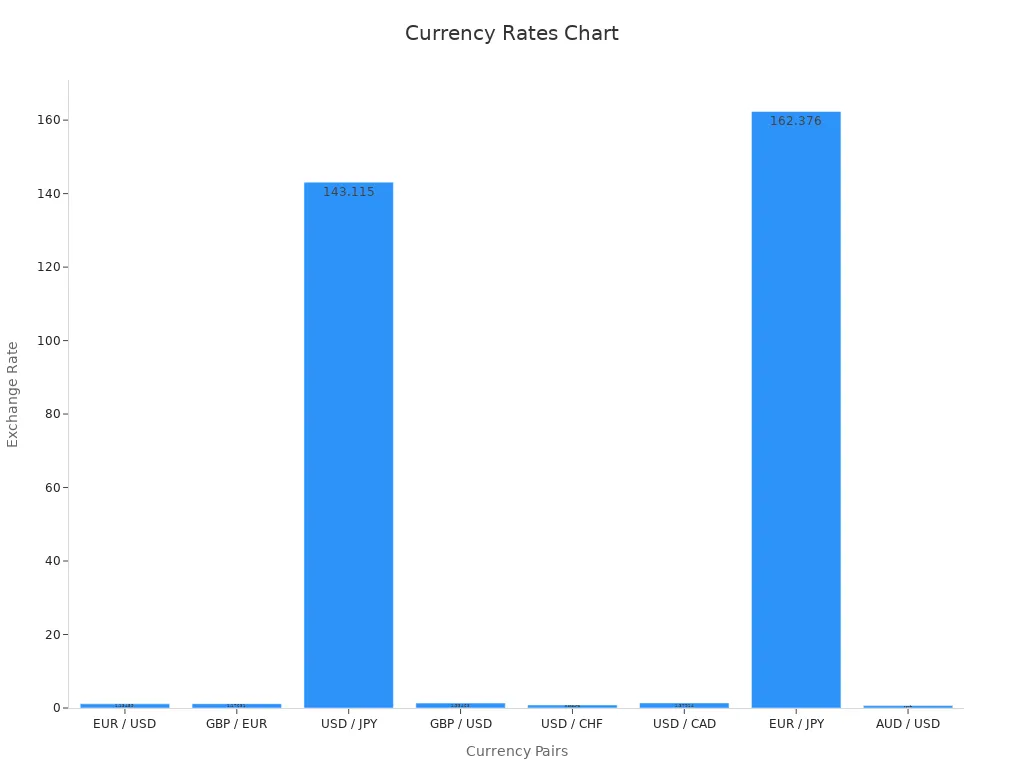
Managing currency conversions can be challenging due to fluctuating rates. Businesses often face issues like limited flexibility and visibility in traditional FX solutions. Leveraging technology can help you navigate these complexities, ensuring smoother international payments.
Fees and deductions in global payments
Fees and deductions are an integral part of global payment systems. When you process cross-border payments, understanding these costs helps you manage expenses effectively. Payment platforms often charge fees based on transaction type, region, and payment method. These charges can vary significantly depending on the country or currency involved.
For example, card networks like Visa and Mastercard apply different fee structures across regions. In the European Union (EU) and European Economic Area (EEA), Visa fees range from 0% to 2%, while Mastercard charges between 0.02 EUR and 3%. In the United States, Visa fees include a percentage (0.05%-3.15%) plus a fixed amount ($0.05-$0.30). Mastercard fees in the U.S. range from 0% to 3.30%, with an additional $0.10 per transaction.
|
Fee Type |
EU/EEA |
US |
|---|---|---|
|
Visa |
0%-2% |
0.05%-3.15% + $0.05-$0.30 |
|
Mastercard |
0.02 EUR or 0.1%-3% |
0%-3.30% + $0.10 |
These fees highlight the importance of choosing the right payment processor. By comparing costs across platforms, you can minimize deductions and maximize your revenue. Some processors offer competitive rates for businesses, making them ideal for managing international transactions.
In addition to card fees, other deductions may include currency conversion charges, bank transfer fees, and intermediary costs. These expenses can add up quickly, especially for businesses handling frequent international payments. Staying informed about these charges ensures that you can plan your finances and avoid unexpected costs.
How Global Payment Processing Works

The global payment process explained
Global payment processing involves a series of steps that ensure secure and efficient cross-border transactions. Each step plays a vital role in transferring funds from one party to another. Here’s how the process works:
-
Payment initiation: You start the transaction by providing the necessary details, such as the recipient's account information and the payment amount.
-
Payment authorization: The system verifies the transaction using security measures like encryption and multi-factor authentication.
-
Transaction processing: The payment information is sent to the recipient's bank through a secure network.
-
Currency conversion: If the payment involves different currencies, the amount is converted based on the current exchange rate.
-
Processing completion: The transaction is finalized, and the funds are deposited into the recipient's account. Sometimes, intermediary banks may assist in completing the process.
Security measures like tokenization and secure payment gateways protect sensitive data throughout the process. These steps ensure that global payment processing remains reliable and transparent.
Key players in global payment systems
Several key players contribute to the smooth functioning of global payment systems. Each organization brings unique strengths to the table, ensuring that you can send and receive payments seamlessly. Here are some of the major players:
|
Key Player |
Description |
|---|---|
|
PayPal Holdings, Inc. |
A global leader in digital payments with a strong brand and extensive user base. |
|
Visa Inc. |
Major player with a vast network for electronic transactions and continuous innovation. |
|
Mastercard Inc. |
Offers a range of payment solutions and innovative technologies, positioning it as a key competitor. |
These companies, along with other payment processing companies, play a crucial role in enabling secure and efficient transactions. Their innovations and global reach make them indispensable in the global payments system.
The role of technology in global payment processing
Technology has revolutionized global payment processing by improving speed, security, and efficiency. Advanced tools and systems ensure that transactions are completed quickly and safely. Here are some ways technology enhances the process:
-
Machine learning: Detects fraud by analyzing transaction data in real time.
-
Blockchain: Provides secure and transparent transactions, reducing the risk of fraud.
-
Predictive analytics: Forecasts transaction volumes to prevent delays during peak periods.
-
Natural language processing: Automates customer support, resolving payment-related issues faster.
AI-powered systems also adapt to evolving threats, making global payment processing more secure over time. These advancements allow you to focus on growing your business while relying on a robust global payments system.
The Role of Payment Processors in Global Payments
What are payment processors?
Payment processors act as intermediaries between you and financial institutions during transactions. They ensure that payments move securely and efficiently from your customers to your business. These systems handle the authorization, processing, and settlement of payments, making them essential for global payment processing.
Industry reports, such as the 'State of the Industry Report' by CMSPI, emphasize the importance of payment processors in building robust payment infrastructures. For example, the U.S. has played a significant role in developing card-based systems, which dominate the global payments industry. This highlights how payment processors contribute to seamless international transactions.
How Xtransfer simplifies global payment processing
Xtransfer stands out as a global payment partner for small and medium-sized enterprises (SMEs). It offers multi-currency accounts, competitive exchange rates, and fast international transfers. These features simplify global payment processing, allowing you to focus on growing your business.
According to a 2023 World Bank report, businesses using global account providers like Xtransfer save up to 40% on transaction fees compared to traditional banks. This cost efficiency enables better resource allocation.
Xtransfer also enhances cash flow management by reducing payment processing time. It allows you to make timely payments in local currencies, minimizing the impact of FX fluctuations. Additionally, its risk management tools help you hold various currencies, reducing exposure to currency risks.
|
Performance Metric |
Impact |
|---|---|
|
Revenue Growth |
Enables accurate reporting of operational performance without currency distortions. |
|
Operating Income |
Reflects actual performance through constant currency reporting. |
|
Cash Flow Management |
Improves accuracy in cash flow forecasts by separating currency effects. |
Security and compliance in global payment systems
Security and compliance are critical in global payment processing. Payment processors must adhere to strict standards to protect your transactions. The Payment Card Industry Data Security Standard (PCI DSS) sets the benchmark for secure handling of payment card information. Its upcoming version 4.0 introduces flexibility while maintaining essential security objectives.
|
Compliance Standard |
Description |
|---|---|
|
PCI DSS |
Ensures secure handling of credit card information by maintaining a secure environment. |
|
GDPR |
Governs data protection and privacy for individuals within the EU and EEA. |
Payment processors also conduct regular audits to identify vulnerabilities. These include penetration testing, vulnerability scanning, and code reviews. Maintaining a firewall, encrypting data transmissions, and establishing access control measures further enhance security. By choosing a reliable payment processing partner, you can ensure compliance and safeguard your transactions.
Tips for Optimizing Global Payments
Selecting the right payment processor
Choosing the right payment processor is essential for managing global payment transactions effectively. You should evaluate several factors to ensure the processor aligns with your business needs:
-
Understand the pricing models and transaction types the processor supports.
-
Assess its capabilities for handling cross border payments.
-
Review fees, including transaction, monthly, and chargeback fees.
-
Verify its compliance with PCI DSS and other security standards.
-
Confirm that it supports multiple currencies and manages foreign transaction fees efficiently.
These considerations help you select a processor that minimizes costs and enhances transaction efficiency. For instance, a processor with robust international payment capabilities ensures seamless operations across different markets.
Reducing fees and hidden costs
Reducing fees and hidden costs in global payment systems can significantly improve your bottom line. Studies show that initiatives like the European Commission's efforts to lower interchange fees have reduced costs for businesses. Visa and MasterCard, for example, agreed to cap fees at 0.2% for debit cards and 0.3% for credit cards. This reduction benefits businesses by lowering transaction expenses.
You can also save by negotiating fixed pricing models or exploring processors with transparent fee structures. Businesses that adopt global budget models often achieve savings through price reductions. By understanding these strategies, you can optimize your cross border payments and allocate resources more effectively.
Ensuring compliance with international regulations
Compliance with international regulations is critical for maintaining trust and avoiding penalties. Many businesses have improved their risk management strategies to meet regulatory standards. For example, 40% of surveyed business leaders enhanced their compliance approaches, while 84% of IT professionals emphasized the importance of adhering to data protection frameworks like GDPR.
To ensure compliance, you can:
-
Assign a dedicated AML officer to oversee strategies.
-
Develop internal controls to identify risks.
-
Train employees on compliance processes.
-
Conduct third-party audits to keep policies updated.
By prioritizing compliance, you protect your business from legal risks and build a reputation for ethical practices in global payment systems.
Leveraging technology for efficiency
Technology plays a vital role in making global payments faster, more secure, and efficient. By adopting advanced tools, you can streamline processes and reduce errors. These innovations not only save time but also improve the overall payment experience.
One example is the use of Central Bank Digital Currencies (CBDCs). These digital currencies, issued by central banks, enhance payment systems by enabling faster transactions and promoting financial inclusion. Another significant advancement is ISO 20022, a global payment standard that supports detailed payment information. This standard allows for greater automation and better data handling, making payment processing smoother.
|
Technology/Initiative |
Description |
Efficiency Metrics |
|---|---|---|
|
Central Bank Digital Currencies (CBDCs) |
A digital form of central bank money that can enhance payment systems. |
Faster transactions, improved financial inclusion |
|
ISO 20022 |
A global payment standard that supports detailed payment information. |
Greater automation, improved data handling |
|
SWIFT gpi |
A tool for tracking cross-border payments with full transparency. |
Nearly 50% of payments reach beneficiaries within 30 minutes, most within 24 hours |
|
Variable Recurring Payments (VRPs) |
Allows businesses to make multiple payments on behalf of customers. |
Enhanced flexibility in payment processing |
Another transformative tool is SWIFT gpi, which provides full transparency for cross-border payments. Nearly half of these payments reach their recipients within 30 minutes, while most are completed within 24 hours. This speed ensures that your business can operate without delays, even when dealing with international partners.
You can also benefit from Variable Recurring Payments (VRPs). This technology allows businesses to make multiple payments on behalf of customers, offering greater flexibility. It simplifies recurring transactions, reducing manual effort and improving customer satisfaction.
By leveraging these advancements, you can optimize your global payment processes. These tools not only enhance efficiency but also provide the reliability needed to grow your business in international markets.
Global payment systems provide essential components like secure fund transfers, detailed transaction records, and efficient currency conversions. These features help you manage international transactions with ease. Choosing a reliable payment processor, such as Xtransfer, ensures faster payments, competitive exchange rates, and robust security measures. Optimizing your global payment processes allows you to reduce costs, improve efficiency, and expand your business into international markets. By leveraging advanced tools and trusted platforms, you can position your business for sustainable growth.
FAQ
What is the difference between global payments and domestic payments?
Global payments involve transferring funds across borders in different currencies, while domestic payments occur within one country using a single currency. Global payments require currency conversion and compliance with international regulations.
How can you reduce fees in global payment systems?
You can reduce fees by choosing processors with transparent pricing, negotiating fixed rates, and avoiding unnecessary intermediary banks. Comparing platforms helps you find cost-effective solutions.
Why is currency conversion important in global payments?
Currency conversion ensures that funds are exchanged accurately between different currencies. It impacts the value of payments and helps businesses operate in international markets.
What role does technology play in global payment processing?
Technology enhances speed, security, and efficiency. Tools like blockchain, AI, and predictive analytics streamline transactions, detect fraud, and improve customer experiences.
How does Xtransfer simplify global payments for SMEs?
Xtransfer offers multi-currency accounts, competitive FX rates, and fast transfers. It reduces costs, improves cash flow, and ensures compliance with international standards.
Related content