
Understanding the Bill of Lading in 2025 and Beyond
Author:XTransfer2025.12.03Bill of Lading
A bill of lading serves as a vital document in modern logistics. It functions as a receipt, a contract, and proof of ownership during the shipping process. Without it, you cannot ensure the smooth movement of goods from one point to another. Its importance has only grown in recent years, especially as businesses increasingly adopt digital formats. For instance:
-
Dual-format users increased from 28.0% in 2022 to 41.7% in 2024.
-
The overall adoption rate rose to 49.2% in 2024, up from 33.0% in 2022.
-
A staggering 74.7% of paper-only users now plan to transition to electronic bills of lading.
These trends highlight the growing reliance on this document, making it an essential tool for a comprehensive guide for logistics professionals in 2025 and beyond.
Understanding the Bill of Lading
Definition and purpose
A bill of lading is a cornerstone of shipping documentation. It serves multiple purposes, ensuring the smooth flow of goods in global trade. At its core, it acts as a receipt, confirming that the carrier has taken possession of the cargo. It also functions as a contract, outlining the terms of transportation between the shipper and the carrier. Additionally, it serves as a document of title, proving ownership of the goods and enabling the transfer of rights to another party.
|
Role |
Description |
|---|---|
|
Receipt |
Acknowledges that the carrier has taken possession of the cargo. |
|
Contract |
Outlines the rights, responsibilities, and liabilities of the shipper and carrier. |
|
Document of Title |
Indicates ownership or control of the goods, allowing claims for possession and serving as collateral against debt. |
|
Legal Protection |
Provides proof of carrier liability in case of damage or loss of goods. |
|
Delivery Accuracy |
Ensures accurate processing and invoicing of freight shipments. |
Understanding the bill of lading is essential for anyone involved in logistics. Whether you're dealing with an ocean bill of lading, air waybill, or freight bill of lading, this document ensures that goods are transported securely and efficiently.
Key roles in logistics and supply chain
The bill of lading plays a vital role in logistics and supply chain management. It confirms that the carrier has received the goods and outlines the terms of their transportation. This document also acts as a legal contract, protecting both the shipper and the carrier in case of disputes.
The Pitney Bowes parcel shipping index reports that over 5,100 parcels are shipped globally every second. This staggering volume highlights the importance of the bill of lading in ensuring smooth operations. Without it, managing such a massive flow of goods would be chaotic.
Additionally, companies like Century Supply Chain Solutions have demonstrated the operational impact of automating bills of lading. By processing over 15,000 bills monthly, they reduced labor costs and improved efficiency. Automation also allowed them to handle more customer orders without increasing staff, showcasing the document's critical role in modern logistics.
Why it remains critical in 2025
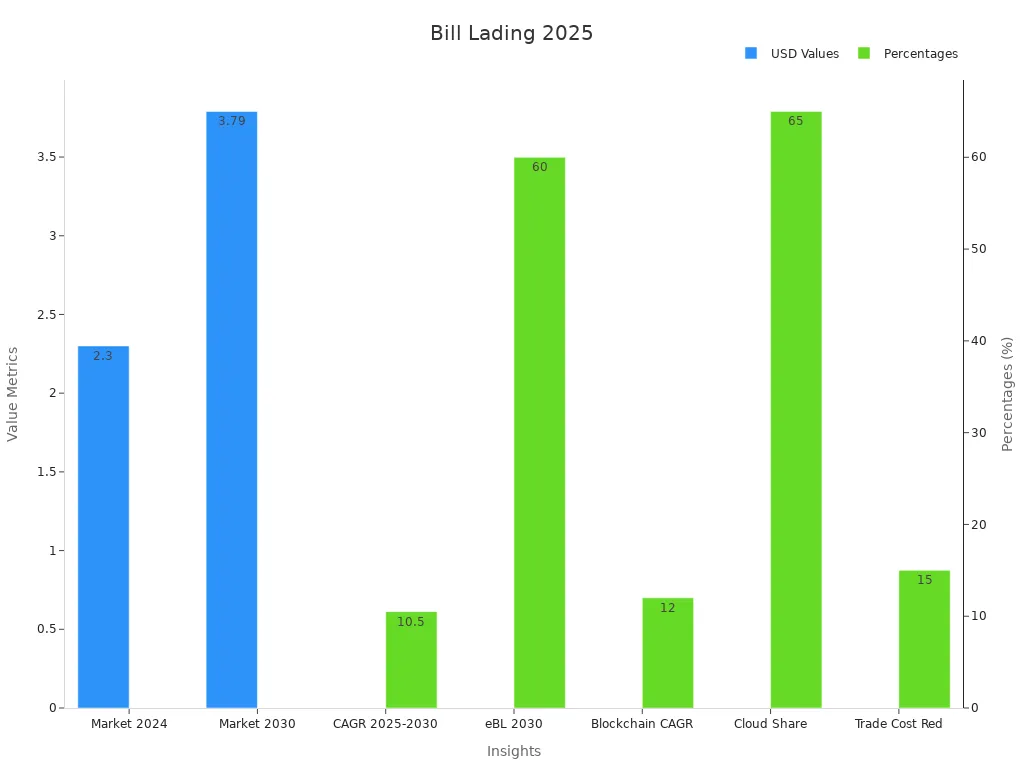
The bill of lading remains indispensable in 2025 due to its adaptability and relevance in a rapidly evolving industry. The global market for bills of lading was valued at USD 2.3 billion in 2024 and is expected to grow to USD 3.79 billion by 2030, with a compound annual growth rate (CAGR) of 10.5%.
Several factors contribute to its continued importance:
-
The transition from paper-based to electronic solutions enhances efficiency and security.
-
Blockchain technology improves transparency and reduces fraud.
-
Governments worldwide promote digital trade through supportive regulations.
-
The growing need for streamlined cross-border transactions drives demand for standardized documentation.
The adoption of electronic bills of lading (eBL) is also on the rise. By 2030, over 60% of global shipping companies are expected to use eBLs, with cloud-based solutions holding a 65% market share. These advancements reduce trade costs by an estimated 15%, making the bill of lading more critical than ever.
Types of Bills of Lading
Straight Bill of Lading
A straight bill of lading is a non-negotiable document that specifies a consignee who will receive the shipment. This type of bill is commonly used when the buyer has already paid for the goods or when the shipment involves non-commercial purposes like gifts or returns. It ensures that the goods are delivered directly to the named consignee without any transfer of ownership during transit.
For example, if you are shipping a prepaid order to a specific customer, a straight bill of lading guarantees that only the named recipient can claim the goods. This makes it ideal for direct shipments where simplicity and security are priorities.
|
Type of Bill of Lading |
Characteristics |
Use Cases |
|---|---|---|
|
Straight Bill of Lading |
Non-negotiable, specifies a consignee |
Direct shipments, paid goods, gifts, returns |
-
A straight bill of lading works best for shipments where payment is complete before shipping.
-
It also suits non-commercial shipments, ensuring the goods reach the intended recipient without complications.
Order Bill of Lading
An order bill of lading is a negotiable document that allows the transfer of ownership during transit. This flexibility makes it a preferred choice for international trade and transactions involving letters of credit. The consignee or a third party can endorse the document, enabling the transfer of goods to another party.
For instance, if you are shipping goods to a distributor who may sell them to another buyer, an order bill of lading facilitates this process. It provides the flexibility needed for complex trade scenarios while maintaining legal security.
|
Type of Bill of Lading |
Suitable Scenarios |
Advantages |
Drawbacks |
|---|---|---|---|
|
House Bill of Lading (HBL) |
Multimodal Transport, Less-than-Container Load (LCL) Shipments, Need for Value-Added Services, Small Businesses |
Flexibility, Additional services, Ideal for complex logistics |
May not be suitable for direct shipping needs |
|
Master Bill of Lading (MBL) |
Full Container Load (FCL) Shipments, Letter of Credit Payments, Direct Shipping, Large-Scale Trade Partnerships |
Legal security, Direct relationship with carrier, Simplicity |
Less flexibility for complex logistics situations |
Bearer Bill of Lading
A bearer bill of lading is unique because it does not specify a consignee. Instead, the person in possession of the document can claim the goods. This type of bill is less common but is useful in scenarios where flexibility and quick transfer of ownership are required.
For example, if you are shipping goods to a port where the recipient may vary, a bearer bill of lading allows any authorized individual to collect the shipment. However, this flexibility comes with risks, as it requires careful handling to prevent unauthorized claims.
Bearer bills of lading are often used in specific trade agreements or situations where the consignee's identity might change during transit. While they offer convenience, they demand strict security measures to avoid misuse.
Clean vs. Claused Bill of Lading
A clean bill of lading confirms that the goods were received in good condition, with no visible damage or discrepancies. It assures you that the shipment meets the agreed terms of the contract of carriage. This type of bill is often required in international trade, especially when banks or financial institutions are involved in the transaction. For example, if you are shipping goods under a letter of credit, the bank may demand a clean bill of lading to release payment.
On the other hand, a claused bill of lading indicates that the goods have visible damage or do not match the description provided by the shipper. This document includes specific remarks or clauses detailing the issues. For instance, if a shipment of electronics arrives with damaged packaging, the carrier will issue a claused bill of lading to note the condition. While this protects the carrier from liability, it may complicate your claims process or delay payment.
Understanding the difference between these two types of bills is crucial. A clean bill of lading simplifies transactions and ensures smooth delivery. A claused bill of lading, however, highlights potential issues that may require resolution before the goods can be accepted.
Electronic Bill of Lading
The electronic bill of lading represents a significant shift in logistics. Unlike traditional paper documents, it exists in a digital format, streamlining the contract of carriage process. This innovation offers several advantages:
-
Faster transaction processing reduces delays in global trade.
-
Enhanced operational security minimizes the risk of fraud.
-
Cost savings benefit shippers, carriers, and consignees alike.
-
Improved efficiency supports the growing demand for seamless logistics.
Despite these benefits, challenges remain. Legal recognition varies across jurisdictions, and compliance with international standards requires careful attention. Security concerns, such as data breaches, also need to be addressed. However, as technology advances, these obstacles are gradually being overcome.
The adoption of electronic bills of lading continues to grow. Many companies now recognize their potential to transform logistics. By embracing this technology, you can reduce costs, improve accuracy, and enhance the overall efficiency of your supply chain.
Components of a Bill of Lading
Shipper and consignee information
The shipper and consignee information is one of the most critical components of a bill of lading. This section identifies the parties involved in the shipment, ensuring that the goods reach the correct destination without delays or complications. You must include accurate and complete details for both the shipper and the consignee. Missing or incorrect information can lead to shipment delays, additional costs, or even legal disputes.
Here’s what you should include:
-
Shipper’s Information: Name, address, and contact details of the person or company sending the goods.
-
Consignee’s Information: Name, address, and contact details of the recipient.
-
Carrier’s Information: Name, logo, and contact details of the company responsible for transporting the goods.
For example, if you’re shipping goods internationally, the consignee’s address must match the customs documentation. Any mismatch could result in customs clearance delays or penalties. By ensuring this information is correct, you can avoid unnecessary complications and ensure a seamless shipping experience.
Description of goods
The description of goods is another essential part of the bill of lading. This section provides a detailed account of the items being shipped, helping carriers, customs officials, and consignees understand what is in the shipment. A clear and accurate description ensures that the goods are handled properly and reach their destination in good condition.
A complete description should include:
-
The type of goods being shipped.
-
The quantity and weight of the items.
-
Any special handling instructions, such as "Fragile" or "Keep Refrigerated."
For instance, if you’re shipping perishable goods, specifying the need for refrigeration ensures that the carrier takes the necessary precautions. Similarly, labeling fragile items helps prevent damage during transit. Using standardized templates for this section can save time and reduce errors, as these templates often include pre-filled fields for common details.
Freight terms and payment details
Freight terms and payment details outline the financial and logistical responsibilities of the shipper and consignee. This section specifies who pays for the shipping costs, when the payment is due, and any additional charges that may apply. Clear freight terms prevent misunderstandings and disputes between the parties involved.
Common freight terms include:
-
Prepaid: The shipper pays the freight charges before the shipment is delivered.
-
Collect: The consignee pays the freight charges upon delivery.
-
Third-Party Billing: A third party, such as a logistics provider, handles the payment.
Including payment details, such as the total cost, currency, and payment method, ensures transparency. For example, if the consignee is responsible for paying the freight charges, this must be clearly stated to avoid confusion. Additionally, specifying the payment terms, such as "Net 30 days," helps both parties manage their finances effectively.
By addressing these components thoroughly, you ensure that the bill of lading serves as a reliable receipt for shipped goods, a document of title, and a contract between the shipper and carrier.
Carrier details and signatures
Carrier details and signatures form the backbone of a bill of lading. This section identifies the carrier responsible for transporting your goods and provides a record of their acknowledgment. Accurate carrier information ensures accountability and smooth communication throughout the shipping process.
Key Carrier Details to Include:
-
Carrier Name and Contact Information: This includes the full name, address, and phone number of the carrier. It ensures you can reach them if issues arise during transit.
-
Carrier Identification Number: This unique identifier links the carrier to the shipment, reducing confusion in case multiple carriers are involved.
-
Mode of Transport: Specify whether the shipment is by sea, air, rail, or road. This detail helps clarify the logistics and handling requirements.
The signature section is equally important. It serves as proof that the carrier has received the goods in the agreed condition and accepts responsibility for their transport. Without proper signatures, disputes over liability can arise, especially in cases of loss or damage.
Why Proper Signatures Matter:
-
The master bill of lading acts as a legal contract. It binds the carrier to the terms of the shipment and ensures safe and lawful transport.
-
Shipping processes often face risks like theft, damage, or loss. A signed bill of lading provides a clear record of the carrier's accountability.
-
The document outlines the rights and responsibilities of all parties involved. This clarity prevents misunderstandings and protects your interests.
When preparing the bill of lading, ensure the carrier's representative signs it before the shipment leaves your facility. Their signature confirms that they have inspected the goods and agree to the terms. This step safeguards your shipment and strengthens your legal position in case of disputes.
Delivery instructions and special notes
Delivery instructions and special notes guide the final stage of the shipping process. This section ensures that your goods reach the correct destination under the right conditions. Clear and detailed instructions reduce the chances of errors or delays.
What to Include in Delivery Instructions:
-
Exact Delivery Address: Provide the full address, including any specific details like floor numbers or unit names.
-
Contact Person and Phone Number: List the name and phone number of the person receiving the shipment. This ensures smooth coordination upon arrival.
-
Preferred Delivery Time: Specify time windows to avoid missed deliveries or additional charges.
-
Special Handling Requirements: Mention any conditions, such as temperature control for perishable items or fragile handling for delicate goods.
Special notes allow you to communicate unique requirements or considerations. For example, if the delivery location has restricted access or requires prior authorization, include this information. Similarly, if the shipment contains hazardous materials, note the necessary safety precautions.
Examples of Special Notes:
-
"Delivery location requires gate code: 1234."
-
"Handle with care: Contains glassware."
-
"Refrigeration required: Maintain at 4°C."
These notes provide carriers with the information they need to handle your shipment properly. They also help avoid unnecessary delays or complications.
By including comprehensive delivery instructions and special notes, you ensure that your goods arrive safely and efficiently. This attention to detail reflects professionalism and enhances your reputation with clients and partners.
Legal Implications and Benefits of the Bill of Lading
Legal contract and its significance
The bill of lading serves as a legally binding contract between the shipper, carrier, and consignee. It outlines the terms and conditions of the shipment, ensuring that all parties understand their responsibilities. This document provides legal protection and liability coverage, safeguarding your interests in case of disputes. For example, if goods are damaged during transit, the bill of lading specifies the carrier's liability, helping you resolve the issue efficiently.
Courts have repeatedly emphasized the importance of this document in international trade. In one case, a court ruled that carriers must not deliver cargo without the original bill of lading. This decision highlights its role in ensuring compliance with contractual obligations. Additionally, Section 375(1) of the Merchant Shipping Act grants consignees the right to sue regarding the goods, reinforcing the bill of lading's legal significance.
Establishing ownership and liability
The bill of lading plays a crucial role in establishing ownership and liability during cargo transit. It acts as a document of title, allowing the holder to claim the goods at the destination. This feature is particularly important in international trade, where ownership may transfer multiple times before delivery.
|
Purpose |
Description |
|---|---|
|
Evidence of contract |
Acts as a legally binding contract between the shipper, carrier, and consignee, outlining terms and conditions. |
|
Receipt for goods |
Serves as a receipt confirming the goods have been received for transport. |
|
Document of title |
Establishes ownership of the cargo, allowing the holder to claim the goods at the destination. |
The bill of lading also specifies the carrier’s liability, which varies depending on the type of document used. For instance, it includes details like shipment dates, property descriptions, and the intended destination. These elements ensure that all parties understand their roles and responsibilities, reducing the risk of disputes.
Ensuring delivery accuracy
The bill of lading ensures delivery accuracy by providing proof of shipment and delivery. It includes detailed information about the goods, the shipper, and the consignee, leaving no room for ambiguity. This clarity helps carriers deliver shipments to the correct destination without errors.
For example, if a shipment arrives damaged or incomplete, the bill of lading serves as evidence to resolve the issue. In the case of Ogwuru v. Co-op Bank of E/N Ltd., the court confirmed that the bill of lading acts as a receipt for goods, proving their condition and quantity at the time of shipment. This legal implication of the bill of lading protects your interests and ensures accountability throughout the shipping process.
By using this document effectively, you can minimize risks, streamline operations, and maintain trust with your trading partners.
Benefits in global trade
The Bill of Lading plays a vital role in global trade by simplifying complex processes and ensuring smooth transactions. It acts as a bridge between shippers, carriers, and consignees, making international commerce more efficient and reliable. Without it, managing cross-border shipments would become chaotic and prone to errors.
One of its key benefits lies in customs clearance. The Bill of Lading verifies the legitimacy of your cargo and ensures compliance with international regulations. This prevents potential seizures or delays at customs checkpoints. By presenting this document, you demonstrate that your shipment meets all legal requirements, allowing goods to move seamlessly across borders.
The document also facilitates payment processes, especially in transactions involving letters of credit. Banks rely on the Bill of Lading to confirm that your shipment has been dispatched. This assurance speeds up payment approvals and builds trust between trading partners. For example, when exporting goods, you can use the Bill of Lading to prove that the shipment aligns with the agreed terms, ensuring timely payments.
Additionally, the Bill of Lading provides clarity throughout the shipping process. It details cargo information, terms of carriage, and delivery instructions. This transparency reduces misunderstandings and ensures that all parties fulfill their responsibilities. By using this document effectively, you can minimize risks and enhance the efficiency of your supply chain.
In global trade, the Bill of Lading is more than just a piece of paper. It is a tool that protects your interests, ensures compliance, and fosters trust in international transactions.
Practical Tips for Managing Bills of Lading
Ensuring accurate documentation
Accurate documentation is the foundation of effective bill of lading management. A well-defined documentation policy ensures consistency and compliance across all shipments. You should establish clear guidelines for creating and reviewing bills of lading. Regular training programs for employees can help them stay updated on regulatory changes and avoid errors.
To improve accuracy, consider these best practices:
-
Standardize document templates to maintain consistent formats and improve data quality.
-
Use electronic signatures to speed up approvals and reduce delays.
-
Define clear workflows for processing and approving documents efficiently.
-
Monitor performance metrics like error rates and processing times to identify areas for improvement.
Adopting these practices can lead to significant benefits. For example, companies that implement standardized templates and electronic signatures report 25-30% faster shipping cycles and a 40-45% reduction in document-related errors. These improvements not only save time but also reduce logistics administration costs by 15-20%.
Avoiding common mistakes
Avoiding common mistakes in bill of lading management is crucial for maintaining smooth operations. Errors such as incorrect product descriptions or missing consignee details can cause costly delays and disputes. To minimize these risks, you should double-check all information before finalizing the document.
Here are some common errors and their implications:
|
Error Type |
Implication |
Example of Impact |
|---|---|---|
|
Human Error |
Leads to inaccuracies in documentation and delays in processing |
Incorrect product name or number recorded can result in costly returns |
|
Lengthy Turnaround Times |
Slows down the supply chain and increases operational costs |
Delays in BOL processing can set companies back significantly |
|
Lack of Visibility |
Hinders effective decision-making and responsiveness in the supply chain |
Inability to track shipments can lead to missed deadlines and customer dissatisfaction |
By addressing these issues, you can enhance the reliability of your shipping processes and build trust with your partners.
Using digital tools for management
Digital tools have revolutionized bill of lading management, making it faster and more efficient. Popular software to generate a bill of lading, such as CargoWise and FreightPOP, simplifies the process by automating data entry and ensuring compliance with international standards. These tools also improve visibility, allowing you to track shipments in real time.
The benefits of using digital tools are backed by impressive statistics. For instance, electronic bills of lading (eBL) reduce processing times by 2.6 days compared to traditional paper-based methods, which can take up to 30 days. Additionally, eBL adoption has saved the industry $6.5 billion annually while reducing carbon emissions by 32 to 86 kilograms per transaction.
By integrating digital tools into your workflow, you can achieve greater accuracy, reduce costs, and contribute to a more sustainable supply chain.
Automating processes for efficiency
Automating processes for efficiency in logistics can transform how you manage bills of lading. By replacing manual tasks with automated systems, you can save time, reduce errors, and improve overall productivity. Automation ensures that your operations run smoothly, even during peak shipping periods.
Automation offers several key benefits that enhance your supply chain operations:
|
Benefit |
Description |
|---|---|
|
Enhanced efficiency |
Automating document reading and organization allows employees to focus on more valuable tasks. |
|
Cost savings |
Reduces labor costs by minimizing the workforce needed for manual data entry and handling. |
|
Improved compliance |
Ensures accurate processing and storage of bills of lading to meet regulatory requirements. |
|
Accelerated decision-making |
Quick access to digitized information enables faster business decisions. |
|
Streamlined claims processing |
Accurate data capture leads to faster resolution of claims, enhancing customer satisfaction. |
Automating the bill of lading processes also reduces the need for physical storage. Digital systems eliminate expenses related to paper, printing, and storage space. Additionally, automation ensures that all necessary information is captured accurately, helping you adapt to regulatory changes swiftly.
-
Automation reduces the need for manual data entry, leading to lower labor costs.
-
Digital storage minimizes expenses related to physical materials and space.
By integrating advanced technologies like machine learning, you can further enhance the accuracy of data entry. This improvement reduces errors and waste, ensuring that your supply chain remains resilient. Automation not only saves time but also allows your team to focus on strategic tasks, driving long-term growth.
The Future of the Bill of Lading

Growth of electronic Bills of Lading
Electronic bills of lading (eBLs) are transforming the logistics industry. These digital documents replace traditional paper-based bills, offering faster processing and improved efficiency. By using eBLs, you can reduce paperwork, save time, and lower costs. Many companies have already adopted this technology, and its popularity continues to grow.
The shift to eBLs also enhances security. Digital systems make it harder for unauthorized parties to tamper with shipment details. This ensures that your goods are transported safely and accurately. Additionally, eBLs simplify global trade by enabling real-time tracking and seamless data sharing between shippers, carriers, and consignees.
As more businesses embrace eBLs, the logistics industry is becoming more streamlined and sustainable. By adopting this technology, you can stay ahead in a competitive market and meet the demands of modern trade.
Standardization in global trade
Standardization in global trade is essential for ensuring consistency and efficiency. Regulatory changes and international trade agreements highlight the need for a unified approach to shipping documentation, including the bill of lading. For example, the ICS2-ENS regulation requires a uniform data submission format for EU Customs, promoting consistency across the industry.
|
Regulatory Change |
Implication for Global Standardization |
|---|---|
|
ICS2-ENS |
Mandates uniform data submission format to EU Customs, enhancing consistency across industry participants. |
|
Data Accuracy |
Emphasizes the need for accurate data to avoid fines and disruptions, supporting a unified approach in shipping documentation. |
|
Alignment with WCO |
Suggests potential for further global harmonization in trade regulations, reinforcing the need for standardization. |
By aligning with these standards, you can avoid delays, reduce errors, and improve compliance. Standardization also simplifies cross-border transactions, making it easier for you to expand your business internationally.
Blockchain and security enhancements
Blockchain technology is revolutionizing the security of the bill of lading. This innovation ensures that your shipment data remains safe and tamper-proof. By transitioning from physical to digital documents, blockchain reduces paperwork and speeds up verification processes. Its cryptographic features protect your data from unauthorized changes, preventing fraud and cargo theft.
-
Digitization of Bills of Lading: Transitioning from physical to digital documents reduces paperwork and speeds up verification, ensuring authenticity and preventing fraud.
-
Strengthening Security and Data Integrity: Blockchain's cryptographic features protect shipment data from unauthorized changes, enhancing security against threats like data tampering and cargo theft.
-
Decentralized System: Unlike traditional electronic Bills of Lading, blockchain offers an open system that democratizes access and maintains document integrity.
By adopting blockchain, you can enhance the security of your supply chain and build trust with your trading partners. This technology not only protects your shipments but also improves transparency and efficiency in global trade.
Predictions for 2030 and beyond
The future of the Bill of Lading (BOL) is set to transform logistics and trade by 2030. You will witness a shift driven by technology, efficiency, and global standardization. The market for digital documentation is projected to grow significantly, with the BOL market size expected to reach $3,405.29 million by 2030, up from $799.50 million in 2023. This represents a remarkable compound annual growth rate (CAGR) of 23%.
|
Year |
Market Size (USD Million) |
CAGR (%) |
|---|---|---|
|
2023 |
799.50 |
N/A |
|
2030 |
3405.29 |
23 |
The integration of blockchain technology will play a pivotal role in this evolution. Blockchain enhances trust and transparency by creating tamper-proof records. You can expect this technology to reduce fraud and improve the security of your shipments. Additionally, artificial intelligence (AI) and machine learning will revolutionize data analytics. These tools will help you make better decisions by analyzing trends and predicting potential risks.
The COVID-19 pandemic accelerated the adoption of digital documentation. This shift has made processes faster and more reliable. By 2030, real-time tracking and visibility will become standard. These features will allow you to monitor shipments, manage inventory efficiently, and ensure timely deliveries.
The pursuit of operational efficiency will remain a key driver. Companies will continue to streamline processes and enhance transparency. As a result, you will benefit from faster transactions, reduced errors, and improved customer satisfaction. The future of the BOL is not just about technology; it’s about creating a seamless and secure global trade environment.
By staying ahead of these trends, you can position yourself as a leader in the logistics industry. The advancements in BOL management will empower you to navigate the complexities of global trade with confidence.
The bill of lading remains a cornerstone of logistics, ensuring smooth operations and legal clarity in global trade. As digital transformation reshapes the industry, adopting electronic solutions offers unmatched benefits. Digital bills of lading eliminate paperwork, reduce errors, and enhance security through encryption and blockchain. Automation further streamlines workflows, saving time and cutting costs.
Organizations embracing these advancements see significant gains. For instance:
|
Statistic |
Description |
|---|---|
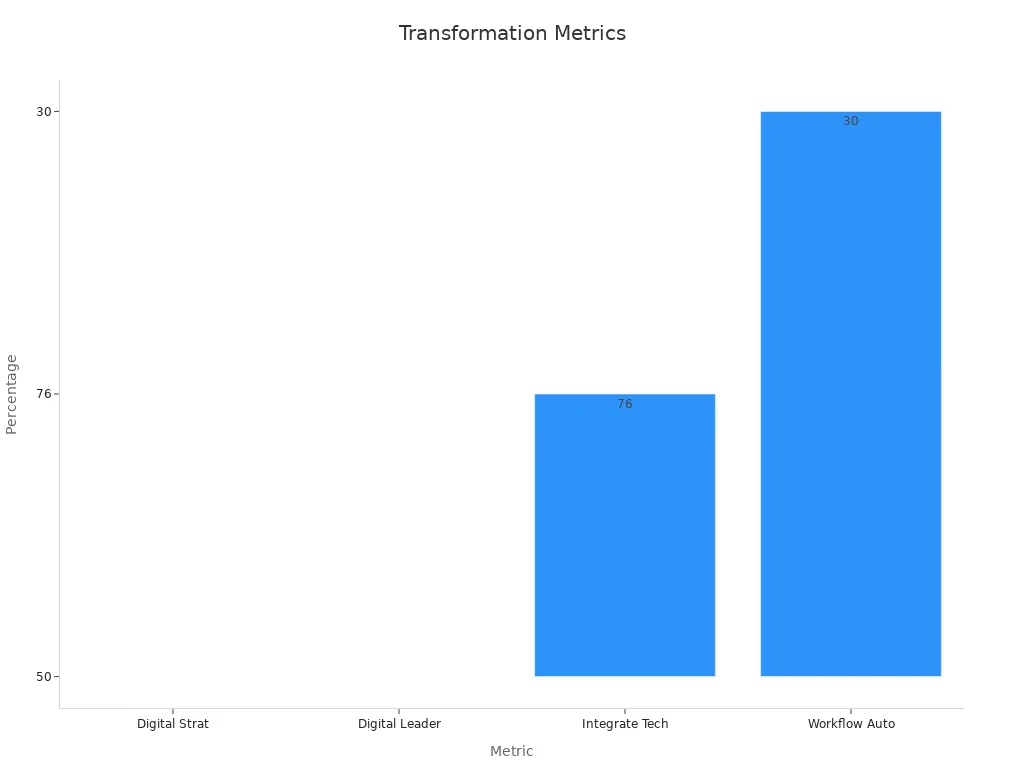
|
50% |
Companies with digital strategies are 50% more likely to achieve higher profits. |
|
$20 |
Automating document processing saves $20 per document in labor costs. |
|
30% |
Workflow automation boosts productivity by 30%. |
By adapting to these trends, you can future-proof your operations, reduce costs, and contribute to sustainability goals. The time to act is now—embrace innovation and lead the way in modern logistics.
FAQ
What is the main purpose of a Bill of Lading?
The Bill of Lading acts as a receipt, a contract, and proof of ownership for shipped goods. It ensures that the carrier, shipper, and consignee understand their roles and responsibilities during the shipping process.
Can a Bill of Lading be used as a legal document?
Yes, it serves as a legally binding contract. It outlines the terms of shipment and protects your rights in case of disputes, such as damage or loss of goods during transit.
What happens if there are errors in the Bill of Lading?
Errors can cause delays, additional costs, or legal disputes. For example, incorrect consignee details may lead to delivery issues. Always double-check the information to avoid complications.
How does an electronic Bill of Lading differ from a paper one?
An electronic Bill of Lading (eBL) is digital. It reduces paperwork, speeds up processing, and enhances security. Unlike paper documents, eBLs allow real-time tracking and easier data sharing.
Is a Bill of Lading required for all shipments?
Yes, it is essential for most shipments. It ensures proper documentation, legal compliance, and smooth delivery. Without it, carriers may refuse to transport goods, and customs clearance could become problematic.
Related content