
Strategies for Using AI to Revolutionize Military Logistics
Author:XTransfer2025.12.19Military logistics
The transformative influence of AI is reshaping military logistics, offering unprecedented efficiency and precision. You can see how AI revolutionizes operations by enhancing supply chain management and optimizing transportation. For example, integrating AI into supply chains improves efficiency by 20% or more. AI also identifies issues in military fleets early, reducing reliance on manual intervention.
In addition to these advantages, AI helps optimize travel routes, cutting transportation costs and ensuring timely delivery of critical supplies. Whether managing ammunition or troop movements, AI enables smarter, faster decisions. Its ability to predict and adapt in real time makes it a game-changer for modern military operations.
AI Technologies Driving Military Logistics
Machine Learning for Predictive Analytics
Machine learning plays a vital role in military logistics by helping you predict and prepare for potential disruptions. It analyzes historical data, weather patterns, and regional information to optimize inventory management for critical supplies like ammunition and fuel. This ensures that you always have the resources you need, even in unpredictable environments.
By using predictive analytics, machine learning can forecast demand for spare parts or maintenance schedules for military equipment. For example, it can analyze complex patterns to predict when a fleet of drones might require repairs. This reduces downtime and increases readiness levels. Studies show that machine learning can boost operational readiness from 82% to 91% without additional spending, making it a cost-effective solution for improving efficiency.
Natural Language Processing in Communication
Natural language processing (NLP) enhances communication by enabling you to process and understand vast amounts of text quickly. AI summarization tools powered by NLP extract critical information from multiple sources, reducing your cognitive load while preserving essential details. This allows you to focus on making informed decisions without getting overwhelmed by excessive data.
NLP also ensures consistent information processing, minimizing human bias during intelligence gathering. With faster and more accurate summaries, you can accelerate strategic planning and respond to challenges more effectively. Whether analyzing reports or coordinating with teams, NLP simplifies complex communication tasks.
Computer Vision for Monitoring and Surveillance
Computer vision transforms how you monitor and secure military operations. This artificial intelligence technology uses advanced image and video analysis to detect threats, track movements, and ensure the safety of personnel and assets. For instance, it can identify suspicious activities in real-time, providing you with actionable insights to mitigate risks.
By automating surveillance, computer vision reduces the need for manual monitoring, freeing up resources for other critical tasks. It also enhances accuracy by eliminating human errors in visual analysis. Whether deployed in warehouses or on the battlefield, this technology strengthens your ability to maintain control and security.
Autonomous Systems and Robotics
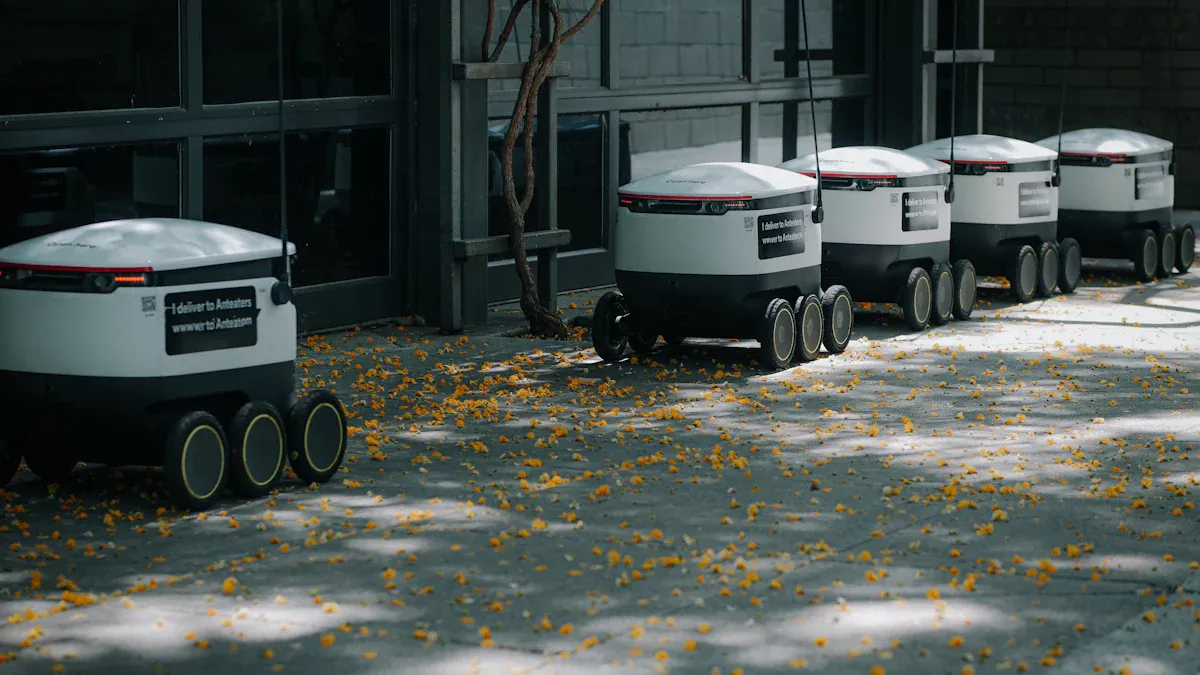
Autonomous systems and robotics are transforming military logistics by enhancing efficiency and reducing human workload. These technologies allow you to automate repetitive tasks, streamline operations, and improve overall mission readiness.
One of the most significant advancements in this field comes from autonomous vehicles. The DARPA Grand Challenge in 2004 played a pivotal role in advancing this technology. Today, companies like TuSimple and Einride use similar innovations in civilian logistics, demonstrating how military advancements influence broader industries. These vehicles can navigate complex terrains, ensuring timely delivery of supplies even in challenging environments.
Robotics also plays a crucial role in supply chain management. AI-powered robots can handle tasks like loading, unloading, and sorting supplies in warehouses. This automation reduces errors and speeds up processes, allowing you to focus on strategic decision-making. For example, robotic systems equipped with sensors can monitor inventory levels in real-time, ensuring that critical supplies are always available.
The benefits of autonomous systems extend beyond efficiency. They enhance safety by reducing the need for personnel to operate in hazardous conditions. For instance, self-driving vehicles can transport supplies through conflict zones, minimizing risks to human life. Additionally, these systems adapt to dynamic conditions, ensuring reliable performance under adverse circumstances.
-
Key improvements brought by autonomous systems include:
-
Faster and more accurate supply deliveries.
-
Reduced operational costs through automation.
-
Enhanced resilience of supply networks in unpredictable scenarios.
-
By leveraging autonomous systems and robotics, you can revolutionize military logistics. These technologies not only improve operational efficiency but also provide a strategic advantage in modern warfare.
Benefits of AI in Military Logistics
Improved Decision-Making with Data Insights
AI empowers you to make better logistical decisions by providing actionable insights from vast amounts of data. With advanced analytics, AI identifies patterns, predicts outcomes, and optimizes resource allocation. For example, it can analyze historical supply chain data to forecast demand for critical resources like fuel or ammunition. This ensures you allocate resources effectively, even in high-pressure scenarios.
AI-driven analytics also help you anticipate risks and mitigate potential disruptions. By analyzing variables such as weather conditions, geopolitical factors, and equipment usage rates, AI enables you to prepare for challenges before they arise. This proactive approach enhances logistical decision-making and ensures mission readiness.
-
Key benefits of AI in decision-making include:
-
Improved resource allocation through data-driven insights.
-
Enhanced ability to predict supply chain disruptions.
-
Faster response times to changing operational needs.
-
Enhanced Operational Efficiency
AI significantly boosts the efficiency of military logistics by automating repetitive tasks and streamlining complex processes. For instance, NATO has successfully implemented AI and machine learning to improve logistical planning, resulting in measurable gains in both cost-effectiveness and operational speed. Similarly, the U.S. Department of Defense is exploring blockchain technology to enhance supply chain traceability and security.
AI-powered systems reduce the time and effort required for tasks like inventory tracking, transportation planning, and maintenance scheduling. By automating these processes, you can focus on strategic priorities rather than manual operations. Additionally, AI ensures that logistical networks adapt quickly to dynamic conditions, such as sudden changes in mission requirements or supply chain disruptions.
-
Examples of AI-driven efficiency improvements:
-
Faster inventory updates through real-time monitoring.
-
Reduced operational costs by automating routine tasks.
-
Enhanced adaptability to changing mission needs.
-
Greater Accuracy in Supply Chain Processes
AI enhances the accuracy of supply chain operations by minimizing human error and providing precise data analysis. For example, AI systems equipped with IoT devices can monitor inventory levels in real time, ensuring that stock levels remain optimal. This reduces the risk of overstocking or running out of critical supplies.
The financial and operational benefits of AI in supply chain accuracy are significant. Studies show that AI interventions can save €3.5 million annually in logistics expenses while reducing inventory levels by 15%. These improvements not only lower costs but also ensure that you have the right resources available when and where they are needed.
|
Benefit Description |
Numerical Data |
|---|---|
|
Cost savings from logistics expenses |
€3.5 million per year |
|
Reduction in inventory levels |
15% reduction |
AI also supports strategic planning by analyzing trends in supply usage and recommending optimal inventory levels. This ensures that your supply chain remains responsive to operational demands while maintaining high levels of accuracy.
Real-Time Adaptability to Dynamic Conditions
AI systems excel at adapting to dynamic conditions in real-time, making them indispensable for military logistics. These systems use real-time data analysis to monitor changing variables like weather, traffic, and geopolitical events. By processing live information, they enable you to respond swiftly to disruptions and maintain operational continuity.
One of the most significant advantages of AI is its ability to dynamically adjust routes and schedules. For example, AI systems can instantly detect roadblocks or adverse weather conditions and recalculate optimal routes. This minimizes delays and ensures timely delivery of critical supplies. A logistics company reported a 25% decrease in delivery times and a 15% reduction in fuel costs after integrating AI into its operations. These results highlight how real-time tracking and adaptability can transform logistical efficiency.
AI-powered adaptability also enhances mission readiness. When conditions change unexpectedly, such as during a conflict or natural disaster, AI systems analyze real-time data to prioritize resources and allocate them effectively. This ensures that you can meet urgent demands without compromising other logistical needs.
-
Key benefits of real-time adaptability include:
-
Faster response to disruptions.
-
Reduced operational costs through optimized routes.
-
Improved resource allocation during emergencies.
-
AI systems also provide predictive insights based on real-time data analysis. For instance, they can forecast potential disruptions by analyzing patterns in live data streams. This allows you to take proactive measures, such as rerouting supplies or adjusting inventory levels, before issues escalate. By leveraging these capabilities, you can maintain a high level of operational efficiency even in unpredictable environments.
Real-time adaptability is not just about reacting to changes; it’s about anticipating them. AI systems equipped with real-time tracking capabilities empower you to stay ahead of challenges, ensuring that your logistics operations remain resilient and responsive.
Applications of AI in Military Logistics
Optimizing Supply Chain Management
AI-driven supply chain management transforms how you handle military logistics. It uses predictive analytics to forecast future demand by analyzing past usage patterns. This ensures you maintain optimal stock levels for critical supplies like ammunition and fuel. For example, AI can predict when spare parts will be needed, reducing downtime for equipment and improving readiness.
Asset tracking is another key benefit. AI monitors equipment conditions and schedules repairs before issues arise. This minimizes downtime and keeps operations running smoothly. By automating routine tasks, AI allows personnel to focus on strategic activities, improving overall efficiency.
|
Success Metric |
Description |
|---|---|
|
Predictive Analytics |
AI forecasts future demand by analyzing past usage patterns, helping maintain optimal stock levels. |
|
Asset Tracking |
Enhances maintenance by monitoring equipment conditions and scheduling repairs to minimize downtime. |
|
Task Automation |
Automates routine tasks, allowing personnel to focus on strategic activities, improving overall efficiency. |
AI-driven supply chain management ensures your logistics operations remain efficient and responsive, even in unpredictable environments.
Transportation and Route Planning
AI revolutionizes transportation planning by analyzing traffic, weather, and other variables to optimize routes. This improves efficiency and reduces costs. For instance, AI systems can detect roadblocks or adverse weather conditions and suggest alternative routes. This ensures timely delivery of supplies and minimizes delays.
Performance statistics highlight the impact of AI on transportation. Fuel costs decrease by up to 15%, while delivery times improve by up to 30%. Operational efficiency also increases through streamlined fuel consumption and reduced costs.
-
Enhanced route planning efficiency through AI analysis of traffic and weather conditions.
-
Immediate and long-term improvements in logistics services.
|
Improvement Area |
Performance Statistic |
|---|---|
|
Fuel Cost Reduction |
Up to 15% reduction in fuel costs |
|
Delivery Time |
Reduction in delivery times by up to 30% |
|
Operational Efficiency |
Streamlined fuel consumption and reduced costs |
AI-powered transportation planning ensures your logistics operations adapt to dynamic conditions, improving reliability and cost-effectiveness.
Inventory Control and Demand Forecasting
AI enhances inventory control by providing real-time monitoring and accurate demand forecasting. It uses IoT devices to track stock levels and prevent overstocking or shortages. This ensures you always have the right supplies available when needed.
Demand forecasting is another critical application. AI analyzes historical data and usage trends to predict future needs. For example, it can forecast demand for medical supplies during a humanitarian mission. This helps you allocate resources effectively and avoid waste.
AI systems also recommend inventory adjustments based on operational demands. This keeps your supply chain operations responsive and efficient. By integrating AI into inventory control, you reduce costs and improve readiness for any mission.
Risk Assessment and Threat Mitigation
AI strengthens your ability to assess risks and mitigate threats in military logistics. It analyzes vast amounts of data to identify vulnerabilities and predict potential disruptions. By using advanced algorithms, AI helps you stay ahead of challenges and maintain operational continuity.
How AI Enhances Risk Assessment
AI systems excel at identifying risks in supply chains. They analyze historical data, current trends, and environmental factors to forecast disruptions. For example, predictive analytics can anticipate shortages of critical supplies like fuel or medical equipment. This allows you to allocate resources effectively and avoid operational delays.
-
Key metrics that verify AI's efficiency in risk assessment include:
-
Forecasting Demand: AI predicts the need for supplies by analyzing past usage patterns.
-
Route Planning: Algorithms adapt transportation routes in real-time, ensuring efficient delivery.
-
Risk Identification: AI scans large datasets to detect potential threats in logistics operations.
-
These capabilities enable you to take proactive measures, reducing the impact of unforeseen events.
Threat Mitigation Through Real-Time Adaptability
AI-powered systems adapt to dynamic conditions in real time. They process live data from multiple sources, such as weather reports and geopolitical updates, to adjust logistics plans. For instance, if a conflict arises in a supply route, AI can suggest alternative paths to ensure safe delivery.
AI also improves threat mitigation by automating surveillance and monitoring. Computer vision technology detects suspicious activities and alerts you to potential risks. This reduces the reliance on manual oversight and increases the accuracy of threat detection.
Practical Applications in Military Logistics
AI's role in risk assessment and threat mitigation extends to various practical applications. It helps you manage inventory levels, plan transportation routes, and prioritize resources during emergencies. For example, during a natural disaster, AI can analyze live data to determine which supplies are most urgently needed and where they should be sent.
|
Application Area |
AI Contribution |
|---|---|
|
Inventory Management |
Tracks stock levels and forecasts demand to prevent shortages or overstocking. |
|
Transportation Planning |
Adjusts routes based on real-time data to avoid disruptions. |
|
Emergency Response |
Allocates resources effectively during crises. |
By leveraging these applications, you can ensure that your logistics operations remain efficient and secure.
Strategic Advantages of AI in Risk Management
AI provides a strategic edge by enabling you to anticipate and respond to risks more effectively. Its ability to process large datasets and generate actionable insights enhances your decision-making. For example, AI can identify patterns in supply chain disruptions and recommend preventive measures. This reduces downtime and improves mission readiness.
-
Benefits of AI in risk management include:
-
Faster identification of vulnerabilities.
-
Improved allocation of resources during emergencies.
-
Enhanced resilience against supply chain disruptions.
-
AI transforms risk assessment and threat mitigation into proactive processes. By integrating AI into your logistics operations, you can safeguard resources, reduce costs, and maintain operational efficiency even in challenging environments.
Autonomous Devices in Military Logistics
Drones for Delivery and Reconnaissance
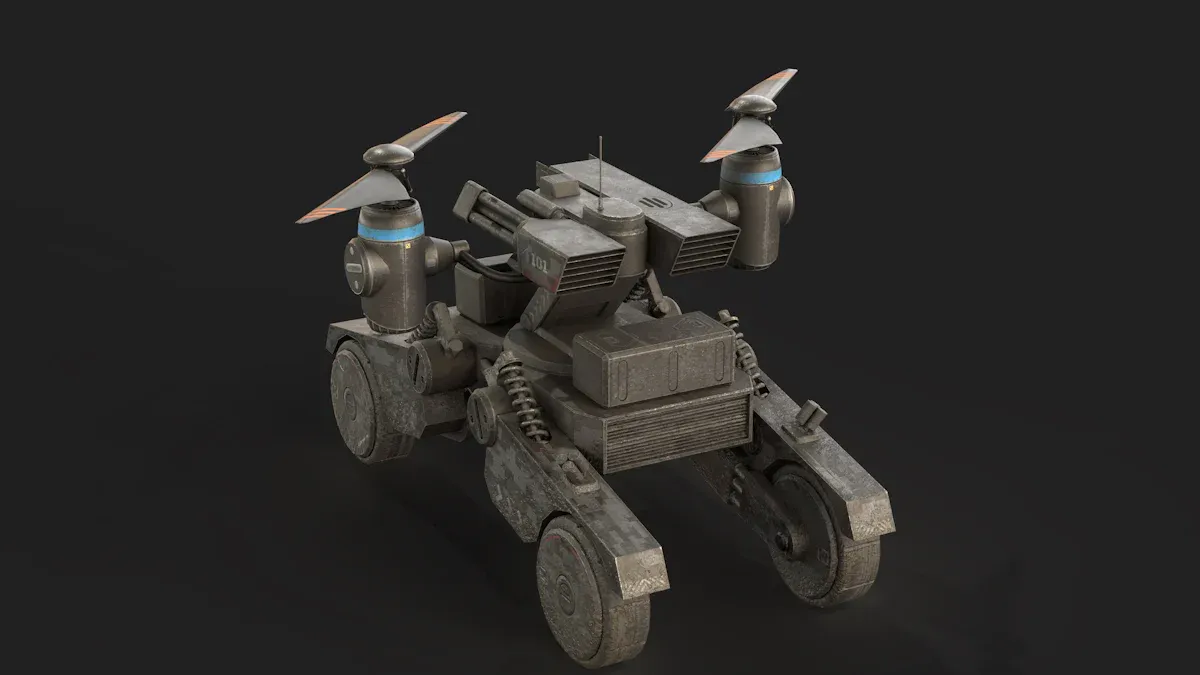
Drones have become indispensable in military logistics due to their versatility and efficiency. Equipped with advanced tracking systems, they gather real-time intelligence, perform reconnaissance, and even engage in electronic warfare. Their ability to neutralize threats while providing critical surveillance makes them a valuable asset in modern operations.
You can also rely on drones for resupplying troops in remote or forward operating areas. Their seamless integration with existing logistics equipment eliminates the need for specialized tools, simplifying the loading process. For example, the Orca drone uses AI to manage multiple units remotely, enhancing operational efficiency. Drones’ small size and vertical takeoff capabilities allow them to operate in confined spaces, ensuring delivery even in challenging environments. Additionally, their ability to function in GPS-denied areas ensures continuity during critical missions.
Beyond reconnaissance and resupply, drones support medical emergencies and provide cover for troops. Their advanced tracking systems enable precise navigation, making them a reliable tool for various military applications.
Self-Driving Vehicles for Logistics Operations
Self-driving vehicles are transforming logistics operations by reducing the need for human intervention. These vehicles navigate complex terrains using advanced tracking systems, ensuring timely delivery of supplies. Their ability to operate autonomously in hazardous conditions enhances safety and efficiency.
You can use self-driving vehicles to transport ammunition, medical supplies, and other critical resources across conflict zones. Their automation reduces the risk to personnel and ensures consistent performance under adverse conditions. For instance, these vehicles adapt to real-time changes in terrain or weather, maintaining operational continuity.
The integration of self-driving vehicles into military logistics also addresses challenges like fragmentation in decentralized organizations. By streamlining transportation processes, they improve responsiveness and innovation in supply chain management.
Robotics for Warehouse Automation
Robotics has revolutionized warehouse operations by automating repetitive tasks and improving efficiency. AI-powered robots equipped with advanced tracking systems handle inventory management, loading, and sorting with precision. This reduces human error and accelerates logistical processes.
For example, AI-based navigation systems predict human movement, allowing robots to operate efficiently in busy environments. These systems also reduce delivery times significantly, ensuring that supplies reach their destinations faster. Virtual simulation training further enhances the capabilities of robotics, lowering costs associated with real-world testing.
By automating warehouse operations, robotics minimizes delays and optimizes resource allocation. This ensures that your logistics network remains agile and responsive to dynamic military demands.
AI-Powered Maintenance and Repairs
AI-powered systems transform how you approach maintenance and repairs in military logistics. These systems analyze real-time data from sensors embedded in equipment, predicting when repairs are needed before breakdowns occur. This proactive approach minimizes unplanned downtime and keeps operations running smoothly.
You can rely on AI to monitor equipment health and identify issues early. For example, predictive maintenance algorithms detect wear and tear in vehicles or machinery, allowing you to schedule repairs at optimal times. This reduces the risk of sudden failures and ensures mission readiness. AI also streamlines repair processes by automating diagnostics, helping technicians focus on fixing problems rather than identifying them.
The efficiency gains from AI-powered maintenance are remarkable. Metrics show that maintenance costs drop by 25%, while annual fees decrease by up to 10%. Operational productivity increases by 25%, and equipment uptime improves by 10–20%. Unplanned downtime reduces by up to 50%, ensuring your logistics network remains resilient.
|
Metric |
Improvement |
|---|---|
|
Maintenance Cost Reduction |
25% |
|
Annual Fee Reduction |
Up to 10% |
|
Operational Productivity Increase |
25% |
|
Breakdown Reduction |
70% |
|
Operational Cost Savings |
5–10% |
|
Equipment Uptime Gain |
10–20% |
|
Unplanned Downtime Reduction |
Up to 50% |
AI also enhances resource allocation during repairs. By analyzing historical data, it recommends the best tools and personnel for each task. This ensures repairs are completed efficiently, saving time and reducing costs. With AI, you can maintain high levels of operational readiness while optimizing your logistics processes.
Overcoming Challenges in AI Integration
Addressing Ethical and Security Concerns
Integrating AI into military logistics introduces ethical and security challenges that demand careful consideration. Autonomous weapons, such as drone swarms, pose significant risks. These systems can independently identify and attack targets, potentially escalating conflicts. For example, the Kargu 2 drone used in Libya demonstrated how lethal autonomous weapons could change the nature of warfare. The rapid deployment of such technologies raises concerns about accountability and misuse.
Cybersecurity is another critical issue. AI enhances the complexity of cyberattacks, making it harder to trace their origins. This increases the risk of large-scale disruptions in logistics operations. Automated systems may also lead to unintended escalations during conflicts, as decisions occur faster than human oversight can manage. The potential for an AI-driven arms race further underscores the need for international regulations to prevent misuse.
|
Risk Factor |
Description |
|---|---|
|
Autonomous Weapons |
Low-cost automated weapons, like drone swarms, can autonomously hunt human targets, increasing the risk of large-scale violence. |
|
Cyberattacks |
AI can enhance the frequency and severity of cyberattacks, complicating attribution and escalating conflict risks. |
|
Escalation of Conflicts |
Automated systems may lead to rapid escalations in warfare, potentially resulting in unintended large-scale conflicts. |
|
Lethal Autonomous Weapons Usage |
The use of lethal autonomous weapons, such as the Kargu 2 drone in Libya, raises concerns about the future of warfare. |
|
Military AI Arms Race |
The rapid advancement of AI in military technology could lead to destructive conflicts and misuse by malicious actors. |
Addressing these concerns requires robust policies and international cooperation. Ethical guidelines must prioritize human oversight and accountability in AI applications.
Integrating AI with Legacy Systems
Adopting AI in military logistics often involves integrating it with older systems. This process presents technical challenges, as legacy systems may lack the infrastructure to support modern AI technologies. However, strategies like modernization and collaboration can bridge this gap. For instance, the Canadian Armed Forces emphasize upgrading existing systems while fostering partnerships to enhance compatibility.
AI improves information management, reducing the risk of information overload in logistics operations. It also optimizes supply routes and minimizes equipment downtime, demonstrating its value in older systems. By gradually incorporating AI into logistics planning, you can ensure a smoother transition without disrupting ongoing operations.
-
Key strategies for integration:
-
Modernizing legacy systems to support AI capabilities.
-
Collaborating with technology partners to enhance compatibility.
-
Using AI to streamline information management and logistics planning.
-
These approaches highlight the importance of strategic planning and resource allocation when integrating AI with older systems.
Training Personnel for AI Operations
Effective training programs are essential for preparing personnel to operate AI systems in military logistics. AI-based training tools provide real-time feedback, helping trainees improve their skills. For example, AI tracks every action during training sessions, allowing commanders to tailor future modules to individual needs. This personalized approach enhances learning outcomes.
Immersive training sessions also boost confidence and readiness. Studies show that 81% of trainees feel more prepared after participating in AI-driven programs. Real-time evaluations further enable commanders to assess unit performance and identify areas for improvement.
|
Measurable Outcome |
Description |
|---|---|
|
Skill Tracking |
AI records and analyzes every action of trainees, allowing for tailored future training modules. |
|
Confidence and Readiness |
81% of trainees report increased confidence and readiness after immersive training sessions. |
|
Real-Time Feedback |
AI provides ongoing evaluations, enabling commanders to assess unit performance effectively. |
By investing in AI-focused training, you can ensure that personnel are equipped to handle the complexities of modern logistics operations. This not only improves efficiency but also enhances mission readiness.
Ensuring Reliability in Critical Scenarios
AI plays a crucial role in ensuring reliability during critical military operations. You can trust AI systems to perform consistently by implementing robust evaluation frameworks. These frameworks assess AI models for accuracy, reliability, and safety. They also help identify potential failure modes, ensuring safe deployment in mission-critical scenarios. Ethical AI practices further minimize risks, making operations more secure.
To select the best AI models for defense, you should conduct benchmarking and comparative analysis. This process evaluates different models to determine which performs best under specific conditions. Stress tests in simulated combat scenarios provide valuable insights into how AI systems handle high-pressure environments. These tests reveal weaknesses and help refine the models for better performance. Adversarial AI training prepares systems to counter enemy tactics, enhancing their resilience.
Regular audits and updates are essential for maintaining reliability. By analyzing real-world data, you can refine AI models to adapt to changing conditions. This continuous improvement ensures that systems remain effective over time. For example, updating algorithms based on recent mission data can improve decision-making accuracy and operational efficiency.
-
Key practices for ensuring reliability include:
-
Developing ethical AI frameworks to reduce risks.
-
Identifying failure modes to enhance safety.
-
Benchmarking AI models for optimal performance.
-
Running stress tests in simulated scenarios.
-
Training AI to counter adversarial tactics.
-
Conducting regular audits and updates.
-
These strategies ensure that AI systems perform seamlessly, even in the most demanding situations. By prioritizing reliability, you can enhance mission success and maintain operational readiness. AI’s ability to adapt and improve makes it an indispensable tool for modern military logistics.
AI has revolutionized military logistics by enhancing efficiency, accuracy, and adaptability. Predictive models, like those used in Operation Inherent Resolve, optimize supply delivery, reducing delays and improving mission readiness. Historical challenges, such as those faced during the Meuse-Argonne Offensive, highlight how far logistics have advanced with AI integration. Systems like Israel’s Iron Dome and AI-piloted aircraft demonstrate the strategic importance of AI in modern military operations. These innovations reduce risks, improve tactical flexibility, and strengthen defense capabilities. Continued investment in AI ensures that military logistics remain resilient and ready for future challenges.
FAQ
What is the role of AI in military logistics?
AI helps you optimize supply chains, predict demand, and automate tasks. It analyzes data to improve decision-making and adapts to changing conditions in real time. These capabilities enhance efficiency and ensure mission readiness.
How does AI improve transportation planning?
AI analyzes traffic, weather, and terrain data to suggest the best routes. It recalculates paths instantly when disruptions occur. This reduces delays, lowers fuel costs, and ensures timely delivery of supplies.
Are autonomous devices reliable in critical missions?
Yes, autonomous devices like drones and self-driving vehicles use advanced AI systems to operate consistently. They adapt to dynamic conditions, ensuring safe and efficient performance even in high-pressure scenarios.
What challenges arise when integrating AI into military logistics?
You may face issues like ethical concerns, cybersecurity risks, and compatibility with older systems. Addressing these requires careful planning, modernization, and international cooperation to ensure safe and effective AI use.
How does AI enhance inventory management?
AI tracks stock levels in real time and forecasts demand using historical data. It prevents shortages and overstocking, ensuring you always have the right supplies available for missions.
Related content