
How Value-Added Logistics Services Improve Supply Chain Efficiency
Author:XTransfer2025.12.19Value-added logistics service
Value-added logistics services transform how supply chains operate by making processes faster and more cost-effective. You can rely on these services to enhance efficiency by reducing errors and improving delivery times. For example, order accuracy rates of up to 99.9% ensure fewer mistakes, while on-time delivery targets of 98% boost customer trust. These metrics directly contribute to customer satisfaction, which grows stronger when services like customization and reliable delivery meet unique needs.
Flexibility is another advantage. Scalable solutions help you adapt to market changes quickly. This adaptability ensures your operations stay efficient, even during demand fluctuations. By integrating these services, you can elevate both performance and customer loyalty.
What Are Value-Added Logistics Services?
Definition of Value-Added Logistics Services
Value-added logistics services refer to specialized operations that go beyond basic transportation and warehousing. These services enhance the overall efficiency of supply chains by addressing specific needs such as custom packaging, assembly, and quality control. They aim to improve the flow of goods and ensure that products meet customer expectations before reaching their final destination.
You can think of these services as tailored solutions that bridge the gap between standard logistics and customer satisfaction. For example, instead of merely storing products, a value-added logistics service might include assembling components into a finished product or labeling items according to regional requirements. These additional steps streamline processes and reduce the workload for your business.
Importance in Modern Supply Chains
In today’s fast-paced market, supply chains must adapt quickly to changing demands. Value-added logistics services play a critical role in meeting these challenges. They allow you to optimize operations, reduce errors, and deliver products faster. By integrating these services, you can focus on core business activities while ensuring that your supply chain remains efficient and responsive.
Research highlights the measurable benefits of adopting value-added logistics services. Companies that implement these services report significant improvements in planning, sourcing, manufacturing, and delivery processes. Statistical analyses, such as McNemar's tests, confirm these enhancements with high confidence (p < 0.05). This means that businesses like yours can expect better performance metrics and smoother operations.
Additionally, these services provide a competitive edge. They enable you to offer customized solutions that cater to unique customer needs. For instance, custom packaging or kitting services can differentiate your brand in a crowded market. As a result, you not only meet customer expectations but also build long-term loyalty.
Types of Value-Added Logistics Services

Custom Packaging and Labeling
Custom packaging and labeling play a vital role in optimizing supply chain operations. These services ensure that products are packaged and labeled according to specific customer or regional requirements. By tailoring packaging, you can enhance brand recognition and meet compliance standards in different markets.
The impact of custom packaging and labeling is measurable. For instance, companies have reported a 20% reduction in order processing times after implementing tailored solutions. Additionally, higher customer satisfaction scores reflect the success of these services in meeting unique needs. Faster shipping times and fewer errors further highlight the operational efficiency gained. The table below summarizes these outcomes:
|
Measurable Outcome |
Description |
|---|---|
|
Reduction in Order Processing Times |
20% reduction reported after implementing kitting service. |
|
Improved Customer Satisfaction |
Higher scores indicate success of tailored solutions. |
|
Operational Efficiency |
Faster shipping times and fewer errors noted. |
Assembly and Kitting
Assembly and kitting simplify supply chain processes by consolidating multiple items into a single, ready-to-ship package. This service is especially beneficial for industries like e-commerce, subscription boxes, and medical diagnostics. By grouping products, you can reduce labor costs, improve order accuracy, and save warehouse space.
For example, a medical diagnostics client achieved a 32% reduction in labor costs and a 28% improvement in order accuracy through kitting. E-commerce clients also reported a 71% reduction in warehouse storage needs. Kitting further aids inventory management by consolidating multiple SKUs into a single, trackable unit. Automation and robotics in these processes enhance efficiency by reducing manual labor and increasing accuracy.
Quality Control and Inspection
Quality control and inspection ensure that products meet high standards before reaching customers. These services identify defects, verify quantities, and maintain product reliability. By addressing issues early, you can prevent disruptions in the supply chain and reduce returns or exchanges.
Inspection reports help pinpoint production or logistical problems, improving inventory levels and fulfillment timelines. For example, integrating insights from quality control into a QA framework enhances product quality and boosts customer trust. Effective inspections also contribute to brand reputation by ensuring consistent reliability. Key benefits include:
-
Identifying discrepancies in quantity verification.
-
Minimizing returns by detecting defects early.
-
Enhancing customer satisfaction through exceptional product quality.
Returns Management
Efficient returns management is essential for maintaining a smooth supply chain. It ensures that returned products are processed quickly and cost-effectively, minimizing disruptions. By implementing advanced strategies, you can reduce the financial impact of returns while improving customer satisfaction.
Modern returns management often incorporates technology to streamline processes. For example, over 36% of businesses now use AI solutions to enhance efficiency in handling returns. Mobile platforms also play a significant role. They allow customers to initiate returns easily, track their progress in real-time, and communicate effectively with support teams. These tools not only simplify the process but also build trust with your customers.
Customized logistics solutions further improve returns management. Tailored approaches, such as offering flexible return policies or optimizing reverse logistics, reduce the likelihood of returns. They also enhance the overall customer experience. The table below highlights key trends in returns management:
|
Evidence Type |
Description |
|---|---|
|
AI Integration |
Over 36% of businesses have integrated AI solutions into logistics, enhancing efficiency in returns management. |
|
Mobile Optimization |
Mobile platforms improve returns management by enabling easy initiation, real-time tracking, and efficient communication. |
|
Customized Logistics Solutions |
Tailored logistics approaches reduce return likelihood and enhance customer experience, contributing to operational efficiency. |
By adopting these strategies, you can transform returns from a challenge into an opportunity to strengthen your supply chain.
Inventory and Order Fulfillment
Effective inventory and order fulfillment services are critical for reducing operational costs and meeting customer expectations. These services ensure that products are stored, picked, packed, and shipped efficiently. By optimizing inventory levels, you can avoid overstocking or stockouts, which directly impacts your bottom line.
Demand forecasting services play a vital role in inventory optimization services. Predictive software helps you forecast demand accurately, reducing carrying costs and improving order accuracy. Automation technologies further enhance efficiency by cutting labor costs and speeding up processes. For example, automating order picking and packing reduces errors and ensures faster delivery times.
To achieve optimal results, consider these strategies:
-
Optimize inventory levels using predictive software to forecast demand.
-
Automate processes to reduce labor costs and improve efficiency.
-
Negotiate with suppliers and carriers for better terms and rates.
-
Improve packaging to lower shipping fees and minimize damage.
-
Enhance training programs to boost workforce productivity.
-
Leverage outsourcing through third-party logistics (3PL) providers.
-
Implement technology solutions for better logistics operations.
By integrating these practices, you can streamline your supply chain and deliver exceptional service to your customers.
How Value-Added Logistics Services Lead to Improved Efficiency

Streamlining Operations
Value-added logistics services simplify complex supply chain processes, making your operations more efficient. By integrating services like custom packaging and labeling or assembly and kitting, you can eliminate redundant steps and reduce manual errors. For instance, custom packaging ensures that products are ready for shipment without additional handling, while kitting consolidates multiple items into a single package, reducing the time spent on order preparation.
Streamlined operations also improve warehouse utilization rates and inventory turnover. A case study on warehouse processing optimization revealed a 15% reduction in average order processing times. This improvement not only speeds up delivery but also enhances overall supply chain performance. Additionally, technologies like automated sorting systems and real-time tracking tools further optimize workflows, ensuring that every step in your logistics process adds value.
|
Metric Type |
Specific Metrics |
|---|---|
|
Cost Metrics |
Total supply chain costs, Cost per unit, Inventory turnover rates |
|
Quality Indicators |
Order accuracy rates, Supplier performance metrics, Perfect order fulfillment |
|
Time and Speed Metrics |
Order cycle time, Lead time, On-time delivery rates, Warehouse utilization rates |
These metrics highlight how value-added logistics services contribute to improved efficiency by addressing key operational challenges.
Reducing Lead Times
Reducing lead times is critical for meeting customer expectations, especially in industries that demand same day delivery. Value-added logistics services achieve this by optimizing transportation routes, improving inventory management, and leveraging economies of scale. For example, route efficiency studies have shown a 12% reduction in delivery times when advanced planning tools are used.
Technological integration plays a significant role in minimizing delays. Automated inventory systems ensure that stock levels are accurate, preventing shortages or overstocking. Additionally, cross-docking operations reduce the time products spend in transit by transferring them directly from inbound to outbound transportation. A documented case study on cross-docking operations improvement demonstrated minimized loading and unloading times, further accelerating the supply chain.
|
Metric |
Reduction |
|---|---|
|
Lead Time |
25% |
|
Operating Costs |
30% |
|
Customer Satisfaction |
Improved |
By adopting these strategies, you can achieve faster order fulfillment and enhance customer satisfaction, all while keeping costs under control.
Enhancing Flexibility
Flexibility in your supply chain allows you to adapt quickly to market changes and customer demands. Value-added logistics services, such as assembly and kitting, provide the scalability needed to handle fluctuating order volumes. For example, during peak seasons, you can bundle products into kits to streamline order processing and reduce labor costs.
Outsourcing non-core activities to value-added logistics providers also enhances flexibility. This approach lets you focus on your core competencies while the logistics partner manages tasks like inventory control and returns management. A retail client facing unpredictable holiday demand implemented a flexible logistics strategy, which included scalable warehousing and real-time demand forecasting. The result was a 30% improvement in on-time delivery and a 20% reduction in labor costs.
-
Key benefits of enhanced flexibility include:
-
Faster response to demand fluctuations.
-
Reduced need for upfront investments in infrastructure.
-
Improved customer satisfaction through tailored solutions.
-
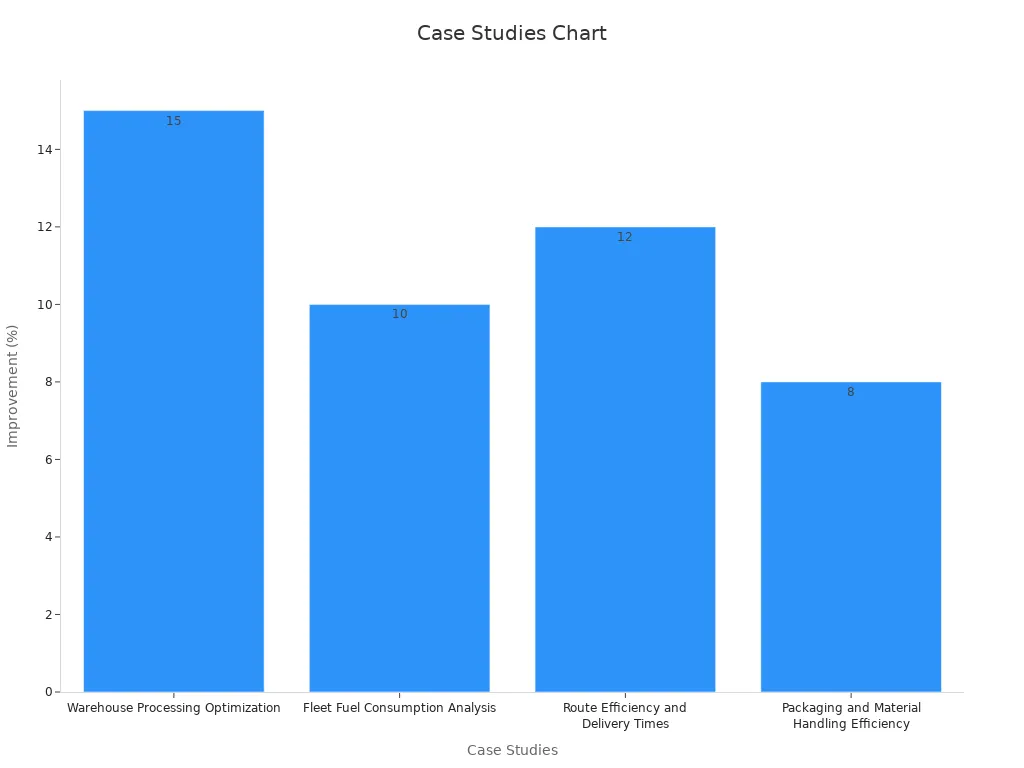
By leveraging value-added services, you can build a supply chain that is not only efficient but also resilient to market changes.
Optimizing Costs
Value-added logistics services play a crucial role in reducing costs across your supply chain. By integrating these services, you can identify inefficiencies, streamline processes, and allocate resources more effectively. This approach not only minimizes waste but also ensures that every dollar spent contributes to improved efficiency.
One way to optimize costs is through better inventory management. Services like demand forecasting and automated inventory systems help you maintain optimal stock levels. This reduces carrying costs and prevents overstocking or stockouts. For example, predictive software can analyze historical data to forecast demand accurately, ensuring you only store what you need. This approach improves cash flow and reduces the risk of holding unsold inventory.
Another cost-saving strategy involves leveraging economies of scale. By outsourcing logistics tasks to third-party providers, you can benefit from their established networks and expertise. These providers often negotiate better rates with carriers, reducing transportation costs. Additionally, services like cross-docking eliminate the need for long-term storage, further cutting expenses. For instance, cross-docking transfers goods directly from inbound to outbound transportation, reducing warehouse handling costs.
Technology also plays a significant role in cost optimization. Shipment tracking systems provide real-time updates, allowing you to monitor deliveries and address delays promptly. This reduces the risk of missed deadlines and associated penalties. Advanced tools like route optimization software ensure that transportation routes are efficient, saving fuel and time. For businesses offering same day delivery, these technologies are essential for maintaining profitability while meeting customer expectations.
The financial impact of these strategies can be measured using key metrics. The table below highlights some of the most effective indicators for assessing cost optimization:
|
Metric |
Description |
|---|---|
|
Logistics Cost as a % of Sales |
Indicates the proportion of sales consumed by logistics expenses, highlighting cost efficiency. |
|
Inventory Turns |
Measures how often inventory is sold and replaced over a period, reflecting inventory management efficiency. |
|
Days Sales Inventory |
Shows the average number of days inventory is held before being sold, impacting working capital. |
By focusing on these metrics, you can track your progress and identify areas for further improvement. Value-added logistics services not only reduce costs but also enhance overall efficiency, making your supply chain more competitive and resilient.
Tangible Benefits of Value-Added Logistics Services
Cost Savings
Value-added logistics services help you reduce costs by streamlining operations and eliminating inefficiencies. For example, better inventory management ensures you avoid overstocking or stockouts, which directly impacts your bottom line. Predictive tools analyze demand trends, allowing you to maintain optimal stock levels and reduce carrying costs. Additionally, services like custom packaging and labeling minimize waste and improve shipping efficiency.
Companies that adopt these services report significant savings. A global retailer reduced transportation costs by 20% through improved route planning and freight consolidation. Automation and real-time analytics also decreased warehousing expenses by 15%. Similarly, a manufacturing company achieved an 18% cost reduction by focusing on lean management practices and better inventory turnover rates.
|
Company/Context |
Cost Savings |
Description |
|---|---|---|
|
Global Leader SEW-EURODRIVE |
Significant |
Achieved through Intelligent Content Automation platform |
|
Leading global retailer |
20% |
Improved route planning and freight consolidation; 15% decrease in warehousing expenses |
|
Prominent manufacturing company |
18% |
Lean management practices improved inventory turnover rates |
Improved Customer Satisfaction
Value-added logistics services enhance customer satisfaction by ensuring faster deliveries, accurate orders, and high-quality products. Services like assembly and kitting simplify order fulfillment, reducing errors and improving delivery times. For instance, custom packaging and labeling ensure products meet regional requirements, creating a seamless experience for your customers.
Studies show that businesses implementing these services see measurable improvements in customer satisfaction. Faster order processing and fewer errors lead to higher trust and loyalty. By addressing customer needs proactively, you can build long-term relationships and strengthen your brand reputation.
Competitive Advantage
Incorporating value-added logistics services gives you a competitive edge in today’s fast-paced market. These services allow you to offer tailored solutions, such as custom packaging and labeling or assembly and kitting, that meet unique customer demands. By doing so, you differentiate your brand and attract more customers.
Additionally, these services improve operational efficiency, enabling you to adapt quickly to market changes. For example, advanced analytics and automation help you optimize routes and inventory levels, reducing costs and improving delivery times. This adaptability ensures you stay ahead of competitors while maintaining high customer satisfaction.
By leveraging value-added services, you position your business as a leader in the industry. Customers value reliability and efficiency, and these services help you deliver both.
Adaptability to Market Changes
Adapting to market changes is essential for maintaining a competitive edge. Value-added logistics services provide the tools you need to respond quickly to shifting demands. These services allow you to scale operations, adjust inventory levels, and meet customer expectations during peak seasons or unexpected disruptions.
Smart logistics plays a key role in enhancing adaptability. It strengthens the resilience of your supply chain, enabling faster responses to market fluctuations. For example, advanced technologies like real-time tracking and automated inventory systems improve logistics efficiency. This ensures that your operations remain smooth, even when demand patterns shift unexpectedly.
Cost reduction is another benefit of these services. By streamlining processes and eliminating inefficiencies, you can lower transaction costs. For instance, predictive analytics helps you forecast demand accurately, reducing the risk of overstocking or stockouts. This not only saves money but also ensures that your customers receive their orders on time.
The table below highlights how value-added logistics services improve adaptability:
|
Aspect |
Findings |
|---|---|
|
Resilience |
Smart logistics enhances the resilience of the manufacturing industry chain, enabling rapid response to market changes. |
|
Efficiency |
It improves logistics efficiency, which is crucial for adapting to fluctuations. |
|
Cost Reduction |
Smart logistics reduces transaction costs, facilitating better adaptability in business operations. |
By leveraging these services, you can build a supply chain that is both flexible and efficient. This adaptability ensures that your business thrives, even in unpredictable markets.
Value-added logistics services play a crucial role in enhancing supply chain efficiency. They streamline operations, reduce costs, and improve customer satisfaction. By adopting these services, you can optimize your logistics processes and stay ahead in a competitive market. Tailored value-added logistics service solutions allow you to meet unique business needs while maintaining flexibility and adaptability. Exploring these options ensures your supply chain remains efficient and resilient in today’s dynamic environment.
FAQ
What are value-added logistics services?
Value-added logistics services include tasks like custom packaging, assembly, and quality control. These services go beyond basic transportation and storage to improve efficiency and meet customer needs. They help streamline operations and enhance supply chain performance.
How do these services reduce costs?
They reduce costs by optimizing processes like inventory management and transportation. For example, predictive tools help maintain optimal stock levels, avoiding overstocking or shortages. Outsourcing logistics tasks to experts also lowers expenses through better resource allocation.
Can small businesses benefit from value-added logistics?
Yes, small businesses can benefit greatly. These services provide scalable solutions, allowing you to adapt to market changes. They also improve customer satisfaction by ensuring faster deliveries and accurate orders, which helps build trust and loyalty.
Are value-added logistics services customizable?
Yes, they are highly customizable. You can tailor services like packaging, labeling, and kitting to meet specific customer or regional requirements. This flexibility ensures your supply chain aligns with your business goals and customer expectations.
How do these services improve customer satisfaction?
They improve satisfaction by ensuring timely deliveries, accurate orders, and high-quality products. Customization options, like tailored packaging, create a better customer experience. Faster processing and fewer errors also build trust and loyalty with your customers.
Related content