
How IoT and Automation Are Optimizing Supply Chain Logistics
Author:XTransfer2025.12.19Logistics technology
The digital transformation in logistics technology is reshaping how you manage supply chains. IoT and automation bring tools like real-time tracking, predictive analytics, and operational efficiency to the forefront. These innovations are not just theoretical; they deliver measurable results:
-
Real-time tracking has reduced idle fleet time by 30%, cutting costs and improving delivery efficiency.
-
Over half of logistics providers now offer mobile apps for real-time tracking, improving communication.
-
IoT reduces logistics costs by up to 50% while boosting overall efficiency by 30%.
Such advancements make logistics more transparent, cost-effective, and adaptable to customer needs.
Understanding IoT and Automation in Logistics Technology
What Is IoT in Logistics?
The internet of things (IoT) has revolutionized logistics by creating a highly connected network that enhances visibility and efficiency. IoT uses sensors to collect real-time data on shipment location, temperature, and humidity. This data helps you monitor goods during transit and make informed decisions to prevent delays or damage. For example, companies like FedEx use IoT-enabled systems to track package conditions and locations, ensuring timely deliveries.
IoT also optimizes warehouse operations. Smart shelves and RFID tags reduce human error and improve inventory management. By leveraging IoT, you can anticipate potential issues, such as stock shortages or environmental changes, and address them proactively. This technology not only streamlines operations but also gives you a competitive edge in the fast-paced logistics industry.
The Role of Automation in Supply Chains
Automation in supply chains involves using technology to perform tasks without human intervention. It increases efficiency, reduces labor costs, and minimizes errors. In warehouses, automated picking systems and robotic arms speed up order fulfillment. For instance, Amazon employs automation to track package movement and manage inventory flow in its fulfillment centers.
Beyond warehouses, automation enhances transportation management. AI-powered tools optimize delivery routes, reducing fuel consumption and transit times. Predictive maintenance systems, like those used by DHL, monitor fleet health to prevent breakdowns and lower operational costs. By adopting automation, you can improve overall supply chain performance and meet customer demands more effectively.
How IoT and Automation Work Together
IoT and automation complement each other to create smarter, more efficient supply chains. IoT provides real-time data, while automation uses this data to execute tasks seamlessly. For example, IoT-enabled sensors in warehouses collect information on inventory levels, which automated systems use to reorder stock or adjust storage layouts. This synergy reduces manual effort and enhances accuracy.
In transportation, IoT tracks fleet locations and monitors road conditions. Automated systems then use this data to optimize delivery routes and schedules. Companies like UPS combine IoT and automation to minimize fuel consumption and improve delivery efficiency. Additionally, integrating AI with IoT enables automated decision-making, such as adjusting logistics strategies based on predictive weather analytics. Together, these technologies help you scale operations, reduce costs, and deliver better results.
Applications of IoT and Automation in Supply Chain Logistics
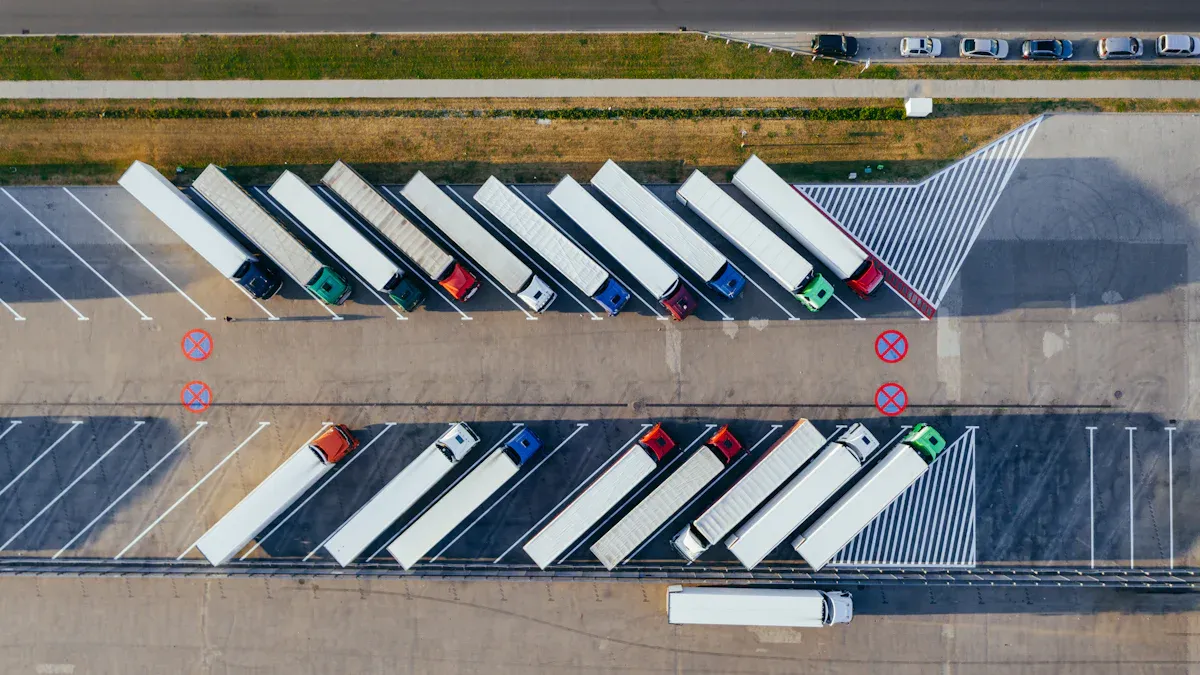
Real-Time Shipment Tracking and Monitoring
Real-time shipment tracking is one of the most impactful applications of IoT in logistics. By using IoT-enabled sensors and GPS technology, you can monitor the location and condition of shipments throughout their journey. This capability reduces delays and ensures goods arrive on time. For example, companies like Maersk and Unilever have implemented advanced tracking systems to optimize their logistics operations.
|
Company |
Impact on Supply Chain Performance |
|---|---|
|
Maersk |
Implemented real-time data solutions to reduce delays and enhance operational efficiency. |
|
Zalando |
Uses real-time data to ensure faster deliveries and minimize the risk of delays. |
|
Unilever |
Optimizes supply chain operations with advanced tracking systems to ensure timely deliveries and reduce disruptions. |
Real-time tracking also improves communication between stakeholders. You can provide customers with accurate updates on delivery status, enhancing their experience. By leveraging IoT, you gain advanced digital logistics capabilities that streamline operations and boost efficiency.
Predictive Analytics for Maintenance and Demand Forecasting
Predictive analytics transforms logistics operations by enabling proactive decision-making. IoT devices collect data from sensors, which predictive models use to forecast equipment behavior and maintenance needs. This approach minimizes downtime and reduces costs. For instance, historical data helps you prioritize maintenance tasks based on severity, ensuring efficient resource allocation.
|
Key Aspect |
Description |
|---|---|
|
Historical Data Usage |
Predictive models utilize historical data to forecast future equipment behavior, enhancing maintenance scheduling. |
|
Optimization of Maintenance Schedules |
Organizations can prioritize maintenance tasks based on the severity of predictions, ensuring efficient resource allocation. |
|
Continuous Improvement |
Predictive maintenance is iterative, requiring ongoing monitoring and model adjustments as new data is collected. |
|
Proactive Maintenance Strategy |
By analyzing data from sensors and IoT devices, organizations can anticipate maintenance needs, reducing downtime and costs. |
|
Data Collection Foundation |
Effective predictive maintenance relies on gathering relevant data from various sources, including IoT devices. |
|
Data Preprocessing |
Cleaning and normalizing data is essential for accurate predictions, involving techniques to handle noise and inconsistencies. |
|
Application of Algorithms |
Machine learning algorithms identify patterns in data, predicting maintenance needs effectively. |
|
Anomaly Detection |
Algorithms detect deviations from normal behavior, allowing for timely interventions to prevent failures. |
Predictive analytics also enhances demand forecasting. By analyzing trends and patterns, you can anticipate customer needs and adjust inventory levels accordingly. This capability ensures you meet demand without overstocking or understocking, optimizing your supply chain performance.
Warehouse Automation and Smart Inventory Management
Warehouse automation is revolutionizing logistics by improving efficiency and accuracy. Automated systems, such as robotic arms and conveyor belts, speed up order fulfillment and reduce labor costs. IoT technology enhances these systems by providing real-time data on inventory levels. This data allows you to optimize storage layouts and reorder stock automatically.
-
IoT technology enhances inventory management systems in warehouses.
-
It emphasizes increased accuracy and efficiency.
-
Real-time tracking capabilities improve inventory management and optimization.
Smart inventory management systems powered by IoT reduce human error and improve operational efficiency. You can track inventory in real-time, ensuring accurate stock levels and minimizing waste. By adopting warehouse automation, you gain a competitive edge in logistics operations and meet customer demands more effectively.
Autonomous Vehicles and Drones in Logistics
Autonomous vehicles and drones are transforming logistics by introducing faster, safer, and more efficient delivery methods. These technologies reduce human intervention, allowing you to streamline operations and lower costs.
Autonomous Vehicles
Autonomous vehicles, such as self-driving trucks, are revolutionizing freight transportation. Equipped with advanced sensors and AI systems, these vehicles navigate roads, avoid obstacles, and optimize delivery routes. You can use autonomous trucks to reduce driver fatigue and improve delivery times. For example, companies like Tesla and Waymo are developing smart freight solutions that enhance long-haul transportation efficiency.
Benefits of autonomous vehicles include:
-
Cost Savings: Reduced labor costs and fuel consumption.
-
Safety: Fewer accidents due to AI-driven navigation systems.
-
Efficiency: Continuous operation without breaks, ensuring faster deliveries.
Drones in Logistics
Drones offer a unique advantage for last-mile delivery. They can bypass traffic and deliver packages directly to customers' doorsteps. You can use drones to reach remote areas or deliver urgent medical supplies. Amazon Prime Air and Zipline are leading examples of companies leveraging drones for smart freight operations.
Advantages of drones include:
-
Speed: Faster delivery times, especially for short distances.
-
Accessibility: Ability to reach hard-to-access locations.
-
Eco-Friendly: Reduced carbon emissions compared to traditional vehicles.
By integrating autonomous vehicles and drones into your logistics strategy, you can achieve smarter freight operations that enhance efficiency and customer satisfaction.
IoT-Enabled Cold Chain Logistics
IoT-enabled cold chain logistics ensure the safe transportation of temperature-sensitive goods, such as pharmaceuticals and food products. IoT sensors monitor temperature, humidity, and other environmental factors in real time, helping you maintain product quality throughout the supply chain.
Real-Time Monitoring
IoT devices provide continuous updates on shipment conditions. You can use this data to detect temperature fluctuations and take immediate action. For instance, smart freight solutions equipped with IoT sensors alert you if a refrigerated truck's temperature rises above the acceptable range.
Enhanced Visibility
IoT-enabled systems improve visibility across the cold chain. You can track shipments from origin to destination, ensuring compliance with regulatory standards. Companies like DHL and FedEx use IoT to optimize cold chain logistics and reduce spoilage.
Benefits of IoT in Cold Chain Logistics
-
Reduced Waste: Minimized spoilage of perishable goods.
-
Improved Quality: Maintained product integrity during transit.
-
Regulatory Compliance: Ensured adherence to temperature control standards.
IoT-enabled cold chain logistics allow you to deliver temperature-sensitive goods reliably and efficiently. By adopting these technologies, you can enhance your supply chain performance and meet customer expectations.
Benefits of IoT and Automation in Logistics Technology
Improved Visibility and Transparency Across the Supply Chain
Visibility plays a crucial role in modern logistics. By adopting IoT and automation, you can achieve real-time visibility across your supply chain. This means you can track shipments, monitor inventory, and oversee operations from start to finish. With tools like cloud-based systems and API technology, you can reduce the time and cost required to gain this level of transparency.
-
Companies investing in visibility tools often see a favorable return on investment, especially when customers demand real-time information.
-
Tracing products back to their sources helps you mitigate risks, such as product recalls, while enhancing supply chain integrity.
For example, real-time visibility allows you to identify potential delays or disruptions early. This proactive approach ensures smoother logistics operations and builds trust with your customers. By improving transparency, you not only enhance operational efficiency but also strengthen your business reputation.
Enhanced Efficiency and Cost Savings
IoT and automation bring significant benefits to logistics technology by boosting efficiency and reducing costs. Automating processes allows you to execute tasks faster and with fewer errors. For instance, automated systems in warehouses streamline order fulfillment, while AI-powered tools optimize delivery routes. These advancements lead to measurable cost savings and operational improvements.
|
Source |
Evidence |
Year |
|---|---|---|
|
Deloitte Insights |
Average 28.5% increase in operational efficiency |
2021 |
|
Microsoft IoT Signals Report |
30-33% reduction in operational costs |
2022 |
|
Energy Star |
Average 23% reduction in energy consumption |
2021 |
|
Google Sustainability Report |
Cooling costs reduced by up to 40% |
2021 |
Initial investments in IoT technology may seem high, but they pay off over time. By saving on labor costs and improving efficiency, you can achieve long-term financial benefits. Additionally, automating repetitive tasks frees up your workforce to focus on more strategic activities, further enhancing productivity.
Faster Decision-Making with Real-Time Data
Real-time data is a game-changer for logistics operations. It enables you to make faster, more informed decisions, which is critical in a fast-paced industry. For example, real-time tracking of shipments and vehicle locations helps you identify potential issues before they escalate. This allows you to address problems proactively, minimizing disruptions.
|
Example Type |
Description |
|---|---|
|
Enhanced Visibility |
Real-time tracking of shipments and vehicle locations helps identify potential issues before they escalate. |
|
Optimized Route Planning |
Adjusting routes dynamically based on current traffic and weather conditions minimizes delays. |
|
Improved Inventory Management |
Continuous monitoring of inventory levels allows for timely restocking and reduces overstock risks. |
|
Proactive Problem Resolution |
Predictive analytics can forecast equipment failures, enabling preemptive maintenance to avoid disruptions. |
By leveraging real-time data, you can optimize route planning, improve inventory management, and enhance overall supply chain efficiency. This capability not only reduces costs but also improves customer satisfaction by ensuring timely deliveries. Real-time decision-making powered by IoT and automation gives you a competitive edge in the logistics industry.
Better Customer Experience Through Accurate Updates
Accurate updates play a vital role in improving customer satisfaction in logistics. When you provide real-time information about shipment status, customers feel more confident and informed. This transparency builds trust and strengthens your relationship with them.
-
Real-Time Notifications: IoT-enabled systems allow you to send instant updates about delivery progress. Customers can track their orders and know exactly when to expect them.
-
Proactive Communication: Automated alerts notify customers about potential delays or changes in delivery schedules. This proactive approach reduces frustration and enhances their experience.
For example, companies like Amazon use IoT and automation to provide precise delivery windows. Customers receive notifications at every stage of the shipping process, from order confirmation to final delivery. This level of detail ensures they stay informed and satisfied.
Accurate updates also help you handle customer inquiries more efficiently. With access to real-time data, your support team can quickly address questions about shipment status. This reduces response times and improves overall service quality. By prioritizing accurate updates, you create a seamless and enjoyable experience for your customers.
Sustainability and Reduced Environmental Impact
IoT and automation contribute significantly to sustainability in logistics. These technologies help you optimize operations, reduce waste, and lower your carbon footprint. By adopting eco-friendly practices, you not only protect the environment but also appeal to environmentally conscious customers.
How IoT and Automation Promote Sustainability
-
Optimized Routes: IoT-enabled systems analyze traffic and weather conditions to plan the most efficient delivery routes. This reduces fuel consumption and minimizes emissions.
-
Energy-Efficient Warehouses: Automated systems use energy-saving technologies, such as smart lighting and temperature controls, to lower energy usage.
-
Reduced Waste: IoT sensors monitor inventory levels and expiration dates, helping you avoid overstocking and product spoilage.
|
Sustainability Benefit |
Example |
|---|---|
|
Lower Fuel Consumption |
Route optimization reduces unnecessary mileage and fuel usage. |
|
Energy Savings |
Smart warehouses cut energy costs by up to 30%. |
|
Waste Reduction |
Real-time inventory tracking minimizes expired or unsold products. |
Real-World Examples
Companies like UPS and DHL have implemented green logistics initiatives using IoT and automation. UPS’s route optimization system, ORION, saves millions of gallons of fuel annually. DHL uses IoT to monitor energy usage in its warehouses, achieving significant reductions in carbon emissions.
Sustainability is no longer optional. Customers increasingly prefer businesses that prioritize eco-friendly practices. By leveraging IoT and automation, you can align your operations with sustainability goals while improving efficiency and reducing costs.
Challenges and Solutions in Adopting IoT and Automation
Addressing Data Security and Privacy Concerns
Data security and privacy remain critical challenges when adopting IoT and automation in logistics. Cyber-attacks often target IT systems, where sensitive customer and corporate data are stored. To protect your operations, you must implement robust cybersecurity measures. These include firewalls, encryption, and regular security audits. For example, encrypting data ensures that even if unauthorized access occurs, the information remains unreadable.
Compliance with regulations like GDPR and CCPA also strengthens your data protection strategy. These laws give individuals more control over their personal information and enforce strict standards for data handling. Training your employees on data protection practices further reduces the risk of human error. By combining these measures, you can safeguard your logistics operations and maintain customer trust.
Overcoming Integration Issues with Legacy Systems
Integrating IoT systems with older logistics technologies can be challenging. Legacy systems often lack the ability to communicate with modern IoT devices, leading to inefficiencies. To address this, you should evaluate your existing infrastructure and plan the integration process carefully. Start by selecting IoT devices compatible with your current systems. Then, create a detailed roadmap to guide the implementation.
Using modular architecture and standardized protocols can simplify integration. Modular systems allow you to expand your IoT network without disrupting existing operations. Standardized protocols ensure that different devices work together seamlessly. For example, API-based integration connects IoT components to legacy systems, enabling smooth data exchange. These strategies help you modernize your logistics operations without significant disruptions.
Managing High Initial Investment Costs
The high upfront costs of IoT and automation can deter businesses from adopting these technologies. Expenses often include software licenses, hardware, and skilled personnel. However, a phased implementation approach can make these investments more manageable. By rolling out IoT solutions gradually, you can spread costs over time and assess their impact before scaling up.
Despite the initial expense, automation offers long-term cost savings. Automated systems reduce labor costs, improve efficiency, and minimize errors. For instance, optimizing delivery routes with IoT can lower fuel consumption, saving money in the long run. By focusing on the long-term benefits, you can justify the initial investment and enhance your logistics operations.
Workforce Training and Adaptation
Adopting IoT and automation in logistics requires your workforce to adapt to new technologies. Training programs play a crucial role in ensuring employees can effectively use these tools. Without proper training, your team may struggle to keep up with the demands of a digitally transformed supply chain.
Reskilling and upskilling are two essential strategies. Reskilling helps employees transition into new roles, while upskilling enhances their current abilities. For example:
-
44% of new hires need skill updates to meet job requirements.
-
Companies like Walmart and Deloitte have implemented tailored training programs to address these needs.
DHL’s "Reskill Today, Lead Tomorrow" program demonstrates the impact of effective training. This initiative improved operational efficiency by 20%, giving the company a stronger competitive edge.
|
Training Program |
Outcome |
Impact |
|---|---|---|
|
DHL's Reskill Today, Lead Tomorrow |
20% improvement in efficiency |
Stronger competitive edge in the market |
By investing in workforce training, you can ensure your employees are prepared to handle the challenges of IoT and automation. This not only boosts productivity but also fosters a culture of innovation and adaptability.
Practical Solutions for Seamless Implementation
Implementing IoT and automation can be complex, but practical strategies can simplify the process. Start by involving your employees early. Gaining their buy-in ensures smoother transitions and reduces resistance to change. Personalized dashboards and clear communication can help employees understand the benefits of new systems.
For example, N&N Moving Supplies used personalized dashboards and effective planning to gain employee support. This approach reduced payroll processing time by 84% and improved labor-cost tracking across locations.
|
Case Study |
Key Strategies |
Outcomes |
|---|---|---|
|
N&N Moving Supplies |
- Employee buy-in through personalized dashboards |
- Reduced payroll processing time by 84% |
|
|
- Tailored ERP solution with third-party partner |
- Improved accuracy of hours and vacation time counts |
|
Green Rabbit |
- Implemented ERP to manage complex supply chain |
- Delivered tens of thousands of orders per day without delays |
|
|
- Focused on real-time data analysis and error reduction |
- Achieved error-free data management and could triple order volume without system concerns |
Another effective solution is leveraging ERP systems to streamline operations. Green Rabbit implemented an ERP system to manage a complex supply chain, enabling them to handle tens of thousands of orders daily without delays. Real-time data analysis and error reduction allowed them to triple their order volume without system concerns.
By focusing on employee engagement and robust systems, you can overcome implementation challenges and unlock the full potential of IoT and automation in your logistics operations.
Future Trends in IoT and Automation for Logistics

AI-Powered Logistics and Smart Automation
AI is reshaping logistics by enabling smarter and faster decision-making. You can use AI-driven route optimization to reduce delivery times and fuel consumption. AI also powers predictive analytics, helping you anticipate demand and manage inventory more effectively. For example, AI systems analyze historical data to predict peak seasons, ensuring you stock the right products at the right time.
The market for AI-powered logistics is growing rapidly. By 2027, it is expected to reach $21.4 billion, with a compound annual growth rate (CAGR) of 43.5%.
|
Forecast Year |
Market Size (in billion USD) |
CAGR (%) |
|---|---|---|
|
2020 |
N/A |
N/A |
|
2027 |
21.4 |
43.5 |
This growth highlights the increasing adoption of AI in logistics operations. By integrating AI into your supply chain, you can improve efficiency, reduce costs, and stay ahead of the competition.
Blockchain for Secure and Transparent Data Sharing
Blockchain technology is revolutionizing data sharing in logistics. It creates a secure and transparent system for tracking shipments and verifying transactions. You can use blockchain to ensure the authenticity of goods and prevent fraud. For instance, blockchain records every step of a product’s journey, giving you and your customers complete visibility.
The blockchain market in logistics is projected to grow significantly.
-
The market size reached $19.5 billion in 2023.
-
It is expected to grow at a CAGR exceeding 45% from 2024 to 2032.
-
The tracking and tracing segment could surpass $300 billion by 2032, driven by the demand for real-time visibility.
By adopting blockchain, you can enhance trust and efficiency in your supply chain, making your operations more reliable and customer-focused.
5G Connectivity for Enhanced IoT Performance
5G connectivity is a game-changer for IoT in logistics. Its ability to connect up to a million devices per square kilometer allows you to integrate more IoT devices into your operations. This increased capacity supports real-time data sharing, improving efficiency and decision-making.
The low latency of 5G ensures almost instantaneous data transmission. This is crucial for logistics applications like tracking shipments and monitoring warehouse conditions. For example, 5G enables high-speed communication between devices, allowing you to adjust delivery routes in real time based on traffic or weather conditions.
-
5G supports a high density of devices, essential for logistics environments with numerous sensors.
-
Its ultra-low latency enhances operational efficiency by enabling faster response times.
-
Enhanced connectivity improves asset tracking, reducing delays and boosting reliability.
By leveraging 5G, you can optimize your logistics operations, ensuring timely deliveries and better customer satisfaction.
Fully Autonomous Supply Chains
Fully autonomous supply chains represent the next frontier in logistics. These systems operate with minimal human intervention, relying on advanced technologies like robotics, artificial intelligence, and IoT. You can use these technologies to automate tasks such as inventory management, order fulfillment, and transportation.
One of the most significant benefits of fully autonomous supply chains is their ability to improve efficiency. For example, robotic systems in warehouses can pick and pack orders faster than humans. Autonomous vehicles can deliver goods without delays caused by driver fatigue. These advancements reduce operational costs and increase productivity.
Another advantage is the ability to make data-driven decisions. AI-powered systems analyze real-time data to optimize routes, predict demand, and prevent disruptions. For instance, predictive analytics can identify potential bottlenecks in your supply chain, allowing you to address them before they escalate. This level of automation ensures smoother operations and better customer satisfaction.
However, implementing fully autonomous supply chains requires careful planning. You need to invest in the right technologies and train your workforce to adapt to these changes. By taking a phased approach, you can gradually transition to a more automated system without disrupting your current operations.
Green Logistics and Sustainability Initiatives
Green logistics focuses on reducing the environmental impact of supply chain operations. You can achieve this by adopting sustainable practices such as route optimization, energy-efficient warehouses, and eco-friendly packaging. These initiatives not only protect the environment but also appeal to customers who value sustainability.
Route optimization is one of the most effective ways to reduce carbon emissions. IoT-enabled systems analyze traffic patterns and weather conditions to plan the most efficient delivery routes. This reduces fuel consumption and minimizes your carbon footprint. Energy-efficient warehouses also play a crucial role. Automated systems with smart lighting and temperature controls lower energy usage, saving costs and reducing emissions.
Eco-friendly packaging is another key aspect of green logistics. By using biodegradable or recyclable materials, you can minimize waste and meet customer expectations for sustainable practices. Companies like UPS and Amazon have already adopted these measures, setting an example for the industry.
Sustainability is no longer optional. Customers increasingly prefer businesses that prioritize eco-friendly practices. By integrating green logistics into your operations, you can reduce costs, improve efficiency, and build a positive brand image.
IoT and automation are transforming logistics technology by enhancing efficiency, reducing costs, and improving visibility across the supply chain. These advancements allow you to optimize operations and stay competitive in a rapidly evolving industry. For example, McKinsey research shows IoT can cut equipment downtime by up to 50% and extend machinery life, reducing capital investment by 3-5%. Companies like Amazon and UPS already use AI-driven systems and robotics to streamline logistics, achieving faster deliveries and lower operational costs.
While challenges like data security and integration exist, strategic planning and investment can help you overcome them. By adopting IoT and automation, you prepare your business for future logistics demands and gain a competitive edge. Explore these technologies to unlock new opportunities and optimize your supply chain operations.
FAQ
What is IoT, and how does it improve logistics?
IoT connects devices to collect and share data. In logistics, it tracks shipments, monitors inventory, and ensures real-time updates. This improves efficiency, reduces errors, and enhances visibility across your supply chain.
How can automation reduce costs in supply chain operations?
Automation eliminates repetitive tasks and minimizes human errors. It speeds up processes like order fulfillment and route optimization. This reduces labor costs and fuel consumption, saving you money over time.
Are IoT and automation difficult to implement?
Implementation can be challenging, especially with legacy systems. Start small and scale gradually. Use modular systems and standardized protocols to simplify integration. Training your workforce ensures smoother transitions.
How do IoT and automation contribute to sustainability?
IoT optimizes delivery routes, reducing fuel usage. Automation improves energy efficiency in warehouses and minimizes waste. These practices lower your carbon footprint and align operations with environmental goals.
What are the risks of adopting IoT in logistics?
Data security is a major concern. Cyber-attacks can compromise sensitive information. Use encryption, firewalls, and regular audits to protect your systems. Compliance with regulations like GDPR ensures better data handling.
Related content