
What Makes an Offshore Company Unique
Author:XTransfer2025.04.29Offshore company
An offshore company operates in a country different from where its owners or investors live. These companies offer unique opportunities for global business. Many individuals and organizations set up offshore entities to enjoy tax advantages, protect their assets, and expand into international markets.
Offshore destinations like Switzerland, Hong Kong, and Singapore have become popular. In 2022, Switzerland led globally with offshore assets reaching 2.4 trillion U.S. dollars. Hong Kong and Singapore followed closely as top choices for offshore operations. These jurisdictions create a favorable environment for businesses seeking privacy and financial benefits.
What Is an Offshore Company?
Definition and Concept
An offshore company is a legal entity established in a country different from where its owners or investors reside. These companies are often formed to take advantage of specific benefits offered by foreign jurisdictions. You might wonder what makes an offshore company unique. It operates outside the country where its principal business activities occur, providing opportunities for tax optimization, privacy, and global trade.
Here are some key points to understand the concept better:
-
A company refers to any legal entity, such as a corporation or partnership, that engages in business activities.
-
Offshore means operating outside your home country, often in jurisdictions with favorable tax policies.
-
Offshore companies can include corporations, limited liability companies (LLCs), or similar entities formed abroad.
-
These companies typically operate outside their country of incorporation and the residence of their owners.
For example, if you live in the United States and establish a business in the British Virgin Islands, that business qualifies as an offshore company. This setup allows you to access benefits like reduced taxes and enhanced confidentiality.
Common Jurisdictions for Offshore Companies
Certain countries and territories have become popular destinations for offshore incorporation due to their favorable business environments. These jurisdictions often offer low or no taxes, strong privacy protections, and simplified regulatory frameworks. Below is a table highlighting some of the most common offshore jurisdictions and their key features:
If you are considering offshore incorporation, jurisdictions like the British Virgin Islands or Seychelles might appeal to you due to their tax advantages and ease of setup. Each location offers unique benefits, so choosing the right one depends on your business goals.
Differences Between Offshore and Domestic Companies
Offshore companies differ significantly from domestic companies in terms of tax rates, regulatory frameworks, and operational scope. Understanding these differences can help you decide whether an offshore setup aligns with your business needs.
Offshore companies often benefit from significantly lower tax rates compared to domestic companies. For instance, U.S. multinationals face a 21% tax rate on domestic profits, while foreign profits are subject to a lower minimum tax rate of 10.5%. This difference highlights why many businesses choose offshore jurisdictions to optimize their tax obligations.
Additionally, offshore companies operate under the laws of their country of incorporation, which may offer more flexible regulations. Domestic companies, on the other hand, must comply with stricter local laws and often face higher operational costs. By setting up an offshore company, you can potentially reduce your tax burden and gain access to global markets, though it requires careful planning and compliance with international regulations.
Unique Characteristics of Offshore Companies

Foreign Registration and Operation
Offshore companies operate in jurisdictions outside their owners' home countries. This foreign registration provides unique operational advantages. For instance, many offshore jurisdictions have minimal reporting requirements and streamlined processes, making it easier for you to manage your business. Unlike domestic entities, offshore companies often operate without a physical presence in the country of incorporation. This flexibility allows you to conduct business globally without being tied to one location.
Here are some key distinctions between offshore and domestic entities:
However, navigating foreign operations comes with challenges. You must comply with local laws, including tax codes and employment regulations. Protecting intellectual property, such as patents and trademarks, can also be more complex across jurisdictions. Additionally, ensuring contracts are enforceable in different legal systems requires careful planning. Despite these hurdles, the global market access and asset protection offered by offshore companies make them an attractive option for many entrepreneurs.
Tax-Free or Tax-Advantaged Status
One of the most appealing features of offshore companies is their tax-free or tax-advantaged status. Many jurisdictions, often referred to as tax havens, offer low or zero corporate tax rates to attract foreign investors. For example, in 2012, American multinationals reported $625 billion in profits from tax havens, accounting for 59% of their total offshore profits. This demonstrates the significant tax savings that offshore companies can achieve.
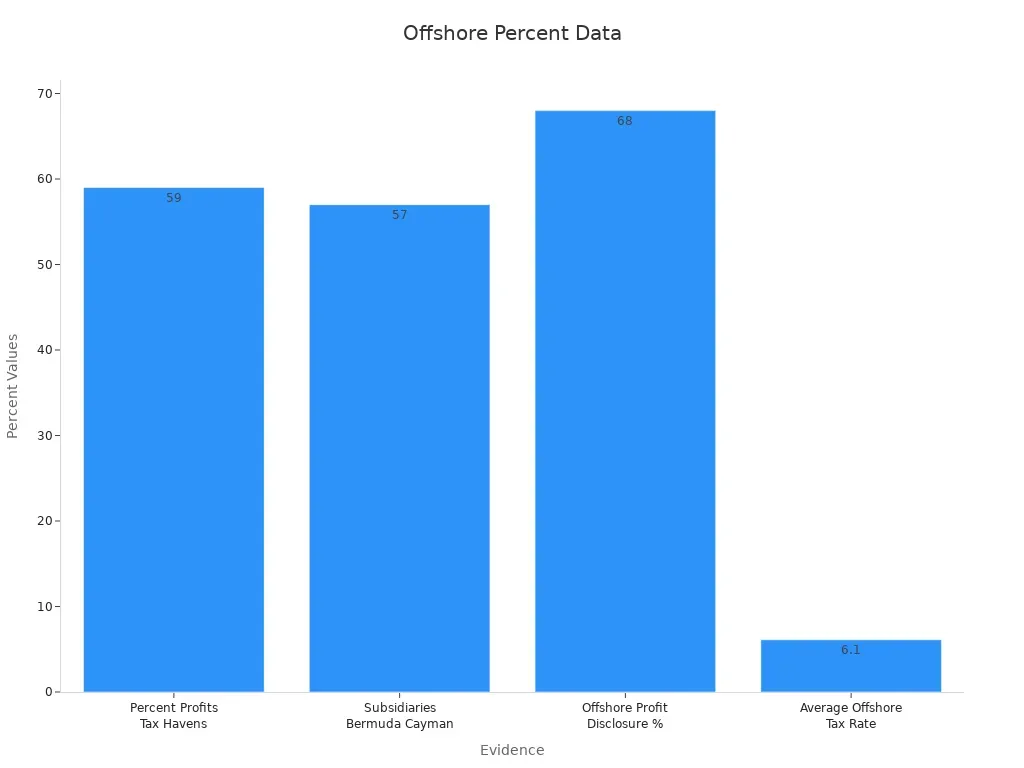
By incorporating your business offshore, you can reduce your tax burden significantly. However, you must align your operations with international tax laws and treaties to avoid legal complications. Some countries offer tax incentives specifically designed to attract foreign investors, which can further enhance your savings.
Flexible Corporate Structures
Offshore companies provide you with the flexibility to choose from a variety of corporate structures. These structures are designed to meet diverse business needs, whether you are a small startup or a large multinational corporation. For example, you can establish a private limited company, a limited liability company (LLC), or an international business company (IBC). Each structure offers unique benefits, such as limited liability, ease of management, and asset protection.
Many offshore jurisdictions allow you to customize your corporate structure to suit your business goals. For instance, you can appoint nominee directors or shareholders to maintain privacy. Additionally, some jurisdictions do not require you to disclose ownership details, ensuring confidentiality. This flexibility makes offshore companies an ideal choice for businesses seeking to protect their assets and operate efficiently on a global scale.
However, you should be aware of potential restrictions. Some jurisdictions may limit the types of business activities you can conduct locally. Compliance and reporting requirements also vary by country, so working with professional advisors is essential to ensure you meet all legal obligations.
Privacy and Confidentiality Benefits
Privacy and confidentiality stand out as key advantages when you establish an offshore company. Many jurisdictions prioritize protecting your personal and financial information, offering a level of security that domestic companies often cannot match. This focus on confidentiality can shield you from unnecessary scrutiny and safeguard your business operations.
Offshore jurisdictions implement strict data protection laws to ensure your information remains secure. These regulations often prevent the disclosure of your identity and financial transactions to third parties. For example, if you register your company in a jurisdiction like Nevis or the British Virgin Islands, your ownership details are not made public. This level of privacy can be especially beneficial if you want to protect your assets or avoid unwarranted attention.
Some offshore locations also allow the use of nominee directors and shareholders. These services enhance your anonymity by listing appointed individuals as the official representatives of your company. While you retain full control, the nominees act as a protective layer, keeping your identity confidential. This feature is particularly useful if you operate in industries where privacy is a top priority.
Additionally, offshore companies are often exempt from disclosing ownership details in public records. This exemption protects you from public scrutiny and reduces the risk of targeted legal actions or competitive threats. Below is a table summarizing the privacy and confidentiality benefits offered by offshore jurisdictions:
By choosing an offshore setup, you gain access to these privacy benefits, which can help you focus on growing your business without distractions. However, you must ensure compliance with international regulations to avoid potential legal issues. Working with professional advisors can help you navigate these requirements while maximizing the confidentiality advantages of your offshore company.
Benefits of Offshore Companies

Tax Optimization and Savings
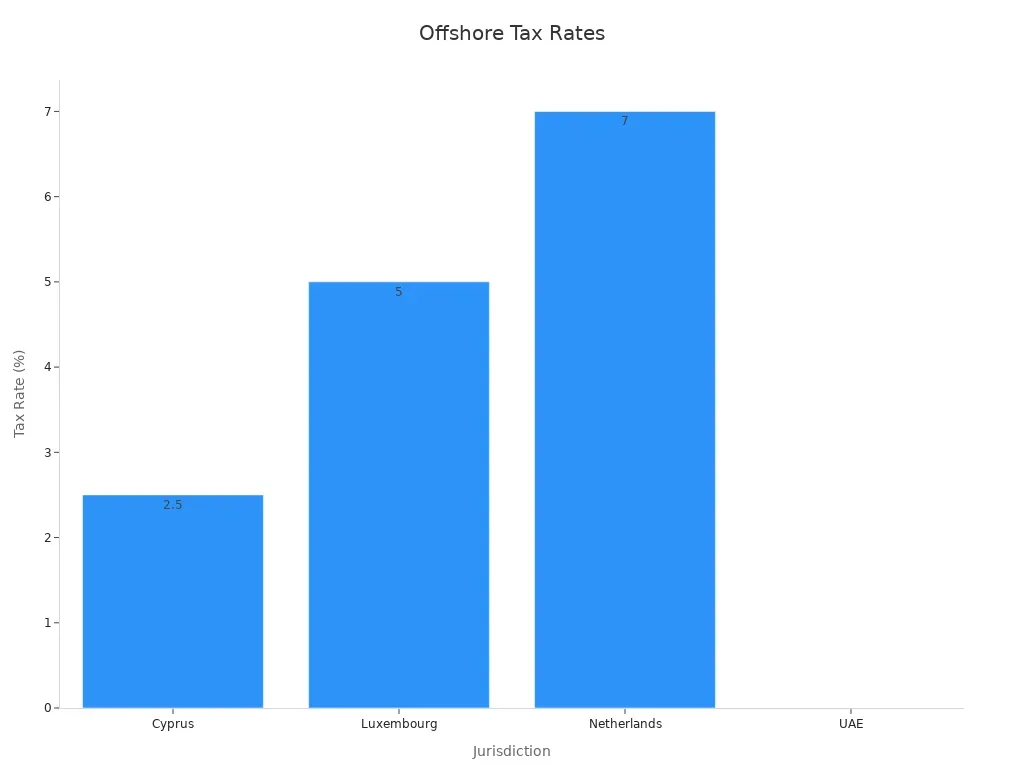
Offshore companies offer significant tax benefits, making them an attractive option for businesses seeking tax minimization. Many jurisdictions provide tax shelter schemes, such as reduced corporate tax rates or complete tax exemptions, to encourage foreign investment. For example, Cyprus offers an 80% exemption on qualifying intellectual property (IP) profits, resulting in an effective tax rate of just 2.5%. Similarly, the UAE imposes 0% corporate tax, provided companies meet substance requirements.
In 2020, American corporations reported profits in 15 offshore jurisdictions that exceeded the economic output of these regions. For instance, profits claimed in Bermuda and the Cayman Islands were over five times their GDP. These jurisdictions accounted for only 3% of global economic output outside the U.S. but represented 59% of total offshore profits reported to the IRS. This highlights the tax efficiencies offshore companies can achieve.
Asset Protection and Risk Mitigation
Offshore companies provide robust asset protection, shielding your business from potential risks. Many jurisdictions have legal frameworks designed to safeguard assets from creditors, lawsuits, or political instability. By incorporating offshore, you can separate personal and business assets, reducing exposure to liabilities.
The Risk-Based Corrosion Integrity Management (RB-CIM) methodology emphasizes a multidisciplinary approach to asset protection. It focuses on design reappraisal, failure investigation, and prioritized inspection to address safety, environmental, and performance objectives.
This approach ensures the protection of assets through diligent planning and compliance with regulatory standards. Offshore companies also allow you to establish trusts or foundations, adding an extra layer of security for your wealth.
Access to Global Markets
Offshore companies open doors to global markets, enabling seamless business expansion. By operating in multiple jurisdictions, you can tap into international trade opportunities and diversify your revenue streams. Offshore jurisdictions often have favorable trade agreements, making it easier for your company to conduct cross-border transactions.
For example, setting up an offshore company in a free trade zone can reduce tariffs and streamline import/export processes. This global reach allows you to compete in international markets while enjoying the benefits of tax shelter schemes and simplified regulations. Offshore companies also provide a platform for raising capital through foreign investors, further enhancing your business growth potential.
Simplified Business Operations
Offshore companies often provide you with streamlined business operations, making it easier to manage your enterprise. Many jurisdictions offer simplified regulatory frameworks, reducing the administrative burden on your business. This allows you to focus more on growth and less on compliance.
One of the key advantages is the potential for operational cost savings. Studies show that companies participating in offshore setups typically achieve 5–15% savings in operating expenses. These savings come from evaluating performance against peers and identifying opportunities to improve cost efficiency and production. By optimizing key performance indicators like operating costs, production efficiency, and uptime reliability, you can enhance your business's overall productivity.
Offshore jurisdictions also support operational efficiency through advanced tools and technologies. For example, business intelligence tools can predict equipment failures, minimizing downtime and reducing maintenance costs. These tools analyze operational factors such as fuel consumption and logistics routes, helping you optimize resource use and cut unnecessary expenses.
Additionally, offshore companies benefit from reduced bureaucracy. Many jurisdictions have minimal reporting requirements and faster incorporation processes. You can establish your company quickly and start operations without delays. This efficiency is particularly beneficial if you aim to enter global markets or expand your business internationally.
Here are some operational efficiency metrics that highlight the benefits of offshore companies:
-
Operating cost savings: Achieve 5–15% reductions in expenses.
-
Production efficiency: Improve output by identifying cost drivers.
-
Uptime reliability: Minimize downtime with predictive maintenance tools.
By leveraging these advantages, you can simplify your business operations and focus on achieving your strategic goals. Offshore setups provide a practical solution for businesses seeking efficiency and growth on a global scale.
Drawbacks of Offshore Companies
Reputational Risks and Misconceptions
Offshore companies often face reputational risks due to public misconceptions. Many people associate offshore setups with tax evasion or unethical practices, even when companies operate legally. These perceptions can harm your business's image and lead to lost opportunities. High-profile incidents have amplified these concerns. For example:
-
The Deepwater Horizon accident in 2010 caused significant reputational damage for BP, resulting in over $60 billion in settlements and fines.
-
The Exxon Valdez disaster in 1989 undermined the offshore industry's claims about safety, leading to stricter regulations and higher operational costs.
-
The Three Mile Island accident in 1979 halted new nuclear plant constructions, showcasing how industrial accidents can have long-lasting reputational impacts.
These examples highlight how offshore operations can attract scrutiny, even when unrelated to your company. To mitigate these risks, you must prioritize transparency and ethical practices. Building trust with stakeholders and maintaining compliance with international standards can help protect your reputation.
Regulatory and Compliance Challenges
Operating an offshore company requires navigating complex regulatory landscapes. Each jurisdiction has unique laws, and you must comply with international standards to avoid penalties. Challenges include:
These challenges demand careful planning and professional guidance. You must invest time and resources to ensure compliance, which can increase operational costs.
Costs of Setup and Maintenance
Setting up and maintaining an offshore company involves significant expenses. Initial setup costs include legal fees, incorporation charges, and infrastructure decisions. Ongoing maintenance costs cover system monitoring, compliance updates, and troubleshooting. Key cost categories include:
-
Design Costs: Setting up the necessary environment, such as servers and infrastructure.
-
Direction Costs: Covering project management and oversight, ranging from 10% to 30% of total costs.
-
Operation and Maintenance Costs: Typically around 5% of the system development cost, ensuring smooth operations.
These expenses can outweigh the benefits if not managed effectively. You must evaluate your business goals and financial capacity before committing to an offshore setup. Working with professional advisors can help optimize costs and ensure long-term sustainability.
Limited Access to Domestic Benefits
When you set up an offshore company, you may miss out on certain advantages that domestic businesses enjoy. Governments often provide incentives to local companies to boost their economies. These benefits include tax credits, grants, and subsidies. Offshore companies, however, usually do not qualify for these programs.
For example, many countries offer small businesses reduced tax rates or funding opportunities to encourage growth. If your company operates offshore, you might not meet the eligibility criteria for such programs. This limitation can increase your operational costs compared to domestic competitors.
Another challenge involves access to local markets. Domestic companies often benefit from strong relationships with local suppliers, customers, and government agencies. Offshore companies may struggle to build these connections. Without a local presence, you could face difficulties in understanding market trends or customer preferences.
Additionally, offshore companies may encounter restrictions when bidding for government contracts. Many governments prioritize domestic businesses for public projects. This preference can limit your opportunities to secure lucrative contracts.
Here’s a quick comparison of domestic and offshore companies regarding access to benefits:
By understanding these limitations, you can make informed decisions about whether an offshore setup aligns with your business goals.
Considerations for Setting Up an Offshore Company
Choosing the Right Jurisdiction
Selecting the right jurisdiction is one of the most critical steps when setting up an offshore company. Each jurisdiction offers unique benefits and challenges, so you must evaluate your options carefully. Factors like tax policies, political stability, and privacy protections play a significant role in determining the suitability of a location. For example, jurisdictions like the Cayman Islands and Seychelles provide favorable tax regulations and flexible corporate structures, making them popular choices for businesses seeking tax minimization.
When choosing a jurisdiction, consider how its legal framework aligns with your business goals. For instance, Hong Kong offers low corporate tax rates and no tax on foreign earnings, while Singapore provides over 70 tax treaties to facilitate international trade.
Understanding Legal and Tax Obligations
Operating an offshore company requires you to comply with the legal and tax obligations of your chosen jurisdiction. Many offshore locations have economic substance rules, which mandate reporting requirements and tax compliance. For example:
You must also stay updated on international tax laws to avoid penalties. Tax havens often provide security for funds and ownership privacy, but their opaque nature can lead to scrutiny. Understanding these obligations ensures your operations remain legal and transparent.
Working With Professional Advisors
Professional advisors play a vital role in setting up and managing an offshore company. They help you navigate complex legal frameworks, ensure compliance with tax regulations, and optimize your business structure. Advisors can also assist in conducting cost-benefit analyses to determine whether an offshore setup aligns with your financial goals.
By working with professionals, you gain access to valuable insights and resources. They can help you identify the best jurisdiction for your needs, manage reporting requirements, and ensure your company operates efficiently.
Ensuring Compliance With International Regulations
Operating an offshore company requires you to follow international regulations to avoid legal complications. These rules ensure fair business practices and protect stakeholders across borders. Ignoring them can lead to penalties, reputational damage, or even the suspension of your business operations.
You must comply with several global frameworks. For example, trade agreements govern how you conduct cross-border transactions. Intellectual property rights protect your innovations, while labor laws ensure fair treatment of employees. If your business operates in the European Union, you must also adhere to the General Data Protection Regulation (GDPR). This law safeguards personal data and imposes strict penalties for violations.
To stay compliant, you should take proactive steps. Start by conducting a thorough risk assessment. This process helps you identify potential legal and regulatory challenges in your target markets. Once you understand the risks, establish internal compliance mechanisms. These include creating clear policies, conducting regular audits, and training your employees on regulatory requirements.
Here are some key areas to focus on for compliance:
-
Trade Agreements: Ensure your business aligns with international trade rules to avoid disputes.
-
Data Protection: Follow GDPR or similar regulations to protect customer information.
-
Labor Laws: Treat employees fairly and meet local employment standards.
-
Intellectual Property: Secure your patents and trademarks to prevent misuse.
By prioritizing compliance, you protect your business from unnecessary risks. It also builds trust with customers and partners, enhancing your reputation. Remember, staying informed about changing regulations is essential. Working with legal experts can help you navigate these complexities and keep your offshore company on the right track.
An offshore company offers unique advantages, including tax savings, privacy, and access to global markets. These benefits make it an appealing choice for businesses aiming to expand internationally. However, you must carefully evaluate potential drawbacks, such as reputational risks and compliance challenges. Understanding the legal and tax obligations of your chosen jurisdiction is essential to avoid complications.
FAQ
What is the main purpose of an offshore company?
Offshore companies help you reduce taxes, protect assets, and access global markets. They also offer privacy and flexible corporate structures, making them ideal for international business operations.
Are offshore companies legal?
Yes, offshore companies are legal when you comply with the laws of the jurisdiction where they are registered. Following international regulations ensures your operations remain legitimate.
How do I choose the right jurisdiction for my offshore company?
Evaluate factors like tax policies, political stability, and privacy protections. For example, the Cayman Islands offer zero corporate tax, while Hong Kong provides strong trade agreements.
Do offshore companies pay taxes?
Many offshore companies enjoy reduced or zero tax rates. However, you must meet the jurisdiction’s requirements and comply with international tax laws to avoid penalties.
Can I operate an offshore company without visiting the country?
Yes, most offshore jurisdictions allow you to manage your company remotely. You can handle operations online, but some countries may require a local agent or representative.
Related content