
Walmart Revolutionizing Retail with AI and Automation
Author:XTransfer2025.12.03Walmart Revolutionizing
Walmart is revolutionizing retail by setting a new standard through the use of AI and automation to transform business operations. For example, the company’s AI chatbots have increased customer satisfaction scores by 25%, while automated inventory systems have cut stockout rates from 5.5% to 3.0%. These groundbreaking innovations not only enhance customer experiences but also boost operational efficiency. This Walmart revolutionizing retail approach is inspiring the broader industry, with AI in retail expected to grow from $7.14 billion in 2023 to $85.07 billion by 2032. By embracing cutting-edge technology, Walmart ensures that customers enjoy faster service, improved product availability, and highly personalized shopping experiences.
The Role of AI and Automation in Walmart Revolutionizing Retail
Understanding AI and automation in the retail context
AI and automation are transforming how you shop and interact with retailers. AI, or artificial intelligence, refers to systems that mimic human intelligence to analyze data, predict trends, and make decisions. Automation involves using technology to perform repetitive tasks without human intervention. In retail, these technologies work together to improve efficiency and enhance your shopping experience. For example, AI-driven tools like machine learning and natural language processing help retailers understand your preferences and deliver personalized recommendations. Automation, such as self-checkout systems, speeds up your in-store experience while reducing errors.
Why AI and automation are essential for modern retail success
AI and automation are no longer optional for retailers—they are essential for staying competitive. Predictive AI helps brands anticipate your needs, offering hyper-personalized experiences that keep you engaged. As consumer habits shift toward eCommerce, retailers must adapt quickly. Walmart revolutionizing retail through AI ensures faster integration of customer data, allowing decisions to be made in hours rather than months. This speed gives retailers an edge in meeting your expectations.
|
Evidence Type |
Description |
|---|---|
|
Predictive AI |
Brands using predictive AI will dominate the market by 2025. |
|
Consumer Spending Trends |
eCommerce sales rose by 2.6%, while brick-and-mortar declined by 1.7%. |
|
Integration Speed |
Retailers now act on customer data in hours instead of months. |
Retail transformation driven by AI and automation also benefits smaller retailers. For instance, Tecovas achieved a 14X ROI from AI-driven SMS marketing, proving that even smaller players can compete effectively.
Key industry trends driving Walmart's adoption of these technologies
Walmart’s focus on AI and automation stems from key industry trends. Retailers are leveraging AI to enhance customer experiences through hyper-personalization and sentiment analysis. Automation improves logistics and supply chain efficiency, ensuring faster deliveries and reduced costs. Walmart revolutionizing retail includes adopting AI-powered data platforms for real-time supply chain visibility. This approach minimizes delays and helps you get what you need when you need it.
-
AI-powered sentiment analysis decodes customer emotions to improve interactions.
-
Hyper-personalization boosts engagement and satisfaction.
-
AI-driven logistics optimization enhances delivery speed and reduces costs.
By embracing these trends, Walmart sets the standard for AI in retail, ensuring that your shopping experience is seamless and efficient.
Enhancing Customer Experience with AI and Automation
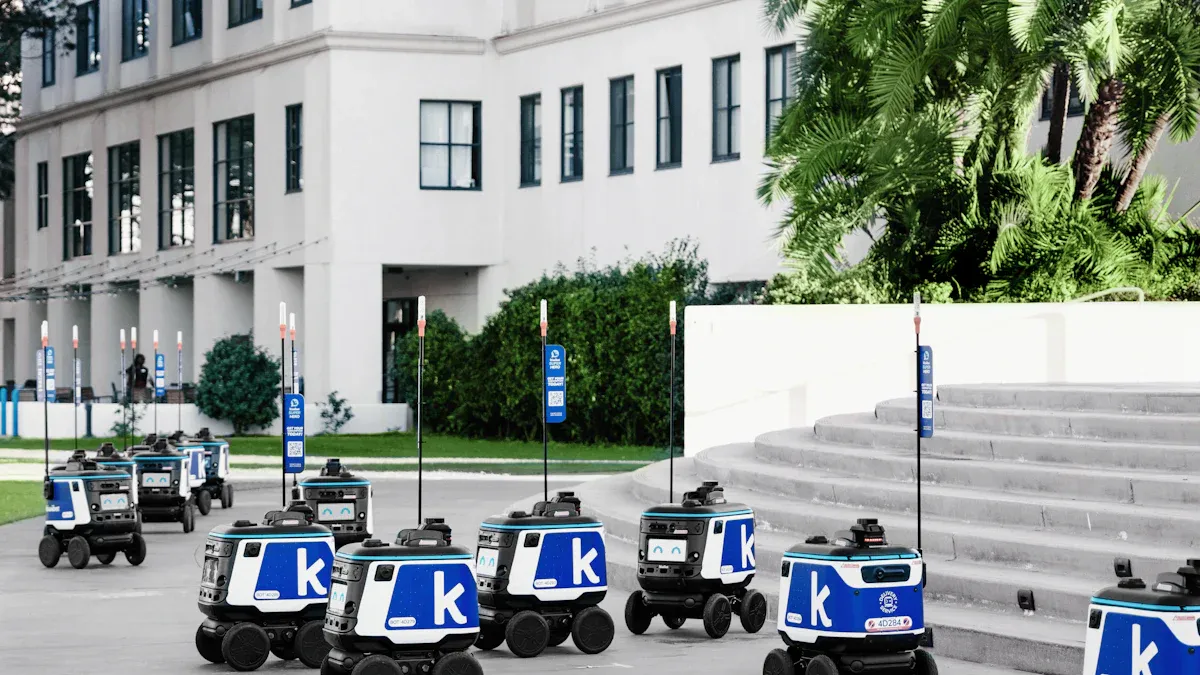
Hyper-personalized shopping through AI-driven product recommendations
AI has transformed how you shop by offering hyper-personalized product recommendations. These systems analyze your preferences, browsing history, and purchase patterns to suggest items tailored to your needs. For example, when you browse an online store, AI algorithms predict what you might like based on your past behavior. This approach not only saves you time but also enhances your overall shopping experience.
The impact of AI-driven personalization is remarkable. Retailers have reported significant improvements in key metrics, as shown in the table below:
|
Metric |
Impact |
|---|---|
|
Revenue increase from personalized recommendations |
Up to 26% |
|
Conversion rate increase from targeted campaigns |
50% |
|
Sales increase from personalization strategies |
20% |
|
Average order value increase from personalized recommendations |
369% |
|
Contribution of personalized recommendations to e-commerce revenues |
Up to 31% |
|
Conversion rate increase from personalized recommendations |
288% |
These statistics highlight how AI enhances customer shopping experiences by making them more relevant and engaging. Walmart revolutionizing retail through AI ensures that you receive recommendations that align with your preferences, making your shopping journey seamless and enjoyable.
AI-powered sentiment analysis for real-time customer feedback
Understanding how you feel about a product or service is crucial for retailers. AI-powered sentiment analysis uses natural language processing (NLP) to analyze your feedback from various sources, such as reviews, social media, and surveys. This technology helps businesses identify patterns in customer sentiment and predict future behavior.
For instance, tools like IBM Watson and MonkeyLearn process large volumes of data in real time, providing actionable insights. Retailers can use these insights to improve their strategies and address your concerns promptly. Automated alerts for sentiment trends enable businesses to respond quickly to negative feedback, ensuring they maintain your trust.
-
Hootsuite uses NLP to analyze emotions across social media, helping businesses understand public opinion and resolve issues promptly.
-
IBM Watson Tone Analyzer evaluates customer interactions, leading to higher satisfaction rates.
-
Real-time sentiment analysis allows companies to respond swiftly to complaints and leverage positive feedback effectively.
By leveraging AI for sentiment analysis, Walmart ensures that your voice is heard and your concerns are addressed. This proactive approach strengthens your trust in the brand and enhances your overall experience.
Transforming in-store experiences with automation (e.g., self-checkout, AR)
Automation has redefined how you interact with physical stores. Self-checkout systems, for example, use computer vision technology to recognize items and automate the checkout process. These systems significantly reduce wait times, making your shopping experience faster and more convenient. Many customers now prefer self-checkout due to its speed and ease of use.
Advanced AI-powered systems also enhance accuracy by detecting errors during transactions. They integrate with loyalty programs to offer personalized promotions, further enriching your shopping journey. Virtual assistants analyze your data to provide tailored recommendations, increasing the likelihood of finding what you need.
Other innovations, such as augmented reality (AR), take in-store experiences to the next level. AR allows you to visualize products in your space before purchasing them. For example, you can see how a piece of furniture fits in your living room or how a pair of glasses looks on your face. These technologies make shopping more interactive and enjoyable.
By adopting these automation technologies, Walmart revolutionizing retail ensures that your in-store experiences are efficient, engaging, and tailored to your needs.
Revolutionizing Logistics and Supply Chain Management
Predictive analytics for supply chain optimization
Predictive analytics is changing how you experience retail. By analyzing historical data and current trends, AI-powered predictive tools help retailers like Walmart anticipate demand and optimize their supply chains. These tools ensure that products are available when and where you need them. For example, predictive analytics can forecast seasonal demand spikes, allowing retailers to stock up on popular items before they run out.
This technology also helps retailers identify potential disruptions in the supply chain. By predicting delays or shortages, businesses can take proactive measures to minimize their impact. As a result, you benefit from fewer stockouts and faster delivery times. Predictive analytics plays a crucial role in retail logistics optimization, ensuring that the right products reach the right locations at the right time.
Automated inventory tracking and replenishment systems
Automated inventory systems are revolutionizing how retailers manage stock. These systems use AI to track inventory levels in real time, ensuring that shelves are always stocked with the products you need. Alerts for low stock levels help retailers avoid running out of essential items. Additionally, these systems monitor raw materials, ensuring that all components are available for production or assembly.
Key performance metrics highlight the effectiveness of these systems. For instance, lead times are reduced, ensuring timely replenishment and avoiding stockouts. Monitoring vendor performance also becomes easier, as these systems track metrics like late deliveries and incomplete shipments. By balancing inventory with actual demand, automated replenishment software helps retailers maintain lean operations while meeting your expectations.
This technology also reduces human error, which often leads to overstocking or understocking. With automated systems in place, retailers can focus on providing you with a seamless shopping experience. Walmart's adoption of these systems ensures that you always find what you're looking for, whether you're shopping online or in-store.
AI-driven route optimization for faster and more efficient delivery
AI-driven route optimization is transforming delivery operations. By analyzing traffic patterns, weather conditions, and delivery schedules, AI ensures that packages reach you faster and more efficiently. This technology minimizes expenses by reducing mileage, optimizing fuel usage, and eliminating unnecessary vehicle wear and tear.
The benefits of AI-powered route optimization are clear. Early adopters of this technology have seen logistics costs improve by 15%, service levels increase by 65%, and inventory levels improve by 35%. These improvements mean that you receive your orders on time, with fewer delays and disruptions.
Walmart uses AI to streamline its delivery network, ensuring that your orders are delivered quickly and reliably. This commitment to efficiency not only enhances your shopping experience but also sets a new standard for retail logistics optimization.
Driving Operational Efficiency with AI and Automation
Robotic process automation in warehouse operations
Robotic process automation (RPA) is transforming warehouse operations by streamlining repetitive tasks and reducing errors. Automated systems collect and analyze data in real time, giving you insights into operational performance. This ensures inventory records stay accurate and up-to-date. By eliminating manual intervention, RPA enhances efficiency and lowers operational costs.
For example:
-
Automation prevents overstocking and stockouts, saving storage costs and avoiding rush order expenses.
-
RPA technology minimizes errors, leading to higher-quality customer service.
-
These solutions improve service effectiveness while reducing costs.
When warehouses operate efficiently, you benefit from faster order processing and fewer delays. Walmart’s use of RPA ensures that your shopping experience remains seamless, whether online or in-store.
AI-powered demand forecasting to reduce costs
AI-powered demand forecasting helps retailers like Walmart predict demand fluctuations with precision. This technology reduces stock shortages and overstock situations, saving costs and improving supply chain efficiency. Accurate forecasts also enhance decision-making, helping businesses avoid overproduction or missed sales opportunities.
|
Aspect |
Benefit Description |
|---|---|
|
Inventory Management |
Predicts demand fluctuations, reducing stock shortages and overstock situations. |
|
Supply Chain Efficiency |
Enhances coordination through precise forecasts, lowering operational costs. |
|
Decision-Making Processes |
Improves forecasting accuracy, avoiding errors in stock management. |
By leveraging AI in retail, Walmart ensures that products are available when you need them, while also keeping costs under control.
Workforce productivity improvements with automated scheduling tools
Automated scheduling tools are revolutionizing workforce management. These tools allow employees to focus on meaningful tasks instead of repetitive processes. For instance:
-
78% of business leaders report improved productivity due to automation.
-
85% agree that automating repetitive tasks helps employees concentrate on strategic goals.
-
65% of workers feel less stressed when automation handles routine tasks.
By reducing manual scheduling errors, these tools ensure that employees work efficiently and effectively. Walmart’s use of automation not only improves productivity but also creates a better work environment for its team, ultimately enhancing your overall customer experience.
Walmart as a Leader in Retail Technology Innovation
Investments in AI and automation research and development
Walmart’s commitment to advancing retail through technology is evident in its substantial investments in AI and automation. For fiscal year 2022, Walmart allocated $14 billion to automation and technology initiatives. This investment includes the development of a $118 million fulfillment center in Canada, which uses robotic technology to optimize packaging and reduce costs. The center aims to ship 20 million items annually, contributing to a $3.5 billion effort to enhance shopping experiences.
Walmart is also expanding AI-powered coding tools to improve productivity. By 2025, these tools are expected to save approximately four million developer hours. CEO Doug McMillon has emphasized Walmart’s focus on using AI to drive business growth and efficiency. Plans to roll out AI tools to developers across North America and India further highlight Walmart’s dedication to innovation.
Collaborations with tech companies to advance retail innovation
Walmart’s partnerships with leading technology companies demonstrate its role as a pioneer in retail innovation. Collaborations include initiatives that enhance customer experiences and streamline operations:
|
Company |
Partnership Type |
Innovation Description |
|---|---|---|
|
ASOS |
Personalized Discounts |
Uses social media data to tailor discounts for customers, improving shopping relevance. |
|
Lululemon |
Digital Concierge |
Offers video chat appointments for personalized shopping assistance. |
|
IKEA |
Augmented Reality |
Provides AR functionality to help customers visualize furniture in their homes. |
|
Audi |
Virtual Reality Experience |
Enables customers to configure cars in a virtual environment, enhancing decision-making. |
These partnerships reflect Walmart’s ability to leverage cutting-edge technology to meet your needs. By collaborating with innovators, Walmart ensures that you benefit from personalized, immersive, and efficient shopping experiences.
Setting industry benchmarks for AI and automation in retail
Walmart sets the standard for AI and automation in retail by continuously improving processes and customer experiences. Its AI-driven tools reduce data analysis time for merchants, enabling faster and more accurate decision-making. Predictive analytics enhance product relevance, optimizing inventory and boosting customer satisfaction.
Walmart’s bold approach to AI has also transformed fashion retail. By integrating generative AI tools, Walmart has cut lead times by 18 weeks, ensuring faster delivery of new styles. Investments in augmented reality and immersive commerce further showcase Walmart’s innovative strategies, making shopping more engaging and efficient.
These advancements position Walmart as a leader in retail technology, inspiring other retailers to adopt similar practices. Walmart’s focus on AI ensures that you experience seamless shopping while benefiting from industry-leading innovations.
Walmart continues to lead the charge in revolutionizing retail through AI and automation. By leveraging advanced technologies, Walmart collects and analyzes 2.5 petabytes of data every hour from over 1 million customers. This enables the company to deliver tailored recommendations and improve shopping experiences. Predictive analytics have also optimized operations, such as adjusting the free shipping threshold to enhance customer satisfaction. These innovations ensure seamless shopping while boosting operational efficiency.
The broader implications of Walmart’s advancements extend beyond retail. As AI and automation evolve, they will redefine how businesses interact with customers, manage logistics, and streamline operations. Walmart’s pioneering efforts set a benchmark for the industry, shaping the future of retail technology.
FAQ
What is Walmart’s main goal with AI and automation?
Walmart aims to improve your shopping experience by making it faster, more personalized, and efficient. AI and automation help Walmart optimize inventory, enhance logistics, and provide tailored recommendations to meet your needs.
How does Walmart use AI to personalize shopping?
Walmart uses AI to analyze your preferences, browsing history, and purchase patterns. This data helps suggest products that match your interests, making your shopping experience more relevant and enjoyable.
How does automation improve Walmart’s logistics?
Automation streamlines Walmart’s supply chain by tracking inventory in real time and optimizing delivery routes. This ensures that products reach you quickly and efficiently, reducing delays and costs.
What are some examples of in-store automation at Walmart?
Walmart uses self-checkout systems and shelf-scanning robots to improve your in-store experience. These technologies reduce wait times, ensure shelves are stocked, and make shopping more convenient.
Why is Walmart considered a leader in retail technology?
Walmart invests heavily in AI and automation, collaborates with tech companies, and sets industry benchmarks. These efforts ensure that you benefit from cutting-edge innovations and seamless shopping experiences.
Related content