
What is the Canton Fair? Definition, Structure, and Global Impact
Author:XTransfer2026.01.08China Import and Export Fair
One-Sentence Definition
The Canton Fair, officially known as the China Import and Export Fair, is the largest and longest-running comprehensive international trade exhibition in China, held twice a year in Guangzhou and serving as a core platform for global B2B sourcing and business exchange.
Overview and Historical Significance
Established in 1957, the Canton Fair has played a foundational role in China’s integration into global trade. For decades, it has functioned as a key window through which international buyers engage with Chinese manufacturers and exporters across nearly all major industrial and consumer sectors.
Co-hosted by the Ministry of Commerce of China and the Guangdong Provincial Government, and organized by the China Foreign Trade Centre, the fair is widely regarded as a barometer of China’s foreign trade trends. Its continuity, scale, and institutional backing have made it one of the most trusted sourcing events for global procurement professionals.
By 2026, the Canton Fair has evolved from a traditional export-focused exhibition into a hybrid, digitally enhanced trade ecosystem that supports both import and export activities.
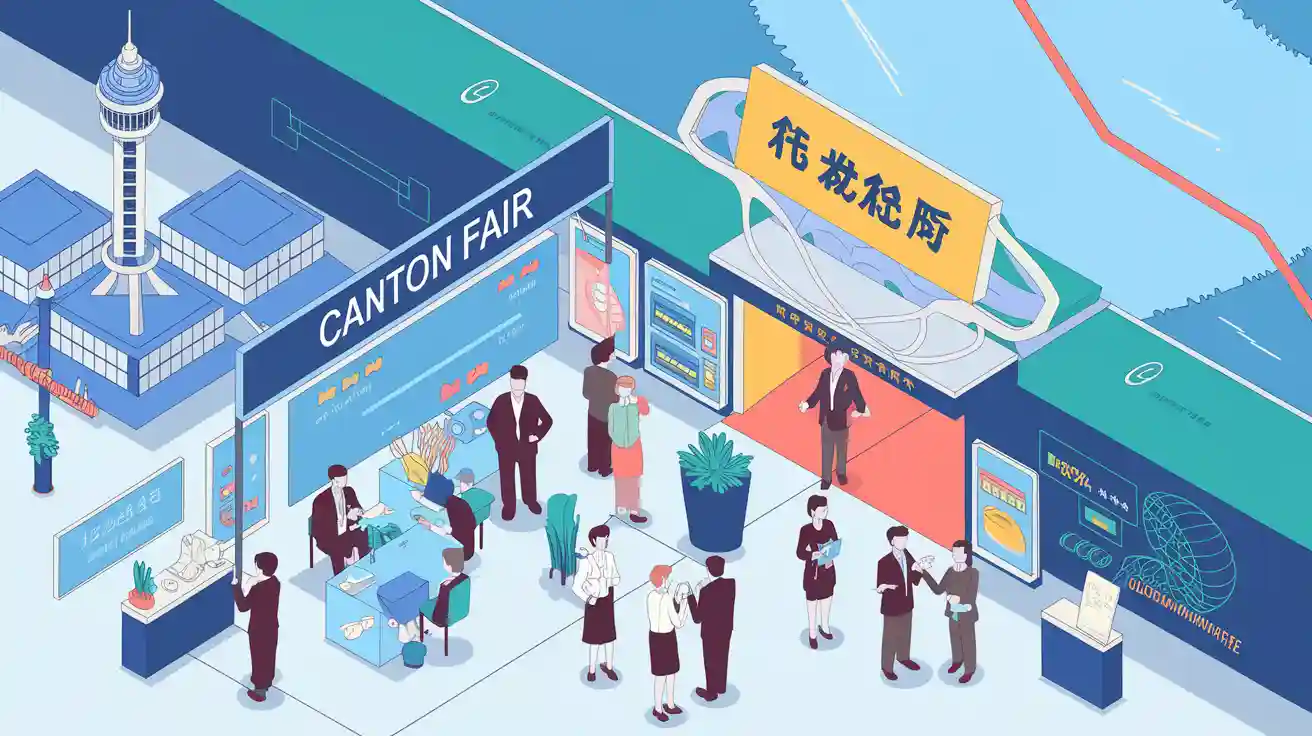
Core Structure of the Canton Fair
Three-Phase Exhibition Model
The Canton Fair operates under a structured three-phase format, with each phase dedicated to distinct product categories. This phased approach allows buyers to focus on specific industries while enabling exhibitors to reach more targeted audiences.
The first phase concentrates on electronics, electrical appliances, machinery, industrial equipment, vehicles, and building materials. This phase attracts buyers involved in manufacturing, infrastructure, and large-scale procurement.
The second phase focuses on consumer goods, including household products, gifts, decorative items, and home furnishings. It is particularly relevant for retailers, wholesalers, and brand owners sourcing finished consumer products.
The third phase covers textiles and apparel, footwear, healthcare products, medical devices, food, and office supplies. Buyers in fashion, lifestyle, and healthcare sectors typically prioritize this phase.
Hybrid Exhibition Model and Digital Transformation
Since 2020, the Canton Fair has adopted a hybrid format, combining on-site exhibitions in Guangzhou with a fully functional online platform. By 2026, this model has become standard rather than exceptional.
The online component includes digital booths, virtual product catalogs, live-streamed product demonstrations, and AI-assisted buyer–supplier matchmaking. This allows international buyers who cannot travel to participate remotely while maintaining access to verified exhibitors and official fair resources.
This hybrid structure significantly lowers participation barriers, especially for small and medium-sized enterprises, and extends the fair’s influence beyond its physical location.
Scale, Reach, and Global Participation
Each session of the Canton Fair typically features more than 25,000 exhibitors and attracts approximately 200,000 buyers from over 200 countries and regions. This scale makes it one of the most comprehensive sourcing platforms in the world.
The diversity of participants—ranging from multinational corporations to export-oriented SMEs—creates a competitive and information-rich environment. Buyers can compare suppliers across price, quality, compliance standards, and production capacity within a single event.
Practical Value for Global Buyers and Suppliers
For international buyers, the Canton Fair offers a centralized and relatively low-risk entry point into the Chinese supply chain. Exhibitors are subject to official qualification and review processes, which enhances credibility compared to informal sourcing channels.
For Chinese exporters, the fair provides direct access to overseas markets, real-time buyer feedback, and opportunities to showcase product upgrades and innovations. Many long-term supplier–buyer relationships originate from initial Canton Fair interactions.
In recent years, SMEs have increasingly leveraged the fair not only for order acquisition but also for brand exposure and market intelligence.
Trade Settlement and Cross-Border Payments in Practice
Beyond product sourcing, successful transactions at the Canton Fair depend on efficient and compliant financial settlement. Once deals are negotiated, exporters and buyers must handle multi-currency payments, foreign exchange conversion, and regulatory compliance across jurisdictions.
In this context, many businesses adopt specialized cross-border B2B payment platforms such as XTransfer to support post-fair transactions. These platforms help streamline international settlements, reduce transaction costs, and enhance compliance transparency—particularly important for SMEs operating across multiple markets.
The integration of trade exhibitions and fintech solutions reflects a broader trend toward digitized, end-to-end global trade infrastructure.
Related Trade Concepts and Ecosystem
The Canton Fair operates within a broader international trade framework and is closely connected to several related concepts.
An import and export fair is a general term for exhibitions focused on cross-border commerce, of which the Canton Fair is the most prominent example in China.
A trade show refers more broadly to industry-specific exhibitions, whereas the Canton Fair is comprehensive and multi-sector.
Cross-border payments are essential to converting trade negotiations into completed transactions, particularly in B2B contexts.
B2B trade remains the core focus of the Canton Fair, distinguishing it from consumer-oriented expos.
The China International Import Expo (CIIE) complements the Canton Fair by emphasizing imports into China rather than exports.
Why the Canton Fair Still Matters in 2026
In 2026, the Canton Fair remains a cornerstone of global sourcing and international trade. Its institutional credibility, unmatched scale, and ongoing digital transformation continue to attract buyers and suppliers worldwide.
For global procurement professionals, the fair offers efficiency, visibility, and access. For exporters, it provides market reach, partnership opportunities, and alignment with global trade trends. As international commerce becomes increasingly digital and regulated, the Canton Fair’s role as a structured, trusted, and adaptive platform is more relevant than ever.
Learn More
For businesses looking to streamline cross-border payments and compliance after the Canton Fair, discover how XTransfer can help you trade globally with confidence:https://www.xtransfer.com/.
Related content