
Exploring the Rise of Vinted in Sustainable Fashion
Author:XTransfer2025.12.03Rise of Vinted
Have you noticed the rise of Vinted and how second-hand shopping has taken off lately? Platforms like Vinted are leading the charge, making it easier than ever to buy and sell pre-loved clothing. In 2023, Vinted reported €596.3 million in revenue—a 61% jump from the previous year. That’s not just success; it’s a movement. More than a third of Vinted users now say second-hand clothing makes up at least half of their wardrobe. This shift isn’t just about saving money; it’s about embracing sustainable fashion and giving your clothes a second life. You’re not just shopping—you’re making a difference.
The Rise of Vinted
Vinted's Journey: From Startup to Global Platform
You’ve probably heard of Vinted, but did you know it started as a small idea in Lithuania back in 2008? Milda Mitkute and Justas Janauskas wanted to create a space where people could swap second-hand clothing. Fast forward to today, and Vinted has grown into a global platform with over 105 million registered users and 32.8 million downloads in 2023.
The rise of Vinted isn’t just about numbers; it’s about how the platform tapped into the growing trend of conscious consumerism. By expanding from Lithuania to other European countries in the 2010s, Vinted positioned itself as a leader in second-hand fashion. In the 2020s, it went global, connecting buyers and sellers across continents. Its gross merchandise value has tripled since 2021, showing just how much people love giving their clothes a second life.
Here’s a snapshot of Vinted’s growth:
|
Year |
Revenue (€ million) |
Registered Users (millions) |
Downloads (millions) |
|---|---|---|---|
|
2022 |
370 |
N/A |
N/A |
|
2023 |
596 |
105 |
32.8 |
This isn’t just a success story; it’s proof that second-hand clothing is becoming a mainstream choice.
Key Features Driving User Engagement
What makes Vinted so addictive? It’s all about the features. You can search for exactly what you need, filter by size, brand, or even color, and save your favorites for later. These tools make shopping for second-hand clothing feel effortless.
Vinted’s search accuracy is a game-changer. When you find what you’re looking for quickly, you’re more likely to stick around—and maybe even make a purchase. The platform’s user-friendly design keeps you coming back, whether you’re buying or selling.
Here’s why users love it:
-
Relevant search results lead to more purchases.
-
Favorites management helps you keep track of items you love.
-
High transaction volumes show how committed users are to the platform.
Vinted’s retention rate at 60 days is 12%, far ahead of competitors like Lounge by Zalando (7%) and Vestiaire Collective (3%). That’s not just loyalty; it’s a sign that Vinted knows how to keep you engaged.
The Role of Technology in Second-Hand Consumption
Technology is the backbone of Vinted’s success. The platform uses artificial intelligence and machine learning to give you personalized recommendations. It’s like having a personal shopper who knows exactly what you want.
Secure payment options and buyer protection make transactions safe, while seller ratings add transparency. You can trust the community because Vinted has built it on fairness and reliability.
Here’s how technology makes second-hand shopping better:
-
AI-powered search results help you find items faster.
-
Mobile optimization means you can shop anytime, anywhere.
-
Features like designer item verification add credibility to high-value purchases.
Vinted’s innovations don’t stop there. The platform has expanded into new markets like Finland, Greece, and Croatia, and it’s even introduced services like designer item verification in 10 countries. It’s no wonder Vinted has become the number one online brand in France, surpassing giants like Zara and H&M.
Benefits of Second-Hand Fashion on Vinted
Affordable and Accessible Fashion for Buyers
Shopping for second-hand clothing on Vinted is like finding hidden treasures without breaking the bank. The platform offers competitive prices that make sustainable fashion accessible to everyone, regardless of income level. Sellers often provide discounts, making it even easier for you to snag a great deal.
Here’s why Vinted stands out:
-
Budget-friendly options: Nearly half of Vinted users shop here because of affordability.
-
Diverse accessibility: The platform attracts buyers from all income levels.
-
Discounts galore: Sellers frequently offer price cuts, giving you more value for your money.
According to a report by Vaayu, 47% of buyers choose Vinted for its affordability, while 20% are motivated by environmental and social concerns. This trend shows that second-hand shopping isn’t just a smart financial choice—it’s a step toward a more sustainable future.
A Profitable and User-Friendly Platform for Sellers
If you’ve ever thought about selling your pre-loved clothing, Vinted makes it simple and rewarding. The platform’s user-friendly design ensures that listing items is quick and hassle-free. Plus, the financial benefits are hard to ignore.
In 2023, Vinted Group reported a 61% revenue increase, reaching €596.3 million, alongside a net profit of €17.8 million. By 2024, revenue soared to €813.4 million, with net profit jumping to €76.7 million—a staggering 330% growth year-on-year. These numbers highlight how profitable the platform is for sellers.
Whether you’re decluttering your closet or starting a side hustle, Vinted gives you the tools to succeed. You can set your own prices, negotiate with buyers, and even offer discounts to boost sales. It’s not just a marketplace; it’s a thriving ecosystem for second-hand fashion enthusiasts.
Building a Community Around Second-Hand Fashion
Vinted isn’t just a platform; it’s a community. When you shop or sell here, you’re joining millions of people who share a passion for sustainable fashion. The platform’s engagement metrics prove how strong this community is.
|
Metric |
Value |
|---|---|
|
Monthly Active Users |
Millions |
|
Average Engagement Rate |
20% |
|
Average Session Duration |
30 minutes |
|
Average Transaction Frequency |
3.5 items per user/year |
|
Customer Satisfaction Rate |
85% |
|
App Rating |
4.5 out of 5 |
With over 50 million users across 12 countries, Vinted fosters connections between buyers and sellers. You’re not just purchasing clothing; you’re contributing to a global movement that values sustainability and community.
Vinted's Impact on Sustainable Fashion
Reducing Textile Waste Through Second-Hand Consumption
When you shop second-hand on Vinted, you're doing more than just saving money—you’re helping the planet. Every time you buy pre-loved clothing, you’re reducing the demand for new production, which means fewer resources are wasted. Did you know that Vinted has reportedly avoided approximately 453 kilotons of CO2 emissions? That’s the same as driving 3.6 billion kilometers!
Here’s how your choices make a difference:
-
For every 2.56 items purchased on Vinted, one new item is avoided. This prevents 1.8 kg of CO2 emissions, which is like skipping a 15 km car ride.
-
In 2023 alone, Vinted helped avoid 678,691 tons of CO2 equivalent. That’s 1.25 kg of CO2 saved for every second-hand purchase.
By choosing second-hand consumption, you’re directly contributing to reducing textile waste. It’s a small step for you but a giant leap for sustainability.
Encouraging Circular Fashion Practices
Vinted isn’t just about buying and selling clothing—it’s about creating a circular economy. When you sell your pre-loved items, you’re giving them a second life and keeping them out of landfills. This approach aligns perfectly with the mission of sustainability, where the goal is to reuse and recycle instead of throwing things away.
The platform has made circular fashion practical and even profitable. You can earn money while saving the planet. This model benefits everyone: buyers get affordable options, sellers make extra cash, and the environment gets a break. It’s a win-win-win!
Circular practices like these are gaining traction globally. The European Union’s Strategy for Sustainable and Circular Textiles highlights the importance of platforms like Vinted. By promoting resale, these platforms reduce waste and encourage sustainable consumption. It’s no wonder more people are turning to second-hand fashion as a way to align their shopping habits with their values.
Addressing Challenges: Fast Fashion and Overconsumption
Fast fashion has made clothing cheap and accessible, but it comes at a high cost to the environment. The industry produces massive amounts of waste and contributes to overconsumption. Vinted offers a solution by encouraging you to rethink how you shop.
Instead of buying new items that might only last a season, you can invest in second-hand fashion. This shift not only reduces waste but also challenges the fast fashion model. When you choose pre-loved clothing, you’re sending a message to the industry: sustainability matters.
However, overconsumption can still be an issue, even with second-hand items. It’s easy to get carried away when prices are low. That’s why it’s important to shop mindfully. Ask yourself, “Do I really need this?” before making a purchase.
Economic Factors Behind the Growth of Second-Hand Consumption
The Cost of Living Crisis and Budget-Friendly Shopping
When times get tough, you look for ways to stretch your dollar, right? That’s where second-hand consumption shines. Platforms like Vinted offer affordable options, making it easier for you to shop without feeling the pinch. Over 80% of Vinted’s UK transactions are under £20, proving that budget-friendly shopping is a major draw.
Rising living costs have made people rethink their spending habits. Instead of splurging on new clothing, you can find high-quality, pre-loved items at a fraction of the price. This shift isn’t just about saving money—it’s about making smarter choices. With Vinted’s low pricing strategy, the platform has become a go-to for shoppers looking to balance style and savings during economic downturns.
Vinted as a Side-Hustle for Extra Income
Selling your pre-loved clothing on Vinted isn’t just decluttering—it’s a side hustle. Imagine earning an average of $15.10 per item sold, with no fees eating into your profits. That’s right, Vinted takes 0% in seller fees, making it one of the most profitable platforms for fashion resale.
Here’s a quick breakdown of what you could earn:
|
Metric |
Value |
|---|---|
|
Total earnings |
$437.90 |
|
Number of items sold |
29 |
|
Average earnings per item |
$15.10 |
Whether you’re saving for a rainy day or funding your next shopping spree, Vinted gives you the tools to turn your closet into cash. Plus, with its user-friendly interface, listing items is a breeze.
The Broader Economic Impact of the Second-Hand Clothing Market
The second-hand clothing market isn’t just helping individuals—it’s reshaping the economy. Vinted alone captured 36% of website traffic in France between October 2021 and September 2022, showing how much people value sustainable fashion options. The platform’s revenue hit €371.4 million in 2022, reflecting a 51% growth.
This booming resale market is also driving environmental benefits. Every second-hand purchase on Vinted saves an average of 1.8 kgCO₂e compared to buying new. That’s not just good for your wallet—it’s good for the planet. By extending the life of garments, you’re reducing waste and supporting a more sustainable consumption model.
The appeal of second-hand shopping goes beyond affordability. It’s about finding unique pieces that let you express your style while contributing to a circular economy. As the resale market grows, it’s clear that platforms like Vinted are here to stay.
How Second-Hand Fashion is Changing Consumer Habits
Shifting Perceptions of Pre-Owned Clothing
You might have noticed how pre-owned clothing has gone from being a niche choice to a mainstream trend. What used to carry a stigma—concerns about hygiene or outdated styles—is now celebrated for its value and uniqueness. Today, buying used fashion is seen as a smart and ethical choice.
Here’s what’s driving this shift:
-
In the U.S., 60% of people made at least one second-hand purchase last year, up from 49% in 2019.
-
France saw a 17% jump in second-hand purchases, showing how global attitudes are evolving.
-
Younger generations, especially Gen Z, are embracing pre-owned clothing for its affordability and eco-friendly appeal.
A big part of this change comes from platforms like Vinted, which make it easy to find stylish, high-quality items. You’re not just saving money—you’re also making a statement about mindful consumption and sustainability.
|
Key Factors Influencing Perceptions |
Barriers to Adoption |
|---|---|
|
Perceived value |
Hygiene concerns |
|
Affordability |
Product quality risks |
|
Uniqueness |
Negative social stigma |
|
Sustainability |
Outdated styles |
The Rise of Conscious Consumerism
Have you ever thought about how your shopping habits affect the planet? You’re not alone. Conscious consumerism is on the rise, and second-hand fashion is leading the way. Platforms like Vinted make it easier for you to shop ethically without breaking the bank.
Here’s what the numbers say:
-
96% of UK Gen Z and millennials feel the high cost of living impacts their ability to make sustainable choices.
-
77% of Gen Z now see buying second-hand clothing as a normal part of life.
By choosing pre-owned clothing, you’re not just saving money—you’re also reducing waste and supporting a circular economy. It’s a small change that makes a big difference.
The Influence of Second-Hand Fashion on the Broader Industry
Second-hand fashion isn’t just changing how you shop—it’s reshaping the entire fashion industry. The global second-hand market is growing at an annual rate of 14%, far outpacing traditional retail’s 3-4% growth. By 2029, it’s expected to triple in value.
This growth is forcing brands to rethink their strategies. Luxury resale platforms like Vestiaire Collective are booming, and even traditional retailers are launching in-store trade-in programs. Within two months of launching such a program, trade-ins increased by 226%.
When you choose pre-owned clothing, you’re sending a clear message to the industry: sustainability matters. Your choices are driving brands to adopt more ethical practices and prioritize mindful consumption.
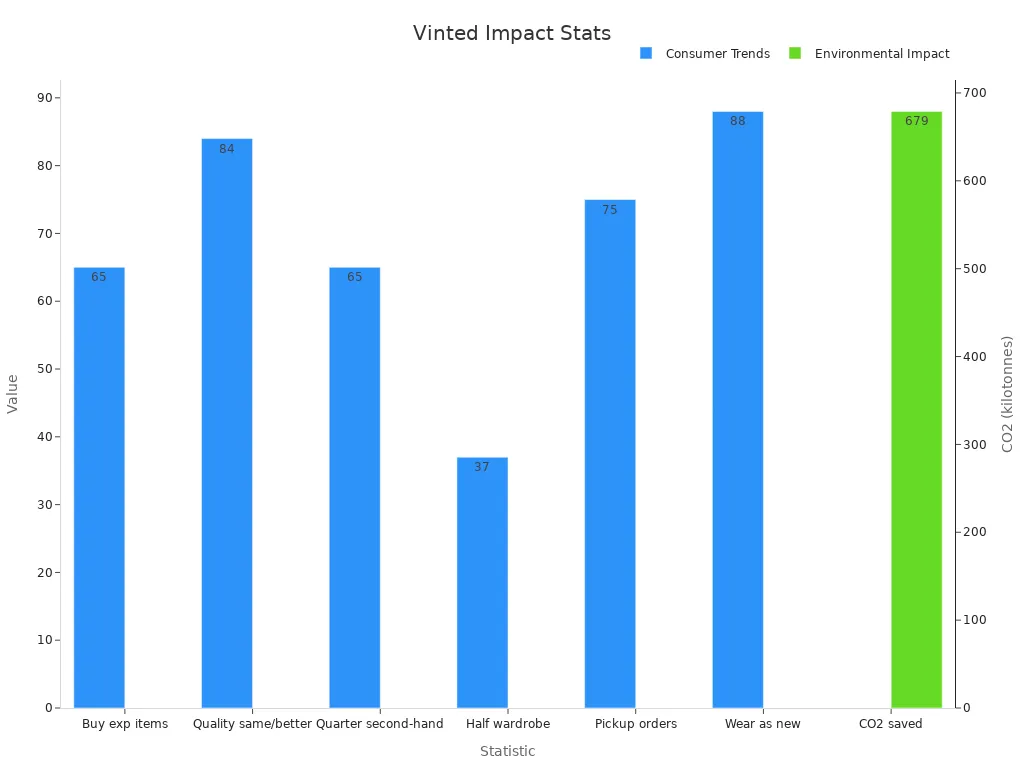
Vinted has become more than just a platform for buying and selling second-hand clothing—it’s a driving force behind the shift toward sustainable fashion. By enabling users to save 679 kilotonnes of CO2 in 2023 and fostering a community where 37% of members have half or more of their wardrobe second-hand, Vinted proves that small choices can lead to big environmental impacts.
The future looks promising. With the secondhand apparel market projected to hit $350 billion by 2028, Vinted is poised to further reshape consumer habits and the fashion industry. As more people embrace pre-loved clothing, the cultural shift toward sustainability and mindful consumption will only grow stronger.
FAQ
What is Vinted, and how does it work?
Vinted is a platform where you can buy and sell second-hand clothing. You list items for free, set your price, and connect with buyers. It’s simple, safe, and perfect for decluttering your closet while earning extra cash.
Is shopping on Vinted safe?
Absolutely! Vinted offers secure payment options and buyer protection. You can check seller ratings and reviews before purchasing. Plus, the platform ensures transparency, so you can shop with confidence.
How do I start selling on Vinted?
It’s easy! Snap a photo of your item, write a description, and set your price. Once listed, buyers can contact you directly. You don’t pay seller fees, so all profits are yours.
Can I find designer items on Vinted?
Yes! Vinted has a wide range of designer pieces. Use filters to search by brand, size, or color. Some countries even offer designer item verification for added trust.
Why should I choose second-hand fashion?
Second-hand fashion saves money, reduces waste, and supports sustainability. You’ll find unique pieces that express your style while helping the planet. It’s a win-win for your wallet and the environment.
Related content